

NOSHscape: The Latest Food Brand News
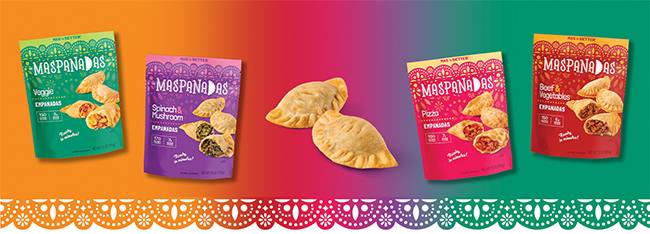
Latin-Inspired Frozen Snacks Gain Retail Ground as Maspanadas Enters Walmart
Latin Goodness Foods, parent company of frozen empanada brand Maspanadas, announced its largest retail expansion to-date, bringing a new bite-sized Poppers format to Walmart stores nationwide. The new products will reach stores across the Southeast, Mid-Atlantic, Northeast, parts of the Midwest in addition to California and Texas.
“Launching at Walmart is an incredible milestone for our company,” said Margarita Womack, founder and CEO of Latin Goodness Foods. “We’re especially excited that consumers will experience our brand through our new MasPanadas Poppers.
The Maryland-based brand is introducing the new bite-sized format in two varieties: Beef Picadillo and Chicken Tinga. The expansion comes nearly two years after the company moved into a new 12,000 sq. ft. production facility in Rockville, Md., which at the time, Womack said would be able to produce 300,000 1 oz. mini empanadas per day.
Founded in 2017 as a catering business, the company has grown significantly from producing by hand in a
commercial kitchen, to now supporting a network of retail, foodservice and private label partnerships across the country. Maspandas’ core line features five varieties of clean label frozen empanadas with flavors like Beef and Vegetables, Pizza, Spinach and Mushroom, Chicken and Vegetables, and Veggie.
Its flagship line is currently distributed at Whole Foods and Sprouts Farmer Market stores, as well as a wide array of retailers throughout the mid-Atlantic region. In 2025, the company began a national partnership with foodservice distributor Dot Foods. Womack noted that the partnership with Walmart will not only be its most significant retail expansion yet, but will also bring the products to entirely new markets and consumer groups.
With global flavors and clean label, convenient products experiencing increased consumer demand, Maspanadas has a strong stance in the frozen empanada space as a clean label, better-for-you product that now plays in both natural and conventional spaces.
The brand’s closest competitors have aligned themselves with gluten-free consumers including Feel Good Foods’ frozen empanada line, or Nadas, the Northeast-based brand that uses spices and natural ingredients rather than artificial colors to create vibrantly-colored dough for its Colombian-style, gluten-free empanada line.
Latin-inspired foods continue to gain momentum across the frozen and convenient food set. Xinca Foods’ frozen pupusa line recently rolled out to Whole Foods stores across the Pacific Northwest and Del Real Foods has been growing its refrigerated lineup of meals, appetizers, sides and salsas continue to gain ground in retail including Walmart, Target and Safeway stores.
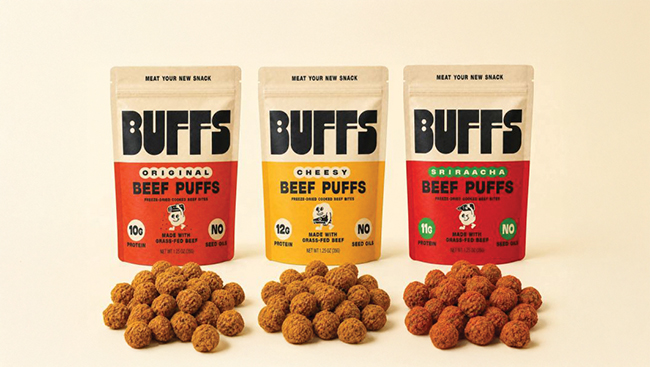
Beef Puffs Startup BUFFS Closes $1.1M Pre-Seed Round
Startup meat snacks brand BUFFS is preparing to launch following the close of a $1.1 million pre-seed funding round.
Co-founder George Zhou announced the financing on LinkedIn, shouting out a number of individual investors in the pre-seed round including Hu co-founder Jordan Brown, The Coconut Cult CEO Ari Raz, Kettle & Fire founder Nicholas Mares and Rocana Venture Partners’ Sumesh
Sachar and Gurdeep Prewal, among more than a dozen others.
BUFFS produces a line of “Beef Puffs” made from grass-fed beef and available in Original, Cheesy and Sriracha flavors. Each 1.25 oz. pouch contains 10-12 grams of protein and 170-180 calories. Additionally, the brand touts a “No Seed Oils” claim on the front label.
According to Zhou, the brand began when he and co-founder Beckett Kitaen were juniors in college and “started arguing with ChatGPT on how to puff meat.”
“I vividly remember the first time we tried our hot honey beef puff, which was meant to be a joke to see if we could food poison ourselves,” Zhou wrote. “I still can picture the face we made at each other after popping it in, eyebrows raised, eyes bulging out of our faces. “From that moment, we knew that this product had to exist for other people to enjoy.”
BUFFS is coming to market as consumer demand for protein is skyrocketing, with meat snacks like jerky becoming one of the fastest-growing segments in U.S. retail.
Tracked retail sales of dried meat snacks rose 11.8% to more than $6.6 billion in the latest 52-week period, with jerky reporting about $2.5 billion in sales while all other dried meat snacks touted $4.2 billion, per Circana data.
That burst in consumer spending has also led to a favorable investment environment for meat snacks brands.
CoBank estimated that more than $1 billion in meat snack processing investments have been announced since 2020.
For BUFFS, Zhou said the journey from concept to market has been rocky, but that the company is now ready to roll.
“The real work starts now. Real customers. Real feedback. Real timelines. Real pressure. Real revenue,” he wrote.
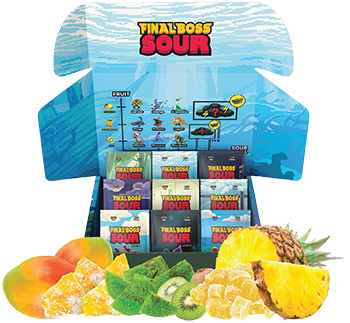
Final Boss Sour Raises $4M Ahead of Walmart, Target Expansion
Gaming-themed candy brand Final Boss Sour has raised a $4 million “strategic funding round” from new and existing
investors including Evolution VC Partners, The Angel Group, Mondelez International SnackFutures Ventures, Melitas Ventures and GFR Fund, among others.
“We’ve always believed that if we built a product people genuinely loved, the growth would follow. That’s exactly what’s happened,” said James Hicks, co-founder and general manager.
The funding comes ahead of the Science Inc.-incubated brand’s rollout to Walmart, Target, 7-Eleven, Kroger, H-E-B, Wegmans and Hy-Vee, taking place now through the fall. According to Hicks, this new cash gives the company the ability to reach those shelves, in addition to investing in new innovations and collaborations to engage the community around the brand.
Final Boss Sour raised $4 million in May 2025; to-date the three-year-old company has raised $12 million in outside
capital. Hicks claims that Final Boss Sour is “the fastest-growing sour snack brand in the country,” noting that demand for
better-for-you sour snacks is strong and has translated to “high velocity” in early retail tests.
“We’re still very early in what we think this brand can become,” Hicks said.
The brand’s snacks are made with dried fruit, including strawberries, blueberries, cranberries, mangoes and more, that are candied with a sour coating that escalates through four, increasingly tart levels. The new funds will also go toward
expanding the brand’s nearly 30-SKU lineup with new flavors.
“One of the biggest advantages of being a digital-first brand is that we can listen to our community and respond quickly,” said Tommy Riggs, co-founder of Final Boss Sour, in a press release. “We built the largest YouTube subscriber base of any sour snack brand by giving fans something new to engage with every month… Every launch creates new reasons for our community to come back, participate and share.”
The brand claims it has garnered more than 2 billion organic views across TikTok, YouTube and Instagram. It also claims to be the largest sour candy brand on TikTok Shop. That growth has been driven by monthly product launches, the company said.
Collaborative launches have included professional athletes like NHL player Trevor Zegras and MLB player Jazz Chisholm Jr. as well as gamer-centric brands like PAC-MAN and G FUEL. The brand said every new release creates a “social media event” that supports engagement and retail demand.
“The Final Boss Sour playbook is fundamentally different from how most consumer brands have historically grown,” said Michael Jones, general partner at Science Inc., in a press release. “The team built demand through content and community first, then translated that momentum into retail expansion. That’s a powerful validation for a viral snack, and one we believe is just getting started.”
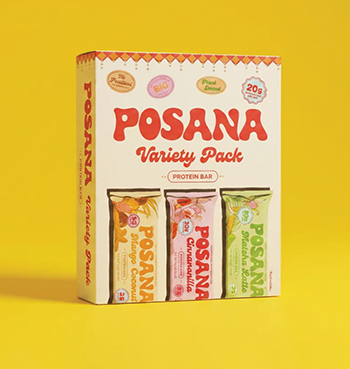
Posana Pulls In Pre-Seed Funding
Upstart protein bar brand Posana announced it has closed a $650,000 pre-seed round with a slate of creators and operators backing the business, per a LinkedIn post from founder Aditya Banerjee.
The round drew from notable CPG investors such as Janica Lane, Piper Sandler director of consumer investing; Rian Rappaport, founder and CEO of Quan Media Group; Will Fischer, co-founder and CEO of Spring Cash; Jenny Liu, founder of Crush It VC; and Adam Shi, an associate at Tactile VC.
Posana has also garnered support from an array of online creators including Salt Hank, Fred Liu, Aaron Drizzt, Ben Aratame and Eunice Lai. Table tennis pro Sid Naresh, Boba Guys co-founder Andrew Chau and Ascend co-founders Will Host and Malcolm
Cutler also invested, among others.
Founded in 2024, Posana is working to position itself as an “exciting” protein bar. The brand produces three flavors: Cinnavanilla (20 grams of protein), Matcha Latte (20 grams of protein) and Mango Coconut (20 grams of protein). The plant-based bars are produced in California and contain 9 grams of fiber.
The bars are made with a blend of pea protein, rice protein and almond protein powder, in addition to almond butter, chicory root fiber and pea protein crisps. For sweeteners, Posana uses allulose and stevia extract. A 9-count variety pack of bars is priced at $29.99 on the brand’s website while single-flavor 12-count packs are marked at $39.99.
Banerjee, who launched the company from his freshman dorm room at UC Berkeley, secured over $500,000 in
funding from angel investors at launch. As of last month, Banerjee departed Berkeley to focus on the business, which is now on shelf in 125 stores including Westside Market locations in New York City and Luke’s Local in San Francisco. The company also closed two distributor deals that will expand its presence across the West Coast.
“Berkeley gave me a full scholarship. I’m putting it on pause to sell protein bars,” Banerjee said in a LinkedIn post. “I kept telling myself I could do both: full course load, full-time founder. I couldn’t. Not at the level either deserved. So I’m taking a leave of absence to go all-in on Posana. To everyone who’s bought a bar, opened a door, or bet on me early, this is for you. We’re just getting started.”
Posana is advised by CPG consultant Ryan Coon, retail broker and co-founder of Highline Brands Martin Forde, and former Coca-Cola, Nestlé and PepsiCo executive Diane Roy.
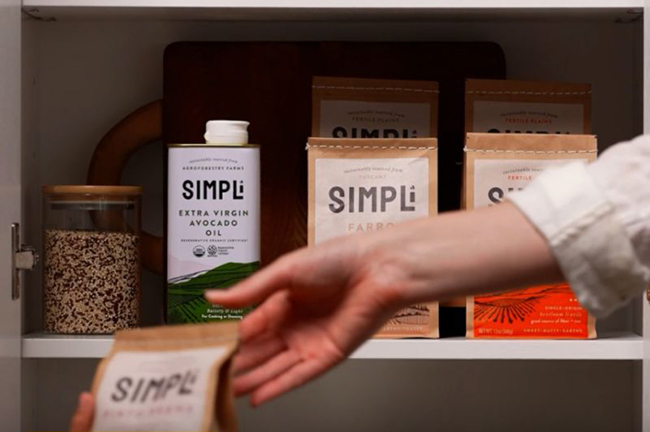
SIMPLi Secures Investment From Chipotle’s Cultivate Next Fund
Regenerative pantry staple producer SIMPLi announced it has secured investment from Chipotle Mexican Grill’s Cultivate
Next Fund. The Philadelphia-based business is one of six companies to receive investment from the fund. Financial terms were not disclosed.
“The investment will support SIMPLi’s next phase of growth, including retail and foodservice expansion of our gold
standard heirloom beans, ancient grains, and single-origin oils, advancing Regenerative Organic Certified sourcing programs, accelerating innovation in nutrient-dense products and category adjacencies, and continuing to invest in initiatives that bring greater transparency and measurable outcomes to the food system,” said co-founder Matt Cohen in a statement to Nosh.
The fund has previously invested in food companies like alternative protein brand Meati, rubisco protein grower
Plantible and cultured oil maker Zero Acre Farms. Cultivate Next focuses on supporting companies advancing food
systems, climate resilience, regenerative agriculture, supply chain transparency, and sustainability measurement, it stated in a press release.
The restaurant-backed vehicle has also invested in a wide array of AI, robotics and biotechnology companies since it was founded in 2022. SIMPLi was the only packaged food company to receive funding from this latest tranche.
“Together, these companies demonstrate how innovation is reshaping agriculture, sustainability, supply chains and the guest experience, creating new opportunities to build a more resilient food system,” said Curt Garner, president and chief strategy and technology officer at Chipotle, in a press release. “Their technologies have the potential to
create meaningful value for farmers, suppliers, restaurant operators and guests alike.”
SIMPLi has grown extensively through Whole Foods since its debut in 2020, with now more than 15 products on shelf, as well as expanding into mass and conventional retail. In February the company expanded its partnership with Whole Foods even deeper, debuting its largest product expansion to date with 10 new SKUs spanning three categories. Co-founder Sarela
Herrada told Nosh earlier this year that SIMPLi is on track to become the number one selling bean brand at Whole Foods, behind private label.
According to Cultivate Next, that is exactly why it is backing SIMPLi: Consumers are demanding greater transparency about where their food comes from and the Regenerative Organic Certified brand delivers that. The firm highlighted the brand’s sourcing approach as well as its commitment to third-party nutrient-density testing and sustainability tracking.
“Since day one, we’ve believed that the future of food starts with transparency,” SIMPLi said in a LinkedIn post. “By
partnering directly with farmers, investing in regenerative organic agriculture, measuring both nutrient density and
environmental impact, and building fully traceable supply chains, we’re working to create a new gold standard for pantry staples.”
SIMPLi has previously secured capital from University System of Maryland Momentum Fund. Cohen said the Cultivate Next investment is part of the company’s continued growth strategy.


Receive your free magazine!
Join thousands of other food and beverage professionals who utilize BevNET Magazine to stay up-to-date on current trends and news within the food and beverage world.
Receive your free copy of the magazine 6x per year in digital or print and utilize insights on consumer behavior, brand growth, category volume, and trend forecasting.
Subscribe