

Top of Mind: Energy Drinks Are Expanding Mind Share in More Ways Than One
As brands born in fitness and nutrition channels migrate to the mainstream, they’re literally bringing a new mentality to the energy category.
Within energy drinks, rising interest in biohacking, nootropics and optimized supplement “stacking” has inevitably moved the conversation beyond just workout-boosting ingredients or more caffeine and towards things that can help users dominate outside of the gym. That includes everything from proprietary ingredients like Cognizin, a form of citicoline patented by Japanese supplier Kyowa, and NeuroFactor, a FutureCeuticals product, to L-theanine and ginseng.
It fits with a broader trend of young consumers seeking functional benefits from their beverages; according to Keurig Dr Pepper’s 2026 “State of Beverages” trend report, Gen Alpha and Gen Z are 31% more likely than other age groups to prioritize mental focus and 41% more likely to prioritize sustained energy.
But it also represents an evolution: as stated in Kerry Group’s 2026 trend forecast report, “the U.S. energy drink market is firmly in a new phase, beyond caffeine jolts and sugar highs.” The adoption of remote work and greater mental health awareness has “opened the door to neurofunctional drinks that blend energy with brain benefits,” with particular appeal to the roughly 130 million Americans engaged in “gaming and other digital deep-work activities.” The “digital afternoon burnout” occasion is ripe for products that offer a slightly different energy profile.
Brain Battles
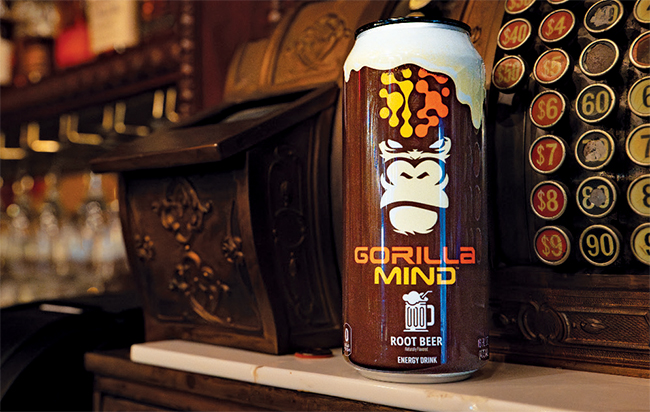
The trend also closely tracks the rise of next-gen male lifestyle brands and social media-fueled “maxxing” trends, forces that have helped niche brain health ingredients gain new prominence in CPG. Influencer-backed supplement brands like Jocko Fuel, Joe Rogan’s ONNIT and Gorilla Mind, owned by YouTube bodybuilding star Derek (“More Plates More Dates”), have championed nootropics to their respective audiences of millions, helping to normalize those niche ingredients. There’s even the curiously-named, Florida-based Trumpdrive Energy, sporting up to 350mg of Cognizin and 200mg caffeine in each 12 oz. can.
In the past, those drinks were often marketed as promising gamers a competitive edge; now, they’re now being pushed as overall performance enhancers that are part of a modern wellness regime. Creatine, another, more mainstream performance enhancer, also jumped out of gyms and into the mainstream with a marketing campaign not just involving its extra strength benefits, but also studies around its cognitive benefits.
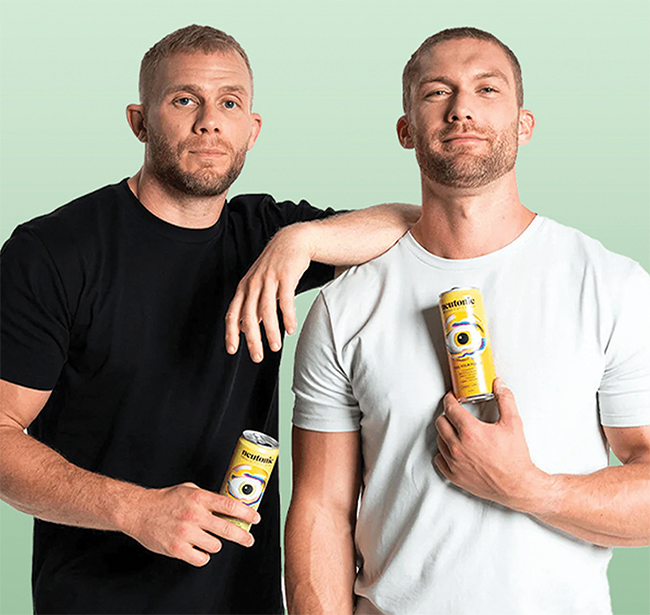
Those factors have opened the door for “productivity drinks” that offer a more specialized, fine-tuned energy experience. Last year, British podcaster Chris Williamson (host of Modern Wisdom) and YouTube fitness guru James Smith raised $3.7 million to kickstart expansion for their brand Neutonic, a productivity drink which touts 500mg of Cognizin, 120mg of caffeine and 400mg of L-theanine, along with rhodiola rosea and panax ginseng, in each 12 oz. can. As Williamson told us at the time, the formulation is “basically what every nootropics bro would look at if they went down the stack.” Using the tagline “Fuel Your Focus,” the brand has found receptive U.S. retail partners in GNC, The Vitamin Shoppe, Central Market and on Walmart.com, and plans to grow distribution this summer after raising another $6 million in growth capital this April.
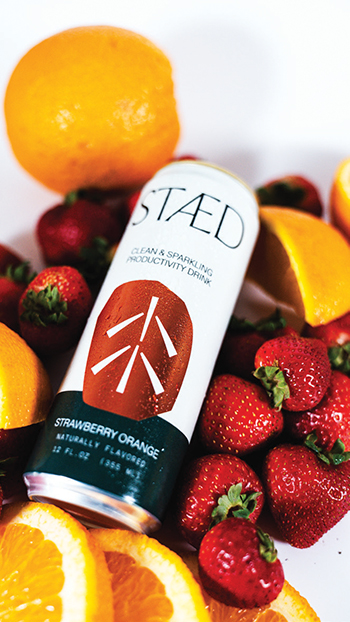
Recognizing the current momentum, new brands are joining the fray. Startup STAED, aiming to link gut and brain function with its productivity line, launched this spring. Formulated for founders, creatives and busy professionals, its four-SKU lineup of 12 oz. drinks also feature Cognizin and L-theanine, as well as organic agave inulin for gut support. There’s also the nootropic energy brand Happy Panda, which was launched this spring in 12 oz. and 7.5 oz. mini cans.
Built around the trifecta of caffeine, L-theanine and Cognizin, Happy Panda is “part of the next generation of functional beverage brands that prioritize substance over trend,” said Katie Emerson, MS, RD, Senior Manager of Scientific Affairs at Kyowa Hakko USA.
Even if cognition-boosting ingredients aren’t always a central part of a brand’s marketing, they can play an important role in positioning the product within a crowded category. BUM Energy, which pairs 112mg caffeine and 250mg of
Cognizin, has been a fast mover. The first energy RTD from RAW Nutrition, it was first distributed in the same nutrition and gym channels that served its parent company, but quickly leapt into mainstream stores like Circle K, Walmart and Target.
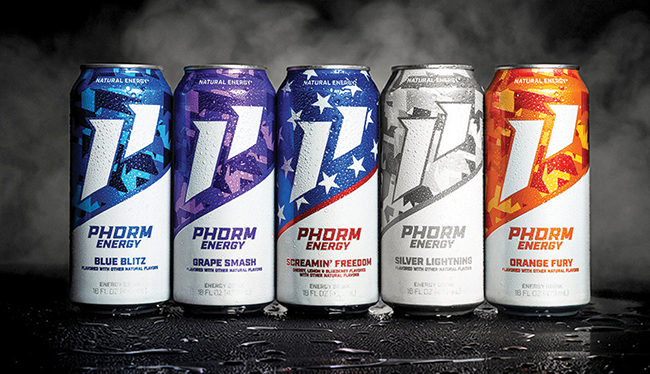
Phorm Energy – backed by Anheser-Busch, supplement maker 1st Phorm, and UFC boss and manosphere royal Dana White – has also been tailored to perform in c-stores. The product, which pairs NeuroFactor with 200mg of caffeine from green tea plus
L-theanine, has made big strides in its first year, becoming a top-15 category brand and picking up over 59,000 doors, including nationwide placement at 7-Eleven.
Fungal Function
But there’s another, softer side to this emerging performance category as well, exemplified by mushroom-powered energy RTDs like Odyssey and Melting Forest. After spending several years introducing the concept to the market, Florida-based Odyssey, now adopting “functional energy” as its descriptor, has trimmed its portfolio and built around high caffeine (222 mg) and low caffeine (85 mg) lines in 12 oz. slim cans; the functional stack also includes organic Lion’s Mane, organic cordyceps, panax ginseng and L-Theanine. Though it has been moving into retail through mainly beer DSDs, the unlock has been getting the product to busy working professionals through placement at office break rooms (via Canteen) and the campuses of major corporations like Uber and Meta.
Despite the encouraging signals, however, it’s unclear where the ceiling for “smart energy” truly lies. Brands like Nerd Focus have folded, while Nutrabolt’s C4 brand quietly shifted its Cognizin-boosted Smart Energy line in 12 oz. cans out of retail and exclusively online. Meanwhile, GHOST (NeuroFactor), Jocko Fuel Go Energy, Bucked Up and the aforementioned Phorm Energy haven’t explicitly built their respective products around cognition claims, instead positioning them as part of a holistic package.
A mature cognition category may also look to different formats: see Magic Mind, which has been making its case for nootropics-added performance shots since launching in 2020. Last fall, after expanding its range to three SKUs, the brand raised over $12 million to help bring its Cognizin, L-theanine and adaptogen-powered shots from DTC to retail. Elsewhere, newcomer AUTOFOCUS, a division of Productive Health Co., is spreading its bets. The brand’s flagship Do More Drink, which pairs caffeine and L-theanine, comes in two 12 oz. canned versions (carbonated and non-carbonated) along with a 2 oz. shot.
That approach may reflect the results-oriented attitudes of consumers in this sub-segment: what matters is whether these functional products can deliver, regardless of how they are delivered. As the market develops and social media has its say, brands will be expected to keep pushing the envelope, and some already are; Neutonic’s Cognizin-and-caffeine toothpicks and BUM Energy’s infused oral pouches may be a look at the future.
Other Trends to Watch
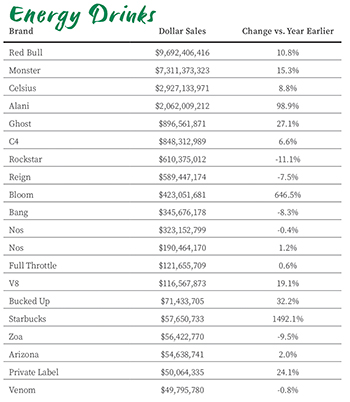
- As we reported in our last energy drink feature (and extensively on BevNET.com), female-focused energy drinks continue to gain ground, as exemplified by Alani Nu’s continued expansion and the emergence of Nutrabolt’s Bloom brand. That has inspired more major players to enter the market, headlined by the introduction of Monster Energy’s FLRT this spring. Yet even with the distribution muscle of Coca-Cola behind it, that entry will face a competitive field that includes influencer-backed projects like UPDATE (Kim Kardashian), Unwell (podcaster Alex Cooper) and Gorgie, which signed rock icon Jon Bon Jovi as an ambassador this spring.
- Consumers are seeking drinks that provide a healthy way to relax and unwind; energy drinks can’t necessarily offer that exactly, but they can tone down the caffeine. Liquid Death’s “unextreme” energy drinks (100mg caffeine) have enjoyed a strong start at retail, according to Goldman Sachs quarterly Beverage Bytes survey of c-store retailers.
- Hydration is another avenue by which energy drinks are expanding their reach without adding more caffeine. After launching a protein-enhanced energy drink last year, Bucked Up is tapping into electrolytes for its Drive subline, which also includes 50 mg of caffeine. PHX, backed by Barstool Sports chief Dave Portnoy, has also championed that approach, and has moved into 14 new regions for distribution thus far this year. Their success thus far is notably different from previous attempts by established sports drink giants BodyArmor and Gatorade to lean into caffeine; the former discontinued its Fast Twitch line, while the latter has shifted its energy SKUs (previously marketed as BodyArmor Edge) into rapid hydration platform Flash I.V.


Receive your free magazine!
Join thousands of other food and beverage professionals who utilize BevNET Magazine to stay up-to-date on current trends and news within the food and beverage world.
Receive your free copy of the magazine 6x per year in digital or print and utilize insights on consumer behavior, brand growth, category volume, and trend forecasting.
Subscribe