

BevNET Live Winter 2024 kicked off with a spirits-themed Sunday afternoon featuring panels on the state of the RTD cocktail category and a new victor in BevNET’s annual Cocktail Showdown.
Yoju Emerges Victorious
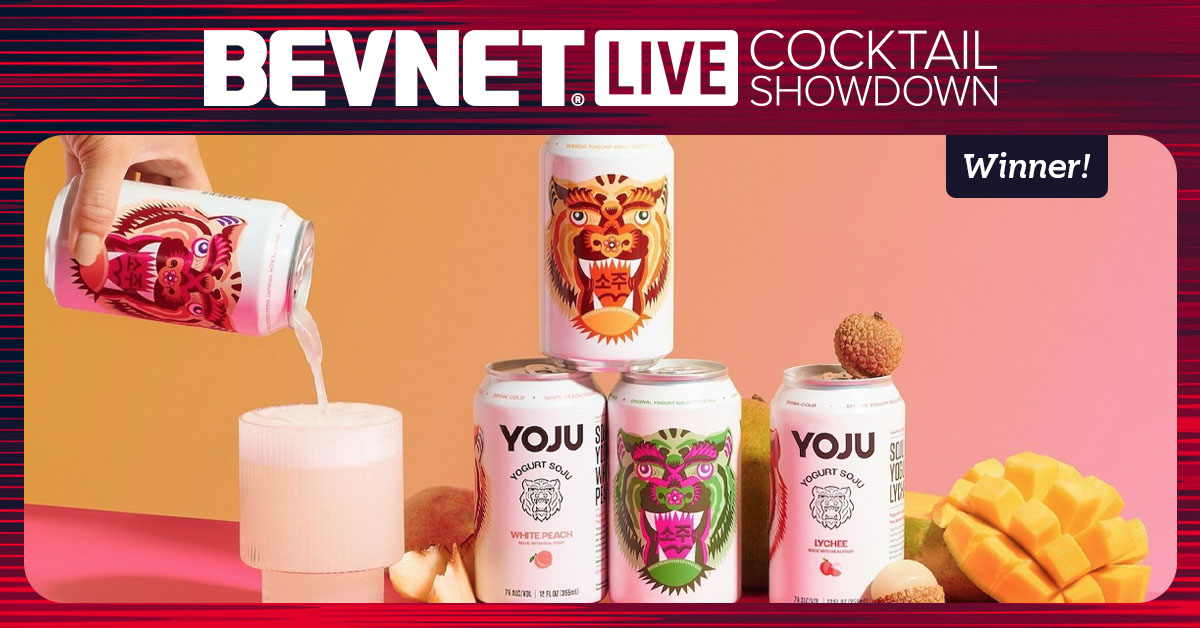
Yoju was crowned the champion of the BevNET Cocktail Showdown in Marina Del Rey, California, yesterday.
The Los Angeles-based yogurt and soju Korean cocktail line impressed the judges with its unique flavor profiles that were “beautiful on the palette” and its eye-catching, vibrant tiger-themed cans that pop on shelf. Founded by college friends-turned-entrepreneurs Steven Tang and Kenn Miller, Yoju’s lineup includes Original, Lychee, Mango, and White Peach flavors, retailing for $14.99 per 4-pack and $25.99 per 8-pack and containing 7% ABV per 12 oz. can.
Currently sold in 875 accounts, including Whole Foods Market, Costco, Trader Joe’s, Total Wine & More, and Safeway, among others. According to Tang, the brand’s top 100 retail accounts are averaging 15 cases per month.
“Our core strategy right now is going deep in each of our markets, including Virginia, D.C., Maryland, California, Washington, and Hawaii,” said Tang, adding that the brand is gearing up to launch in Texas and New York in 2025.
Yoju beat out a field of five other brands, including Gardenista, Good Beverage Company, Hoste Cocktails, LIXIR of The Gods, and Tequio Tequila Cocktails.
Yoju is the fifth victor of BevNET’s Cocktail Showdown, joining past champions Ponyboy Slings, Velvet Llama, Wandering Barman and Golden Rule. The brand will walk away with bragging rights, an engraved trophy, and an industry advertising package valued at $10,000.
The State of the RTD Cocktail Category
Before the Cocktail Showdown, two main stage sessions explored the ins and outs of the ever-evolving RTD cocktail market.
First, Gustavo Aguirre, VP of brand innovation at InvestBev, Maria Pearman, advisory partner at GHJ and Dale LaFlam, founder of 5:30 somewhere, walked the audience through three key challenge points for the emerging brands: refining go-to-market strategy, guarding cash flow, and tactics in the market.
According to Aguirre, 95% of new brands ultimately fail for six main reasons: lack of product market fit, not delivering on its promise, competition, ineffective go-to-market strategy, lack of capabilities to execute, and failure to turn the idea into a business case.
“It’s important to understand your brand that you’re rolling out to the market. This is more than just a great-tasting product developed by a great founder because that’s table stakes,” said Aguirre.
He continued, “Are you meeting your four customer needs? What are the needs of your consumers, retailers, distributors, and investors? You need to answer that to be in the 5% [of brands that succeed].”
Zeroing in on finances, Pearman emphasized the importance of understanding – and avoiding – unrealistic pricing. She pointed out that startups and emerging brands are often hesitant to price accordingly while under the pressure of sitting on shelf next to larger companies that have more cushion to absorb smaller margins.
“Understanding your costs on a SKU-level basis is imperative because it helps you know what you need to sell it at to get a reasonable margin,” said Pearman.
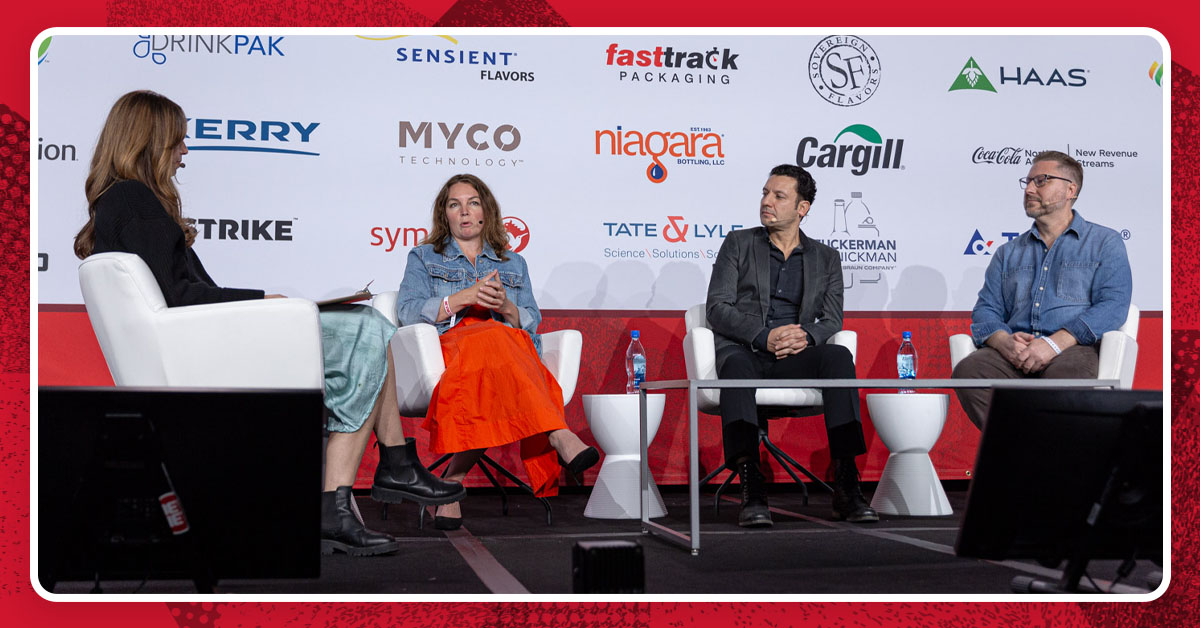
Later, BevNET Spirits Editor Ferron Salniker sat down with panelists Adam Kost, founder and CEO of Dirty Shirley; Cassie Finley, VP of customer development at Southern Glazer’s Wine and Spirits; and Forrest Dein, co-founder and CMO of Juneshine, to discuss how opportunities and challenges change when a brand begins to scale.
As more and more brands enter the already saturated RTD cocktail category, Finley said there’s a lot of contraction and realization happening across grocery and more traditional channels. This has led to confusion among buyers as to what they should bring on. The guiding factor? Incrementality.
“You need to know that you’re bringing in an incremental consumer because why would they take a chance on you if you look and smell like everybody else or a product that’s already been washed out of the set at some point,” said Finley. “They don’t like making the same mistake twice.”
Alongside incrementality, exemplifying discipline – especially as it pertains to marketing efforts – is paramount.
“Don’t get over your skis or get too excited about the shiny marketing opportunity that you feel good to be a part of, like a festival that invites us to go and spend $100,000 to be part of that honor. You’ve got to say no to the shiny stuff,” said Kost.
Dein echoed the sentiment, sharing that JuneShine has cut back on its marketing efforts to maximize profitability. Whereas the hard kombucha brand used to “try to do so many different things” from a marketing standpoint, it now focuses on three main buckets: shopper, field, and social.
“We were able to shrink our team and get really good at those three things, and that’s allowed us to grow but stay profitable at the same time,” said Dein.