

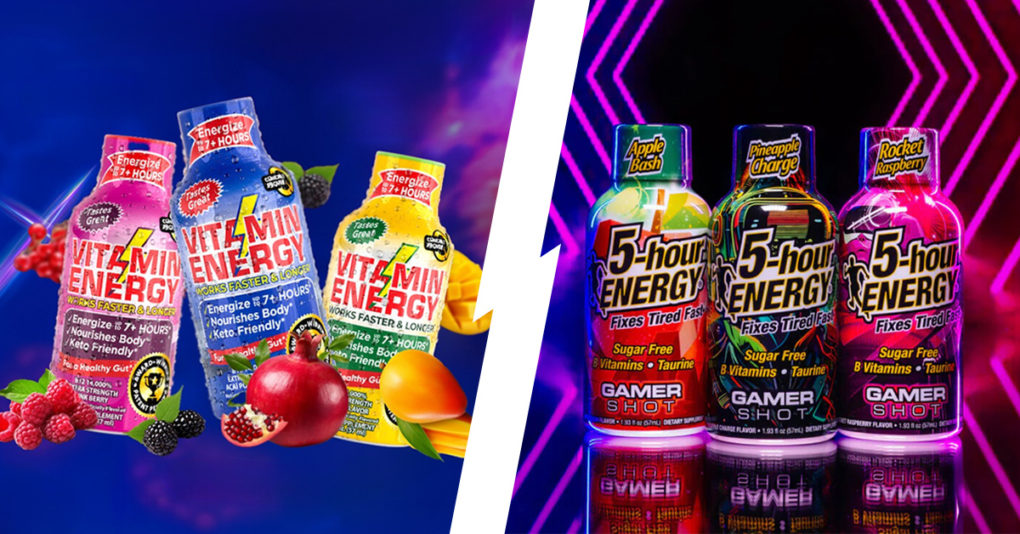
Shot maker Vitamin Energy is gunning for the king of the category. The startup brand filed a lawsuit last week against 5-Hour Energy owner Manoj Bhargava and the brand’s associated companies, alleging it has violated U.S. antitrust and false advertising laws by wielding an unfair monopoly over the energy shots business.
According to the complaint, filed in Michigan on Friday, Vitamin Energy, Inc. alleges that 5-Hour Energy’s associated companies – Living Essentials, LLC, International IP Holdings, LLC and Innovation Ventures, LLC – have utilized exclusive placement agreements with retailers to shut out competing energy shot brands and maintain a monopoly over the category that has led to “lost sales, lost profits and loss of market share”. The lawsuit seeks $1 billion in damages.
The complaint cited agreements 5-Hour has with convenience channel chains Pilot Flying J and Casey’s as examples of its supposed anticompetitive behavior.
In the case of Pilot Flying J, Vitamin Energy said it had display racks at over 500 of the chain’s stores across 39 states in 2020, costing around $40,000 to create and maintain. However, the complaint alleges that when 5-Hour learned of the racks, “they induced Pilot Flying J to swiftly remove the Vitamin Energy racks along with other Vitamin Energy products from the point-of-sale locations and place the Vitamin Energy shots in a secondary more obscure location.”
Vitamin Energy said its sales in Pilot Flying J stores were over $225,000 in 2020, but after the racks were removed around March of 2021 – “and were thrown away or destroyed” without consulting the brand – its sales in the chain fell over 30% to around $150,000.
“On information and belief, Defendants entered into an agreement with Pilot Flying J to obtain and maintain dominant placement of 5-hour ENERGY shots on the counter at the point of sale, require significant sales volumes in each convenience store, and pay rebates on the total 5-hour ENERGY with the understanding that Pilot would remove competing energy shots, including Vitamin Energy shots, from preferred counter placements near the cash register,” the complaint states.
With Casey’s, which operates around 2,500 stores nationwide, Vitamin Energy claimed it was never able to win point-of-sale placement in the first place due to agreements the retailer had with 5-Hour, relegating the brand to the store’s Health & Beauty Aids aisle.
Besides the monopoly claims, Vitamin Energy is also alleging 5-Hour violated the Lanham Act against false advertising, claiming that its TV and social media ads overstate the product’s effectiveness.
The complaint cites the brand’s “Fixes Tired Fast” and “100% Energy” marketing campaigns – the latter showed consumers with depleted battery meters being filled to the maximum after drinking 5-Hour’s shots – as examples of deceptive claims.
This isn’t the first time 5-Hour and Vitamin Energy have met in the court room. In 2019, 5-Hour’s owners sued Vitamin Energy alleging trademark infringement for claims that its products can provide “up to 7 hours of energy.” The brand has been notably litigious in policing its trademarks, and has repeatedly sued smaller energy shot brands using similar “hours of energy” language on its labels and marketing materials.
5-Hour Energy has long been the top brand in the energy shot segment, at one point commanding over a billion dollars in annual U.S. retail sales. Although the business has seen dollar sales fall in recent years, Circana reported that 5-Hour still holds a roughly 85% market share of the shelf-stable energy shot segment.
In the 52-week period ending August 11, 2024, its dollar sales in the U.S. MULO and convenience channels were around $774.5 million (-6.8% year-over-year), while the next largest tracked brand was Tweaker, which reported $30.3 million in dollar sales (+10.3%).
Comparatively, Vitamin Energy’s retail sales were down -5.7% to just $485,237 in the same period. However, that data may not include all product lines or all retail accounts for the companies.
Vitamin Energy previously saw a triple-digit jump in its sales around the end of 2020. In January 2021, the company told BevNET its products were in around 10,000 retail stores across the country, including Circle K, QuikTrip, 7-Eleven and, of note, Pilot Flying J.