

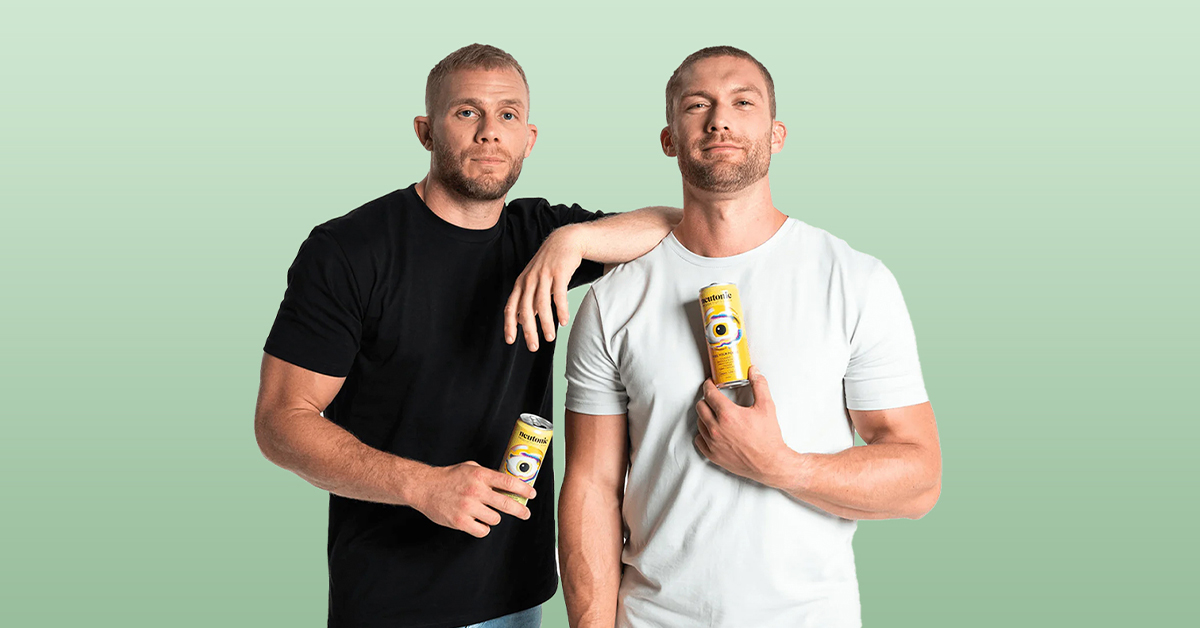
Having attracted millions of listeners to hear him talk about the subject on his podcast Modern Wisdom, Chris Williamson has become an influential advocate for the role of nootropics in optimizing productivity and performance. Now, with Neutonic, he’s hoping to bring that audience with him on the next step in his journey as an emerging CPG entrepreneur.
Neutonic, the supplement brand fronted by Williamson and health and fitness YouTuber James Smith, this morning announced it has raised $3.7 million at a $20 million valuation to help fuel the expansion of its RTD “productivity drinks,” including their expected arrival in U.S. retail later this year.
The raise, Neutonic’s first, aims to keep up the momentum the company has generated during its first 18 months on the market for its flagship 330ml zero-sugar productivity drink, available in a single SKU, Orange Sunrise. Selling exclusively online through its website and Amazon, the product has thus far sold over 3 million cans and generated over $10 million in revenue across the U.K. and U.S., according to the company. The line has also been expanded to powder sticks and capsules.
“After 30 years in business, I’d like to think I can spot great founders when I see them,” said Alan Barratt, an investor in Neutonic and founder of sports nutrition company Grenade, which was acquired by Mondelez in 2021 for £200 million. “I’ve known Chris and James since 2019, and we’ve always shared a passion for health and fitness, entrepreneurship, and developing great products that consumers can trust. I’m so proud to have had the opportunity to invest in Neutonic, and excited to see what the future holds for this world class brand and team.”
The raise consisted of $2 million from venture capital group JDI Investments, with further participation from individual investors including Codie Sanchez, founder of Contrarian Thinking; fitness entrepreneur Mike Thurston; Gym King founder Jay Parker; and Kayla Itsines, co-founder of the Sweat app.
Neutonic’s founders have been key to its appeal. Across their various platforms, Williamson, who shot to fame in the U.K. as a former contestant on Love Island, and James Smith, an outspoken personal trainer with a large YouTube following, are influential voices in modern wellness, integrating brain function and cognition into a holistic outlook on mental and physical health.
Creating Neutonic was the culmination of Smith and Williamson’s longstanding interest in cognitive performance and nootropics, as well as their response to a perceived gap in the market for a productivity-based brand with high-performance ingredients backed by clinical human trials.
After they each expressed interest in making a ready-to-drink product, Smith and Williamson partnered with manager Luke Betts and Shan Hanif, CEO of online marketing group Genflow, to launch Neutonic in 2023; the four men are all listed as co-founders, with Smith owning the largest share of the company (37%). The founders put in around $1.5 million to get Neutonic off the ground, according to Hanif.
The brand fits within several broader beverage trends, with influencer-led brands and cognition-boosting ingredients each on the rise. More specifically, there’s also a widening bridge connecting podcasters and the CPG world, as notable names are crossing over with products that align with their audiences; see: neuroscientist Dr. Andrew Huberman’s investment in yerba mate brand Mateina, Emma Chamberlain’s eponymous coffee brand or Call Her Daddy host Alex Cooper’s budding Unwell hydration drink. But Williamson insisted his approach is different from many other influencer-led ventures.
“A dirty secret of the influencer-based CPG world is that most of these companies are kind of like K-Pop boy bands that have been constructed by some big conglomerate, and then the right person has been brought in at the very end and is called ‘founder,’” he said. “Whereas me and James have touched every single line of copy on the cans, the designs, the colors, we’ve taste tested every horrendous version of every different product that we did right up to the beautiful finished product, and I feel really proud of that.”
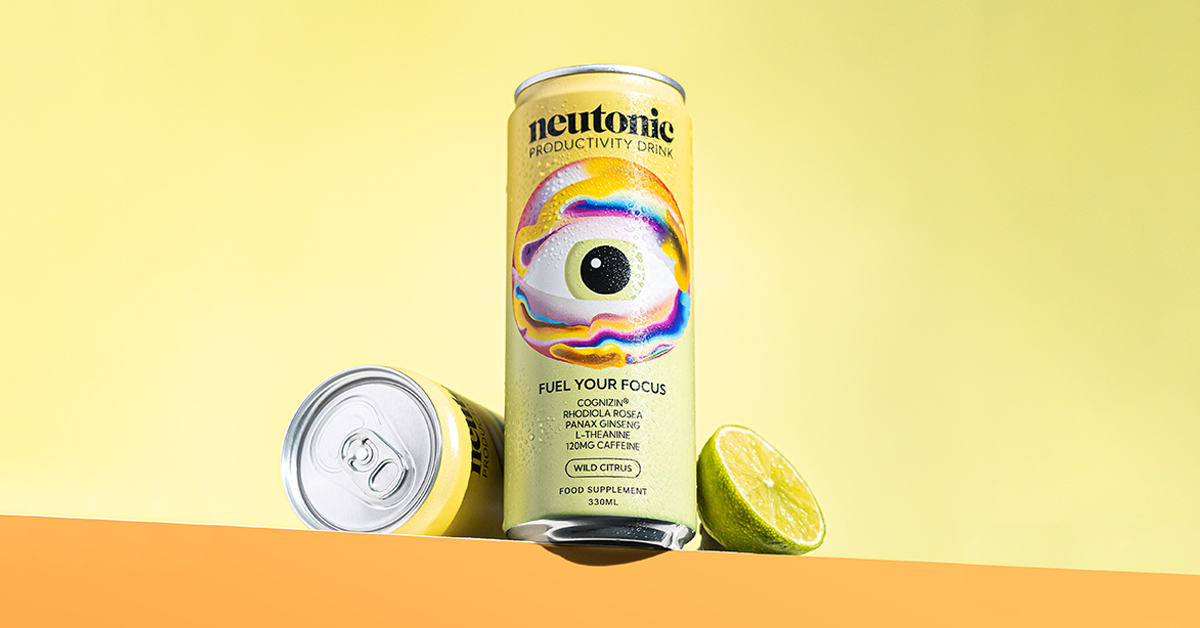
The resulting product doesn’t rely on a proprietary formulation, instead calling out its headline ingredients (and dosage) in bold print on the can. Neutonic boasts the “highest legal limit” for Cognizin (500mg per serving), and “twice as much L-theanine as you get in sleep supplements” to go along with a “medium dose” (120mg) of caffeine; as Williamson says, the formulation is “basically what every nootropics bro would look at if they went down the stack.”
And the bros seem to like it; in a video breaking down the deal, Hanif said Neutonic has sold through multiple runs in the U.S. and struggled to keep up with inventory demand. A 12-pack sells for $37.99 on Amazon or for $35.99 on Neutonic’s website.
Yet the product is a “relatively mainstream” play, said Williamson, who has drunk up to six cans in a day. That theory will be tested when Neutonic arrives at U.S. retailers later this year. Though energy brands like Ghost and C4 have incorporated some similar ingredients, like Cognizin, a pitch deck for Neutonic positions the brand deeper into the niche nootropic segment with competitors like Unilever-owned Onnit and Gorilla Mind.
“I think that the kind of flagship formulation that we’ve got at the moment is a really good starting point that works for most people’s biologies, most people’s brain states,” Williamson said. “It’s very safe, very well researched, and it’s at doses that are pretty easily tolerated.”
Having turned his initial reality TV appearance into a career in the public eye, Williamson continues to integrate his business with his growing platform; “I’m a shameless shill for my own products,” he admits, noting that guests on his podcasts — names ranging from Matthew McConaughey to Jordan Peterson and the aforementioned Dr. Huberman — will have a can in front of them during the recording. With access to millions of combined followers across their social networks, Williamson and Smith have a product that can keep engagement with their audience high, even while they’re off the air.
“I really love it, and I genuinely think that we can add quality to people’s lives, which is the same thing I feel about when it comes to the podcast,” said Williamson. “It’s like a virtuous quest, hopefully, to make people operate better.”