

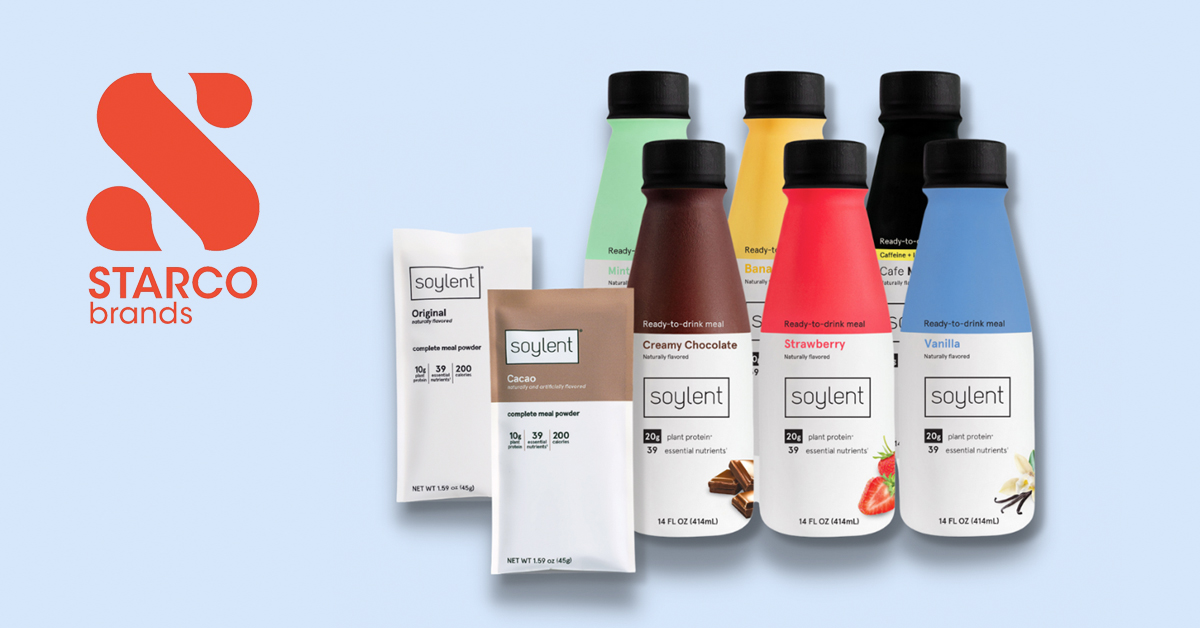
Soylent’s evolution from tech-industry concept to broad nationwide distribution seems to now be in reverse, per last week’s Q4 earnings call from parent company Starco Brands.
The meal replacement shake tumbled at retail in Q2, generating just $6.8 million in gross revenue Q2 compared to $11 million the same period last year, an approximately 33.6% drop. Gross profit dropped to just $2.4 million ($3.3 million last year). Sales were slowed by “inventory constraints,” the company said.
Soylent did report an operating profit of almost $164,000, bettering a loss of over $8 million in the same period last year. That number was inflated by a share price adjustment provision included in the 2023 acquisition that kicked in once the Company’s stock fell below 0.35 per share, costing around $8.6 million.
A return to Soylent’s D2C roots could be in the cards: Starco Brands Chairman and CEO Ross Sklar alluded to “the strategic exit of unprofitable SKUs and underperforming retail channels” in his prepared remarks. Meanwhile, Starco is “prioritizing profitability by focusing resources on its higher margin direct-to-consumer and e-commerce channels,” per a press statement.
Overall, Starco reported just over $11 million in revenue in Q2, a 26.4% drop (around $3.9 million) from the same period last year. Beyond Soylent, the company’s portfolio includes vodka-infused whipped cream Whipshots, skincare brand The Art of Sport, fragrance maker Skylar and Winona Butter Flavor Popcorn Spray.
“We improved first-half Adjusted EBITDA by $1.9 million year-over-year while reducing operating expenses by 32%, excluding non-cash items, through decisive actions including workforce optimization and the strategic exit of unprofitable SKUs and underperforming retail channels,” said Sklar. “As we enter the high-selling season in the second half of 2025, we are exceptionally well-positioned to capitalize on this momentum and deliver strong results.”
But Starco may have more immediate concerns, as the earnings report also revealed questions over its financial stability.
Last month, after incurring multiple Events of Default in its loan agreement, the company entered a Forbearance Agreement with lender Gibraltar Business Capital that runs through September 16. That agreement gives Starco temporary reprieve from any action and an exception from achieving the minimum $300,000 EBITDA required in its deal with Gibraltar; the September deadline can be extended a further two times (up to November 15) if it can hit that benchmark in July and August.
The agreement does not waive any existing defaults.
Those conditions have cast “substantial doubt” as to Starco’s ability “to meet its obligations as they become due within one year,” according to the filing. Its future viability as a going concern is in question, thanks in part to its “history of recurring net losses and continued working capital deficiencies.”
Net income for the first six months ended June 30 was just $125,904, while the company lost over $1.8 million net in Q2. Working capital deficit was around $6.3 million as of June 30 (accumulated deficit is over $81 million).
The company also owes around $2.4 million in notes payable to Sklar; total debt was approximately $7 million as of June 30.
“To address these conditions, management intends to pursue alternative financing sources to enhance liquidity, provide additional working capital, and support repayment of existing debts, if necessary,” the company wrote in its Form 10-Q report.
“In support of these objectives, management will continue to pursue strategic initiatives aimed at increasing top-line revenue in the most profitable sales channels across all segments and to reduce overall expenses as a percentage of revenue. Improvements to date have and are expected to continue to result from operational synergies gained through the Company’s back-end shared services model and focus on profitable sales channels.”
The company also hopes to create greater scale and efficiencies through the purchase of its co-packing partner The Starco Group, which operates three facilities across the U.S. A letter of intent to acquire the manufacturers was submitted on July 29, proposing the creation of two main operating subsidiaries, Starco Brands and Starco Manufacturing, each standalone business units in a single umbrella company under Sklar’s leadership.