Search across the BevNET CPG Media network including BevNET, Nosh, Brewbound, Taste Radio, Nombase and CPG Jobs.

Can You Cultivate A Phenomenon? Graza Has. Here’s How.
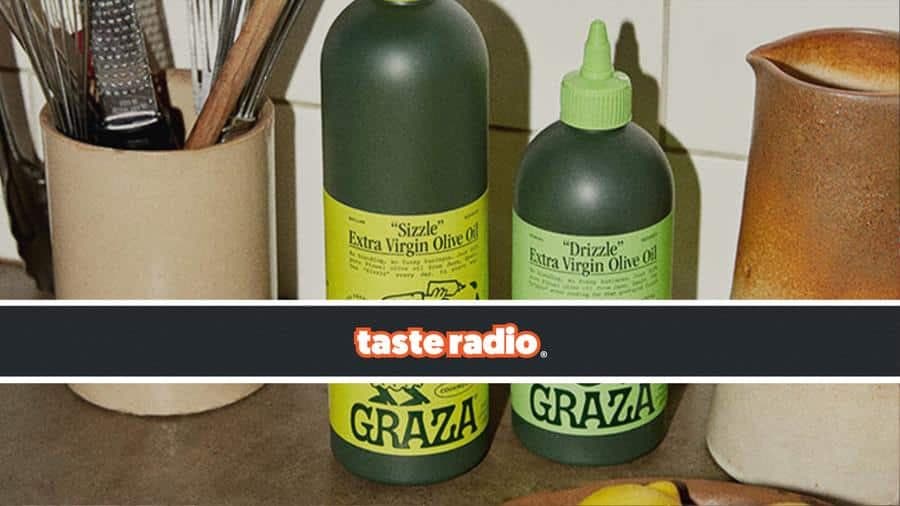
Occasional derision, however, is fine with co-founder and CEO Andrew Benin. Being aligned with one of the world’s most popular social media platforms is a good thing, he says, and should be celebrated.
Since its debut, Graza, which markets extra virgin olive oil sold in “sizzle” and “drizzle” varieties, has been a constant presence in the pantries and kitchens of Instagram, YouTube and TikTok influencers. Virality has helped the brand generate millions of dollars in direct-to-consumer sales and supported its presence at national retailers, including Whole Foods, Target and Walmart. According to a recent CNBC report, Graza expects to bring in over $48 million in gross sales by the end of 2024.
We sat down with Andrew for a conversation about how Graza has inspired authentic and fervent enthusiasm for its products on social media, how the company has maintained relationships with influencers “at scale” and how taking a bet on the upside has guided its demand planning strategy. He also explains why he describes Graza as an “early team-led company” versus a founder-led one and shares his nuanced perspective on profitability.
Transcript
Note: Transcripts are automatically generated and may contain inaccuracies and spelling errors.
Speaker 1 [00:03] Hey folks, it's Ray with Taste Radio. Right now, I'm honored to be sitting down with Andrew Benin, the co-founder and CEO of Graza. Andrew, great to see you.
Speaker 2 [00:13] Great to see you too. I saw you at, at Expo West. You were, you were on the move. You were interviewing people on the go, but now I see you in your, your nice little office. I like
Speaker 1 [00:21] it. It is our nice little office. I wish we had a studio set up at Expo West. It would make things a lot easier for us, but it's not that kind of show. You're always on the go.
Speaker 2 [00:30] I'm sure you can get a brand to sponsor your studio at Expo
Speaker 1 [00:34] West. Are you offering us studio space, uh, Andrew? I mean, I,
Speaker 2 [00:39] I, I, I know a guy.
Speaker 1 [00:40] OK, well, let's connect after, uh, after we hop off the mics on, on who that guy is, because I think, uh, our accounting department would love to hear more about that. So the last time we spoke, uh, virtually anyway, was when Graza got off the ground, essentially. It was in March of 2022. You joined us for an episode of Elevator Talk, which is a series that highlights early stage and disruptive brands in the food and beverage business. I recall your hair was a little bit bigger. Uh, your, your video is a little bit choppier. Things have changed in terms of your AV, but things have changed quite a bit just for Graza as a brand. And I, and I want to talk about one thing in particular, which is The New York Times. A year ago or a few months back, uh, you were in Graza was in the New York Times because of a scribe that you posted on LinkedIn, uh, that was deemed by many to be fair, uh, as controversial, and the New York Times covered that controversy or what people deemed as, as controversial. But last week, The New York Times rated Graza, or described Graza as the best overall olive oil that you can buy in a grocery store. So things have kind of come full circle in a way with the New York Times, which is kind of awesome.
Speaker 2 [02:03] We love the New York Times. It's funny, it's hard to assess which rating systems or which ratings agencies are legitimate. You almost have to value which ones have the consumer's trust and like the New York Times does, and we were unaware that this was taking place. So at least there's some. Uh, a genuine, you know, curiosity on their behalf to procure products that way brands like Graza, we don't actually have control over what they're testing, right? When a retailer asks you for a sample, you have some control over what you're sending them, um, but, but this was just, I guess, them picking up a product on the shelf and loving it meant a lot.
Speaker 1 [02:47] You had no idea your PR team did not send any product. It was nothing like that.
Speaker 2 [02:51] No idea. 0.
Speaker 1 [02:53] What's been the impact? I, I, I gotta think, uh, you're, you're probably inventory is low at this point. Uh,
Speaker 2 [02:59] we're stocked where things have, things have changed on the inventory side also, um. I think the impact is that kind of validation reverberates around the omni-channel business, right? Like there are the New York Times, like they're linking out to our squeeze bottles to Amazon because I think the commission structure with Amazon carts is so aggressive, but then they're linking directly to our site for the refill cans, so we have seen an uptick in traffic. And then I don't know, I think a retailer or our buyers feel empowered that they're carrying this product that is getting national recognition and recognition for what's inside the bottle, not just the beautiful brand that it is. So I don't know, it's all good.
Speaker 1 [03:47] What's inside the bottle you would think is the most important thing, but my first experience with Graza was as a very convenient option for olive oil that I didn't know I needed. How did you come up with this idea? I mean, clearly, and everyone knows this, you know, people have been using squeeze bottles for some time, but when did you think that there was going to be a big opportunity for a brand like Graza in the package that you have, the package that you're most known for?
Speaker 2 [04:16] Um, you know, it, it was, I actually worked in the line at restaurants, used olive oil in squeeze bottles, and it didn't click at that point, nor years later. The kind of founding story of the package that we decided to go in was. A shower, uh, using a Doctor Bronner's bottle. Also shout out Doctor Bronner's for launching their new refills. We love them. I hope you like it.
Speaker 1 [04:48] They also use olive oil in their products too.
Speaker 2 [04:52] Um, we, I was just showering, squeezing their soap that takes forever to get off. And had the moment, ran out of the shower and just in a towel and washed out all the soap out of this Doctor Bronner's bottle, filled it up with olive oil, and squeezed it into a large cast iron pan. Um, and then the next day, Photoshopped Bobby Flay YouTube video and a Gordon Ramsay YouTube video photoshopping this like obscure green object in their hand where there was a different brand of olive oil, this squeeze bottle looking thing, and it just happened. It came to life. It was like wow, like this is an opportunity here, and then as you're describing this initial experience with with the vessel, like we definitely benefit as a company from having A tactile experience that is memorable. I think other things that you open and use, it's hard to have a memorable tactile experience that is different from what you were used to in the past. So if I'm, you know, opening a bag of granola or cereal box, it's like it's, there's nothing memorable about that right now. You just do it because you have to access what's inside. Um, with Graza there's a memorable action, which is squeezing it into a pen, squeezing it into a sheet pan. It's a tactile experience that didn't exist before in this category, um, and it's resonating for sure. I think now everyone wants to talk about the functionality of it and the dosing and the control that you have and how it's superior to other things, but I think fundamentally, actually it's just This motion, like this squeeze and this motion has stuck with people, and they enjoy it and it feels empowering and it's an emotional tactile experience in the kitchen.
Speaker 1 [06:52] I think a lot of entrepreneurs have that moment that you were describing, not necessarily in the shower but have that moment where they're like, hey, I could create a brand, I could create a product that people will love because I love this idea myself. However, not everyone knows they want to be an entrepreneur until maybe that light bulb moment has. Did you feel that way? Cause I looked through your resume, Andrew, and it is, uh, you have one of the weirdest assortments. I don't know, weird is the wrong word, but you have one of the most diverse assortments of jobs I've ever seen. You worked at Warby Parker. You worked at, you staged at Gramercy Tavern. You worked at IKEA in Spain. You worked for Magic Spoon. You, I mean, you did all these different things. When did you realize, I mean, was it that moment you were in the shower that you realized you wanted to be, to be an entrepreneur or was it well before that?
Speaker 2 [07:42] No, I think it was well before that. I don't know if it was as much the desire to be an entrepreneur or the desire to actualize a vision, right? Like I've expressed in other interviews that I think entrepreneurs and and and artists and designers, we, we, we share and probably everyone actually shares this desire to express yourself. I think entrepreneurs use. You know, products or services to express themselves or express a branding vision that they had. It's just a, it's just a medium, I think. For me, I'd always worked for entrepreneurs and, and I think developed eventually a two-sided equation of it. One was appreciation for how much I was learning and the exposure that I had, and the other was envy, envy of, you know, them creating something, envy of. You know, them having a seat at the table for every decision, one that they earned. So combining this knowledge base and these experiences and channeling the energy from the envy, which became frustration, which eventually gets materialized as creating something if you're lucky, um, is is how it all happened for me. I don't, I think I actually When I was getting started on this and pitching it, I didn't even like being referred to as a startup or even an entrepreneur because it felt like it minimized, you know, that there are millions of small business owners that are just trying to materialize their vision, and there is Absolutely equal respect for, you know, a new landscaping business that puts up a website and hires a sales force to get clients. Like that's a startup and that's someone that had a vision whether for their life or for their brand or their business, and Graza was kind of the same way. It's just how I figured out how to express myself.
Speaker 1 [09:54] For sure, uh, but starting a landscaping company and getting known for your business and finding clients in a small town might be as easy as taking out an ad in a newspaper. I'm just showing my age by saying something like that, but you know what I mean. It's like, it's finding ways to promote your brand and, and get your name out there and get clients. In CPG, in modern CPG in particular, it's a lot more difficult, especially when you have to use social media, you have to work within that system. To highlight what you're doing and you did and Graza has done an amazing job on social media from the get-go. How did you think about that social strategy working with micro influencers early into the brand's development?
Speaker 2 [10:41] Yeah, I mean, I think it's a prerequisite to having success and having a strategy for it is necessary. I think that you also can't fit a, you know, square peg into a round hole, no matter what your budget is if the product is not right for the media that you're looking to distribute it upon. Um, Groza wasn't engineered for social media, but The experience of having a highly noticeable package that does not need to be the star of a video but can be a best supporting actor in a variety of environments has worked very well for us. So olive oil as a category is Uh, supporting actor in everything that people are doing at home, right? We don't need to have people say, I just discovered olive oil, and it's delicious. Our messaging is much more I'm making homemade hummus because that's so fun on my new food processor and I'm topping it with graza drizzle, and it's like, oh great, you know, I love cooking. I love hummus. I love drizzle, you know, it's not. There's not like 18 macros that we need to be read off a script, right.
Speaker 1 [12:05] Yeah, it's pretty intuitive on what olive oil is and how to use it. You don't need to teach people, but when I look at Instagram videos these days and I see cooking Instagram videos, whether it's a pro or just an at-home chef, I'm not even kidding. Like half the time, half the time or more, they're using graza. Are you sending products to these folks, or I mean, do you have direct relationships with folks right now that are, is, is, is broad in its scope, or, I mean, are people just buying your product and using it?
Speaker 2 [12:35] I think all of it, um. I think some of it is a pat on the back of how ubiquitous we've become in such little time. And the rest of it obviously is incredibly hard work maintaining relationships with people directly at scale, um, and then of course they're on YouTube, for example, we have been investing in sponsored placement because we believe in the audience that someone's able to garner, um, but I'd say. Paid versus unpaid for us product placement we're probably talking about 99.5% organic placement or we send product out to someone or they ask for a re-up because it's just part of their routine, uh, or you know 0.5% being paid placement that we procure and manage our own without agency support so I don't know, I mean. Think if you're in a boardroom of a, you know, massive CPG conglomerate, social media is probably what is being spoken about the most besides the bottom line and EBITA. I, I would think so. Like that's how important it is, um. But if it's not in your DNA and your brand's inception, I think, or in the early team that you built, I think it's going to be hard to feel natural for a bigger brand. For us it's been We've celebrated being called Instagram's olive oil and TikTok's olive oil, right? It's, it's almost Some people would call it demeaning, right, to be like, you're just the olive oil of the internet, and we're like, well, do you understand the power of the internet? That is a massive compliment. Like great that we got a New York Times tastiest olive oil award, you know, sold at scale at grocery. We feel that way. That's how our internal team feels about our products that we create. But the internet's olive oil, hopefully I want to keep that cap forever, you know.
Speaker 1 [14:44] I want to dive a bit deeper into social media. Uh, you were born as a social media brand, but how has your social media strategy, how is your team evolved since?
Speaker 2 [14:57] Yeah, I mean, we have a big brand marketing team, um,
Speaker 1 [15:01] and how big is big for you
Speaker 2 [15:03] brand marketers? I feel like we have 5 full-time brand marketers, um, out of 12 full-time employees, so that's
Speaker 1 [15:11] pretty big, yeah,
Speaker 2 [15:13] big for us, um. And how has it changed? Well, it's not, it's not as much as changing like the, the outreach strategy is consistent with how it's always been. I think it's the maintenance plus outreach piece necessitates more resources. Like if you're just spewing out product seeding requests to everyone, that's how you're going to be interpreted as a business. It's the same as like if you're spewing out emails to hundreds of people a day asking for support or it's like. Eventually being a bit more thoughtful is going to be reciprocated, um, so for us investing in resources and personnel to continue maintaining relationships that we've built and other personnel that are responsible for procuring new relationships and new opportunities has been the biggest change. Um, that's a commitment to the people that have helped us to date, um, and the people that we think can help us moving forward. Um, I think a lot of people in social media strategy. Uh, will view it as, you know, paying for someone's community, but multi-touch point marketing applies to building trust with the creator's community, so you have to have some longevity to your investment as well, which is scary for brands that can't miss, right? There are plenty of people, including us, that can't spend $100,000 and not have a return on it. Who's going to write that off in these days, you know. Um, so, so yeah, it's still scary. It's not easy.
Speaker 1 [16:49] Earlier you alluded to the fact that you have your inventory, your inventory strategy where you want it to be, or at least it seems like it's, it's much more solidified than it had been when you started out, and I think this is part of growing up as a brand, growing up as a founder, is understanding that you're running a business, that there's. An operation side to what you do that is as important if not the most important thing that you do. Um, how have, how has that changed? I mean, how have you thought about what we need at the time that you, that you launched, you know, how quickly you're growing, how do you, you know, how do you manage that process of rapid growth with, you know, at the back end of we've got to do all this stuff to be prepared to sell as much as we expect we can sell.
Speaker 2 [17:35] It's hard. Um, you're always taking a bet on the upside, which is challenging for your cash flow and your cash conversion cycles, especially in a commodity marketplace, especially if you don't have a comman model, um, but that provides a healthy pressure on us to deliver on our expectations. Um, so it's a double-edged sword, uh, and then how do we manage it? There is no silver bullet there. It is a lot of Reforecasting and reforecasting and reforecasting over and over and over again, um, especially once we have this much warehoused distribution at, at all the big distributors in the country, direct accounts that are picking up from our warehouse, uh, I think it's a forcing function because. I think you know that once you get into, say, a Walmart, like, There's less flexibility for a misstep, um, and you don't, we've been told as CPG operators that if there's a mistake with an account like that or if you don't succeed once you're in, then you're out and you're never getting back in. I actually don't think that's true, but it's part of the neurosis, I think that forces us to invest in demand planning resources, um, so. Yeah, I don't know, like, it's all just incredibly hard work. It really is, like, It is
Speaker 1 [19:04] Is sales forecasting, is demand planning, is that all happening internally or are you outsourcing? To support that type of long term business planning all internal. And is it, is it a function of you hiring the right people or is it just you learning along the way, you and your team?
Speaker 2 [19:26] I think those are the same thing actually, um, if you hire the right people at an early stage that are motivated and uh nimble enough to evolve to the organization's needs, those become your lifers and Uh, that's one of the most motivating parts of this is understanding that, uh, it hasn't been a founder-led company, it's been an early team-led company, um, and a lot of people have developed to address what the business' needs are, both from an operations perspective and a marketing perspective, right? Um, as shopper marketing gets You know, as important as brand marketing, like, The first default for us is do we have an internal resource that can learn quickly and learn in the context of Gaza and operations is the same way our operations and our finance team are. You know, quite overlapped and that works for us. So what about,
Speaker 1 [20:28] what about innovation? I think about this, this can that I have in my hand, which is your new or part of your new refill lineup of products. It's a 24.5 ounce can of your sizzle, and this was developed, I think it feels like with the Whole Foods buyer team that you've been working with for some time, is innovation a factor of what your retail buyers are asking for? How closely do you work with them when it comes to launching new products?
Speaker 2 [20:57] Uh, I mean, they definitely didn't ask for a 750 mL. So, uh, I mean, we work closely with them. Because I don't know, data talks, right? Um, so once you're prosperous in the data, you've allowed yourself the opportunity to work hand in hand with the retailers because there's less risk that the things that you put out. And that they accept aren't going to work. Um, you have a proof point, so. Um, a refill solution is something that I think everyone wanted retailer and online customer and the brand itself, even our branding agency early on, you know, was really pressing us on, do you have an NPD schedule for refills? We were like, guys, we don't even have a website yet, you know, step at a. One step at a time here, but we did start working on the cans, you know, 1617 months ago, so pretty quick after a launch, um. And it did hit. What was at that time and still remains our product development formula for evergreen products, which is, you know, is it fun? Is it functional? Is it beloved? Is it new and exciting? Is it different and most importantly, is it good for the oil? Um, so this checked those boxes really quick. Um, there are actually things that retailers have asked for. That we don't feel are the best for the oil but might be a pure economic opportunity and thus far we've pushed back, you know, we didn't launch cans to hit a certain price point or to hit a certain sustainability metric. We launched cans because they were perfect for what is a refill for our bottles, which we believe it, and because there were people that were not buying raza. Because they didn't want to buy anything in PET and now they can, so it was how many things can we address at once with this launch, and there were a lot.
Speaker 1 [23:07] Sales and velocity solve a lot of problems uh in buyer relationships, uh, and they enhance buyer relationships for sure. Um, are there any things, any other, you know, factors that have made your relationships with retailers and their teams better?
Speaker 2 [23:27] Yeah, I mean, I think because of the way that we need to purchase our olive oil and how intimate we are in our supply chain, we get viewed as another resource for them to learn about the category and what's going on. There's been severe fluctuations in Price of extra virgin olive oil and having that kind of direct line and dialogue to what Graza is seeing, what a retailer is seeing. Retailers have private label businesses that they're trying to plan around has been a new level of partnership that we've been able to establish, but, um, you know, we're, we're buying oil every single day, you know, so, um, we're on the farms every single month. We're in our manufacturing facility every 2 weeks, so. At the end of the day, I think It's different than I produced my products, you know, at this, at these two commands, and we qualify our components and our ingredients, and its services a need. It's just a different type of business, so with our buyers that has gone a long way for our category.
Speaker 1 [24:32] I've got to ask, you know, I read that G Graza is at this point profitable. There's probably less than 1% of all CPG companies that are profitable after 2 years in the market, you know, with all the fluctuations in terms of your supply and the inflationary pressures that you have and The, you know, desire to keep the cost of your end product at a reasonable price for consumers. How have you navigated all those different things, all those elements to get to a point where you are in a position to be profitable?
Speaker 2 [25:10] I mean my perspective on this, I think, is a bit nuanced, Ray, if I'm going to be honest, like, Being profitable and being in control of your destiny are different things. Um, I think there are plenty of businesses that don't need to use whether or not they were profitable in any given fiscal year as the main moniker of success. Um, so G Graza could just as easily be unprofitable by choice because Accelerated growth or market share that we wanted to capture was more important to us, so I don't think you should get too much credit for being profitable the same way I don't think you should get completely bashed for being unprofitable. If there's longevity to your business, that should be weeded out rather than, you know, is it in the black or in the red, um. For us, you know, we don't spend that much on marketing, um, we budget. Bottoms up, you know, and. And it works for us, but I don't know if it would work for somebody else. But
Speaker 1 [26:23] strangely, profitability has been one of the buzziest words in our industry for some time, and it's, it's investor driven. Have your investors been pushing you to be profitable?
Speaker 2 [26:33] They have not, no, I think there's a cyclical panic right now, and in 5 years things will change, where when I was at Casper, you know, top line was everything that everyone was talking about. I think that it's I think You should always be operating your business with profitability as a goal, um, but I think you should be able to make decisions that have a bit more longevity to them than do I need to. You know, cut anything drastically just to prove to my investors that I'm profitable or minimize my growth. Like Graza is a growing business, that's what's actually really important to us. Like this is up and to the right.
Speaker 1 [27:22] You are definitely up into the right and there are so many amazing things that are going on with Graza and I'm just so honored to have had this opportunity to sit down with you, Andrew, thank you so much for taking the time. Uh, I feel like we need a part two pretty soon, so maybe later this year we can make that happen.
Speaker 2 [27:40] Sounds good. I'd be honored as well.