Search across the BevNET CPG Media network including BevNET, Nosh, Brewbound, Taste Radio, Nombase and CPG Jobs.

Category Close-Up: CSDs/Soda - Product Showcase
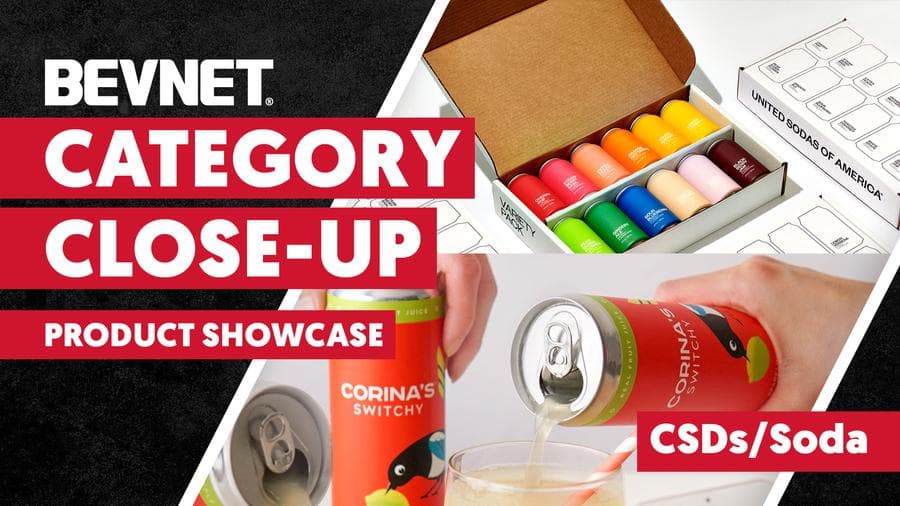
On this edition of Product Showcase, you’ll hear about the latest product innovations and brand updates from a host of brands and entrepreneurs, including:
Mary Pellettieri, President and Co-Founder Top Note American Mixers (2:20)
Marisa Zupan, CEO, United Sodas of America (10:03)
Corina Belle-Isle, Founder, Corina’s Switchy (18:04)
Adam Louras, Chief Mad Officer, LA Libations (26:03)
Jason LaValla, Co-Founder, Casamara Club (33:53)
Denis Detobel, Founder, Soda Bossa (41:07)
Transcript
Note: Transcripts are automatically generated and may contain inaccuracies and spelling errors.
Ray Latif [00:09] Hey folks, I'm Ray Latif, the editor and producer of Bevnet's Taste Radio podcast, and you're tuning into the latest episode of Bevnet and Nash's Category close-up series. This episode continues upon our deep dive into the business of soda and carbonated soft drinks. Yesterday, my colleague and Bevnet managing editor Martin Caballero spoke with a group of industry experts about how market trends in the overall business climate are shaping the CSD category. Today, Martin and I will be speaking with several entrepreneurs representing category brands about product strategy, innovation, and new products related to their respective companies. All right, let's welcome my colleague Martin to the show. Martin, how are
Speaker 2 [00:46] you? I'm doing great, Ray. How are you doing, man? I'm
Ray Latif [00:49] doing fantastic, fantastic. So, can you share a few takeaways from yesterday's episode about the state of the CSD category?
Speaker 2 [00:57] Sure thing. Well, a little bit differently, uh, as viewers will see, um, we, we kind of caught up with a couple of individuals and sort of packaging things together to sort of get a, uh, a different perspectives from around the industry. Um, but it was really super interesting. I think, I think this category clearly has been sort of, you know, had some, some challenges. Certainly the struggle with sugar as, uh, consumers kind of shift away from that, um, look towards healthier options, look towards options with more functional benefits and that kind of thing. So it was really interesting to see the category kind of go in different directions. Um, as I mentioned, um, functional being a priority for consumers. We've seen, uh, sodas sort of, uh, act as a vehicle to enter into that, um, avenue and sort of, uh, provide some benefits there. But we've also seen them kind of struggle a little bit with the competition with, uh, sparkling waters. Um, certainly that zero calorie flavored sparkling waters that we've seen really, uh, do a lot of growth, um, you know, is having an impact on this category as well. Um, so a lot of different topics that we touched on. Really interesting, I think too, it's, it's, uh, it's interesting to note that, um, flavor-wise, we are seeing a lot of interest in those kind of classic soda flavors that consumers are familiar with really migrate into other categories including sparkling water. So really interesting to see that there's definitely an appetite for CSDs and sodas, even the traditional ones, but maybe just not in the same kind of format, um, and maybe just, uh, looking for something a little bit different in terms of, uh, what consumers exactly want.
Ray Latif [02:20] All right, let's hear from our first participant for this episode of Category Close Ups product showcase. That's Mary Pelletieri, who is the president and co-founder of La Pavia Beverage Incorporated, the maker of Top Note American Mixers. Mary, how are you?
Speaker 3 [02:34] Great. How are you guys doing today?
Ray Latif [02:36] Doing fantastic. Thanks so much for joining us today. Tell us a bit about Top Note and what the brand is all about and what's new with the brand.
Speaker 3 [02:43] Yeah, sure. Um, you know, Top Note is the youngest, yet most awarded American craft mixer in the market. Um, we came out in 2017 and two weeks after we launched, we won a Sophie Award, um, for Best New Mixer, and that was for our Indian tonic water. Um, we've kind of struck out into this, uh, category specifically to bring a bit of a craft brewer's bend to the category. It's, that was my provenance where I came from. I worked for years at Goose Island Beer and Um, kind of have that mind still, and, uh, when I was pregnant at Goose, I decided, um, tonic water is icky, and I wanna, I wanna fix it someday. So, um, you know, when you're pregnant, there's not much to drink and there's not a lot of adult, uh, mocktail selections really to drink. At least there wasn't 18 years ago. So, I think, um, you know, this category just needed, um, a bit of more of a craft spin to it. And we started this brand, uh, just keeping that hat on all the time. So, when we launched, we launched with an Indian tonic water, a bitter lemon, and a ginger beer, all with a little bit different, um, spin on ingredients. Our Indian tonic water has gentian root in it, for example. And I know you're speaking about uh carbonate soft drinks needing some sort of, um, um, positioning in terms of, uh, what's good for you in it because that's what we're competing against and You know, these are old school drinks. Um, we make porttivo style sodas. That was really our ambition at first. We wanted to make mixers that tasted good on their own, but also equally are versatile mixed with, um, uh, spirits or, or, uh, distilled spirits, as well as, um, non-alcoholic spirits, juices, those sorts of things. And we, we are set out on that journey and we're doing pretty darn well, so.
Speaker 2 [04:33] Mary, I wonder if you could tell us a little bit about the Gena, the bitter soda. Uh, I'm not sure if I'm pronouncing that right, but, uh, really interesting product and your first limited release. Tell us a little bit about, you know, the concept behind that and sort of why the limited release.
Speaker 3 [04:46] Yeah, so we have 6 on the shelf right now, um, including, uh, 3 tonic waters, a ginger beer, a grapefruit soda, and a unique club soda that's, uh, low sodium. But we, we thought, you know, Bartenders are always looking for something new, a new tool in their, in their belt, um, and we're crafty enough to go ahead and just give them that. We're still small. We can still do small runs. We still have a lot of flexibility to bring new products to the shelf. And again, craft brewer head, head says, yeah, limited releases are fun. They definitely give a new sales energy to the brand, and, um, we sell mostly through alcohol beverage. Distributors, so we do need to give them something kind of new and cool to walk into bars and restaurants. Coming out of COVID, we thought, you know, it'd be fun to give bartenders something that makes them think of travel, we think of travel, um, and we thought of the Spritz. Um, this is kind of our version of a non-alcoholic Spritz or Spritz builder. So, um, Genta, I just have kind of a pilot bottle here. It's a dark tonic. It's got a lot of. Gentian root in it. And gentian is what gives that nice, um, bitterness to the, to the flavor, but it also gives, uh, similar to, um, Swedish bitters, it gives you those digestive enzymes, and it's great pre-meal. So, we, um, we thought, why not give something to the market that has a, a bit of that feel of traveling, um, but also a great tool for bartenders right now for low-proof, no-proof cocktailing.
Ray Latif [06:18] Mary, it feels like what you're doing is coming out with a product that's defining a whole new set. Um, how are you working with retailers to create that set and what are you doing to, uh, amplify your messaging within this sort of new segment?
Speaker 3 [06:34] Yeah, good question. We, we actually work mostly with liquor, uh, the liquor channels. So, liquor channels is a lot more innovative. They're gonna be a lot more flexible and fluid with their shelf space than, say, your traditional grocery. Um, so we're, we're coming out with a single. It's just a bark pack. Um, and as a single, um, it can be, you know, pushed into a grab and go selection or it can be put into, you know, on the shelf next to the mixers without being in a four-pack or anything like that. Um, it stands out very uniquely because it is, um, it's gonna be a foil label, it's gonna be pretty, um, higher price point, and the whole point is to get people to try something different. Um, I see a big gap right now in the category in the sense that there needs to be more. Uh, more, more of a look at this non-alcoholic or no low category. Um, and mixers play a big role in that. Um, if you look at, uh, I mean, I looked at what you guys just reviewed recently, and there's, there's a lot of mocktails in there, you know, there's, there's things coming out which, um, people can, um, take home and just serve in, in place of a cocktail. Or concurrently, there's also these ready to drink, uh, low-proof cocktails. It's kind of a mash-up world, you know, and mixers sit right in the middle. So, I would love to see just more brands, more diversity, and um opportunities for consumers to try something different when they come home. They wanna have a nice drink, um, maybe with or without alcohol, and just have that moment to mix. Um, there's a whole set there that's, that needs to be, uh, vetted out, I think. Uh, and liquor is a great way to, a great place to do it in my sense.
Speaker 2 [08:11] Well, it's interesting, you know, uh, uh, mixer, a little bit different type of product than maybe a traditional CSD, but I, I'm curious of your approach to kind of, uh, sugar and just, you know, working with that, formulating with that. Um, clearly, you know, it's, it's one of the things that consumers are concerned about, but does that sort of sugar reduction, does that sort of fit with what you guys are trying to do and if so, how?
Speaker 3 [08:32] Yeah, you know, we're, we're always innovating. Um, we're looking at new opportunities for, uh, sugar reduction. We kind of put our tent pole in the ground saying we're gonna be mid calories, so none of our, none of our, um, products right now are really high in calories comparatively to the more commodity goods that are out in the market. We Certainly don't use high fructose corn syrup or anything like that, GMO free, fun stuff, but we are, um, we are, we are looking at things like fiber-based sweeteners or sweeteners that, um, provide, um, a nice sweetness, but, and maybe some body, but not, not a high amount of calories. Um, it's very challenging to make a cocktail without sugar. And any bartender will tell you that. Um, but the bartender will also tell you, you can't take sugar away. Once it's in the drink, it's in the drink. Um, so, I do challenge, um, um, you know, the other brands that are on the shelf that are, that are calling themselves mixers to really Watch the sugar levels because I do think, um, it, it's always something you can add to a cocktail, you can't take it away. And consumers are drinking more dry. So that's, that's where um we are leaning that way. Going for no sugar, that might be difficult with the current sweeteners on the market.
Ray Latif [09:48] Well, uh, it's exciting to see the, uh, innovation that you've come out with, Mary, and, uh, hope to see it on the shelf, uh, in my neck of the woods in the near future. Uh, in the meantime, thank you so much for joining us, and, uh, please stay in touch. Thank
Speaker 3 [10:01] you. We'll get you some samples soon.
Ray Latif [10:03] All right, on to our next guest for this episode, that's Marisa Zupan, who is the CEO of United Sodas of America. Marissa, how are you? Hey, I'm great. How are you? Doing fantastic. USA United Sodas of America. That is, tell us a bit about the brand.
Speaker 4 [10:19] Yeah, well, it's actually a great time to ask because yesterday we just had our first year anniversary, uh, which was very exciting for us. Uh, it's been an absolutely phenomenal year and not the year we expected. If you think back to what was happening a year ago. Today we're in the middle of the rise of the pandemic across the country, so as a young brand that was just coming in, we really had to, you know, really, really make sure that we are pivoting hard, you know, and making sure that our brand mission came through at the same time. Uh, at United Sodas, we're essentially on a mission to reimagine what people think of as the soda experience, and that is everything from what's in the can, uh, as you mentioned, Martin, in the beginning, sugars have been an issue for the category, so we formulated everything with, um, organic plant-based sweeteners that bring the sugars down to 3030 calories and 6 g of sugar. We're organically sweetened. We're all natural flavors, and we have 12 of them. So we launched really with this platform of variety and choice that makes up the experience that we have in terms of the brand. We're very sort of a fresh new take on minimalist branding in soda. There isn't a lot of words shouting at you or anything. We're really just focused on flavor and, and, and as a nonfunctional proposition, we often say flavor. Our function. We're a flavor forward soda brand, uh, for, for modern consumers. So we've done all of that. We've built that this year. Uh, we started with D2C, and the experience for us was really driven and the, and the sales for us was really driven through our theme packs and our variety packs, which means consumers were buying us for the sheer amount of choice, right? And the unboxing experience, as you can see here, it's very rainbow and colorful, uh, and so that has been amazing for discovery and sampling. Um, through online means, which was so incredible during the pandemic when, you know, a lot of distribution was disrupted. Since then we've really taken off in sort of premium cornerstone markets like Airwan, Central Market, Harman's, and then expanding here in the Northeast. I'm in New York right now. That's really our backyard and, um, and the retail expansion has been really interesting because we've seen As things have opened up, hospitality and food service being a huge opportunity for our brand, which I think is also driven by the nonfunctional aspect, right? You don't really need to think about it if you're putting it on a menu. It's just, it's a soda. It's there for flavor. It's there to be paired with food. So it's been very, very interesting to ride, to ride the wave this year.
Speaker 2 [12:59] Marisa, it's awesome. I love what you guys have done in sort of unapologetically embracing soda for, for what it is. Um, and it's really interesting. We've seen, um, you know, I think in recent years, um, maybe some people leaving the category to go to sparkling water. Are you finding that now that people are, or so where is this, your product sort of fitting in their routines and is it replacing anything or complementing anything?
Speaker 4 [13:21] It's a great question. I think that, you know, consumers are really, really smart when it comes to making sure that they're always finding the next best thing for them, and I think sparkling waters had an incredible rise and a role in people's lives. But if you drink too much sparkling water, you know, you're kind of missing that more pop-like experience. Experience, right, that soda excitement and the flavor forwardness. Um, so we're really slotting in to be sort of that non-functional option that, uh, allows you to have a flavorful experience without, um, you know, sit sitting somewhere between your traditional sodas and your sparkling waters. Uh, so it's sort of an experience with no, no compromises, if you will.
Ray Latif [14:05] Marisa, uh, you mentioned that you're attempting to get into food service and hospitality, um, and I'm assuming the product would be cold when you're serving in those venues, um, but most of your business is in multi-packs right now, so how do you build a soda brand around this idea of, uh, future consumption? What are the advantages and what are the disadvantages?
Speaker 4 [14:26] That's a really good question. Right now, most of our sales online are through the multi-pack format, but our retail sales are still through, you know, cases of single flavors, and that means that we are really driving trial right now as we move forward and we bring the multi-pack experience in store. That's a very interesting proposition because operationally multipacks are more complex when you, you know, you have to pack multiple flavors into one. So we're really working on answering the question, how do you bring variety to the multi-pack experience in store in a way that makes sense for the customer and excites their imaginations and their, their trial, their need for trial and sampling, and something that makes sense for us as a brand. So we haven't made that transition yet in retail, but we're working on it, and we think that's a huge frontier to, to, uh, to accomplish on shelf.
Speaker 2 [15:18] Marisa, you talked about sort of building the variety and you guys already have a pretty, you know, widespread, uh, range of flavors. What is sort of the runway for how many skews you guys can sort of manage or sort of what you had in mind in terms of the, the range of flavors?
Speaker 4 [15:33] Yeah, well, a little insider here. When we, when we launched sort of the concept of it in our minds back in the day, we thought, oh, we're going to have 50 flavors, you know, for all 50 states. So that was, that was the high bar in the beginning of our vision. And, and I would say we've, we've definitely gotten more nuanced in the way that we approach that. For us, 12 was beautiful because it was symbolically something that could fit into a 12 pack, you know, your traditional soda 12 pack. But also has that sort of spectrum and allows for traditional flavor profiles like you mentioned, Martin in the beginning, uh, you know, your cherry, your orange, your grape, but then also on the other side of the spectrum we have our more modern flavors like young mango and sour blueberry, right? So there's many different entrances in and as we expand, we want to make sure that we keep that variety. Different flavor profiles as well as keeping up with the trends in the market in terms of new innovations we are developing some things right now and I wouldn't say we had a cap to the number of skews that we'd ever introduce, but it certainly is something that we want to make sure what we do introduce falls strategically in line with bringing more people of a variety of different flavor preferences into the brand.
Ray Latif [16:52] Marisa, we have, uh, we've got about a minute left, um, you know, have you seen any connection between the rise in interest, uh, among consumers for sober, curious lifestyles and that of your product and brand?
Speaker 4 [17:05] 100%. Uh, it is something that people talk about all the time. Mixing our flavors together as a sort of, um, mocktail experience has been very exciting to watch, um, people experiment with. We definitely have seen interest on menu, as I mentioned in food service and hospitality for us to be the non. Alcoholic option on a menu full of really exciting cocktails, right? So a lot of people who are, you know, wondering, you know, how, how do I keep my nightlife exciting if I'm, if I'm embracing a sober lifestyle, that's something that we can bring to the table. So we have seen a lot of interest from that angle.
Ray Latif [17:47] Outstanding. Well, uh, Marisa, thank you so much for taking the time to be with us today. Uh, great branding, and, uh, I can't wait to see how far the brand goes or where the brand goes from here.
Speaker 4 [17:57] Thanks. Thanks a lot for your support and looking forward to, uh, to talking to you guys soon.
Ray Latif [18:02] Absolutely. All right, moving on to our next participant, it's Corina Belle-Isle, who is the founder of Corina's Switchy. Corina, how are you? I'm great, Ray. How are you? Really nice to see you again. Yes, indeed, it's been a while. Uh, you were in our office and came by our office. Uh jeez, I feel like that was 2 or 3 years ago. It was almost 2 years ago. Yeah, yeah. Well, it's great to see you now virtually notwithstanding, um, but for folks who aren't familiar with Corina's, uh, tell us a bit about the brand. Sure, well, Corina's Switchy was founded on the benefits or the principle of the benefits of drinking apple cider vinegar. Um, I'm a 9th generation Vermonter, so vinegar has played a significant role in my life over the years, and I have made uh various recipes of Switzel, what we call traditionally witel here in Vermont and um a lot of them were delicious and functional, but they weren't great. So I um, I added my my love of flavors, my love of experience. Our brand to Karinawy to create this delicious sparkling juice with just a splash of apple cider vinegar. So it's, uh, we don't really consider ourselves a switch we're a switchy sparkling juice, real juice with a splash of apple cider vinegar.
Speaker 2 [19:17] Karina, it's, it's such a great product and, uh, and you know, as you mentioned, sort of it has a different kind of, uh, foot in different areas, I would say. How do you sort of explain to consumers like maybe sort of when is the right time to use this? What's the right thing to pair it with or just sort of give them a little more education around, you know, this product that has both function and refreshment?
Ray Latif [19:36] That's a really good question. And it was, um, it was both a challenge and an opportunity for us to put the right language on the can and part of this process of rebranding is we've just launched this beautiful new bright red can with, with language that really just says what it is. We want to be totally transparent. We're a sparkling juice with a splash of apple cider vinegar. No one knows what a switchy is, right? Um, but the flavor profiles, the fresh juices. And the splash of apple cider vinegar, it's been really surprising to us the different uses, as you say, you know, how, how do you, how do you encourage people to use it for different reasons, but what's exciting is that people are finding their way to it naturally. So I, I just dropped off a case locally to this big old garage owner, great guys, like I have one every single morning. That's how I start my day. And then I get emails from people who aren't drinking alcohol anymore, um, especially pregnant women who want to have that cocktail experience and want to feel included in, in bars and restaurants. They love it because of the fresh juices and that little bit of apple cider vinegar gives you, gives you the mouth feel of alcohol. So you, you're not drinking a soda and you're not drinking a seltzer. It's something really, really unique and the vinegar helps us achieve that. So the uses are quite interesting. One of the biggest surprises to me, and we've never branded this way or marketed this way, was The number of folks who are using Karina's as a mixer. And um you know, you can imagine like I've never, I've never ever sold Karina as Karina's as a mixer. Um, but it's a natural mixer because, um, you know, you're at a bar and you're making a cocktail, you want the freshest juices. And we use only fresh lime juice and only fresh ginger juice and we get our ginger directly from farms in, um, in Brazil and we juice it fresh, uh, fresh frozen. So that makes us a very easy, very nimble cocktail mixer. And then, and right out of the can, it's a Moscow mule. It's a mocktail mule, essentially.
Speaker 2 [21:44] Well, just to follow up there real quick, uh, in terms of, you know, how people are finding it. um, you know, how are you sort of, uh, explaining this to retailers in terms of where this fits in their set or, you know, where they should put it on the shelf?
Ray Latif [21:57] Yeah, so when we first launched about 2 years ago, we launched in a bottle and um you could see the sediment because there's natural sediment in, in the beverage like an unfiltered beer with an unfiltered soda. And folks were putting us because it looked like a real healthy drink. they were sticking us in the healthy section, you know, with other real craft beverages. With our new branding, it's bright and eye-catching. We're fitting really nicely into the uh cold case right alongside other better for you sodas. And we've been there for about a year now. And so that's very exciting. And then because we are shelf stable, both, um, you know, with shelf stable ambient temperature for a year. Again, retailers are, are finding that Corina's fits nicely into the um Into the mixer section as well as into the, the, so we're selling 4 packs essentially in the ambient sections of grocery stores. And that bright red can is just grabbing people's attention. It's, it's been really great. Our rebrand rebranding has given us a significant boost. I mean, folks are are training I can almost like a piece of artwork, right? I mean, we are a single SKU. We have one brand, we have one flavor, but we're getting multiple, multiple, um, slots in the cold case and also in the ambient shelf, uh, the grocery stores. Corina, do you see an opportunity for Karina's in food service, um, and are you looking at ways to align the brand with eating and drinking? I'm sorry, eating, uh, and dining? It's, it's very interesting when COVID hit, um, we at that point had about 50% of our consumers, 50% of our customers were on-premise consumption. And that was very exciting for us because as I said, people were using it as a mixer and um a great non non-alcoholic alternative. When, uh, COVID hit, of course, we lost a lot of that, but as things are starting to, um, sort of come, come alive again, folks are finding us in food service. They're, you know, we're seeing reorders, etc. so we're seeing that market grow. But the most exciting news I want to share with you is with this rebranding, we have just been taken on by Kahi Distributors, which is really huge for us, very exciting, as well as Chuck's Finer Foods. So we have been self-distributing for the last probably year or so. And have amassed a significant number of customers. We can't do it anymore. But um the branding and the uh being true to our our ingredients, being true to the fresh flavors has gotten the attention of some great distributors. So we're really excited about this.
Speaker 2 [24:41] Congratulations on that. And I, uh, Karina, I did see, uh, the drink on the menu. I was in Vermont, uh, a couple of weeks ago, so that was nice to see, uh, on the menu there as well. So, um, real quick too, uh, you know, as you guys scale, you know, it is, as you mentioned, just that one skew. I mean, you know, considering just the way that you've developed so far, is there, is, are there further skews on the horizon? Is that something that you need to sort of take your time with? Is that a priority?
Ray Latif [25:07] That's a really good question. Corina's because it has classic flavors, classic lime, classic ginger, and, and an aromatic spice, all those flavors combined make for uh what we call a switchy. Before COVID, I had 3 other flavors on the launch pad. I retrenched, we pulled back and I thought, let's give the consumers what they're looking for and that would be a low to no calorie version of Corina's. Presently right now we're 100 calories. We lowered from 130 down to 100. So that's what's in the launch pad right now as a, as a no calorie version of Corina's. So sort of a regular and diet. Well, when you're ready to release that product or at least introduce it to the trade, uh, please let us know and, uh, hopefully we can have you back at the office. We're, we're in Newton now, so just down the street, but, uh, if you can make the trip, we'd love to have you. I'd love to see you guys. I'll bring you some more samples. Thank you so much, Karina. So great seeing you and please stay in touch. All right, now let's speak with Adam Louriss, who is the VP of brand creation and operations for LA Libations, the creator of MadVine Diet Cola. Adam, how are you?
Speaker 5 [26:13] Great. Always good to see you, Ray.
Ray Latif [26:15] Always great to see you as well. It's been a long time since the COA days, but I'm excited to hear about MadVine. Uh, tell us a bit about the brand and, uh, what's new with it.
Speaker 5 [26:24] Yes, so MadMine is really brand new to the market, but it's gaining traction already, you know, our hypothesis around it. At LA Libations was that, you know, nobody has really reinvented the Diet Cola category probably since its inception. I know lots of people have given a stab at it, but not with all of the modern tools and ingredients that are available now new to us that can make these products much more for in the now. So, the brand itself is resonating with millennials. You know, my, my younger sister, it blew my mind when she told me she's Never actually tasted Doctor Pepper before. And those are things that like are just completely weird to me as a beverage guy. Um, so you're up against kind of a new world of beverage where, uh, you know, the new consumer coming along doesn't have a brand per se that they're entrenched with. So it's an opportunity to really rethink the category, introduce, you know, the traditional flavors that people like, but find ways to make them more modern for the consumer.
Speaker 2 [27:24] Now, Adam, uh, you know, it's really interesting to see how, you know, sodas and sparkling waters are sort of interplaying with each other. And with this type of product, you know, what, what is this sort of product, uh, how is it positioned and why is it, you know, a better choice for consumers than, say, a zero calorie flavored sparkling water?
Speaker 5 [27:41] Yeah, you're right, good question. I think that the two categories are blurring in many ways, right? I mean, ultimately, a diet soda is a sparkling water with sweetness, right, because it's using modern sweeteners that have no caloric value. Um, so in many respects, they're interchangeable and I think that plays on why you have to tweak the soda idea for this modern consumer that's probably grown up more in the sparkling water, you know, category in those products. Um, Matt Vine lives in a world where we're, we're going after the big players, the, the Diet Cokes of the world, you know, in, in a, in a meaningful way with a price premium. So we kind of fit into a new, a new spot. And what we bring to the table is what we call nothing to hide, you know, we're, we're putting out the formula on the can. You can read the recipe of the product for the first time. What makes up a cola, you know, and we're using real extracts, real ingredients, nothing to hide on it, no, no trickery, no, no gimmickry, on the, on the labels themselves, and trying to just kind of democratize the entire idea of a soda for this modern consumer.
Ray Latif [28:48] Adam, you mentioned that your younger sister had never tried Doctor Pepper before. Um, how are you attempting to bring younger consumers to this category? What's resonating most with them?
Speaker 5 [28:59] Well, some of it just has to do with the design and the brand theme. You know, we're, we're going with a very retro 80s style theme, and actually the, the, the reason behind that was, was kind of funny. It goes back to 1984. It's when Coke and Pepsi made the decision to change their formulas for the first time in, in the history of the brands and use things like high fructose corn syrup. Um, and so our, our idea was, what if you could go back to 1984. Make, you know, the soda that should have been, not the one that we ended up with. And, uh, and so that's why the theme is back to the 80s. It's kind of back to the future. What if we could recreate that, those moments and we thought that was really fun. Coincidentally, the 80s theme and the, the fun theme is, is really popular right now, right? Jordans are all back in fashion. The original Jordan ones from the 80s, um, you know, you have shows like Stranger Things that are bringing. back pop culture. And it's pretty cool because for people like me that actually grew up in the 80s, I love 80s stuff because I grew up in the 80s and for people that are in the younger generation, the more modern consumer, it's just cool right now. So, we're kind of in a, in a unique place right now where it's a win-win and I think that's what's making us stand out on the shelf. We're bucking the trend of the, the traditional, very stoic uniform of a diet soda and doing things that are really wild and, and fun and loud.
Speaker 2 [30:13] Adam, I wonder if you could talk a little bit about the channel strategy for Mad Vine. Um, we know LL Libations, um, working closely with Molson Coors, um, and, and collaborating and stuff like that. So how are you sort of, you know, uh, approaching that strategy and really taking on these, uh, big incumbents?
Speaker 5 [30:29] Yeah, you know, it's, it's, it's an interesting dichotomy between, you know, the modern consumer shopping at places like, you know, Arawan, and then, of course, the traditional consumer at more traditional grocery. And, you know, when you're working with LA Libations and Molson Coors, there's no doing things small. We have to do things really big and, and this is the, the challenge with a brand like this where you still have to earn your, your stripes, so to speak, you know, in, in the smaller stores, more regional stores where our consumers are shopping and Ladder your way up to those big stores, but we have to do it on a very compressed timeline. And so I don't know if there is a playbook for how to do that perfectly. There probably isn't one. I mean, if I were an entrepreneur truly on this brand, it would incubate a lot longer, probably in the natural channel in some of the smaller, um, smaller regional stores, but we have to go big at some point and, and, and play our hand at a, you know, a big chain like, you know, a Publix or a Wegman's, um, sooner than later and see if we can get that traction. You know, our hope is that, you know, You know, my, my sister will convince my mom. My mom's a Diet Coke purist, and she loves Diet Coke, and I don't think there's any flavor I could come up with that's going to convince her otherwise. But you know what, my sister can convince her, uh, just simply because that's what, that's what sisters do. And, you know, she'll say, Mom, when I'm coming home, I don't want that, I want this. And if we can get that to be, you know, the same mantra across the board, I think for all moms and daughters and sons and dads, then I think we have a chance at, at tipping the scales in a, in a broad consumer way.
Speaker 2 [31:55] Well, just to follow up quickly on that, uh, are, are you guys, um, you know, in terms of the configuration, um, are you guys in coolers? Are you guys on the dry shelf? What's the really the best place to drive that trial in this early phase?
Speaker 5 [32:07] Good question. We're trying to attack both. So we, we sell in an eight-pack, and the eight-pack can be broken down into singles and they're all, they're all uh UPC'd up and, and decorated for selling as individuals. So you'll see us all over Southern California in both the 8-pack, you know, on the shelf, dry shelf, and you'll also see us in the cold boxes as, as individual cans.
Ray Latif [32:30] Adam, uh, we've got about a minute left. Um, have you seen consumer attitudes towards CSDs and sodas change significantly during the pandemic?
Speaker 5 [32:40] Yeah, it's a, it's a great question. I, I think, I think definitely. I mean, I think that, uh, we saw this across the board in, in almost every category where people are leaning a little bit more towards indulgence than maybe they ever had in the past. I think, uh, we're all at home, we're looking for some, I don't know, a vacation in a, in a, in a can, so to speak, and, and some way to escape the monotony of being stuck at home. And, you know, sodas, you know, while they're being villainized for their sugar, we all find some sort of happiness. from our childhood or something by drinking, you know, stuff that made us happy back in the day and we overlook maybe the caloric intake or the grams of sugar. So, so certainly, uh, that's definitely happening. But now as things are, I think, are re-emerging, we're all going back out into the wild, you know, I, I, I think that it's gonna, it's gonna start to change back to the way it was, which is people are, you know, now that you're seeing me, I want to look good again. I want to look fit, and I think diet, diet sodas and CSDs are gonna, gonna have this big surge right
Ray Latif [33:36] now. Outstanding. Well, Adam, uh, this has been great speaking with you. Uh, good luck with convincing Mom Louras, uh, to start drinking, drinking more Madvine. I think you're gonna be successful at some point.
Speaker 5 [33:49] Many thanks, guys. It's great to see you.
Ray Latif [33:51] You too as well. Thank you. All right, let's move on to our next guest. That's Jason LaValla, who is the founder of Casamara Club. Jason, how are you? Hey, I'm doing well. How are you doing? Doing fantastic. Thanks so much for joining us today. Uh, tell us all about Casamara Club. What do you guys do?
Speaker 2 [34:08] Cool. Um, so we are the makers of the world's most refreshing leisure soda, um, which is sort of what I like to call our drinks because, um, we're making really a Um, you know, we're using the infrastructure of the existing carbonated soft drink world to make what are now, what I now think we're calling this category alcohol-free alternatives, and so we make high-end botanical club sodas that are as much for a night out as they are for taking a break from work. That's really interesting, uh, you know, just that idea of the leisure soda and creating that occasion. How are you sort of guiding people to, you know, explain how and when to really get that experience? So that's, that's a great question. It's been top of our mind for the last year in particular. When we launched back in 2018, we were looking almost exclusively at a strategy of getting into the sort of key accounts of top top bars, top restaurants, you know, Michelin stars, James Beard Awards, and really counting on creating a community of bartenders, chefs, beverage. Directors, people that could talk about this internally and be excited to put it on their menus, so you might be, you might see where this is going, where about a year ago, a lot of, a lot of those spots shut down and so we pivoted pretty quickly to you know really trying to meet demand online and as part of that really leaned into a PR strategy. We are. We're using, you know, great PR folks that are, I'd say, more experienced in the world of, you know, restaurants, hospitality, leisure, and so I think that gives us another angle to really come in and move this, move this market around a little bit. Just to follow up quickly there, um, you know, obviously, sort of hopefully coming to the tail end of this pandemic. Are you guys sort of looking to, um, it, has it been a big strategy shift? Or, or are you guys looking to get back into that food service area, you know, assuming that when that gets back online or are you guys now looking more towards online and grocery and that kind of thing? Yeah, so that's a great question, and we are, um, I think we're fortunate enough to feel like we now are in a position to be able to do both, you know, we spent the last year really getting our efficiencies down online, so that now we're looking at ramping back up a sales team for on-premise and Hopefully as a part of that really start to seed the natural chains, you know, we're starting to talk to some of the, some of the smaller and mid-sized ones, but not really making that a focus of the strategy as much as we are focused on, you know, really getting back into those bars and restaurants.
Ray Latif [37:14] Jason, can you talk a bit about package type? Um, you know, you have bottles, cans. What opportunities have you seen open up for you and for the brand, uh, with cans in particular?
Speaker 2 [37:26] Yeah, so, uh, we were in bottles for I think almost, uh, no, a little over 2 years before we launched the cans, and so we got very used to, um, The weight of glass and just the additional cost and expense of freight, the UPS shipments to get it out to consumers, um, and so what's been most exciting to me about cans is that it has allowed us to offer free shipping for the first time, to be able to cover shipping entirely in the cost of the product, um, in a way that we just can't do with with glass bottles shipping out of a single warehouse. I think it's also allowing us to, you know, really, really push this as an outdoor product, something that you can take to take to the pool, to the beach, on a hike, you know, really meet people where they are, no matter what type of, you know, whatever, whatever leisure activities they're getting up to. Jason, I wanted to ask a little bit just about like the formulation. I mean, it's really interesting cause you guys are, you know, they're soft drinks inspired by the flavors of Amaros and Impertivos. When you guys are formulating, is the idea to recreate those? Is the idea to sort of take a spin off of those? What's the right fit for you guys? Right, so the way that I was looking at it really was, and it was so interesting to hear Adam talking about this because you know if they were looking to the 1980s, we were really looking to the 1880s and the history of soda as something that you would get from your pharmacist and Really trying to take the flavor inspiration from this kind of call it an esoteric world of Italian before and after dinner drinks that By design, I would say a lot of our customer base knows nothing about, and so that gives us both the freedom to play with the form a little bit and take those flavor inspirations and spin them out in new ways that might be exciting to, you know, our, our key. Consumers, these beverage directors and chefs, but to do it in a way where we can also introduce people to something new or more often than not let their own imagination, you know, look at the ingredients, look at the labels, and make up their own mind as to what this really means to them.
Ray Latif [39:57] Jason, where do you go from here? Where does the brand go from here in terms of innovation and brand extensions? Yeah,
Speaker 2 [40:03] that's, um, oh man, uh, so we are working on quite a few things right now. Um, we're working on a, a new line of, um, you know, another 4. we, we currently have 4 flavors, Amaro inspired. We're working on another 4, that we're hoping to, to have ready by the end of the year, but In the meantime, part of what we're doing is trying to build out some collaborations with those same chefs and bartenders at a very small batch facility here in Detroit. Um, so that we can work with the work with our customers and make them, you know, bring them into sort of the equity of the business, um, so yeah, we're we're really excited about collaboration and creating really um high-end alcohol-free cocktails using this sort of platform that we've already built.
Ray Latif [40:57] Well, we're excited to see that next evolution. Jason, thank you so much for being with us today, uh, and let us know if we can help in any way. Cool, thanks, Ray. Thanks, Martin. Thank you. All right, our next guest is Denis Detobel, who is the founder of Soda Bossa. Denis, how are you? Very
Speaker 6 [41:13] good. And you? Thanks for accent for taking me today.
Ray Latif [41:16] Well, thank you so much for joining us. Tell us about, uh, Soda Bossa. What's different about the brand?
Speaker 6 [41:23] Well, what we're trying to do is like we started 5 years ago and basically we developed a flavor that, that wanted to be on the healthy aspect and always thinking about all those trends, but the name itself here in the United States represents soft drinks. Every time I say soda, people go to soft drink. So because of this COVID situation and the slowdown and everything that everybody has been trying to figure out, it permit me to revise uh what a cultural movement it is to be in the solar world. So when you look at numbers, still, the majority of the market are drinking soft drinks. And the brand is soda. So I say to myself, you know what, yeah, we have a healthy product. Let's go in the big, with the big boys. Let's play with them. So we decide to reevaluate and revamp everything, all our efforts going towards sodas.
Speaker 2 [42:18] Hey, Denis, very, uh, it's nice to have you here. Uh, I wanted to talk a little bit about that, you know, uh, embracing that soda because, you know, you guys have a product which has characteristics of soda, but yerba mate, guarana, it's definitely has functional benefits, energy benefits as well. Why is soda the right fit for you guys versus being an energy drink or a functional drink or maybe a different positioning?
Speaker 6 [42:40] Thanks for, for asking this question. Uh, the yerbamate is the only one that has basically a higher, uh, caffeine content. Uh, most of the other line of beverages have only 30 mg, would be the same thing as having a, a Coke. So, so the idea of the yerbamate is because, you know, my origin is Uruguay and you know, a little bit about yerbamate for us is cultural, so I wanted to bring a little bit of Uruguay into, into the, into, into the brand. And at the same time, yerba mate is starting to take off here in the United States, so it's a little bit of a, of a difficult situation. Why just keep yerba mate and how about the other flavors? So the dragon fruit and the guarana are basically looked as a different flavor, but it still has a little bit of caffeine, but it's more of a soda because of the name.
Speaker 2 [43:29] Well, just to follow up on that, Danny, I, I wanna, you know, as you mentioned, um, you know, yerba mate is part of South American culture, but it is becoming kind of popular in an RTD format here in the United States. Um, is there, you know, um, is there something that, uh, is, you know, missing from the market, um, in terms of that RTD, uh, yerba mate, or is there something that sort of, um, that you see as sort of a white space where you can sort of improve or add a different dimension to the category?
Speaker 6 [43:57] I think it's a very difficult question to answer because first of all, we are a small company and there are people out there with much more data that can back up things. I can tell you more in terms of, uh, you know, of a founder of a small company and doing it, you know, research in terms of local markets and traction and reaction. So, I do believe that yerba mate, the, the name is out there, but people don't even know the exact flavor of yerba mate. So people are drinking something without even knowing the real taste. So, but if you go to an Argentinian, Uruguayan, southern Brazilian, Paraguayan, or even Chilean, they will tell you that the yerba mate that is here, with the exception of a couple of grants, is not yerba mate. So I wanna leave it in there. Uh, what I did with Soda Bossa and yerbamate, I tried to combine guarana, which is the Brazilian berry that most energy drinks have, with the yerbamate. But the reason why I'm here today is because Soda Bossa now it's in the platform with a big player. So, who is the big boss in the, in the soda world? Coca-Cola, right? So I decided to bring the bossa, the female version of the boss into the market. So that's basically what I'm bringing behind. So we are revamping our website. We are bringing a little more of coloring, we are changing packages that should happen the second semester. And uh we are bringing a new flavor which is citrus, which is basically a yellow lemony flavor. Always with a guarana taste and flavor in the back, but we're trying to create something new that without having to prove people if we are healthy, if we are better for you, or if you are functional. No, we are soda, period. It's up, it's up to the consumer now to basically take it and say, hey, I like it or not. Uh, it's, it's simple in a way, yet very complicated.
Ray Latif [45:48] Yeah, I, I can imagine it is complicated, um, but having the right retail partner can sometimes help, uh, knowing who the consumers are and what they're looking for in that particular retailer. That being said, do you see Soda Bossa as, as a brand that would do well in Latin, uh, focused markets. Um, what is your channel strategy and, and how are you trying to reach those consumers that are most interested or would be most interested in your brand?
Speaker 6 [46:16] Uh, I'm, once again, we're a small company, so Southern California is, where we, where we basically concentrate everything. We did try 3 or 4 years ago to establish ourselves in Florida and because of the distance and wrong representation and we had only one skill, so it was a little bit more complicated. Uh, first of all, I want to see how the people react with the new packaging and with the new flavor. So ideally, I mean, we're trying to, to impress or have a, a good vibe, vibe with the female Hispanic, uh, that basically want to cheat here and there with the soda. But when you do that, we try, since we only have 35 calories, it's like a guilt-free experience. So we are not 100% clean, we are 35 calories, we have real sugar, 8 g of sugars, but it's among what's out there in the soda world, I think we are placed quite well.
Speaker 2 [47:10] And as you guys look to drive trial and, and create awareness, are you mainly looking to be sold in the sort of, um, you know, the coolers and sort of single cans? Are you looking to be in, in packs or how will people be able to buy you?
Speaker 6 [47:24] Uh, No, because of the pandemic and everybody's starting to open up. I mean, our focus is, is has been Amazon and so we are revamping everything. We are revamping our website. We're creating a new design for the cans, very similar to what we have now, but we, with a little bit of a twist to, to embrace a more coloring, more appealing, uh, and the packaging, it will be on cartons, uh, apex, so it's something else that, that will change and hopefully, you know, it'll be attractive to consumers. Uh, it's very early. I mean, things are barely starting, so it's very hard for me to give you a straight answer after being a year of, of drama, problems. I mean, you guys know better than me. I mean, you'll hear from everybody. I'm just one company that faced all these difficulties.
Ray Latif [48:11] Well, Denis, hopefully a lot of those difficulties are going to be fading away soon and we're excited to see the development and growth of Soda balsa from here. Uh, in the meantime, thank you so much for joining us and please stay in touch.
Speaker 6 [48:24] Well, thank you so much, Ray. I keep listening to your podcast and Marty, I really appreciate your questions. You guys are amazing. Thank you so much, huh.
Ray Latif [48:32] Thank you very much for saying that. Thanks for joining us.
Speaker 6 [48:35] I think 00.
Speaker 2 [48:37] Well, that concludes this month's episode of Category Close Up Product showcase focused on sodas and CSDs. I'd like to thank all our guests once again for joining us and chatting with us about their latest products. I'd like to thank our AV team behind the scenes for putting this show together. Big thanks to them. And big thanks to Ray Latif, my co-host. So we will be back in July with our next episode. It's gonna be focused on sports drinks, so be sure to tune into that. Remember, you can access all of episodes of Category Close Up for both Bevnet and Nosh with a subscription. So please check that out if you haven't already. My name is Marty Caballero on behalf of everyone here at Bevnet. Thanks so much for watching and we'll see you next time.
Related Videos
Category Close-up: RTD Cocktails
In this episode of Category Close-up, we explore the trends and business dynamics impacting the spirit-based RTD cocktail segment. Guests: Brandy Rand, Ferron Salniker, Cara Kamenev.
Category Closeup: RTD Cocktails (Bonus Interview) - Natalie Accari, VP RTD & Convenience, Pernod Ricard
Following up on our panel conversation on RTD cocktails, we spoke with Natalie Accari, VP of RTDs & Convenience at Pernod Ricard North America about how the format fits into top-line strategy.
Category Closeup - Allergen-Friendly Food and Beverages
In this Category Closeup, our NOSH editor sits down with a panel of CPG founders, executives and experts to take a look at food and beverage trends in the allergen-friendly (or free-from) category.
Category Closeup: Web3 in CPG
In this edition of Category Closeup, a panel of CPG leaders looks at web3, including how brands can use NFTs, why conglomerates are jumping in, and how companies can address sustainability issues.