Search across the BevNET CPG Media network including BevNET, Nosh, Brewbound, Taste Radio, Nombase and CPG Jobs.

Category Close-Up: Yogurt - Product Showcase
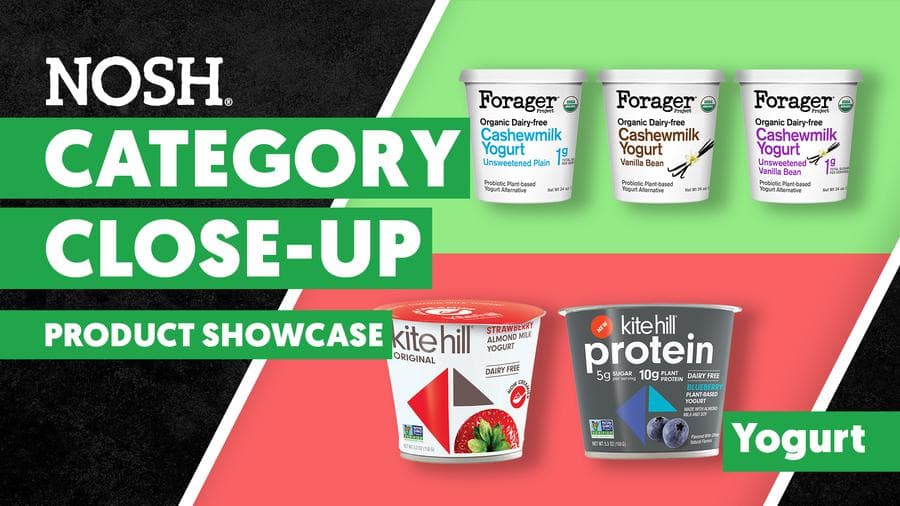
During yesterday’s Expert Analysis, our panel of industry authorities discussed the consumer behaviors, investment activity and retailer attitudes that are impacting the set. Now, we’re hearing from the brands. In this episode NOSH editor Carol Ortenberg and reporter Erin Cabrey will interview executives and brand leaders from both emerging and established yogurt companies to discuss individual company strategy, and how changes within the category affect new product development and marketing.
During the Product Showcase you’ll hear about the latest innovations and updates from brands including:
- Ellenos
- Bellweather Farms
- Nounós Creamery
- Anita’s Yogurt
- Kite Hill
- Forager Project
Retailers, investors and other industry executives can learn more about a wide range of brands and products by accessing our Category Closeup: Digital Download -- a collection of digital images and sales sheets from yogurt producers.
Transcript
Note: Transcripts are automatically generated and may contain inaccuracies and spelling errors.
Carol Ortenberg [00:08] Hi everyone, I'm Carol, the editor of Nosh. You're tuning in to the latest episode of Nosh's category close-up series. This episode continues upon our exploration of the yogurt category. Yesterday, in the expert analysis part of this show, we spoke with a group of industry experts to examine the market dynamics shaping the category, including trends, consumer behaviors, investment activity, and retailer attitudes. As we discussed with our experts, yogurt is a unique category with a focus on flavors and recent shifts in both pack size and ingredients. But today we're going to switch to the other side of the equation, chatting with executives from yogurt brands about both their product and business strategy. Joining us today is Nosh reporter Erin Cabry. Aaron, how are you doing today? What are you looking forward to hearing from these yogurt brands? I'm doing good. Um, we have a great mix of brands here today, um, from yogurt's made with cow's milk and sheep's milk to almond milk and cashew milk, so we have a lot of variety, um, and with that comes different perspectives on where, uh, the yogurt category is now and where it's going. Um, so I'm excited to hear from everyone. Well, I think that's a great jumping off point for our discussion, and with that, let's get to our first guest for the episode. Joining us is John Tucker, the CEO of Elinos. John, thanks so much for being here today.
Speaker 2 [01:34] Uh, absolutely thrilled to be here. Good morning, guys.
Carol Ortenberg [01:37] John, can you start by telling us a little bit about Ellenos and what's new with the brand?
Speaker 2 [01:43] Yeah, absolutely. You know, I think it's really important to first, um, acknowledge the fact that it really all started back in 1999 when um Yvonne Klein, one of our co-founders, she was a flight attendant, and she was flying back and forth to Australia, and she stumbled across this amazing, amazing yogurt. She absolutely fell in love with it. She convinced her husband, Bob, to go over and figure out how they could bring that product to, to To the US and um 15, no, I'm sorry, 20 plus years later, lo and behold, um, Elenos has become a, really a, just a fantastic, um, iconic brand here in the Pack Northwest and is growing very quickly uh beyond. Um, Elenos, what makes it so unique really is that it's a handcrafted Product. It is uber premium. Takes 5 days to, to strain the product. All the ingredients are very carefully selected, and the, the purees and the compotes that we use are all produced in-house. We believe that, um, as a result of that, we've created a, as I say, an uber premium experience that really delivers on uh taste. I would also um note that um we, we feel as a result of this, we, we've really created this white space, um, that's this uber premium category. It's truly disrupting the category by offering this uh premium and indulgent, uh, product, and as a result of that, it's creating new occasions throughout the day. It's not just for breakfast anymore. It's great for snacks. It's a great alternative, um. To desserts, and the beauty of that is that it has, comes with it, that health halo that is so associated with yogurt. So we're really excited about where we're going with it.
Carol Ortenberg [03:39] I think you bring up a great point around the day parts of yogurt. That's, you know, kind of a quest that a lot of brands have tried to go after, saying this can be something that's part of your lunch or a snack. I think, you know, how successful brands have been with that messaging has varied. So, what have you seen works well to get consumers to think about yogurt as more than just, you know, part of their breakfast?
Speaker 2 [04:03] Well, I, I think it really actually quite honestly starts with our package. It's very simple. But when you look at the product, it's just super inviting. You know, we, we don't hide it behind any of it's clear package. It really invites the consumer to say, wow, that looks absolutely delicious. I've got to give it a shot. I think that's one of the, the key attributes, um, is the simplicity of our packaging. That simplicity brings with it the, the message of indulgence, um, taste, and that draws a lot of consumers to our product.
Carol Ortenberg [04:38] Can you talk a little bit about um your approach to flavors. I know you recently launched um the brownie batter um flavor, so can you talk a little bit about um kind of how you approach your new flavor launches and um how you kind of balance like the experiential and things like that.
Speaker 2 [04:52] Yeah, that's, that is an absolutely fantastic question, Erin, and it really starts with the fact that, you know, we were born out of a retail scoop shop. You know, uh, you, you may or may not realize that we have a retail shop down in Pike Place, which is downtown Seattle. That's where it really all began. And as a result of that, our founders have really done a fantastic job of experimenting and trying all kinds of new concepts and, and flavor ideas. And as a result of that, um, we just have this broad spectrum of, of ideas and, and, uh, flavor concepts that, um, we love bringing to the marketplace. I think. You know, when you look at our, our portfolio, um, we have some fantastic Um, mainstays like our marion berry, and our, and our lemon curd. But then you look beyond that, and you say, look at what they're doing with the seasonal, um, flavors that they have. Key lime pie, brownie batter, um, as, as we mentioned, um, an iconic flavor here in the Pack Northwest, and really becoming iconic um throughout the West Coast is our pumpkin pie, uh, which is just fabulous, and we release it. Um, every, every fall. Um, this coming summer, we're going to be releasing a strawberry shortcake, which I think is absolutely dynamite. And I've told everybody on the team, Guys, I'm, I'm absolutely convinced this is going to be my number one favorite going forward. So, a lot of it comes from, um, that experimentation, that learning that we do down at Pike Place. It's a natural place to try new things, get consumer feedback, um, and it's just been fantastic. For um our team to develop these new concepts and, and flavor ideas.
Carol Ortenberg [06:35] Now we've heard a little bit about during COVID, it's sort of shifting the pack size that consumers are looking for in yogurt. How have you seen, um, you know, the pandemic change buying trends, uh, in retail, uh, when it comes to Elios?
Speaker 2 [06:53] Yeah, I mean, uh, it's clearly the pandemic has had its impact, um, in terms of where consumers are turning. What we're seeing is a shift from single-serve to multi-pack, or, or, I'm sorry, multi-serve sizes. So, um, consumers are moving away from our 53 and our 8 ounce to our 16 ounce and our 24 ounce package. We're seeing, we're seeing a fair amount of that, but, um, Um, our mainstays continue to do very strong and do very well, but we're pleased to see that the consumers are adding these larger pack formats, uh, to their baskets.
Carol Ortenberg [07:29] Are the consumers who are kind of going after that larger pack size already sort of loyal Eleo shoppers, or can brands, do you think actually drive trial and attract new consumers with a larger format, uh, product right off the bat?
Speaker 2 [07:44] Well, that's a really great question, and I, and I think that we've always believed that. At the end of the day, um, bring consumers in at a lower price, smaller offering. It's really less risk averse. I mean, it just reduces that risk. And, and so I think that, that's a way that we ultimately believe that we're bringing consumers into the. Franchi is by offering a smaller size and a smaller price point. But once they fall in love with the product, which many, many, many do, um, they quickly, um, scale up because of the, the price-value relationship that occurs at the larger sizes.
Carol Ortenberg [08:21] Well, John, thank you so much for sharing a little bit of Ellenos with us today.
Speaker 2 [08:26] Uh, absolutely my pleasure, and, um, I'm always here. Anytime you want to reach out and chat, I'll be more than happy to do so. You guys take care.
Carol Ortenberg [08:35] Next, we're going to hear from one of the emerging players in the strained yogurt section of the category. Joining us is Steven Ayanu, the co-founder of Nuno's Creamery. Steven, great to have you here. Tell us a little bit about Nuno's. Yeah, thanks for having me. Uh, Nunos was started by my godfather and myself, uh, 8 years ago. Uh, nounos is a Greek word, it means godfather, and, uh, we wanted to bring a small batch handcrafted Greek yogurt, uh, from our little village in Greece to the states, and, uh, and share it with everyone. So Steven, um, 8 years ago, uh, the yogurt category was already getting to be quite crowded. So what, um, did you think you could offer that was different than what was already on the shelf, and what was the white space you identified, uh, to sort of target? Yeah, we definitely saw a space in the market for premium handcrafted, uh, specialty Greek yogurt. Uh, up until the point when we started, there was just a commodity, high volume, uh, mechanically strained yogurt, and, and we really wanted to bring a, uh, uh, a method of making yogurt that our grandparents used in our village in Greece that didn't exist here in the states. We use cheese cloth to to strain our yogurt. And uh it it results in a in a very velvety, unique texture uh when it comes to Greek yogurt. Yeah, I always love visiting your booth at the trade shows because you have these beautiful, uh, bundles of cheese cloths, uh, straining yogurt kind of on display that I think speaks to the process, uh, so wonderfully. Um, but how do you go about changing the consumer perception in a category that sometimes is very commoditized? How do you get them to see past the, you know, 10 for 10, uh, promotions and say, OK, I'm gonna spend a little bit more on this item? Yeah, so, uh, literally we got them to see through it, uh, by packaging our yogurt in glass pots. We were importing glass pots, I want to say almost 9 years ago from Europe, uh, and we really, uh, You really, you know, paved the way for, for glass to be used in, in the yogurt category, uh, in the United States. So the glass not only showcases, uh, the premium aspect of, of the, the brand itself, but it, it also, it as like a marketing vehicle for us in the very beginning, our glass container was, was our marketing. We didn't have to do demos or deep discounts. Uh, you never saw our brand 10 for 10 on the shelf, uh, and, and consumers just gravitated towards our brand because it, it really just stood off the shelf. Well, speaking of that packaging, um, I understand you guys have a new brand identity and some new packaging rolling out, so can you tell us a little bit about that and what it'll look like? Yeah, uh, up until the last year, my business partner John and I have done everything in-house, and, and that's even designing and, um, and And branding of of the Nunos uh brand. Uh, we decided that we needed to bring in some outside, uh, perspective to the brand, and we hired an agency, a marketing agency, to help us design a, uh, freshened look of Nunos. Uh, we, we didn't want them to stray too far from the ethos of the brand, being that we're Greek and it's a Greek brand, uh, and they really helped showcase our, uh, branding. Uh, tying it to the, you know, Greek architecture and, um, the aesthetic of, of the Greek islands. And are you keeping the um signature glass jars? Yes, of course, 100%. Well, during a time when uh we can't travel very much, I think packaging that has a unique aesthetic and can kind of evoke, uh, the experience of going on an adventure is very appealing to consumers right now, uh, even more so than normal. Yeah, that was definitely the inspiration we wanted to, uh, we wanted to embody the essence of traveling to Greece or to the Mediterranean where you just hold our jar and I think that we really captured that this time. Well, I personally am excited to start seeing that roll out on shelves, and thank you so much for joining us today. Yeah, thank you for having me. All right, well, next up, we are going to be joined by Anita Shepherd, who is the founder and CEO of Anita's Yogurt. Anita, thanks so much for joining us here today. Thank you for getting me out of the factory. Yeah, um, I love any chance like this that we have to connect, especially because there's no trade shows this year, you know. Steve and I always find each other at the trade shows. This is like the closest thing we're going to get this year to like, being able to share what's been going on. So thank you all for making this happen for us. Well, I certainly miss seeing you guys at trade shows as well. Uh, for those folks who have, who have not maybe seen you on the floor of a trade show or heard of you before, tell us a little bit about Anita's. Yeah, Anita's is the original coconut yogurt. We were founded in Brooklyn in 2013 is when we hit store shelves. I actually was making yogurt for a few years before that as a vegan pastry chef, giving it to my chef friends, selling it at pop-ups. 2013 is when we officially hit store shelves. The product is still made in Brooklyn in our own dedicated facility. Which I am happy to be out of today talking to you, but usually I'm down there with the machines whirring and I'm, you know, my office is right there. And yeah, it's a very small company, but we're distributed from coast to coast. It's small batch. And I'm very excited because this year we finally got Fair Trade certified. We were the 1st 100% Fair Trade certified yogurt anywhere in the world. So our coconut comes from Sri Lanka, and I'm able to show our fans who's, uh, who's making the coconut milk, where it comes from. It was a dream of mine from when I first started experimenting with yogurt. I wanted to know where it came from. I wanted to know how the people were treated. That's such an important part of my values, you know, I've been vegan for 14 years. It was just this missing piece. What are the ethics behind the manufacturing of my main ingredients? There's no additives, it's just coconut and live cultures. So now that missing piece is a part of my company, and I can tell the whole story all the way from the tree. To the cup. Well, speaking of that manufacturing process, I know you've had a lot of lessons along the way. What has it been like being, you know, one of the pioneers in a category trying to use a new base that maybe, you know, is harder to just go to a co-packer and have them produce, uh, a coconut yogurt for you? The last time I spoke to you guys was at Fancy Food 2018, and I had just started co-packing my product, and that ended in spectacular failure, a huge financial loss, basically wiped away all the profit, all the savings I had for the business, and I ended up just going back. To my little factory in Brooklyn and dusting off the machines and getting cranking again there, I think for a product like mine, I don't use any additives. There's no cassava, there's no pectin, there's no agar. All of the success lies in the how, how it's made. It's such a simple recipe. It's basically two ingredients, coconut and lime cultures. All of the success depends on like the TLC we put into the product. That was not. Available to my product at a co-packer. I remember being there and freaking out about what time they were going to break the yogurt, or about, you know, how it was being mixed, and they just looked at me like I was crazy, because there's no time for them to give that much attention to detail. So, I've been very limited in how much I can grow, but to me, it's so much more important to maintain The clean label to maintain the integrity, integrity of the yogurt and make it myself where I know I can provide that like insane amount of TLC that goes into the making of the product. I know Steve knows what I'm talking about because he's doing this, you know, Amazing, like small batch yogurt, family recipe. It's a similar kind of vibe. Um, going to a co-manufacturer, you, you don't have as much margin of error when you're not using any additives. If I was putting like, uh, tapioca or cassava in it, you have a way bigger margin of error. But, um, for me, That kind of like, you know, side trip into co-manufacturing has just proven to me how much I need to stick to my guns when it comes to the recipe. The brand that's been in the non-dairy space for a minute now, um, how are you kind of approaching the different trends that you've seen come and go? Do you kind of like to keep the product kind of timeless, and how do you kind of, um, integrate what you're seeing in the category and all the different trends that are popping up? Yeah, I'm so glad you asked that because, you know, having done this since 2013, I've seen brands come, I've seen brands grow, go, I've seen a lot of brands come from nowhere and explode and are everywhere. And one thing I need to do to differentiate myself is to stay simple, to stay clean, to stay pared down. I'm not going to add any kind of, like, you know, probiotic, you could call trendy, non-dairy, you could call trendy, but this is something I created because I've been vegan for most of my adult life, and probiotics are really essential to my health. It's not a trend for me. I'm not Um, I don't have investors. I'm not in this to just make a gajillion dollars and then sell. I want this to be a lifelong brand for me, and as such, I need my customers to be lifelong customers. So, I'm trying to create kind of like a new household staple. For a future where people want to eat less animal products, want to eat less dairy, they want to stay healthy. So, um, there's, I'm never going to put like prebiotics in it, or, you know, like, call it a superfood. I kind of just want to keep it clean, keep it simple, keep it approachable, and focus mostly on the quality, the taste, the texture before, um, Anything else, yeah. You do have this really lovely rich texture. You know, there are certainly many plant-based brands in the yogurt set that struggle with achieving that. Um, and have, uh, attempted reformulations, or as you mentioned, you know, just have left the, the subcategory. If plant-based. So how are you telling consumers, you know, if you've tried another plant-based yogurt, come try mine. Like we're different, because that's kind of a, a hard message to explain, uh, in a, in a space like yogurt where it's this wall of products all in cups. Yeah, so, mainly, we don't tell them. We let the product do the talking, and we rely a lot on word of mouth, and we rely a lot on our social community. Fortunately, you know, being a small brand like mine, I don't have dollars for big marketing campaigns or even trade spend to offer deals, so my marketing is based around lucky breaks, you know, we had Tom Brady. It on his show feature us in a smoothie that he was making. And fortunately, the container was turned halfway around, you can see half of the name. And so I put that everywhere. So any little opportunity like that, that I can get, um, I, I just have to kind of get on that because I, I don't really put a lot of messaging on the product. I want to keep it very clean and very classic. And we, we don't have a lot of opportunities. Like in Whole Foods, we have a shelf talker because it's a local vendor that kind of comes with the package. But for other retailers, where we would have to pay extra to get those kind of bonuses, um, financially, it's just not going to happen for a small brand like mine. I'm still a 100% owner. So, yeah, it's a lot of word of mouth, it's a lot of, um, kind of cross pollination into food media, into, uh, food websites, chefs. I started out as a chef, so I rely a lot on chefs that I love using it in their Videos or in their products. So that's something I'm seeing a lot more of, is fans turning to their favorite food media personalities to kind of give them clues as to what, um, ingredients might work in the recipe or in their smoothie. Great. Well, I'm excited to see how you continue to grow within the category, uh, as one of the, the elders of the plant-based space, and thank you so much for joining us today. Of course, thank you. Joining us next, we're going to shift from strained yogurt to plant-based yogurt and hear from Rob Leibowitz, the CEO of Kite Hill. Rob, thanks so much for joining us today. It's great to be here. Yogurt has always been a really large part of Kite Hill's focus, but how you've approached the category and with what products has evolved over time. Can you start by walking our audience through, uh, you know, how Kite Hill's thoughts on yogurts have evolved and what your current portfolio looks like?
Speaker 3 [23:03] Sure. Um, look, yogurt is a big part of the Kitehill portfolio, um, always has been, um, always will be. And we've seen yogurt as meeting a number of consumer need states, not just one. So it's not just one format. Um, yogurt is for everyday use. It can be used for indulgence. It can be used for high protein, low sugar diets for those who are either sports-oriented or fitness-oriented. Um, it can be used for kids or for people who want dessert-type items like with ambient toppings. So you can imagine that consumers see it meeting very different need states and Um, Kite Hill is, um, a platform brand, doesn't meet only one need state, and as you know, we compete in yogurt, spreadable cheese, cream cheese, sour cream, butter, pasta, and other categories. But within yogurt, it's our intention to compete with within every need state that consumers want plant-based, great tasting yogurt. And so our approach, starting with the biggest need state, which was everyday use, was our Kite Hill Original yogurt. And then from that point, we've launched kids, which is in the market today in tubes, Greek, which is a neat state unto itself. Uh, and, uh, today, I'll, you know, I'm proud to announce that we're launching Kihill protein yogurt. Uh, it'll be available this spring, starting at Whole Foods, then across the retail trade, and that's really a first of its kind. 10 g of protein, 2 to 5 g of sugar, um, made with almond milk. Soy protein and fava bean. It delivers an unbelievably smooth texture, great eating experience, and we just can't wait to get it into the market. And then, as manufacturing assets are available, cause some of these are a little more complicated, like putting ambient toppings together with um regular yogurt, we're gonna launch into the other categories as well. And so, just really excited to continue to expand the brand.
Carol Ortenberg [25:07] Now, as you think about each of these need states, how do you make sure that you're designing a new product that is additive to sort of the Kitehill consumer base versus, you know, cannibalizing from another segment you have represented in yogurt already?
Speaker 3 [25:24] That's why we use need states, Carol, um, you know, we feel like an indulgent need state where our, uh, Kite Hill Blissful competes is pretty different than our original yogurt, you know, where mom might be buying it for her kids, you know, herself for everyday use. And so, these need states really are different. Times during the day and for different occasions that they might be used. And the closest one you might see would be, we sell Greek yogurt today, and it's much more of a plain, unsweetened vanilla, unsweetened market. And it's got a particularly um dense texture that people use for mixing. And uh to juxtapose that, Archive Hill protein yogurt is, um, it's a smoother texture. It's gonna feel more like regular smooth, creamy yogurt. Um, we're gonna be offering it in flavors like blueberry, and strawberry, and vanilla, and, you know, in addition to unsweetened for those who want it that way, but it's gonna be eating more solace, right? Which is maybe without putting it into a blender with fruit. And so that's a, just a different need state. And, and so the more we can make sure that these products are uniquely different from a texture, format format, from a protein, sugar content, you know, consumers will see them as different, and we also have to label them appropriately so consumers can really navigate the differences between our product offerings.
Carol Ortenberg [26:50] I know that you guys recently reformulated your um original almond milk yogurt. So can you talk a little bit about um the decision behind that, um, and was the goal to kind of make the product, the consistency as close as possible to dairy-based yogurts? Well,
Speaker 3 [27:04] thanks for asking about our new and improved original yogurt. Um, like, in the plant-based yogurt world, um, All the products, including ours, are not perfect. I mean, it's an emerging field of delivering great tasting consumer experiences. And so, every day we're trying to find better ways to deliver a really smooth, great tasting product that people just delight in and want to come back to. And so, we've really made two improvements. First of all, we've made our product smoother and creamier than ever. It would have the same smoothness and creaminess as regular indulgent dairy yogurt, which is what consumers really want in any yogurt. And then secondly, we reduce the sugar content by about 25% on average, down to 12 g per serving, which is something that, you know, more consumers want now than ever. And so, you should expect us at Kite Hill to always be looking at every offering we have and continually be looking to make improvements, and we do it based on what, you know, we hear consumers want, and we have an active and a loyal consumer offering. Um, they have no, um, there's no secret about what they want and they tell us all the time in social and digital media, and we listen.
Carol Ortenberg [28:20] You are one of the few yogurt brands that plays across categories. You're not just in yogurt. So how does this tie into your larger portfolio and how do you kind of think about the consumer throughout the store and, you know, converting them from maybe a Kite Hill yogurt consumer to your pastas and your cheese products?
Speaker 3 [28:42] Well, I think the common thread, I probably need to start at the beginning, is we were founded 10 years ago um by a chef, a cheese maker, and biochemist. And the fundamental idea they had was if we make great tasting plant-based foods with an accent on great tasting, then people will come back and they'll trust us. And so, and so we have, and we've remained dedicated to that. And so, while we do compete um really well in the yogurt business, we're the market leader in plant-based cream cheese, and we're among the leaders in all the categories in which we compete. And, and with that comes trust and an expectation that when you try a Kittel product, it's gonna deliver. And so, word of mouth, digital media, um, Those things all help us. And when you have a great experience with Kite Hill butter, and you're in the yogurt category, you know what to expect, and you try it. And so, you know, this brand has broad shoulders, and over the last 10 years has really expanded into these categories and the consumer trust that goes with it. is the same trust that will enable us to expand even beyond this. Like our expectations are to compete in many more categories, uh, and to really become dear friends with many new consumers over time.
Carol Ortenberg [30:04] Well, Rob, we're excited to see how you continue to expand upon that brand promise, and thank you so much for joining us today. Thanks so much. All right, next we have Liam Callahan, the co-founder and CEO of Bellwether Farms. Liam, thank you so much for being here. Tell us a little bit about Bellwether and its history.
Speaker 4 [30:25] Well, Bellwether Farms is a long series of what ifs and why-nots, really. Back in the mid-eighties, uh, my mom bought sheep as lawnmowers, uh, hadn't planned on getting into dairy production at all, fell in love with the animals, and within a few years, a friend of the family suggested we research milking them and making dairy products. Uh, we didn't realize Uh, how much dairy around the globe was made from sheep's milk, but not in the US. Uh, we, in 1990 built the dairy. It was, I just graduated from college, and we started taking our cheeses at that time to farmers' markets. Uh, we have since launched a line of yogurts. It's been about 17 years now since we first got into yogurt production. Um, but the, the main thing that we found is that consumers were relating to the quality of the milk. Sheep's milk is just a wonderful milk to make cheese and yogurt from. Uh, it's allowed us to continue to grow and, uh, to push out our distribution across the country. Um, really focusing on the ultimate yogurt experience is what we like to call it, because when someone is buying a yogurt and, and sharing it with their family and eating it, they're looking for something that's very creamy with a delicious flavor, uh, you know, uh, it has that. Uh, traditional yogurt flavor, uh, but it also, uh, delivers the richness that you like in a yogurt without needing additives, without stabilizers or any of the other tricks that we've, we've come to use in the industry.
Carol Ortenberg [32:10] Well, I personally think Lawnmower Farms yogurt could have had a nice ring to it, uh, but Bellwether's quite, uh, nice as well. What's it like selling a sheep's milk yogurt, you know, is that something you talk to the consumer about front and center, um, or is it kind of, um, more about the quality of the milk, and they're less concerned with the animal that it came from?
Speaker 4 [32:35] We talk to our consumers quite a bit, um, and one of the things that we do have to. educate them on at the beginning is that sheep's milk is different than cow's milk and that it's also different than goat's milk. There's a common perception out there that these animals, goat and sheep, seem like they're pretty close to one another, certainly in size of the animal, but there's the flavor in the milk is very different. So one thing we always tell people is there's no goat flavor, which a lot of people, there's sort of a love-hate relationship with. Um, the other thing that we get into discussing with them is the nature of the sheep's milk. It is higher in solids, and in the yogurt space in general, we've seen a migration to higher solids yogurt. Obviously, Greek yogurt is a strained yogurt. Um, that came about, I believe, from consumers. Wanting that creamy experience that they were getting from traditional yogurts, but our industry in general had started to produce poorer quality yogurt that required a lot of stabilizers and things like that to mimic what real rich whole milk could do. So sheep's milk is naturally higher in solids. We have 50% more protein and fat than regular run of the mill milk. It does not require straining or stabilizers. The other thing that people come to us for is digestibility and a non-inflammatory diet. Sheep's milk is 100% A2 protein. Uh, we, uh, find that people are able to digest that more easily. It also has more of the good fats, MCT and the CLA fats, which are anti-inflammatory. So we're constantly talking to our consumers both to raise awareness about what we're putting in the cup, but also we are getting feedback from them about why they are coming to us. Uh, we find that over 50% of our customers are there for digestibility, anti-inflammation reasons. It's a big thing going on in the food space right now. Uh, to also amplify that benefit in our product, we, uh, use lower sugar, much lower. All of our single serves are in the single digits of sugar. Uh, we don't want to go with a sugar substitute that creates all kinds of other potential issues. We just use cane sugar, uh, but just much less of it by selecting ripe fruit for our fruit preps. The other trend that we're seeing besides that is going to larger sizes. Um, we're finding, um, we've seen that during the pandemic, of course, the movement to larger sizes in general across the industry, uh, and we've been no different. For us, it's, we have been working with our retail partners to get the larger sizes on the shelf. Um, we have been working. Over the winter specifically with Whole Foods to offer a new 24 ounce size. Previously our multi-serve was a 16 ounce only, um, and the good news for our fans is that Whole Foods has decided to take us from the current 5 regions and to take that 24 ounce nationally. So that will be available in all Whole Foods across the US, um, again. The, the multi-serve is, is really where the industry in general is going, uh, as yogurt is a pretty good market penetration overall, uh, with consumers now they're using it, uh, but we think that what's happening that's benefiting us is that with much of the disruption that's happening in the space, people are asking themselves, am I eating. The best yogurt for me, and they're trying new solutions and migrating to brands they're offering things like that and sheep's milk really we just feel is the best milk. It's naturally richer, delicious, and has additional health benefits beyond the ultimate eating experience that it offers.
Carol Ortenberg [36:44] So it sounds like there's a lot of uh benefits to using sheep's milk and products. So why, and you guys have been in the game for a while, so why do you feel like there's not as many brands going after um sheep's milk yogurt right now?
Speaker 4 [36:57] Sheep dairy in the US is a brand new thing relatively we were right at the start of it, so it's a 30-year-old industry. Even the goats are well ahead of us in terms of numbers of farms and market penetration. So our challenge has been, and it could take a whole second interview, availability of milk. We've been developing a network of farmers supplying us with the milk so that we can grow and get to the shelf and not have out of stocks. Uh, it's a, it's a new space in the US for sheep farming in general to think of it as something that you could do for milk, not just wool or meat, but it is something that is, is what we like to think of as the next milk. It is a great, a great animal to work with, and the milk is just unbelievable.
Carol Ortenberg [37:47] Well, maybe by the next time we come back to the yogurt category close-up, uh, we'll have more sheep's milk yogurt brands who can join us. I'm excited to see what happens with this subset, uh, of the category. And thank you so much for joining us, Liam.
Speaker 4 [38:02] Oh, my pleasure. Thanks for having me.
Carol Ortenberg [38:05] All right. Joining us next is Steven Williamson, the co-founder and CEO of Forager Project. Thanks so much for being here today.
Speaker 5 [38:15] Oh, hi Carol. How are you?
Carol Ortenberg [38:17] Good, thank you. So tell us a little bit about foragers's yogurt products.
Speaker 5 [38:24] Sure. Well, we make a, uh, we make it ourselves and our, and our plant that we built from scratch. Uh, we make yogurt from cashews and coconut. We source our cashews from, uh, Cambodia, Vietnam, India. Um, we like our name of our company, Forager. It was a bit of a wander and seek, and, uh, the trail and pathway we took, took us to yogurt. We started the company. Making uh fresh uh pressed vegetable juice that went through HPP. And as we learned more about that, we said we needed a bigger line. We started with almonds. We realized almonds just didn't work as well as cashews. We moved to cashews, made cashew milk, made cashew product, uh, drinkable uh drinks, and One day he said, Well, we should make yogurt. We could do an incredible job. And, and the spirit of the company about foraging is just that. Learn from your ingredients. Learn from Uh, where you are every day, and that took us to yogurt. And, um, we built our plant around being a, a really thoughtful, uh, environment for, for culturing. And the thing I think is so great about yogurt is that it's not man-made. It's man-helped, right? It's nature-made. And, and, uh, obviously, we add to that by being organic. It's key to the company. We are Uh, we like the phrase organic matters, and that that's us rooted in plant-based and organic matters, key to what we do.
Carol Ortenberg [40:02] Now, certainly there were already some plant-based brands when you entered the category. There's a lot more since then. Um, so how do you try to differentiate foragers's yogurt items from the other plant-based products on the market, and where do you think you have a, a unique offering for consumers?
Speaker 5 [40:21] You ask very tough questions. That is a tough question. You know, uh, God, the world's competitive, right? I mean, there's just a lot of different, uh, uh, people trying. Uh, um, I, I think you just have to, uh, go, go to your values. I mean, uh, the company, we, we talk a lot about being driven and passionate and humble and, and grateful and empathetic and truthful and creative and curious and simple. All those things matter and how we go about making our yogurt. I mean, we've spent a long time engineering how to Grind the nuts and, and how to uh culture the product, what temperature, how do you agitate it? And, and we, we talk a lot of the company about it, it's our job to make people amazed at, at this. And, and uh I remember when we, when we really thought we were onto something when Gary Hirschberg, uh, who's an investor and uh a close friend. Taste the product and said, This is amazing. You've got a yogurt that tastes like dairy, and, um, that's, that's the spirit of what, what we do. And, and look, I, you know, who knows why someone, something works and doesn't work. I think that there's a lot more to the world than just what I think or what people think. Uh, we've just been lucky enough that, that, uh, our, our, our yogurt's doing incredibly well. We are the number one yogurt brand in, in Whole Foods. Um. Uh, plant-based yogurt, and we're growing incredibly strongly, but I, I, I, I mean, I don't, I don't view that as something that can't go away. So stay humble, stay driven, and never give up trying to amaze people, and you can always do something better.
Carol Ortenberg [42:20] Since the pandemic hit, we've obviously seen across a lot of different categories that consumer habits are changing. So what have you seen, um, in the yogurt category in terms of changing shopping habits? Um, do consumers want multi-serve, single-serve? What kind of ingredients are they looking for?
Speaker 5 [42:36] I, I think that uh the, the data is pretty, pretty clear that multi-serve is the, is the way to go. And that's the way the consumers are spending their dollars, so that's certainly been what's happened for us, and I think that all of the grab and go inspirational business that was done by just people walking into the store has been obviously seriously altered. Excuse me, as my dog wants to join in, but
Carol Ortenberg [43:10] he's, he just jump on the like desk?
Speaker 5 [43:15] Well, Wallace is my dog and he's a very nice Scotty, and he, my, from my desk, you can see out into the fields because given, uh, we're in the land of lockdown, we're living in the, out in the middle of nowhere and, uh, uh, Wallace likes the view.
Carol Ortenberg [43:32] One thing that the Forager Project is really known for is the quality of your ingredients. So in a category where there's lots of, you know, new plant-based competition, how do you kind of talk about this with consumers and have you found that it's impactful to explain, um, you know, what your base is and what type of plant-based yogurt you're producing?
Speaker 5 [43:54] Well, I, I, we, we've, we've stuck with our love for cashews, uh, and, and that, that is the principal, um, ingredient. We, we did have a line of, of, uh, coconut yogurt that was coconut first, cashews second, that was, uh, all around the idea of super full fat, um, But frankly, it just didn't have the turns that our, our, uh, mainline cashew yogurt did. I mean, I, I think you, you raise a really interesting question for a smallish company, which is how, how broad can your line be before you, you know, you, you just aren't performing well enough on the shelf to get the shelf space you deserve or, or, or need to succeed. And so we, we've been pretty focused on keep your number of skews in yogurt to the right level. Don't overexpand and, and don't have, uh, you know, too little shelf space, and it's a, it's a forever dance. And as you mentioned earlier, it's a, it's an incredibly competitive space, focused on quality, be amazed, and focus on Process and, and obviously, we make food every day and you can goof up every batch, or you can make a perfect batch and it's uh little things that make things great. So, um, Get head down and, and, and stay humble and enjoy yogurt.
Carol Ortenberg [45:25] Well, I love that message, uh, for all the yogurt entrepreneurs out there watching. Thank you so much for joining us today. And for everyone watching, um, please make sure to visit the digital download where you can view sales sheets. And other marketing assets from a wide range of yogurt brands. Please stay tuned to our content calendar for future upcoming category close-ups, and you can check out the video page on Nosh to view all previous episodes. Thanks so much for joining us here today.
Related Videos
Category Close-up: RTD Cocktails
In this episode of Category Close-up, we explore the trends and business dynamics impacting the spirit-based RTD cocktail segment. Guests: Brandy Rand, Ferron Salniker, Cara Kamenev.
Category Closeup: RTD Cocktails (Bonus Interview) - Natalie Accari, VP RTD & Convenience, Pernod Ricard
Following up on our panel conversation on RTD cocktails, we spoke with Natalie Accari, VP of RTDs & Convenience at Pernod Ricard North America about how the format fits into top-line strategy.
Category Closeup - Allergen-Friendly Food and Beverages
In this Category Closeup, our NOSH editor sits down with a panel of CPG founders, executives and experts to take a look at food and beverage trends in the allergen-friendly (or free-from) category.
Category Closeup: Web3 in CPG
In this edition of Category Closeup, a panel of CPG leaders looks at web3, including how brands can use NFTs, why conglomerates are jumping in, and how companies can address sustainability issues.