Search across the BevNET CPG Media network including BevNET, Nosh, Brewbound, Taste Radio, Nombase and CPG Jobs.

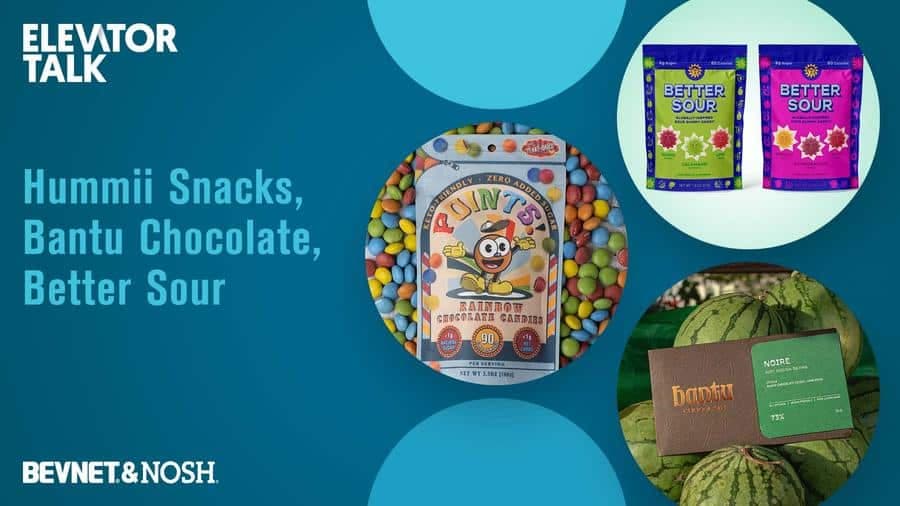
Elevator Talk Episode 73: Hummii Snacks, Bantu Chocolate, Better Sour
Transcript
Note: Transcripts are automatically generated and may contain inaccuracies and spelling errors.
Ray Latif [00:06] Hey folks, I'm Ray Latif, the editor and producer of Bevnet's Taste Radio podcast, and you're tuning into the latest episode of Bevnet and Nash's Elevator Talk, the series that profiles early-stage and disruptive brands from across the food and beverage industry. Today's episode will focus on three food brands whose entrepreneurs will have an opportunity to hear feedback and advice from our co-host for this episode. That's Twee Nguyen, who's a category manager with Thrive Market. Twee, so great to see you.
Speaker 2 [00:35] Hi Ray, nice to see you too. Great to be back.
Ray Latif [00:38] Absolutely. This is your second time co-hosting Elevator Talk. You've also been a judge for our New Beverage showdown, Beverness's New Beverage Showdown, and for Nash's Pitch Slam. That's the last time I saw you. IRL was in December when you were on stage, I believe, right? I didn't get to see you.
Speaker 2 [00:53] you at Expo. Did
Ray Latif [00:54] I
Speaker 2 [00:54] see
Ray Latif [00:54] you
Speaker 2 [00:54] at
Ray Latif [00:55] Expo?
Speaker 2 [00:55] Yeah, that's, oh my goodness,
Ray Latif [00:56] I
Speaker 2 [00:56] did see you at
Ray Latif [00:57] Expo.
Speaker 2 [00:58] There were a lot of celebrities there, so I understand, you know, if you don't remember me,
Ray Latif [01:02] no. Oh my gosh, I am so sorry about that. Expo was such a blur. I can't even believe it. I was, that was Wednesday, right? This is the 2nd day of Expo. Goodness gracious, yeah,
Speaker 2 [01:11] I'm, I'm still recovering, so no worries.
Ray Latif [01:14] Yeah, goodness, you were, I saw a quizzical look on your face and you're like, no, I actually saw you last week. OK. Um, Thrive Market, what a fantastic company and you're a category manager for the retailer, as I mentioned. Uh, talk a bit about what you guys do at Thrive and your role at the company.
Speaker 2 [01:33] Yeah, so I'm one of their newest category managers. I came on around 8 months ago to launch the refrigerated. Um, program, so that's been really exciting and a lot of work. Um, but Thrive is just like a health conscious online retailer really dedicated to making healthy living easy, accessible, and affordable to every American family. We deliver um our groceries nationally to the 48 states, um, continental states, and, um, yeah, we try to, try to think of us as like a Costco meets Whole Foods, but online and it's membership-based, so. Um, customers pay about $60 a year and they get access to over 5000 products plus a lot of Thrive Market owned brands, all at really good prices.
Ray Latif [02:21] Yeah, you have a pretty curated selection of products and brands that you offer. What makes the cut at Thrive Market?
Speaker 2 [02:30] You know, not many people make the cut. It's pretty, it's pretty hard to get in, I would say. I think of course all the brands need to be like better for you, and they need to have, they need to use non-GMO ingredients, and they just have to meet all of our super high standards around like animal welfare and sourcing and all those things. So it's, and you have to taste really good. That's, I think the number one key thing.
Ray Latif [02:54] Yeah, you have to taste really good. I think that's something that sometimes gets lost in the mix. But you know, taste is pretty subjective, especially when you're considering better for you products. Some people think, oh, I don't like this particular sweetener. I don't like a plant-based version of this. I guess how do you evaluate taste when it comes to, you know, what your consumers want?
Speaker 2 [03:14] Um, well, I think when we bring on products we try to get our whole team to taste things and give their feedback so we get like a wide range of opinions, and I agree taste is subjective, but I think there are some things that objectively taste bad. So I'm sorry, is that too mean? No, no, no, but I think like there is a baseline level of like you need to pass this, you know, this test to get in.
Ray Latif [03:41] You know, I'm actually, it sounds maybe a little bit harsh, but I'm glad you're being honest about it because sometimes you just need to be honest with yourself and you know if you're asking people, friends, colleagues, whomever, you know what you think of the taste, you know, if you don't have a great flavor. you're not going to go very far. So be honest with yourself. Hopefully your friends and family will be honest with you as well and make those tweaks, and you'll have a better product and you'll have a better shot of success. So yeah,
Speaker 2 [04:08] that's what I always say because like the first purchase will be on the mission and the brand and the sourcing. Um, and of course the packaging, but then the second like purchase will be like, did you like the product? Do you want to buy it again? So you've got to deliver on that.
Ray Latif [04:22] Absolutely. As I mentioned, we have or are featuring 3 food brands in this episode of Elevator Talk. I'm very excited about all three. Would you like to meet our first entrepreneurs for this episode?
Speaker 3 [04:34] I'm very excited. Yes,
Ray Latif [04:36] fantastic. They are Samira Niku. And Bella Hughes, who are the co-founders of Better Sour. Samira, Bella, great to see you.
Speaker 3 [04:45] Great to see you, Ray. Thank you for having us on. As you know, we're a baby brand just launched a couple of weeks ago, so really grateful that you have us on to share our story.
Speaker 4 [04:54] And it's good to see you at Expo, both of you. In the Blur, I remember hanging out with both of you briefly.
Ray Latif [05:00] Better Sour is a pretty remarkable brand. Um, I got to know you guys and, and the origins of the brand a while back, but please share your story with our audience.
Speaker 3 [05:11] Sure, so we are a globally inspired sour candy brand. Bella and I are lifelong best friends. We're both Iranian American, raised in Hawaii, been friends since we were about a year old, and growing up we never found a candy that really hit that sour spot for us, you know, both Iranian cuisine and the fruits and snacks we had growing up in Hawaii are very sour forward and There's just such a range of sour flavors that are very nuanced and delicious, and the candy we had, you know, growing up was tend to be very artificial tasting, you know, it's not really sour, it's, you know, sweet candy with sour coating and frankly very Western centric in flavor. So what we set out to make is a candy that's really inspired by the fruits that we grow up with that's lower in sugar. Clean ingredients, plant-based, and celebrates, you know, the flavors that you know we had growing up. So one is a nod to the Middle East. I had pomegranate, apricot, and tart plum, and the other one to the Hawaiian Islands in the Asia Pacific ume plum, guava, calamansi, and you know it's been really reaffirming, getting all the feedback that we've gotten, which kind of affirms the market gap here we were, we were able to raise. Oversubscribe pre-seed round and just being in Expo West last week, seeing what's out there on the floor, seeing the spins and IRI data, there is such a desire by consumers for global flavors and you're seeing that in snacks in frozen in beverage, but in candy for some reason it just hasn't happened yet, so we're here with our candy and just really excited to be sharing it in the coming weeks.
Ray Latif [06:55] I'm here with your candy too, and it's taken me everything not to eat this bag. Uh, I, I don't know how long I can hold out. Um, probably another hour or two, but that's about it. Um, it's really, really good. Uh, Bella, this is, this is your 2nd go around in CPG. Uh, you were also actually
Speaker 4 [07:12] my 3rd. I had an ice cream company back in the day too. Um, so yes, 3rd time, and I feel very lucky to be working with my best friend. If you're not working with your best friend, I highly recommend it.
Ray Latif [07:24] Yeah, I mean, uh, just, just quickly, I mean, any learnings that you can apply from your previous two businesses to Better Sour, especially, you know, in the early days when, you know, this path is just littered with pitfalls.
Speaker 4 [07:37] You know, I think one of the things I've learned is KIS Keep it simple. Um, we have such a maximist story and our promise is really simple, you know, it's better sour, a better kind of sour, a plant-based, a 60 calorie, 3 g sugar. We could have gone with the Really, uh, maybe culturally inspired name, but we just wanted to right away communicate like what is that promise to the customers so I think naming is really really important and Better sour really hits the nail on the head and then behind that you get to learn all about our mission and our sort of maximalist story. Yeah, and then trying to scale is very important, um, so that's, that's the other thing which Samira's background and, you know, international trade was really helpful. We're really lucky we're working with a lot of global commodities that we'll have access to, given a lot of consumer interest in our products.
Ray Latif [08:28] Tweet, we're seeing a lot of uh interest. It seems like there's a lot of interest in Better For You Candy, um, and seeing some new brands come to market, um, you know, what do you think of the opportunity and what are your initial thoughts on Better Sour as outlined by Bell and Samira?
Speaker 2 [08:42] Yeah, I have two initial thoughts. The first one is when I was trying to Google better sour candy, I just got a list of the best sour candies on the market, so just some feedback there with the naming, but even though I really like it. The second thought is that I think it's super smart to get into the global flavors for candy, because I feel like the candy flavors have been pretty stagnant for a while. Like you've got your lemon, your strawberry fruit punch, and when I was younger and I ate Starburst, Tropical was always my favorite, like, like a brand for the Starbucks, so Starburst. So that was definitely a flavor that I love. I think that it's super smart to do like the guava and the calamansi. Those are just like fun, bright flavors and they're they're naturally sour and it's, I think it's really smart.
Ray Latif [09:32] Yeah, you know, price point wise, I think candy has traditionally been something that people look at as being relatively inexpensive. What's the price point on Better sour, Bella and Samira?
Speaker 4 [09:43] Yeah, it looks like we're going to initially land at 399. We are definitely a premium product. We all know the cogs, the larger you get, often, um, you know, your price can drop a bit, so 399 should be our launch price in retail. Yeah,
Ray Latif [09:56] and I think, you know, premium pricing fits in with premium retailers like a thrive market. Tweet, is that in line with your expectations for a brand like this?
Speaker 2 [10:07] Yeah, I think, I think definitely under 5. I feel like Smart Sweets is around that 299 mark, and I think better sour is more premium than that, so that, that makes sense. I'd love to ask, in your sweeteners, you said that the candy is 3 g of sugar. Is that added sugar or is that just like the natural fruit juice? Yeah,
Speaker 3 [10:26] that's a little bit of allulose and some apple juice.
Speaker 2 [10:30] Got it. OK. Um, and sorry, is there any added sugar from the fruit juice as well, or is it just apple juice? It's
Speaker 4 [10:38] from the apple juice,
Speaker 3 [10:39] yeah, OK,
Speaker 2 [10:40] got it, got it. Yeah, I, I like that. I feel like, um, the natural sugar from the juice makes more sense than like, like combining all the monk food and stevia and stuff. I think consumers are gravitating towards lower sugar, of course, but like lower sugar through um natural sweeteners versus uh like the the fake stuff.
Speaker 3 [11:01] 100% I think being um sour forward makes it a little bit easier to cut down on that sugar.
Speaker 2 [11:07] Yeah, is, um, what's the like gelatin base? Is it, is it agar agar?
Speaker 3 [11:12] Uh, we rely on a citrus packed in.
Speaker 2 [11:14] OK, nice. OK, yeah, I had the chance to try out the show and I really like the flavor. Um, I think it could have even been more sour, but I have a very high tolerance for sour.
Speaker 4 [11:26] We can go so, so sour because there's traditionally an Iranian snack called lavoshak. It's a really sour fruit roll up, um, but we wanted to like hit that perfect. sour. So we've got some folks that are not huge sour enthusiasts. They try it and they get really excited because it doesn't burn off. They say their tongue.
Speaker 3 [11:43] Yeah, and we've really seen a lot of crossover with the product. Foodies have really embraced it, and we think part of that is because it is about the sour in fruits. So you know, you're eating our apricot kind of gets you a sense that you're eating an actual apricot, but like a little more indulgent.
Speaker 2 [11:59] Yeah, what's your, what's your go to market strategy? How are you getting people excited about these flavors and getting them to try it?
Speaker 4 [12:05] You know, we're at South by right now and we stopped counting at around 200. The only bad feedback is that people want to buy it at the booth and we're like, No, no, no, we're launching next month. Please follow us on social, eat better. and we'll share where we're gonna be. But, um, you know, my background is really traditionally in brick and mortar retail. Um, we definitely think this has due to the lightweight nature of shelf stability, a lot of traction online, but we'll be announcing our retailers in the next month, um, and that's gonna be our primary focus, but we'll also be available on Amazon.
Speaker 2 [12:38] Got it. Awesome.
Ray Latif [12:40] Can I ask about the, the sour component one more time? I mean, I, the, the, when I grew up or when I was growing up, uh, my brothers and I loved sour candy and to the point where we would look for the most sour, almost make your tongue bleed kind of sour. Now I know that's not what you're going. For no one wants to injure someone with their candy, but, um, you know, who is this product for, cause when I think about candy again, you know, typically skews younger, I would think, but and your packaging is really fun and exciting. Um, if you had a target consumer in age range demographic, you know, who is it?
Speaker 4 [13:12] It's us. We actually looked at all the data, and the number one sour and chewy gummy consumers are millennials quickly falling Gen Z. So I think it's people that, to Samira's earlier point, are really enjoying first and foremost global flavors, adventurous eaters. They love candy and they just want to see that excitement, that adventure in the candy aisle.
Speaker 3 [13:36] Yeah, and I mean we kind of. Loosely term are the folks that are our target audience sour seekers as Bella mentioned, kind of millennials, Gen Z, but there could be broader application, right? People who love adventurous eating, you know, after the COVID era, everyone's stuck at home looking to really experience the world through the food you eat, um, and of course kids, for some reason there are studies showing that kids love sour. I don't know if that's like an evolutionary thing, but kids do. We love sour and we've got a lot of positive feedback from children, but especially
Speaker 4 [14:07] mine, my 8 and 10 year old are obsessed. Like,
Speaker 3 [14:10] yep, yeah, so that's broad appeal. I mean, at the target, like initial early adopter, um, consumer probably be the millennial Gen Zs, but I think, um, both of us are fairly confident that there's broad, broad appeal for this product.
Speaker 2 [14:23] I was gonna say your sourcing story at Shaka was so strong. Like, do you have that similar, um, like. Attention to detail with the sourcing for this candy product?
Speaker 4 [14:32] We definitely don't have to build our supply chain from scratch. I think that's why that was such a lead up with the beautiful Shakati story and growing the mamaki industry and directly working with the farmers. Um, we are ethically sourced, but definitely our story here is one of friendship, daughters of immigrants. We're very proudly woman-owned and certified, and that really fun global flavor. Levitt.
Ray Latif [14:56] Yes, on the back of the package we're Iranian American best friends raised in Hawaii here to unleash sour power, and it has Bella at, well, it says Bella and Samira, and then it says drop us a lime. I just, I just saw that's very cute. I like that a lot.
Speaker 4 [15:11] Not a typo, very intentional, and it's all about the sour to the people kind of sour power movement. But do we get one quick, quick question because we'd love to get your. OK, so maybe this is because we're at trade shows and there's a lot going on. We put on our packaging sour gummy candy. We are having to engage a lot and, you know, reaffirm no drugs, no THC, no vitamins, and then we turn just candy into best candy. Do you think we need to put candy even larger?
Speaker 2 [15:40] Well, right now I can only see better sour. I can't see the rest. Oh, it's probably it's
Speaker 4 [15:46] captioned, OK,
Ray Latif [15:48] yeah, just underneath it it says globally inspired sour gummy candy. I think the font is probably 5 times smaller than better sour. Um, so I, I, I mean, I. I think based on that, the question is, do you want it to be more known? Do you want people to know it specifically as a candy and very intentionally? Yeah,
Speaker 3 [16:08] we got a lot of questions. So just candy. This is just candy, nothing in it. We're like, yes, just the best candy. So we're like maybe we should make the font larger. So I wanted to get your take.
Speaker 2 [16:19] I see that. I mean, there is some THC vibes to the packaging, especially with all the green, all these
Speaker 3 [16:24] dummies dancing around.
Speaker 2 [16:27] Exactly, exactly. So that's pretty good, pretty good call out.
Speaker 4 [16:31] OK, we will look to increase the size for the next run, but we really. your support and Ray, you and your team again, thank you for the Mina CPG support. That really means a lot. Thank you. Well,
Ray Latif [16:42] thank you so much for all your coordination efforts and all the hard work that you guys have done in support of the Mina community. It's been amazing, and I know you guys are really busy, but I could ask one more question about social strategy. Social strategy seems to be the most cost effective way. To get the word out, to acquire new consumers, at least at the start, um, you know, what is your social strategy out of the gate?
Speaker 4 [17:06] I'm like hiding my face in shame. We're geriatric millennials. We got no social game. We
Speaker 5 [17:12] 30
Speaker 4 [17:12] followers. We don't even have TikTok downloaded on her phone yet. Um, we're, we're, we're working on that. We're hiring. We're building it out.
Speaker 3 [17:20] If, if you have any recommendations, good folks helping out with social, send them our way. I don't
Speaker 4 [17:25] end caps and like great robust promo strateg. I think we're now at 300 followers on Instagram, 330.
Speaker 5 [17:32] I'll
Speaker 2 [17:33] follow you today.
Speaker 5 [17:34] Yeah,
Speaker 2 [17:36] but yeah, your brand is ripe for social. It's very, it's very loud. It's very like
Speaker 4 [17:41] reach out to us. Let's blow this up. We'd love to meet someone who wants to join the team in that capacity.
Ray Latif [17:46] Yeah, yeah. And, and Thuy just quickly, you know, does social strategy factor into your decision to bring a brand on or not?
Speaker 2 [17:53] Um, it's not the number one thing, but it is important. I do go on the brand's Instagram. I just, I like to see that because you can't tell the whole story on packaging and you can't get a sense of the whole brand. So I like to dig into their social and see like what else they're all about. So it's a, it's a little, it plays a little factor. Yes, there
Speaker 3 [18:11] you go. Is there a minimum number of followers you're looking for?
Speaker 2 [18:14] No, I think it's more about what you're trying to, what your story is, like what posts you have, even if you're like, your post only has 3 likes. Like if it's a good post, I'll like it. OK,
Speaker 4 [18:23] we'll post more and we're unofficially putting out like a call. If anybody wants to join the Better Sour team and you are a rock star at Instagram and actually know TikTok, please reach out to us, Bella and Samira, both of us at bettersour.com.
Ray Latif [18:36] This, this has been a fantastic conversation. We've, I think we've covered a lot of bases here, um, and I'm really excited for the future of Better Sour, so excited for you guys. Thank you so much for taking the time. Again, being at South by Southwest, I can imagine it is, uh, nutty over there, and I really, really, I'm happy that you guys took a few minutes to spend with us. Thank you again.
Speaker 4 [18:57] The pleasures all. Thank you both so much. Have a beautiful day, and we can't wait to hear this and hear all the other amazing founders.
Ray Latif [19:04] All right. Up next in this episode of Elevator Talk, we have Tyler Phillips, who is the founder of Hummii Snacks. Tyler, great to see you.
Speaker 6 [19:12] Great to see you again, Ray. Um, I hope, I think we both remember. I'm also in that blur phase, but, um, I remember we, we, uh, bumped into each other at the snapshot event, um, at the food table a little bit. I think you were actually the first person I talked to. When I got there, so it was always good to see a familiar face. And then at Expo 2 and amidst all the, all the chaos there.
Ray Latif [19:35] Indeed, yes, I was at the snapshot event. I was a little incognito. People don't typically recognize me with a baseball cap and a black hoodie, but somehow you saw me through all my garb, which was good, good to good to happen. Uh, Tyler, you and I have known each other for some time. You're a loyal Tas Radio listener. Thank you so much for all your support. Um, Hummii Snacks, you guys have evolved a little bit over the past couple of years. Tell us about what you do.
Speaker 6 [20:03] Yeah, um, so I, I think the first time we talked, it was right around the time we were doing a Kickstarter campaign. Um, so Hummii Snacks, first of all, it originates, um, around my own family growing up. I'm the oldest of 5 kids. Um, we enjoyed lots of different snacks and junk food, all the kind of classic nostalgic childhood. Um, candies and snacks. So, Entin's Little Bites, um, was a big one that we always had in like our mom's minivan on the way to activities and stuff. Um, and so that was what we launched our Kickstarter around was, uh, reimagining that product in a low sugar, lower carb form, um, that was gluten and grain-free and high in protein. Um, so that was the first time we spoke that, uh, the formulation was finally, um. Completed earlier this year and we're just looking for some creative ways to get financing, um, to get that product out. Um, in the meantime though, uh, let's see if this will show up on screen. It's kind of blurred out as if it's like inappropriate or something, but, um, that's, uh, that's, uh, the points candy and it's, uh, it's like our dark chocolate low sugar take on an M&M. Um, so those are colored naturally and those kind of just arose serendipitously as we were formulating. Uh, the mini muffins actually, an ingredient partner of ours sent us this product. Um, this was around last March, right after I moved to LA and they sent this to use, uh, in the mini muffins to see if we could do a fun flavor around it. Um, I shared it with my roommates at the time. And they knew that the mini muffins were taking forever to get kind of out there into the world and they were just like, Tyler, why don't you just pack these up and start selling them. So, um, I kind of slept on it for a night and then I brought it to Smorgasbord the next day here, um, shared it with a few, um, friends who had booths there, um, to see if they'd be interested in it, um, partly baking with it, um, and they liked it and then from there, the very first edition was just kind of like Your classic like paper bag with a sticker slapped on the front and back and um eventually got to like printed bags this year. We're rolling out on Amazon right now. Um, we've been live on there since January and then just growing bootstrapped throughout SoCal. Um. Another update is I, I took on a job recently, so it's kind of interesting to be at Expo West. I just put out a LinkedIn post about it yesterday, but to be on the other side of the floor, like we're so used to having people kind of sell us stuff or be talking with a service provider and I was in that position where I work for a company now that makes uh mobile apps called Tapcart. So, it's. Interesting to kind of wear both hats, but I think we're seeing more and more founders do this, um, this year in kind of a tougher economy where it's harder to raise, um, and just want to be part of that, um, kind of messaging that it's all right, you don't have to say like goodbye to your baby, um, you can keep it growing and then also maybe learn a lot from working elsewhere.
Ray Latif [23:03] Yeah, I've spoken with a number of entrepreneurs who have not quote unquote quit their day job while scaling their business, and it seems to be a way to maintain some sort of income as you are growing your business. Um, but yeah, I mean, let's let's expound upon points. I'm looking at your website right now and Thuy. I don't know if you've had an opportunity to look at the website. We've seen other Eminem types. Products come to market. I feel like Points really fits this sort of Instagrammy TikTok kind of vibe that we have come to know, um, you know, is this the type of product, just, just in terms of packaging and branding Thuy that you think resonates with that audience, that millennial Gen Z audience that we heard from, uh, that is so attractive to, you know, brand owners and retailers today?
Speaker 2 [23:53] Yeah, I was looking at the package online. It seemed very fun. The graphics were kind of like 90s cartoonish, so I think it does resonate with a younger audience versus like other brands that try to, try to look a little bit more, I guess like buttoned up in terms of the packaging and like not as, not as loud, so I think you're definitely hitting that younger audience. I was trying to look on the site but I couldn't really find all the ingredients, so I was curious like Um, your products are low sugar. Like what are you using as your sweetener and like how is that communicated on your package?
Speaker 6 [24:29] Yeah. Um, so, we looked into allulose for a little bit. Um, I was actually in frozen desserts even before the, the mini muffin Kickstarter. Um, so I was familiar with that product like 3 years ago. Um, we decided not to go with that. I still think it's a good sweetener, but there's just a lot of studies, uh, to be done still on that. Um, as we've seen though, actually, an ingredient that is in the points, um, is erythritol, um, which was definitely in the news, um, but I see that kind of as a blessing in disguise. It forced me as a founder of a product that has erythritol. To really dive in deeper and not just understand it on a surface level that um I knew before that it's um has less impact on your glucose levels and it's diabetic friendly. Um, after diving in more after that report, I learned how your body naturally produces it. Um, and people that were in the study, they're actually more at risk. Um, and so they produce even more of it. Naturally, your body produces, um, I guess certain Um, things like erythroto a bit more when they're in that like hyperactive state. Um, so I kinda learned that from um the study that went out. And then we also use a blend of stevia monk fruit. Um, They're somewhat sweet, but again, it's a dark chocolate that's actually a packaging change that we did when we released these new single serve is instead of saying rainbow chocolate candies on the front, they're called dark chocolate candy pieces. So to really make sure that people know it, it is a dark chocolate and it's lightly sweetened too.
Speaker 2 [26:01] Nice. I love, um, M&M's in general, and I like all the M&M copycats. I'm curious. I was looking at our data for, um, just candy, and I'm seeing that like candy that's sweetened with like things like erythhool or a monk fruit are not, don't perform as well as things that are like naturally sweetened with like date sugar or, you know, uh, organic cane sugar but in smaller amounts. uh. Have you gotten that feedback or have you seen that at all in your like own research?
Speaker 6 [26:33] Um, it might be a case that the, the shoppers on Thrive Market might be different shoppers than the shoppers that I'm, I'm talking with when I'm at sampling events. Um, honestly, I haven't heard it as much. Like, I think our, so the way I think about it actually and realized recently is like the front of the pack is what grabs. A younger crowd like Gen Z, Gen Alpha, um, honestly, when they're that young, they, they're just not educated on that much, um, ingredients and like what they should be watching out for. So, with them, um, I think just not having a lot of added sugars is, um, something that I, we can kind of pride ourselves on is that they're eating this because of the fun packaging, but they're not gonna be on like a sugar roller coaster ride and, and crash and be addicted to added sugars. Um. And for the older crowd, kind of the back of the pack, um, it actually has taken off with a lot of people who are maybe pre-diabetic or diabetic, which, um, if you combine both of those groups, that's now, I think around like a third of the US actually. Um, so with those people, they're familiar with ingredients like erythrotol. I think to your point, like. Uh, something later on, like to experiment with would be using maybe small amounts of date sugar or some sort of sugar where it's only like 2 g maybe or 3 g, um. But, yeah, I'm definitely open to it. Um, it's just one of those things, uh, being bootstrapped, don't have too much room to like completely reformulate the product. The, the equipment is pretty expensive to produce the sun as well, but, um, it's definitely interesting to hear that you see that in your, your insights.
Speaker 2 [28:14] Yeah, I'm also super excited about the muffins that you're putting out because I feel like a lot of those mini muffins out there are loaded with sugar and the ones that aren't don't taste very good, so I'm excited to try yours.
Speaker 6 [28:26] Yeah, I'm, I'm excited to get those out there too. Um, the difficulty with that right now again is financing. Um, so we're trying to land, um, some POs with companies like Thrive Market or Hungry root also, um, talking with them. Um, retail is, is really expensive, I think, as a lot of us know probably, um, so looking for more creative outlets to kind of launch those mini muffins into, um, and then we can kind of prove them out and, and tweak them a bit as well. Um, but we'd love to get, next time we have a test batch, um, I can send them your way as well. Um, actually, Caleb, uh, uh, who works at Thrive Market. Um, we spoke on the phone, I think early on when I was developing the mini muffins, um, too, and it was neat to see his feedback. Nice.
Speaker 2 [29:16] Is that a refrigerated product or is it shelf stable?
Speaker 6 [29:19] Um, so, it's, it's what took so long for the formulation is we wanted it to be, um, shelf stable. Um, so it's 6 months ambient, and then what we've thought about doing is, uh, freezing it after it's manufactured and then we can send it out where it, uh, defrosts and unfreezes, and then it has 6 months shelf life from that point. Is that something you look at as well, I imagine?
Speaker 2 [29:45] Um, yeah, we looked at the shelf life, and, well, we're just starting to bring on frozen bakery products that are like sucked out in transit, so it's definitely something we're exploring this year.
Speaker 6 [29:57] Exciting. And that's your category, right? Yeah,
Speaker 2 [30:01] well, um, I guess like chilled, so frozen to slack.
Ray Latif [30:05] There you go. Uh, Tyler, I gotta ask you one question about the name, the brand name Points. Feels like someone would have taken that by now, uh, trademarked that by now. How did you acquire points or did you acquire the trademark?
Speaker 6 [30:17] I'm still working on the trademark. We added the exclamation point at the end. Um, I did a lot of research. I didn't see any of it being used in the, the food and beverage space and I've been using it for how long now? Like 9 months. So I haven't been sent like a cease and desist or anything. So, hopefully, hopefully that means no one has used it. Um, but the Instagram handle, like it was, it's tough. I still haven't gotten like the, the, the social media handles for that. I mean, there's like The points guy who handles credit card points and things like that, um, and then some people just sitting on those names, so. Uh, on the social media front, it's tougher. Um, the name kind of originated just by chance, like that same night that I was sharing it with my roommates. Um, we were just creatively like brainstorming different names. We wanted something kind of catchy that again, like a younger crowd could kinda use as like cool slang or just say like, hey, can you pick me up some points or pass me the points. Um, And that's kind of how it originated and then after the fact, it's interesting to see like people kind of attribute their own meanings to it that also makes sense. So, I think with that pre-diabetic diabetic community, like some of their tracking, it uses the term points in it. Um, so it kind of connects with that. And then we do have like a little bit of like a video game arcade feel with like these rubber hose cuphead characters. Um. So we're leaning into that a bit with like a loyalty program where you earn points as you eat points.
Speaker 2 [31:48] Very fun. That's what I was thinking about for the name. Like, how do I earn points as I'm, as I'm eating all these candies?
Ray Latif [31:55] Very excited for the future of the brand. Stay at it, even though you have a day job. I think you've got something great on your hands with your brand and hummmy snacks. So, uh, please let us know if we can help in any way and, uh, just reach out anytime.
Speaker 6 [32:09] Uh, thanks, Ray. It's always nice to, to be part of this community and listening to, to TSE Radio on a weekly basis too.
Ray Latif [32:16] Well, that just puts a big smile on my face and uh thank you so much again for your support of the podcast and uh like I said, please stay in touch. All right, our final guest for this episode of Elevator Talk is Veronique Mbita, who is the founder of Bantu Chocolate. Veronique, so great to see you again.
Speaker 5 [32:35] So good to see you as well. Nice to meet you, sweetie. Nice to meet you too.
Ray Latif [32:39] So great to see you once again. As I mentioned, uh, we met at the Snapshot events just before Expo West. Uh, I was just enamored with your branding, your story. I have two of your bars right here, and, uh, I have been holding off on devouring both of them because, uh, after we met, I saw that your application came through to join us for a future episode of Elevator Talk, and here you are, and I'm like, let me just hold on for a little bit longer. Uh, Bansu Chocolate, as I mentioned, is the name of the brand. Please tell us all about what you do.
Speaker 5 [33:13] Yeah, so, um, but at Vantage Chocolate, we are building a better cocoa trade because I believe that, you know, good chocolate shouldn't come at the expense of people or the planet. So, Cameroon, where I am from, is where our agrofry is. So we grow on cocoa and pay our employees a living wage that is 7 times the fur trade equivalent. So this way we take care of both the people and the planet. And um so we are also solving major problem in the cocoa trade and chocolate industry. Um, so we've like basically taken a more innovative approach to the traditional um cocoa trade. So we pay, of course, like an anchor living wage to employees, but we also like, you know, take care of like basically generational poverty and improve their standard of living. And, you know, as a child of immigrant and an immigrant myself, I understand that um motivation, you know, Behind leaving, you know, somebody's home. It's like always the search of a better life. So in, in a time where we're all about, you know, climate change, we also should be focusing on like people's lives, because they both work together. Um, and of course, like, unfortunately, the, the, the chocolate industry is one that is full of like, you know, Dark and bad aspects, although the chocolate itself tastes really good. But for example, you know, child labor is a major one. Approximately 1.6 million of children are working in in in in forced labor in in in in fields in West Africa, which is 7%, which represents 70% of the cocoa we use in the world today comes from West Africa. So, um, we are also tackling like issues like deforestation by planting trees and having like climate smart solution and preserving like biodiversity. Um, we've got like not only cocoa, um, so there's, of course, like no monoculture, so we don't only have cocoa, we have like plantains, we have tomatoes, we've got pigs, we've got Um, chickens, we've got like beans, like, and so much more and so that's, that's, that's basically what we do. It's always hard to try and sum it up altogether because it's just like such a big thing, but I tried. That was like my go to.
Ray Latif [35:35] I thought that was excellent and it's reminiscent of when we first talked about Bantu, you and I, and I mean I love the backstory and the things I just learned about the chocolate industry and the cocoa industry in the last minute. Um is amazing and eye opening, and you know what you're doing in support of better living standards, better or better working standards, better fair wage standards is pretty remarkable. Tweed, this is, you know, something that's very meaningful for me as a consumer. Is it, do you feel like it's meaningful for more and more consumers and particularly within the space that Bantu operates?
Speaker 2 [36:12] Um, I think it's definitely meaningful. When I eat a chocolate bar now, I'm always thinking about like what the certifications it has and like where is it coming from, although I know like even if you're certified, you can't really trace all the chocolate that goes into the bar, so it's super tough. Would you say that your company is like vertically integrated? You grow everything, you roast it, you make the chocolate.
Speaker 5 [36:33] Absolutely, we are vertically integrated in that and that's the idea, like, we want to be able to, you know, to have consumer, you know, capable to appreciate high quality products because of like not only, you know, the ethics behind it, but also because it tastes good. And I've heard we taste pretty good and we smell also really good, so. Um, I think, you know, it is like really important for me to prioritize the well-being of, like, you know, everybody involved, you know, not only like the people we work with, but also the customers, because we are first and foremost customers as well. I'm a customer too, so I care a lot about, you know, what I put in my body, what's in it, like where it comes from, and Whenever I can, I will always try to like, go directly straight to the farmers, because I've understood so much, how much effort is put into, like, growing and feeding people. But like, as the customer, we don't see all that. We just go into a store and, like, just pick up something off the shelf, or just log on online and like, just buy. And sometimes you don't even Like understand where it comes from, how it's being grown, and I think a really important part for me is to really like share the knowledge I've acquired, like, since I've started this project, and this is what we do through like um blogging, through um our feed, our Instagram feed as well. Um, so yeah.
Speaker 2 [38:00] How do you communicate your huge story on your packaging, because there's, there's a lot there.
Speaker 5 [38:07] There is
Speaker 2 [38:08] a
Speaker 5 [38:08] lot
Speaker 2 [38:08] there.
Speaker 5 [38:09] So, uh, this was my first packaging attempt, so I think I will try to improve it. So there is like basically in the packaging, um, on like the inside, there's a bit of like story being explained, and then um on the feed, I want people to really like on Instagram feed on my Instagram feed, I really want people to It's not just only about the chocolate, to be honest, or the cocoa industry, it's really about the food system overall, so people can feel more like more, I don't know. included in the conversation because it is a conversation, it is a collective action and I think that we need to understand, you know, the stems of the, the, the, the issues of today. So, I think eating a good product, it's the beginning to have people feel concerned about serious issues. Um, so, um, yeah.
Speaker 2 [39:09] Awesome. What's your price point and are you trying to get into like larger retail stores or are you more focused on, you know, more of the higher end like gourmet, gourmet shops?
Speaker 5 [39:19] So at the moment, I think because of the price point, which is $15 a bar, I think it will appeal more, let's say to, you know, a more gourmet space and shops, um, but I feel like Chocolate is a luxury because it is a luxury. So it's about eating better product, maybe not that often, but it's just about making a choice that aligns with, of course, your tastes and what you want at the moment, but also, you know, knowing that you do something that is good. Um, so yes, the price point, I think it's at $15 per bar retail. It's a 70 g bar. Um, and I think it's about really like Yes, indulging ethically, responsibly.
Ray Latif [40:11] I mean, from a, from a packaging standpoint, I mean this screams uh super premium for sure and I think the one thing that I would probably want to know a little bit more of as you know, when I'm thinking about taste is the is the flavor name and um you have different names that are not necessarily the flavor for each bar and then underneath it you have the flavor. So the Nostradamus is the one I'm holding in my hand and underneath it it says hibiscus and blonde. Um, have you gotten that kind of feedback, Veronique, about, you know, um, amplifying the flavor of the, of the chocolate?
Speaker 5 [40:47] Not yet, but I'd definitely be open to it because basically I initially, so there's like a noir, which is like, which is a 73 person dark bar. There's an 83 person bar, which is voodoo, which is the darkest bar we've got. And we've got Limbey, which is this one, which is a dark milk with coconut-based milk, um, and we've got the Nostradam is the, the, the toasted white one. So the story behind the names is that I wanted names that would like basically kind of align with what we are about. So, of course, there's like the kind of like um Esoteric, uh, mysticism site with like names like Voodoo and Nostradamus, who was like an astrologer, which I really love, and uh Limbe is a city, a beachside city in Cameroon, which is known for You know, the, the black sand beach that we've got as well. So I wanted names that kind of like are linked to the story of like not only the product but um me myself. And uh I think the flavors, I think I wanted like people to be more intrigued about the name and be like, oh, OK, I'm going to look at it closer and like kind of like try to understand the story or, you know, behind it.
Speaker 2 [42:08] I totally understand where you're coming from. I do feel like when people look at the shelf though and they're picking up the bar, they do want to know immediately, is this going to be like a, like a fruity floral bar? Is it going to be more dark and smooth?
Speaker 5 [42:22] Yeah, true, I definitely will add that onto the next batch, but that's a great feedback. Thank you.
Ray Latif [42:30] Although you just had me Google, uh, Lian Bay looking for the black sand of that seaside town, which is, uh, which is pretty cool for sure, um, you know, I think again, you know, go to market strategy is really important, um, you know, where are you trying to retail the product, uh, at the outset? Is this mostly an e-commerce brand or are you, um, going into retail right now?
Speaker 5 [42:53] So my idea is really like to go through retail. I mean retail is like, you know, a necessity because you still do need that kind of like window. You need people to find a product. I mean, SEO and paid ad and paid social, that it's great, but like I think nothing beats, you know, like a footpath, especially if you like know where your, you know, who is your audience and who you really are trying to target. So I think Logically, the people who would be attracted to my product would be people who would be like, you know, having their probably their grocers, their favorite grocers and loving to discover maybe like new products and, you know, who wants to like have and build a relationship and understand the product. I think we, I've missed one of your questions earlier, which was um about the kind of like space I'm looking forward to sell them. The the the product. I definitely think for me that, you know, grosso and Deli are really important because I want to be able to have people who will be able to tell the story and explain what we are doing, not just like have a product put on a shelf and not really, you know, have any explanation behind it. Yeah.
Speaker 2 [44:07] I think for that price point, you definitely need someone to kind of tell the story of why it's priced like that because most people are seeing bars under $10 or if not under like $5 for the really cheap stuff, um, but you have such a great story. If you could like really integrate the vertically integrated storyline for your chocolate, I think that would hit on it would be really important to highlight because it's so rare. No one, I don't know that many people are doing that.
Speaker 5 [44:34] Yeah, totally agree.
Ray Latif [44:36] Veronique, uh, I'm so glad that we had, uh, this time to chat. I feel like we could chat for another hour or two about Bantu, and, um, I hope we have an opportunity to do so in the near future because I really love your brand and your backstory and the reason you've started it, uh, are remarkable and honorable and all of the above. Uh, thank you so much for taking the time to join us today. Uh, good luck with everything going forward. Let us know how we can help in any way.
Speaker 5 [45:01] Thank you so much. Thank you for having me and um thank you. Nice to meet you, and thank you for the feedbacks as well. That was great. Nice to meet you.
Ray Latif [45:08] Tweet, at the outset of the show, I, I said, you know, we have 3 brands that I'm really excited about and for good reason. They're all really interesting in their own right. Um, and, you know, I think they all have a component of You know, starting out in e-commerce or, you know, doing some work, uh, you know, their, their go to market strategy includes some semblance or try it again, 32. Their go to market strategy includes a component of e-commerce, and you know, for you and for a thrive Market, that is, you know, explaining who you are and what you do via a screen can sometimes be kind of complicated. Just from your perspective, what do some of these brands need to do if they are looking at e-commerce as a serious part of their go to market strategy?
Speaker 2 [46:00] Um, I would say definitely like on their website, really tell their story well, um, and do that on like social as well, like, because When we're onboarding brands, we're looking at their e-commerce, how they're communicating that, and because we're going to use their storytelling to tell their story on our website, so they just need to get their I guess their story straight, you know, and the messaging has to be really clear and who their audience is. I also think like if you want to make an e-commerce and partner with like a like a store like Thrive, having a promotional plan in place is really important too, like. Promoting with us, growing with us, offering some kind of like discount to try the product is really important. So brands just need to be ready to kind of have, they need to have that budget to do that with us.
Ray Latif [46:51] Yeah, I mean, I imagine trial is a little more complicated on Thrive and, you know, similar online retailers. Um, what do brands or what should brands bring to the table when they do have any kind of data about their trial strategy or demo strategy and success of either?
Speaker 2 [47:11] Well, in terms of data, just like if they're pitching to us, we want to see how they envision their products fitting into our category. So they've gone on our site, done the research, um, and then thought of like some uh use examples of other promos that they've done with other retailers that worked and what would work for us because we're different, you know, we're online, we're not just in stores, so you can't just Do the sampling and demo tables. So, um, being prepared with a, with a very specific plan for, for Thrive is really important that it's really nice, um, when a brand is pitching and like, you know, they, they, they tailor their, their PowerPoint to us versus just like taking our name, taking someone else's name out and putting ours in, you know, it has to be super thoughtful.
Ray Latif [47:58] You know, we saw 3 brands today with price points that are a little elevated for, you know, traditional categories. I mean, they're all super premium in their own right, but You know, and I think some consumers are more willing to pay and just the expectations are different because of inflation or otherwise, but are you sensing that there's sort of a limit to how much consumers are willing to spend? Are they spending less? Are you seeing, you know, a sort of a trade down from super premium to just premium products, I guess what are your expectations for, you know, brands like the ones we saw today and others that will come after them?
Speaker 2 [48:32] Yeah, I would say that the Thrive customer at least is pretty price conscious, so they want those premium products, but they want it at prices that they can afford. So, you know, for example, in the candy category, I think like trying to get below 5 is really important to make it work with Bantu. I think it's like a super premium, premium chocolate bar, um, but it may not, like, it may not resonate with the Thrive customer who's looking for something that's like. Under 8 or under 7 for a bar. Um, so yeah, people are definitely more price conscious these days and will buy things if they're on sale. So maybe they're premium, but they have like quarterly sale that could work.
Ray Latif [49:15] And do you see that, I know, I know you're speaking about Thrive, but do you see that as something that, you know, is across the board trend in retail?
Speaker 2 [49:23] I think it's tough to say. I mean, it depends on what the retailer is. I think you have your price conscious retailers and those customers that are shopping there are looking for those discounts, but you also have people caring more about the sourcing, about the story, and they're willing to kind of pay a little bit more if they know where their product is coming from. So it really depends on like, you need to know your market and then you pitch to the retailer that fits into, you know, your market.
Ray Latif [49:49] Well, Tweet, as expected, a wealth of knowledge and insights shared in this episode of Elevator Talk. Thank you so, so much for taking the time to be with us. Uh, I hope to see you at the next great show, which I believe is Sweets and Snacks in Chicago. I don't know if you're gonna be there.
Speaker 2 [50:03] I won't be there because it's not really my category, but I would like to be there because it looks really fun.
Ray Latif [50:08] I think so, yes. Um, but in any case, once again, it's just been a pleasure speaking with you, and I know our entrepreneurs and our audience is getting so much, uh, just by you being here. So thanks again.
Speaker 2 [50:19] Of course, it's really great and thanks for having me again. Yeah,
Ray Latif [50:22] and on behalf of our entire team at Bevnet Ash and Taste Radio, our entrepreneurs have presented today, and of course Twee, thank you so much for watching and we'll talk to you next time.