Search across the BevNET CPG Media network including BevNET, Nosh, Brewbound, Taste Radio, Nombase and CPG Jobs.

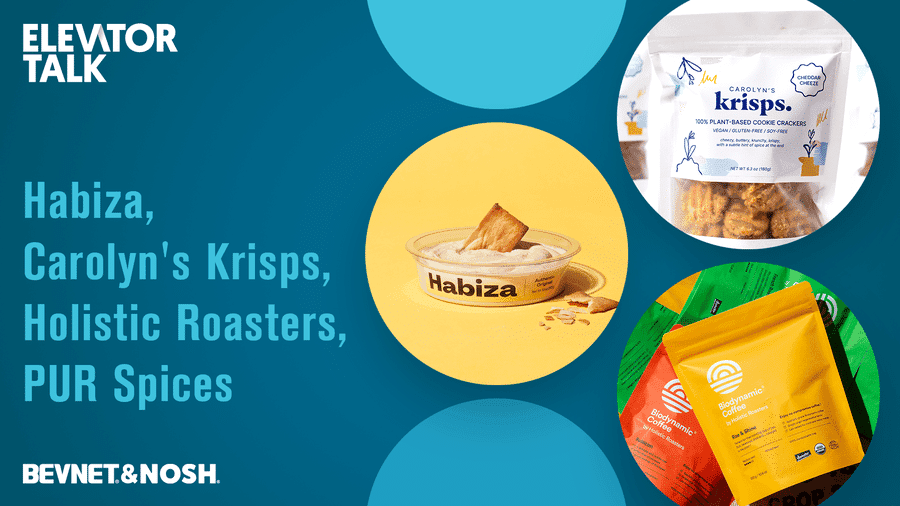
Elevator Talk Episode 80: Habiza, Carolyn's Krisps, Holistic Roasters, PUR Spices
Transcript
Note: Transcripts are automatically generated and may contain inaccuracies and spelling errors.
Ray Latif [00:06] Hey folks, I'm Ray Latif, the editor and producer of Bevnet's Taste Radio podcast, and you're tuning into the latest episode of Bevnet and Nash's Elevator Talk, the show that profiles early stage and disruptive brands from across the food and beverage industry. Today's episode will focus on four food brands whose entrepreneurs will have an opportunity to hear feedback and advice from our co-host for this episode. That's Nicole Dawes, who is the founder of Nixie Sparkling Water and Late July Snacks. Nicole, great to see you again.
Speaker 2 [00:38] Oh, Ray, I was so excited when you asked me to co-host. Uh, it was really fun the last time, and I just love getting to know more about these, um, awesome new emerging brands.
Ray Latif [00:47] Absolutely, I feel the exact same way and I'm so glad that you joined us for this second episode of Elevator Talk. I think the first one you joined us for was in 2020, was it?
Speaker 2 [00:58] It was a long time ago. It was since then,
Ray Latif [01:02] yeah, right, I remember, but I think we were doing like 10 brands per episode back then and, uh, definitely a different time for the world and for certainly for the food and beverage industry, um, but, uh, a lot of exciting stuff for you and your brand, Nixie Sparkling Water, uh, grown quite quickly, and if you can just please give us a brief, uh, intro to the brand and where you are right now.
Speaker 2 [01:25] Sure, so, um, uh, we founded Nixie, um, and hit stores just before the pandemic kind of shut everything down. Um, but, you know, obviously, um, this is my second time around and Um, because I, you know, was a founder at Late July. So, uh, I mean, even though that was a pretty daunting way to start the business, if there's one thing I know as an entrepreneur, I mean, something's always gonna go wrong. I mean, I wasn't expecting a pandemic necessarily, but, um, you know, it, it actually allowed our team to get to know each other really well, learn to work under those circumstances, and we decided to stick with our retail strategy and not shift to D2C despite everything that was happening. And that really worked out for us and we built some deep relationships with retailers through the pandemic and, you know, we came out of it in, in over 10,000 stores nationwide. And uh Nixie's mission is really just helping people make healthier choices for themselves, for the planet through, um, you know, zero calorie, uh organic beverages.
Ray Latif [02:30] Yeah, and as you mentioned, you know, this is not your first rodeo in the food and beverage industry. Late July Snacks, a very successful company you were the founder of, and um I think for folks who are watching this episode and saying, hey, you know, uh, sparkling water and food, how does it all work together, but I think, you know, there are some similarities and commonalities about what it takes to succeed in food and beverage across CPG. And I wonder for you, have you been able to apply the lessons and the learnings that you had from Late July to Nixie, or, you know, is it just a different time for CPG and things are, you know, significantly different?
Speaker 2 [03:06] Oh, I mean, absolutely, we've been able to apply so many of the lessons. I mean, we're growing significantly faster at Nixie. Um, I mean, luckily for me, I made so many mistakes in the early days of Late July. I was really able to learn from those and not repeat them the second time around, but, um, I mean, there's so many. Similarities. I mean, being an entrepreneur and growing a CPG brand, you know, both of them are high velocity competitive categories. Um, so, I mean, I would say not everything is the same certainly, but um there's a lot more similarities than I even predicted there would be.
Ray Latif [03:41] You know, again, doing this for the second time around, uh, you have some experience and you have some, uh, you have the value of hindsight and, and knowing what worked and maybe some of the things that you should have done the first time around, you know, for the entrepreneurs today and those watching at home, just, you know, in the most general sense, you know, what are some of the things that are really helping you. Get along with Nixie, you know, it could be anything from, you know, relationships with retail buyers, you know, gross margin, but you know, what are some of the things that they really need to nail if they are truly to be successful in this business.
Speaker 2 [04:17] You know, I think that, you know, one of the things that I think it's helped me be a better kind of leader too is in the early days of Late July, I mean, I think everything that would go wrong was like the worst calamity in, you know, the kind of the history of my life, you know, it's just everything and, and honestly they were terrible things. It wasn't like they weren't terrible, but One of the things that I've really appreciated the second time around is that, you know, even when things are going really, really wrong or just sideways completely, um, you know, the fact that I've had, you know, been doing this for so long, it really gives you the perspective of understanding, um, You know, that, you know, kind of how to navigate through those challenges and to not, you know, kind of fall apart when things go wrong. So, I mean, I, again, it's, things are never going to stop going wrong. That's the only thing that's certain. But what you can control as a leader is kind of your reaction to that and how you navigate through it and how you help your team navigate through it, and I would say that that's something that is significantly better the second time around.
Ray Latif [05:25] And I think that's such great advice for founders because it can feel really frustrating when things don't go right, you know, when, when things come up that are very unexpected, but, um, you know, just as calmly as you can make your way through it because it's going to happen, but just try to find your way through it.
Speaker 2 [05:44] Yeah, and I also feel like these days it feels like, you know, we're experiencing every month, it seems like sort of a once in a generation type problem that you have no control over that is affecting your business, and, you know, I think it's all the more that you need to kind of stop, pause, and, you know, try to make as levelheaded decisions as you can given the circumstances.
Ray Latif [06:09] Absolutely. Well, as I mentioned, we have, uh, 4 really innovative brands and their founders, uh, waiting to hear from you and waiting to introduce their brands to our audience. Are you ready to meet our first one?
Speaker 2 [06:22] Oh, I'm very excited. I've really spent some time learning about these brands and I can't wait to meet their founders.
Ray Latif [06:27] Well, thank you for doing so, and our first founder is Jonathan Sreer, who is the founder of Habiza. Jonathan, great to see you.
Speaker 3 [06:36] Great to see you. Thank you guys for having me
Ray Latif [06:37] on. Yeah, it's great to see you and sorry for butchering your last name. I'm sure I did, but, uh, Habiza was relatively easy to pronounce. Tell us all about your brand.
Speaker 3 [06:47] So I dropped out of school and started this company out of my driveway. I'm 20 years old, and I believe that the hummus market is ready for a change. I, Middle Eastern have grown up on real hummus that's creamy, it's smooth, and it has those authentic ingredients and flavor to it, but the store. Doesn't seem to have a brand that carries that, and the brands that do lack in so many other ways, they may say no preservatives, but ingredients such as vinegar still don't belong in hummus, and my grandmother and great grandmother might have lost it if they tasted hummus that had vinegar in it. But beyond that comes the point of seed oils, which is in a lot of the hummus that we have today. It's pretty much in every brand. Habiza is a brand that has no seed oils in our hummus. We are scaling an old world process for our garbanzo beans that is extremely particular and it is based off the way my great grandmother and grandmother made hummus. And next to that we're using tahini from Douma, Lebanon, which comes from the mountains in the north. And because of that, we don't need to use oil, and we Our shelf stable were at a 90 day shelf life with no oil, and our hummus is creamy, it's smooth, it's simple, and it's authentic.
Ray Latif [08:10] Jonathan, did you say that Habiza is shelf stable?
Speaker 3 [08:13] Oh, not shelf stable, sorry, sorry, sorry, 90 day shelf life.
Ray Latif [08:16] 90 day shelf life. So it needs to be refrigerated. Yeah, of
Speaker 3 [08:19] course, of course, uh, needs to be refrigerated, but it's 90 days and there's no oil in it.
Ray Latif [08:24] Are you HPPing the hummus?
Speaker 3 [08:26] Yeah, yeah, we use HPP.
Ray Latif [08:27] Gotcha. And, uh, uh, you started out in Arawan, but, uh, it sounds like you moved to a much bigger retailer. You're, you're distributing to a much bigger retailer now as well.
Speaker 3 [08:35] Yeah, that, that was really interesting how that came about. We got Air One, and I had kind of just navigated all the stores trying to figure out who was a buyer. I did not know anything about CPG. I was still making hummus in my garage and selling it in my driveway. We got into Aeron, we got a co-packer, which has been fabulous because the relationship is just like it's our own facility, and it's 20 minutes away from me, so I'm there every time we have production. I'm actually going there after this. Um, then we scaled right into Ralph's and made the move right into conventional, because the legacy players don't seem to be satisfying a lot of the mainstream consumers anymore, and Ralph's was a retailer that picked up on that really quick, kind of in spring summer of last year. And because we had got on boarded to DPI, DPI brought us to Ralph's and to the buyers there, and said, I think we have a solution to kind of the issue in the category.
Ray Latif [09:37] Nicole, you know a thing or two about bringing a premium option or introducing a premium option to a legacy category. What are your initial thoughts on Habiza?
Speaker 2 [09:46] Yeah, I, I mean, obviously I loved, I spent some time reading about, you know, kind of what, um, how you described why you created it this way, and I mean, having a premium option that you're passionate about is amazing because nobody else can bring that kind of um passion to the discussion. I guess I'm curious, what part of the store are you merchandis in? Are you in the produce section? Are you in dairy?
Speaker 3 [10:13] Yeah, so they brought us into, I know with Kroger and Ralph's their service and then some of the divisions have Wall Deli. They brought us into Wall Deli, and they're going to start us in Wall Deli for right now, and then we're going to plan to scale and after Labor Day, look at some options of going into Service Deli and then expanding more throughout Kroger.
Speaker 2 [10:34] You know, I, that's one of the things I was going to ask you about is, you know, an advantage to a small emerging premium brand is being in one of the ancillary parts of the store. Um, and deli is a section of the store where you can build deep relationships and bring something that's differentiated and you're not competing necessarily at the same rate and with the same benchmarks that you would be in the other sections. Um, I mean, I don't know, uh, if that's I don't, I'm not like I, I'm not 100% sure about um how it is with like wall versus, I don't, I, I, I can't get into that level of the weeds with you, but I guess the one piece of advice I would have just hearing you talk about that was Make sure that you also develop your relationship with the buyer, you know, with a, with a distributor bringing you in, you want to make sure that you're also the one that is in the room meeting them, talking to them, um, because, I mean, ultimately, that should be your relationship.
Speaker 3 [11:40] Yeah, there was a lot of issues when we first landed into Ralph's there, you know, anytime distributors handle something, they put in the wrong area of the store. Oh, this shipment didn't go out. I Called up the buyer for Ralph's and I said, hey, I'd love to meet up. So we met up at a store, we walked the store. He was awesome, and I actually got him to allow me because it didn't, you know, when sometimes when something goes into Ralph's or Kroger, they don't put it in the schematic quite yet. They didn't have in the schematic yet, and so I said I'm going to push really hard, and I'm gonna have demoing and sampling because it's not in prime shelf space, and that's what I'm targeting. So I've been going to all the stores, putting up shelf shelf tags. We've been doing a lot of TPR. I've been going to stores just handing out hummus to people saying, hi, I'm the founder, we're located here on the shelf, pushing as hard as I can. And that issue with the shelf space, we've just been doing our best to navigate it and push as hard as possible by making a good relationship with the buyer saying, hi, can we have, you know, another slot on this shelf? Can we put up a tag here? And they've been great so far.
Speaker 2 [12:50] I mean, I, I don't think it necessarily, it's not critical that you do that you do gangbusters business everywhere. I think if you can like really prove yourself and even, you know, a handful of those top stores, I mean, that's going to be more important than spreading yourself too thin. Um, so I mean if there are some that you can get to easily and, you know, really build a relationship, I mean, I, I do that to this day. I mean, I like, I'm, yeah, I mean, I'm, I, anytime I see a customer or, you know, I, I mean, I'll go in and introduce myself, meet the team. I mean, it makes a huge difference and particularly when you're growing in a chain like Ralph's, um, you know, even if you can target. 10 stores, it, it really can make a difference in your velocity numbers.
Speaker 3 [13:39] Got it. Got it.
Ray Latif [13:40] Thank you. Jonathan, what's your price point for Habiza?
Speaker 3 [13:44] So Habiza MSRPs at Ralph's at 549 cents which is about 50 cents more than Sabra and Cedars and any of the other brands in there and then we usually TPR right now we have a TPR going on at 499, so now it's at the same price until Labor Day.
Ray Latif [14:02] Nicole, any thoughts on how best to explain that premium price point to consumers via the packaging or otherwise?
Speaker 2 [14:12] You know, I don't think that that is such a significant price premium, you know, 49 cents. I mean, I think you have to really explain it when you're, you know, $1 or $2 more, but when you're like in the same general vicinity and then on a TPR you're like basically the same. I mean, I don't know that it's as critical that you explain the, the, the, the price premium, but I do think explaining just why your product is different is always important, you know, um, Yeah, and I thought you did a really good job explaining that on your, on your website, and, you know, I mean, I, like I spent some time on it and I could understand very easily why, you know, you believed your product was different. Um, I mean, you know, I, I've had hummus in restaurants, obviously, that tastes very, very different than what you buy on the store shelves, so my mind immediately went to You know, oh, they're not using the right tahini, you know, um, but, so I think using your packaging to really convey like why the choice of that tahini is so critical and why the no oil is so important. I mean, people are pretty passionate about hummus. Like I, I do feel like if you could convey that, people will understand.
Speaker 3 [15:27] Yeah, we uh we have some new packaging rolling out later this year. That was the biggest thing I learned in launching is we, you know, we, we launched kind of fast and we didn't have the resources to get. Bigger packaging done and the capabilities to have, you know, a label that wraps around the entire container with HPP with HPP and hummus, it shows a lot of the blemishes and because of how we're sourcing our containers at first we didn't have the luxury to kind of do it the way we wanted so we had to just make it work with that. Now we have those capabilities, and I'm really excited. I'll actually show you guys a sneak peek right here. This is, I I always keep it by anywhere I work, I just bring it with me. Oh, this is a little mockup, and this, this area is changing. This is some type, but then here's the top, and then there'll be something that says no artificial preservatives.
Ray Latif [16:21] Looks great and I'm glad that you're emphasizing no artificial preservatives because that's what you led off with when you started, uh, your pitch and and chatting with us is how important adding no preservatives, including certainly vinegar is to an authentic hummus, so. Um, I, I think it looks great and you know, certainly you're off to a great start and for being 20 years old, Nicole, I'm, I'm pretty impressed. I mean, I don't know how many 20-year-old entrepreneurs are as sophisticated as you at this point. Uh, well done, Jonathan, and thanks so much for taking the time to be with us. Please stay in touch. Let us know how things are going. Anytime you're increasing or extending your distribution or retail presence, we want to know about it. Just please let us know and drop us a line.
Speaker 3 [16:59] Thank you so much for having
Speaker 2 [17:01] me. Congratulations on your Exciting start, Jonathan.
Speaker 3 [17:05] Thank you. Thank you for having me. It was a pleasure to meet you both.
Ray Latif [17:08] You as well. Thank you. All right, up next on this episode of Elevator Talk is Amy Kessler, who is the founder and CEO of Carolyn's Crisps. Amy, great to see you again.
Speaker 4 [17:18] Hi, thank you. Great to see you as well.
Ray Latif [17:21] I said again because we saw you at the summer fancy food show in New York City. I was introduced to Carolyn's Crisps and just pretty amazed by what you do and the uniqueness of your products. Please tell our audience all about it.
Speaker 4 [17:34] Oh, thank you so much. Um, yeah, so I make cookie crackers. They are a hybrid snack merging the looks and texture of a cookie with the crunch and crisp of a cracker. Um, Carolyn was my grandma, so everything, um, our entire business, the recipe is all based off of a family recipe that I grew up with, made with her. She was pretty known for bringing them to lots of events and family gatherings, and yeah, so everything's inspired by her, and I have taken that recipe and made it vegan and gluten-free and soy-free. So the goal is to You know, reinvent these childhood flavors that I loved growing up into this new snack, the cookie cracker with better for you ingredients and an elevated taste and texture. Um, and so currently we launched in June of 2021, and we're in 30 stores at the moment. Our biggest thing right now is some new packaging relaunch, um, coming up early September. So Ray, you and I, I think, had talked about that when I saw you. Uh, and I have like a little sneak peek. So this is our current packaging right here. Um, it's pretty like bright, crisp, clean, um, but then this is our new version. So we have 3 flavors, core flavors right now. Um, the idea is to really stand out on the shelves, keep our crispness, um, and our like kind of clean graphics, but really showing that flavor differentiation a lot quicker. Um, and also really educating the customer and kind of intriguing them about what a cookie cracker is, because it is a, a new format that not a lot of people have had.
Ray Latif [19:13] It's a new format, but I feel like it's pretty intuitive given that everyone knows what a cracker and a cookie is. Uh, Nicole, do you feel the same way, even though I'm, I'm, I'm guessing you haven't tried this product yet?
Speaker 2 [19:24] No, unfortunately I haven't. I would love to, but um, You know, I, I guess, I don't, you're not like, you're not trying to explain something that's so hard for people to understand, thankfully, um, you know, you're just sort of putting a spin on it, which I think is very helpful, um, when you're trying to convert a consumer to try something new. You know, you're taking two very familiar things and combining them versus something that wouldn't be familiar to the average consumer. So I agree with Ray.
Speaker 4 [19:52] Sure,
Ray Latif [19:53] yeah, yeah, that being said, Amy, are you finding some pushback in terms of education and awareness? Do you find people saying, oh well, I actually need to try it before I really get a sense of what it is and whether or not I'm actually going to like it?
Speaker 4 [20:06] Yeah, I think what like the most surprising thing, so we have a savory option, which is a, it's a cheddar, we call it the best way to describe it in terms of flavors like a gourmet goldfish, um, and so a lot of people like we have a cinnamon sugar and a maple pecan. So for those, I think people are like, OK, it's like, you know, crispy crunchy, but when it comes to something savory, they're like, oh, is it gonna be sweet if it's, you know, is there like a little sweetness to it, so showing people that like, That is a really new format, and a lot of, there's a lot of people are like, so what's a cookie cracker? And they try it and they're like, Oh, I get it. Like it's airy, it has more density than a normal cracker. Um, so it comes up quite a bit. A lot of people ask, like, how do I eat it? What do I dip it in, what do I use it with? And it's like, you know, we have lots of options for all of them. So it's not, it's not, um, something totally new like you guys said, but definitely the question comes up a lot for us.
Ray Latif [21:00] I am guessing Nicole has the same question. I am sure she has some advice on where it should go, but where is the product merchandise and storage? Where is the ideal place for it to sit on shelf?
Speaker 4 [21:10] So, so right now we do like our stores are a lot of specialties. So Foxtrot is our biggest retailer, which is a lot of exploratory shopping, not your traditional kind of natural or like um traditional grocery store, but in terms of looking at any bigger format stores, we are targeting more of that like. Gourmet specialty, like, even like the cheese, like if you think we're charcuterie board, like shoppers would live, there's like a lot of crisps there. Um, one, for a few reasons, I guess because price point tends to be a little higher, people are like, again, doing maybe a little more exploratory shopping, willing to spend a little bit more for some specialty snacks, um, and then, Yeah, I think just giving that whole area, like, you know, being a new brand and revamping and kind of popping it up in an area that does not get, I feel as if a ton of attention sometimes with new products. And
Ray Latif [22:04] what is the price point?
Speaker 4 [22:05] We are at 1099.
Ray Latif [22:07] 1099. OK. Uh, Nicole, what do you think about that merchandizing strategy?
Speaker 2 [22:13] Well, I definitely, I, that was my, my, I mean, I was having the exact same thought as you, Ray? And I, it was definitely one of the things that I, I, like I Not like concerns because obviously I, I don't like to use that word, but, um, you know, you really do have to help consumers know how to, what the use occasion is, like that is like one of the most important things and that's honestly why a lot of times snack companies struggle when they do like a sweet version of what should be savory or a savory version of what should be sweet. Um, I mean, like for years at Late July we're always like, oh, we should do a cinnamon sugar thing and it, you know, but it's like that is, that is sort of the, the, that's the trickiest part of the snack aisle, honestly, when you do the cross. So, uh, you know, I think that's one of the things that you're gonna probably have to really dive deep on is, you know, if, if you end up going in the cookie cracker aisle, where do you go? What is the preferred spot. But, you know, hearing you talk, I mean, I do think, and, and actually after our first guest, Jonathan with Habiza was talking about Delhi, um, you know, that could be a better option for you because you're not having to um choose, number one. Um, you know, they can be together. And, you know, you're helping people with the use occasion, which would be, um, you know, something, whether it's cheese or, or just snacking on its own. But I, I definitely, that's probably gonna be one of your more difficult kind of early challenges is, is helping people. Um, through the location of the store, understand how exactly to use it.
Speaker 4 [23:49] Mhm. For sure.
Ray Latif [23:52] I know, uh, Nicole, you had mentioned that, you know, you eschewed the D2C route, uh, for Nixy and really focused on retail, but it seems like Carolynn's Chris has, uh, an opportunity to prove itself via D2C. Um, so, Amy, are, are you, you know, emphasizing direct to consumer? I mean, are you finding any traction, uh, with online?
Speaker 4 [24:15] Yeah, we, so when we launched, we were online first, um, and we're about 60% wholesale and 40% retail, so a chunk of our business, um, sorry, 60% wholesale, 40% D2C through our website. Um, so a chunk of our business is through online for sure.
Ray Latif [24:34] Any learnings about you know how people perceive the brand that you can apply to that wholesale business?
Speaker 4 [24:42] So we do it, so we on our website actually sell, um, so we have like our retail packs, but then we have the larger, like we have 3 sizes actually. So we have like a large and then like a 1 pound party pack. And what tends to happen is people will try them and then end up buying the larger ones from our website, pretty consistent for like families, um, or special events. So, I think it's interesting that I, I hear constantly the feedback of the use for those special occasions, or that they tend to do a lot of pairings, which was, you know, our goal. So it's like you can they're like highbrow enough for a special event, but then you can just have them with you to go and eat them as a snack. Um, so I think it's maybe more validating like the use case that I, um, was hoping for through the way that their people are buying online.
Ray Latif [25:38] Mhm. You also have a great name, Carolynn's Crisps, and there's a great story behind that name, and I think Nicole, you know, part of the reason Late July was so successful and in turn Nixie is because you're able to share that story, um, that people want to know more about. People want to know more about the founder and the history and the origins of the brand. Um, Nicole, any thoughts on, you know, ways to effectively articulate and communicate that backstory and your personal story into the brand?
Speaker 2 [26:05] Well, I think that since she's got, you know, such a good D2C like fan base going, I mean, obviously that's an incredible way to build your story, cause those are super fans. And I, I think your product does lend itself significantly better than like heavy beverages, obviously, to D2C, you know, I mean, that's one of the benefits. Your price point is, is a little bit on the higher side, which is also good for D2C, um. You know, really building those ambassadors through the people who are purchasing your products regularly and obviously, you know, your website, your packaging, social media, I mean, all of those things, just getting your story out there. I mean, it is a really, it's, it's a great story. I mean, you know, everyone loves a grandma, right? And you know, I, I, I definitely think building those like real passionate consumers through Um, you know, your D2C fan base is definitely helps. I mean, because those are the same people that will go out and, um, you know, support you in other
Ray Latif [27:03] locations. Yeah, uh, Amy, you know, we have a little bit of time left. I'd love to hear from you, you know, what your dream retailer is. I mean, you're already in one of the, uh, foremost or hottest retailers in, in America with Foxtrot. Um, you know, what are you looking for in your next one?
Speaker 4 [27:19] Um, so, like, the next vision for me is really more of like a Whole Foods, to be able to, um, You know, I think have that presence in a little bit more of a natural grocer that has a bigger format. Um, a lot of our customers shop at like Whole Foods or something equal to that, but Whole Foods for us here, and to be able to even start regionally, I think would be amazing just because it fits a lot of our, um, kind of target customer checkboxes for sure.
Ray Latif [27:54] We are out of time, but I think this is a question that is going to apply to everyone today and those listening at home. Uh, Nicole, what is the best way to get into Whole Foods?
Speaker 2 [28:02] You know, it is so much harder today than it used to be. I mean, luckily, um, where, where are you based? Chicago. Chicago, yeah. I mean, most of the regions still have local foragers, and that is definitely. I mean, one of the, you know, still a great way to, to, to get into a region and, and develop a relationship, but it is significantly harder than it used to be, unfortunately, because everything is so much more centralized today than it was, you know, when I started late July 20 years ago.
Ray Latif [28:37] So getting good with a with a forager,
Speaker 2 [28:39] for sure,
Ray Latif [28:39] yeah. Amy, uh, fantastic seeing you again. Uh, love what you're doing with Carolyn's Crisps, and, uh, please stay in touch. Let us know how we can help in any way, um, even if that means maybe sending an email to a local forwardr on your behalf because we'll try our best.
Speaker 4 [28:59] Amazing. Thank you guys so much. I really appreciate it. This is so helpful and awesome. So good seeing you both.
Ray Latif [29:05] All right, up next on this episode of Elevator Talk, we have Gregory Kainan, who is the co-founder of Holistic Roasters. Gregory, how are you?
Speaker 5 [29:13] I'm doing great. How about you?
Ray Latif [29:15] I'm doing fantastic. Great to see you. Uh, you know, I really am impressed with what you're doing with holistic. Uh, biodynamic coffee sounds like it's right on the cusp of being something that could be a big segment within a big category. Tell us all about what you guys do.
Speaker 5 [29:32] Well, I think that's, that's key. It's, it's a huge category. So coffee, I mean, you really need to find a niche if you're going to be in the coffee business and We kind of look to biodynamic wines as as kind of some of the inspiration behind what we're doing, you know, a lot of those wines are award-winning and for really good reasons. A lot of it has to do with just how much focus the farmers have on, excuse me, the soil health and just, you know, the quality that that then results in in terms of The plants, the nutrition of the plants, and being able to then taste that in the result in terms of what is, is harvested from, from those plants. And we look at it from the same perspective from, from coffee, which is in many ways very similar to harvesting grapes. It's done by hand. You're really looking at picking, you know, the most ripe coffee cherries, and all that quality then gets reflected not only in the taste of the coffee, but You know, in terms of being certified biodynamic, which we are by Demeter, it really then speaks to all the care that goes into making sure the coffee is clean. You know, it's, it's pesticide-free, it's GMO free, it's, you know, no herbicides, no, not even chemical fertilizers are used on, on the farms where the coffee is grown. And that, that is also, I think, a big part of our mission is, you know, the support that the farmers get from, you know, really looking at this from Their own, their health, the health of the ecosystem where they're growing the coffee, and also their independence, right? They're not, they're not dependent on any kind of external resources to grow their coffee, which to me is, is, is a kind of a really part of the beauty behind what we're doing.
Ray Latif [31:19] So This is not for everyone. Um, it's definitely for a specific kind of consumer. I'm looking at your website right now and I see your packaging and it speaks to me so perfectly, it feels like something that I would want to buy immediately, but you know, in general terms, could you talk about who that target consumer is and why they would be interested in your product?
Speaker 5 [31:42] Yeah, it turns out that I think the number one driver are people who are looking for clean, healthy coffee. So they're, they're mostly, they're primarily driven by that, I would say. And then the next one would be the taste. I think those two actually are pretty much neck and neck in terms of like why people are choosing our coffee over another coffee. So we test our coffee for We know it's clean to begin with, but we go a little bit extra step. We lab test all our coffee for microtoxins, for heavy metals, um, for also for, um, biological contaminants as well. Uh, so that, I think speaks to people who are interested in kind of a healthy lifestyle, um, you know, so we get a lot of people who are very focused on that. And then the other thing that I think differentiates us from from some of the competition is on the ecological side. So people who are concerned about the environment, you know, particularly from an ecosystem and biodiversity perspective, I think that is another big driver for people who are interested in our coffee.
Ray Latif [32:48] Nicole, uh, Nixi is an organic and non-GMO sparkling water, but, uh, I, I, I'm assuming you don't have any plans to introduce a biodynamic, uh, version of the water, but you know, I, I feel like, you know, they are potentially for a similar consumer in so many ways and that, um, people want to know what's in their products and more specifically want to know what's not in their products. Um, you know, what are your initial thoughts on holistic grocers and their approach to This emerging segment or a very niche segment of the coffee market.
Speaker 2 [33:21] Well, I mean, obviously, I love your commitment to the environment. I mean, it's incredible. It's um very admirable and, you know, having been in, I mean, late July was one of the first products to carry the USDA organic seal and I've never, I mean, it's like we were. You know, I think the only the first brand that launched exclusively under the organic seal, like we kind of launched with it, and you know, I've really dedicated like my entire career to, you know, creating and trying to get people to embrace organic and, and, you know, help consumers along the path of making better, more environmentally friendly choices, um. I mean, I think the one thing I've learned in all of these years, it is really hard, and, you know, um, Some, so many of the things that we do as entrepreneurs that care about the environment are really because we care about it. And I have kind of come to, I've made peace with the fact that there are things that I'm going to care a lot more about than the majority of my consumers. Um, and it's very, very hard to explain some of the benefits, um, because unfortunately, I think Organic is a tricky term for a lot of people, and biodynamic is even more complicated. Um, the thing that always bothered me is the easy ones are like all natural, non-GMO. People get those. But as you get more complicated down the line of things I care about, less people understand them. And I guess my piece of advice to you and just kind of my thoughts on it are, you know, keep doing what you're passionate about and keep the commitment that you've made to this mission is what will like guide you in this path. And even if consumers don't understand and maybe appreciate all the steps you're taking, you're taking them because you know they're what's right. So, don't get discouraged and keep doing what you believe is right and, you know. Yeah,
Speaker 5 [35:23] it's definitely a mission of, of love. It's, you know, the commercial aspect of it, I think in, in many ways comes second, but at the same time, I mean, we've had, since we've launched, I guess we've been pretty consistently growing at about a 60% um Kegar, so, uh, you know, um, so it's, it's, it's decent, right? It's, it's not that, but I think the reason why it works is that once a consumer tries it, the loyalty that we get, so the number of repeat purchases. You know, maybe it grows slowly in the beginning, but as that word of mouth spreads and as we see that we, once we get somebody who likes the coffee, they tend to stick with it over a much longer period than I think than would normally be the case. I think that's plays to our advantage. And I think the other thing, focusing on that mission really then also helps us to look at things a bit differently than maybe other brands do. So we do quite a bit of white label, um, and, and so people would say, well, you're not, you're kind of not building your own brand if you do that, which is true, but it speaks to the mission, right? We're really interested in promoting this type of agriculture, helping the farmers, so the more that we can end up selling either through our own brand or through others, um, you know, that really works for us.
Speaker 2 [36:40] That was the one thing that was our most important, um, kind of, I think the main reason we were successful at Late July, honestly is because of the taste of our products. I think people got hooked on what we were doing because of the way it tasted, and then they fell in love with our mission and became, you know, dedicated consumers. So I mean, I 100% agree with you. I mean, keep making great tasting products and particularly coffee, you know, nobody's going to turn away from a great cup of coffee that they love.
Speaker 5 [37:08] Exactly. Yeah, and, and I, I'm, I'm one of those consumers who, who got hooked on late July, the, uh, you know, by the taste and, you know, it was obviously a nice benefit that it was organic, and all the other things that go with it, but for me, it was the taste, number one, and then, um, you know, everything kind of follows from that, the health aspects of it as well.
Ray Latif [37:29] It's also easy to love Late July's packaging. It's a really good look, and I think the same is true for holistic roasters. I mean, you just have brilliant packaging. Certainly speaks to the super premium nature, maybe the ultra premium nature of what you're selling inside. You know, how often are people buying your product or at least giving it a try because you have, you know, fantastic packaging?
Speaker 5 [37:54] Well, we didn't start off with fantastic packaging. We started off with just the opposite. We had a box that was a craft box. It was beautiful if you look carefully at it, but the point was it didn't really stand out on the shelves, and there was a bag inside the box, so there was a lot of waste, and that really doesn't speak to our kind of ethos of trying to be environmentally friendly, even though it was all compostable. Um, and we kind of spartaned up also realizing that when we shipped these boxes, they'd often get damaged too, so they didn't look good on the shelves. I can remember actually standing in an Aw looking, where's the coffee? I know it's here somewhere and couldn't see it, even though I'm looking for it. And so all of that led us to like, OK, we've got to come up with something that is a lot more efficient and that stands out on the shelves a lot more. So we ended up working with a designer based out of Montreal. And he helped us with with this new package design which made all the difference for sure.
Ray Latif [38:47] And I, you know, we're almost out of time, but the name of the brand is Biodynamic Coffee by Holistic Roasters. Is that correct?
Speaker 5 [38:55] Yes, so Biodynamic is actually a registered trademark of Demeter. So it's like saying organic, right? It's not, it can't be a brand in and of itself. It's a, it's a designation or a certification. So the brand really is holistic Roasters and then just the different roast levels. So there's a Rubicon, there's a Rise and Shine, and there's a French roast. Um, so that's how we've approached it, which, you know, does, maybe there's some good advice that would, would come along with the branding aspect of it as well.
Ray Latif [39:24] I don't know. Do you have any good advice, uh, Nicole, before we wrap up here?
Speaker 2 [39:28] I definitely think that, you know, make it clear that what your brand name is so that, you know, there isn't that confusion. I mean, um, because it's a cool brand name and I, your package redesign is very good, it's very eye catching, so maybe just make your brand just a little bit bigger, um, you know, so that it's clear, but I really applaud you on your mission and your products.
Speaker 5 [39:50] Great, that's great advice. Thanks very much. Yeah,
Ray Latif [39:53] this episode has been flying by. I wish we had more time, Gregory. Uh, perhaps we will have to have you back for an episode of Taste Radio, but in the meantime, thank you so much for taking the time to be with us. Uh, congrats on everything you've built to this point. Uh, and please stay in touch and let us know how we can help along your journey. Thanks so much for having me. All right. Our final guest for this episode of Elevator Talk is Sonia Patel, who is the founder and CEO of Pure Spices. Sonia, great to see
Speaker 6 [40:19] you. Great to see you too, Ray. Thanks for having me. Hi, Nicole.
Speaker 2 [40:22] Hello.
Ray Latif [40:24] Uh, Sony, you and I briefly met also at the summer fancy food show where you were showcasing your absolutely delicious products. Uh, please tell our audience all about what you do.
Speaker 6 [40:35] Sure, so Pure Spices is a globally inspired but locally made sauce and spice company in Cleveland, Ohio. We pride ourselves on small batch handmade sauces and spices that are all actually, so what sets us apart is that they're free of top allergens, um, chemical preservatives, additives. So it's truly things you could make on your own in your own houses, but, you know, we take all the hard work out for you. Um, I'm a mom of food allergy kiddos, and so for me it was really important to expose my family and my kids to flavors I had grown up with, um, or, you know, whether it was from my Indian ethnicity or just things that I ate as a child here in America, um, and then, you know, allowing them to experience those tastes and flavors in a safe and, you know, easy way. So that's kind of how we got started. Um, Something that's been really exciting actually is that we've recently launched into food service and so what we realized is that people were buying bulk quantities whether it was on Amazon or on our website. They would buy cases at a time and you know, I would follow up and kind of find out, OK, what, what are you doing with all this, you know, harissa or masala paste or whatever it was, and it turns out they were using it in their restaurants and cafes and so um. We actually, a couple of months ago, decided to do food service pouches, um, makes it much easier to ship and, you know, uh, people don't want glass in the back of the house and so we started that and that's actually been going really well and really exciting. Um, so yeah, that's what we're up to.
Ray Latif [42:06] That was impressive, Sonia, because in about 1 minute and 45 seconds you said a lot, and I have a lot of questions. I'm sure Nicole has a lot of questions as well. Let's start with Nicole actually.
Speaker 2 [42:16] Um, no, I mean, I, I, I actually have a son with food allergies. He actually was lucky enough to get treated in a clinical trial, um, so he's been, um, he's, you know, no longer has the anaphylaxis, but I am very interested in people creating solutions and, um, spices are one I think that people have a lot of questions around. So, you know, congrats to you on that. Um, and I, I also do think it's very interesting the, um, You know, the launch into the food service, I mean, it's an, it's an enormous category. I mean, the tricky part is it doesn't grow your brand, um, as well as I'm sure you'd like. But I'm curious now, we, your retail strategy, um, like, is there, is it easy to convey the, the allergya aspect of your product on such a small, I feel like that, that's a, it's gotta be one of your bigger challenges.
Speaker 6 [43:08] It is, and we, um, You know, we've added it to our second round of labels that we just, so we moved into our own facility last about a year ago. Prior to that, I didn't actually make the claim on the bottle because we weren't in a dedicated facility. So no matter, you know, and I didn't want to put it on there. I could do that. So we do have it as a top line that we're, you know, in a dedicated allergen-free facility, but it's really small. Um, so I think what happens more than not is that people come to our website or people will come to You know, um, any of our social media, and then they'll see it there, but we don't necessarily have that retail space on our packaging to be able to, you know, call it out very large. Um, and also, you know, it's funny, I didn't necessarily want to make our brand. An allergy brand, right? There's a lot of great brands out there. I wanted it to be something that tasted really good, but as a bonus was free of everything. So we have a lot of people who are not vegan, who are not, you know, who don't have allergies that love our stuff, and it has, you know, they just like it because it tastes good.
Speaker 2 [44:19] Yeah, no, I actually, sorry, looking at your spices, I mean, I think that's one of the most interesting things about them is that they can easily be free of the top 8 allergens. Yeah,
Ray Latif [44:28] and I think there is some growing appeal for global flavors, for Indian flavors in particular. Um, are you still finding that it's a matter of application as much as it is, you know, just buying your product? I guess what I'm asking is, do people know how to use these products as much as they might want to?
Speaker 6 [44:48] Yeah, so we have a range of sauces. The masala paste in particular, Ray, the one that's more, I would say Indian in flavor profile, that definitely takes a little bit of education because it's not a simmer sauce like 95% of the Indian sauces on the market. We actually are more of like a Thai curry paste where it's a concentrated amount, you know, like a concentrated paste, and then you would Use it as a vehicle to add flavor, um, so that has been a challenge, and it's funny when you were asking all the other, um, you know, participants about their retail strategy and where they are on the shelf, we kind of get stuck when it comes to that because we're not a simmer sauce. So when people see our bottle next to the simmer sauces, they, they might shy away because they don't know how to use it the way. Someone from India would, um, and so we actually 90% of our business is actually online because then we can, we have more space to tell the story, to tell how to use it, you know, and what it can do for your food, um, versus, you know, a simmer sauce where you just dump it in. So yeah, I mean we do, we do find that a challenge, especially when we're in on retail shelves.
Ray Latif [46:00] I mean, one thing I would say is that um when I'm looking at your packaging, particularly when it comes to your spices, your brand name is, is pretty small on there uh and I'm wondering, you know, if that impacts or affects like how you will build build a business in the future. I don't know, Nicole, I mean, when you're looking at the, I mean, certainly on for the, for the cooking paste, um, it's different. It's it's a much larger font and and logo, but you know, what are your thoughts?
Speaker 2 [46:28] Um, It is, I mean, it's very small on the spices, absolutely. I think that's hard because it's a tiny space. Yeah, you, I mean, to me, I think one of the most amazing things about your situation currently is how incredible your reviews are on Amazon. I mean, you can't, you know, that is very, very hard to do. I mean, that means the consumers that are finding you are loving what they're finding.
Speaker 6 [46:55] So we actually recently, you know, part of what we've been dealing with is where do we grow, right? So food service has been great, um, retail is hard. Like I, you know, we, we were at Fancy Food, we met a ton of buyers, but then even just, you know, I, I sat in, um, we're a woman-owned business too, so I sat in a seminar and they said, you know, you can get on the shelf, but actually the harder part, which takes a lot more money. It's getting off the shelf. So getting that sell through, right? And so we actually are kind of doubling down on our Amazon because of that. Like people really like what we're selling and the flavors there. And to get that trial on a retail shelf is really hard. And we don't have those reviews sitting in front of our product either, right? Like when you go on a retail shelf, so we're actually doubling down in the next couple of months on um Amazon and then potentially, um, a little bit more towards our DTC. Um, our bottles are hard to ship just like, you know, cans are of, of, um, they're heavy, um, and so we've actually successful with Amazon, truthfully.
Ray Latif [48:02] Hm Well, it, you know, I, I'm curious as to how you're getting so many great reviews. Are you cultivating these reviews as well? I mean, Nicole pointed out that you, I mean that is a huge benefit to selling on that platform. Um, you know, what is, what's been your strategy? What's been your review strategy?
Speaker 6 [48:20] We actually did not pay for any of the reviews. Um, they're all organic, just, you know, we've been in business since 2019 and we went straight to Amazon because Um, when we launched, it was already the summer, so farmers' markets were sold out in the sense they didn't have space for new vendors. So, and I lived all around the country and so my personal network was all over. So my friend said, Hey, put, put, go on Amazon because that's where we shop. And so literally you'll notice, I mean the reviews are slow and steady from 2019 all the way up, and we did not pay for any. We didn't do any of the, you know, sort of programs that Amazon offers. We just, we've been growing and I think our product speaks for itself. It just tastes really good. That's how, I don't know. I, there are certain things I'm willing to pay for, certain things I don't, and I think reviews are one of those authentic, you know, they should be authentic, it should be real, and I, I don't believe in paying for reviews.
Ray Latif [49:18] Yeah. I, I wasn't even aware you could pay for reviews just to show you what I know. Well, Sonia, um, you know, just in a little bit of time we have left, I mean, you said you're doubling down on, you know, e-commerce, um, but I, but I wonder, you know, if you are to, you know, try to enter retail, you talked a little bit about where you are on shelf. Um, is it, is it something where if you feel like you could be merchandized differently, you'd be more successful at retail?
Speaker 6 [49:46] I think so. Right now we end up in the ethnic aisle, which, you know, we're right next to the simmer sauces. Our harisa is there too, which is a hot sauce, so it kind of gets. Lost in the shuffle um in the few stores that we're in a chain of stores in Ohio that has placed us in the local section which has been great, um, and again that took a lot of going it's a one of the stores is actually in our town so I would go every single couple weeks and say hey like I'm as local as you can get. I live here. I was born here like you need to put me on the local shelf. So you know, to Nicole, to your point, like having that relationship with the buyers is so important, um, so we're in a. We're in a regional chain and we're in a, um, you know, in about 30 stores combined um and so yeah, if we could stay in specialty retail we have a higher price point as well, um, similar to most craft foods, so I think for us it's really finding where our people are right, and where our people shop and so mass mass retail doesn't, I don't think it would work for us, we would just get lost on the shelves. So I think it would have to really be specialty retail, someone that um. You know, where people are open to trying new flavors, um, and so either the ethnic aisle or like international foods or like the um the sauce aisle, like sometimes they'll have a condiment aisle cause our our our items do double as hot sauces as well, so that also could work for us.
Ray Latif [51:13] Well, uh, it's going to be exciting to see how you continue along your journey, Sonia. Uh, thank you so much for taking the time to be with us today. Uh, please, please let us know how things are going, uh, as you continue to extend your distribution and retail, uh, we want to know about it, so please let us know.
Speaker 6 [51:28] Absolutely, thanks, Ray. Thanks, Nicole.
Ray Latif [51:31] Nicole, it's, I mean, I think you talked about this, it's so exciting to meet entrepreneurs, um, especially ones that are earlier into their journey and hear about their stories and how they're building their businesses. Uh, I think we talked to 4 entrepreneurs who are doing a pretty good job at this point, um, and, and I wonder, you know, from your perspective, what are some of the things, what are some of the similarities that you saw among these 4 entrepreneurs that you think gives them. An opportunity to extend where they are and build their brands. And what do you, what do you think some of the things that, uh, what do you think are some of the things that might slip them up?
Speaker 2 [52:05] You know, one of the things I can tell is that it's, I mean, I wouldn't say it's 100%, but it's been a pretty accurate judge of future success is how self-aware an entrepreneur is about their challenges. Um, you know, it's, because I think it's, it's very easy to like, look, you know, from 30,000 ft at someone else's business and be like, why aren't they doing this or why aren't they doing that? And I think when you hear an entrepreneur discuss their challenges, I think like, like Sonia just did with hers, you know, trying to really help people understand the use occasions, and, you know, figuring out a launch strategy that, that really optimizes, like, you know, her ability to educate. Um, you know, cause she's not saying that it's not a challenge, like she's acknowledging that it's a, it's a challenge, and, you know, she's actively thinking about ways to help solve that. And, you know, I think the self-awareness around Those issues, um, I think is one of the greater predictors of future success. I mean, I would say 90% of the times when entrepreneurs reach out to me with, you know, for advice, you know, they already know the problem and most of the time the answer. You know, they're, they're just, and, and I think that, you know, they're looking, I think, just to kind of air it out with somebody. Um, and those are the ones I think that really, and I felt like all of the, today's, uh, founders really seem to have that kind of self-awareness about, you know, the issues and the challenges and, and, you know, kind of some of the, those potential, um, around where their products should be merchandis and, um, you know, which retailers should they approach first. I mean, it really did feel like they all had a, a good handle on, um, you know, why that isn't an easy decision.
Ray Latif [53:56] Absolutely, and I think that's such a great point is, you know, you probably know what problems you have in front of you, it's just about how to solve them and I think yes, talking to people who have been there or talking to the people who are currently going through it is very helpful and experience and solidarity goes a long way in this industry for sure. Um, you know, you said you speak with entrepreneurs on a pretty regular basis, Nicole, um, I wonder, you know, if folks want to get in touch with you, is the best way to connect via LinkedIn?
Speaker 2 [54:25] Yeah, I mean, LinkedIn is a great way to connect. I mean, I do want to like, full disclosure, I get it a lot of like, Um, you know, not, I mean, anytime it's like a founder, I try like to recognize that one immediately because, you know, there's a lot of people that are soliciting for other types of stuff on LinkedIn and, and, you know, I get a lot of those per day, but I do try to find any founders. I mean, so many people helped me over the years and I try really hard to make sure that I get back to any founder that reaches out, um. You know, that's a, that is a great way and it's an easy way. It's, you don't have to remember something right now. You just go to LinkedIn and look me up.
Ray Latif [55:04] For sure, for sure. Well, Nicole, I don't know how it's been 3 years since, uh, we, we last had you on the show, or at least I, I last asked you to be on the show, but I kind of feel like I want to like have you on like, I don't know, every week because you're so awesome at this and you're so helpful, but uh we, we, we've got to make it a much more regular thing if, if that, if I can ask for
Speaker 2 [55:23] that. Oh, I would. I mean, I, I tell you, it is, I mean, hearing these, I mean, I'm so proud of all of the people that came on today. I mean, they, they got something they're passionate about. They started it in this, I mean, this is a tough environment to be starting a company in right now. And, you know, they're all doing it. I mean, it's, it's very inspiring to me to hear their stories and Um, you know, obviously I, I like to, I don't want all those mistakes I made to be, you know, for naught, so I really do like to share, um, and help people avoid anything that I did wrong in the early days.
Ray Latif [55:57] Well, I think you've helped out a lot today. So thank you so much for that and thanks so much for being a part of this community, this industry. Um, it's really, really valuable and thank you so much again for being on Elevator Talk.
Speaker 2 [56:07] Oh, thanks for having me, Ray. Always great to see you.
Ray Latif [56:09] You as well, and thanks so much to all of the founders who participated today. Uh, for you all watching at home, in your office, perhaps in your car, as long as your car is not running. Uh, and thanks so much to our amazing team at Bevnet, Nash and Taste Radio, the best in the business. Signing off for everyone. I'm Ray Latif and we will talk to you next time.