Search across the BevNET CPG Media network including BevNET, Nosh, Brewbound, Taste Radio, Nombase and CPG Jobs.

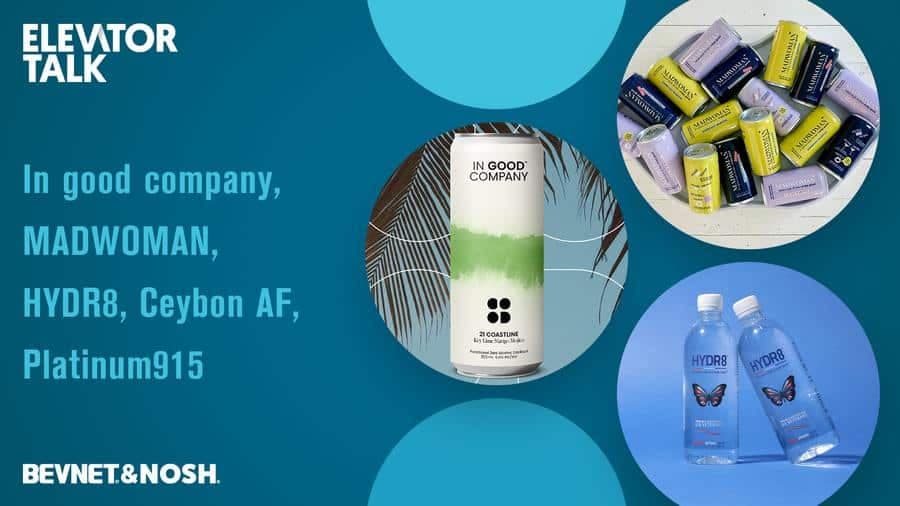
Elevator Talk Episode 99: In Good Company, MADWOMAN, HYDR8, Ceybon AF, Platinum915
Transcript
Note: Transcripts are automatically generated and may contain inaccuracies and spelling errors.
Ray Latif [00:06] Hey folks, I'm Ray Latif, the editor and producer of Bevnet's Taste Radio podcast. And you're tuning into the latest episode of Bevnet and Nash's Elevator Talk, the series that profiles early-stage and disruptive brands from across the food and beverage industry. Today's episode focuses on five beverage brands whose entrepreneurs will have an opportunity to hear feedback and advice from our co-host for this episode. That's Andrew Gard, who's the founder of Right Coast Brands and co-founder of Culture Pop. Andrew, so great to see you.
Speaker 2 [00:38] Great, thanks for having me again. Excited to be back. Yeah.
Ray Latif [00:40] Your 3rd, 4th time on Elevator Talk,
Speaker 2 [00:42] I think the
Ray Latif [00:43] 3rd, 3rd.
Speaker 2 [00:44] We've done a bunch of taste radios together as well too, so it's kind of, uh, not that they're blurring together, but I enjoy being here.
Ray Latif [00:49] Yeah, this is a 1st for us on Elevator Talk in that you are the first co-host to be seated in the studio here with me.
Speaker 2 [00:56] Great, great. Happy to be here. I like coming in.
Ray Latif [00:58] Yes, we're honored as well. As I mentioned, the founder of Right Coast Brands, the co-founder of Culture Pop. You've been in this business for a long time, the beverage business, that is. Tell us a bit about your background. Sure,
Speaker 2 [01:10] so Um You know, I got started in this industry, literally answered a job posting on Craigslist, uh, for a startup flavored water company based in Cambridge, and, uh, never looked back. Uh, I spent some time, um, working here at Bevnet. That's where we met years ago, um, and always just kind of had like a entrepreneurial drive to, to build cool things, make things, bring products to people that are delicious, tasty, and And see what we can do in in building products, you know, that, you know, can go to scale and, and really be exciting and, you know, hopefully, you know, a good addition to, you know, a very competitive industry.
Ray Latif [01:49] I'm not wrong when I call you an operations expert. You know beverages inside and out. You know how to make them. You know what tastes good. You know what ingredients work together, what don't. And in your business, that of co-packing, co-manufacturing. What do you see as some of the biggest problems, the biggest challenges that early stage brands are encountering in that first run, in those first few runs in their interactions with co-packers,
Speaker 2 [02:17] uh, you know, staying on. The taste profile of the ingredients, the kind of foundation of what separates a drink, um. A, a pitfall we kind of find right away is just, you know, real efficacy of ingredients, um, as well as trying to jam pack a drink with all the things, um, or trying to really maximize, um, daily value kind of components of, you know, functional ingredients. It, it tends to be disruptive in making a shelf stable, scalable beverage. So a lot of our introductory work with brands is kind of like. Going through an ingredient deck, going through the commercial viability of certain materials, you know, impacts that they have, whether it's, you know, pasteurized or products need to be preserved in a certain different way, the impacts they have on the package type, you know, if it's in a can, you know, is there can liner problems, you know, are, are certain things just not feasible. Um, we learn a lot of the work that comes our way. That on the formulation side, a lot of that's not covered so we kind of have this secondary initial education on, you know, the feasibility of realities of things and um not just for what we would run, you know, within my facilities or or where but um what's just really gonna be helpful and realistic from a brand's perspective as you're trying to be cost conscious and you know, put as much of your cash to the sales and marketing side of the business as possible and. Um, we just have honest conversations around those things and, and kind of help rebuild products from a, a consumer, you know, lens as opposed to just like a, uh, an entrepreneurial wish list or checklist to kind of build abundant functionality in certain things.
Ray Latif [04:03] There's the viability of the liquid. And the viability of the functional ingredients that may be in that liquid, but there's also another important aspect to this which is the viability of a business plan, of a business strategy. Can this actually work? Can I scale this product? Again, a co-founder of Culture Pop, one of the fastest growing beverage brands in the market, on the market, um, and you and I have seen thousands of beverage brands come and go. What are some of the most important aspects of a successful beverage strategy, because you could have the best tasting product, you could have the best packaging, but if your approach to go to market, if your scaling strategy isn't where it should be or what it should be, you're gonna have problems.
Speaker 2 [04:50] Yeah, I mean, I think really understand what your market opportunity is. Um, in starting Culture Pop, you know, we, the brand is called Culture Pop Soda for a reason, you know, you know, firmly placing us in that soda category, which is a very large market, uh, a big part of the beverage industry, so a lot of, um, space for us to go and explore and figure out where this brand fits and lives, uh, and then building a taste profile that fits that. So on the consumer side of things we're not confusing them. Uh, we talk about that brand as, you know, a delicious, better for you soda product, more so than a probiotic drink. The probiotics are just an enhanced feature that bring functionality to the beverage that we build flavor profiles around, um, but they could exist without it as well too. So we're focused more on the brand, and I think that's the biggest thing as well too is you don't want to spend time educating consumers or potential consumers about the functionality within your drink. You want to educate them on your brand and have them become advocates for you and your business and your brand, not necessarily like the key core functionality within it. I think that's how you build a loyal consumer base that comes back and searches out for your product, not just a product that has something that might be in your drink, that could be in several other drinks as well too.
Ray Latif [06:06] Well put, uh, I'm really excited for this episode. Before we hopped in the mics, Andrew said, I'm really thrilled to be talking to the founders of these brands. Really interesting concepts. Are you ready to meet the first founders of our first brand for this episode? Yeah, let's do it. Let's do it indeed. Those folks are Chantelle Vandenberg and Jessica Stoller, the co-founders of In Good Company. Chantelle, Jessica. Great to see you. Good to see you both. Thanks for having us. Thank you so much for joining us today in good company. I love the name of your brand. Tell us all about what you guys do. So our mission is to offer an elevated, healthier, and more inclusive drinking experience through functional zero alcohol beverages. Um, we're sort of, we're more than a mocktail. We are sophisticated flavors. We use nootropics, adaptogens, vitamins, a little bit of caffeine to kind of help you keep up. We have prebiotics, and we're non-GMO. We're organic, and we are gluten-free. Um, so I'll just get a little bit into sort of Chantelle and I met sort of by fate, I want to say it was, uh, both of us were early on in our sobriety journeys, and we went away for a work event and kind of commiserated over the lack of non-alcoholic beverages that were low in sugar, and you could have a few of them and kind of keep up a little bit with the caffeine and As we were driving home from that trip, we, we realized that we, we could create the product that we were so desperately looking for, and that's what we've done. Another thing that's important to us and in our sobriety and just in life is to give back. And so we have decided we give 10 cents from every can sold to supporting people who are seeking recovery from addiction to drugs and alcohol. Outstanding. I have a lot of respect for what you guys are doing, um, especially because we are seeing a great movement when it comes to sober curious lifestyles and sober lifestyles, period, and you know, I think the hardest part for a lot of folks is, OK, you know, what's out there for me, um. And you know what's out there for me is a little bit easier to find these days. It's still not exactly the easiest thing to find in a lot of places. Where are you guys sold? Where is In Good Company sold right now? And what's your price point? So we have not officially launched. We are doing our pre-sales and we will have a soft launch at the end of September. We are in Canada. We're based out of Vancouver, British Columbia,
Speaker 3 [08:49] and we are planning on our price point to be around 6.99 a can. When we launch, we're about 24.99 a case. Yeah, so we're technically, sorry to interrupt Jess, we're technically soft launched, um, right now, as we're just doing direct to consumer on our website. So we're basically just doing pre-sales right now.
Ray Latif [09:12] Well, I want to get in on this pre-sale because your products look amazing. Your packaging is fantastic, Andrew. Um, you know, I think the most important thing when it comes to products like these is it's something that you wanna reach for, right? Yeah, I mean, talk a bit about your thoughts on the packaging and the concept itself.
Speaker 2 [09:31] Um, a couple of things jump out to me right away. Obviously it kind of falls in a minimalist type of package. What I do like about kind of the watercolor streak in between it that it makes it feel like what's inside of it's bursting with flavor, more so than something that's very subtle and like composed inside, um. I would like to see a little bit more of, I can tell by the flavors here that there's kind of two descriptors, what is essentially like kind of the cocktail name that you would find like on a bar list and then kind of what defines that. Um, I would kind of lean into that a little bit more too, at the very least just certain things that call out, you know, the difference between two of the flavors that's going to be like a driving component, you know, for consumption. Um, other than that, I like the brand name. I like the positioning. I'm curious to know what kind of the icon logo is. It doesn't immediately like jump out to me, but, um, it's, you know, very prominent on each of the cans. I'm just more curious what that is than anything. Um, that's my initial kind of quick takeaways, you know.
Ray Latif [10:33] Do you want to talk about the icon? Yeah, yeah,
Speaker 3 [10:35] so the branding honestly was one of the hardest things, and I didn't think it would be. I'm super creative, so I thought it would be the easiest piece of this puzzle, but it took so many revisions, and it was hard because We didn't want to. Our initial idea was to kind of come off with a bit of an art image on there, um, and then we started to look a bit like a craft beer, um, and then we tried some things where we were like, you know, now we're looking too much like an energy drink. So ultimately this is what we landed on, um, and we wanted something that was simple and still stood out, but we didn't necessarily want to be like a lot of other beverages that have maybe You know, a picture of a fruit or something that's going to really tell you what it is. We wanted people to kind of pick it up and say, oh, this is interesting and really have a look at it to find out what it is. Um, yeah, so that's kind of how we landed on, on our branding. And sorry, for the, the icon is basically, if you look at it, it just, it says good.
Speaker 2 [11:41] Oh, OK, I knew there was something in it that, you know, I'm just not smart enough to pick up,
Speaker 3 [11:48] yeah, that, and that's the point. You really gotta, exactly, you really gotta pick it up, look at it, and that's where all the investigation and, and stuff comes in. So yeah.
Ray Latif [11:59] At $699 the price point is a little bit higher than it might be for other beverages out there. Now this is a very specific kind of beverage beverage because it is a non-alcoholic cocktail. Um, how did you, how do you come up, come to that price point? How do you achieve that $7 price point?
Speaker 3 [12:18] So just so you know, so that is $699 Canadian, um, so I don't know the exact conversion to American, but that would be a little lower, uh, in the US, um,
Ray Latif [12:30] let's go, let's go, I mean, I think the, it might be right, right around $550 or $6
Speaker 3 [12:36] here, yeah, something like that, yeah, so that's a little more in line with some of the, um. The cocktails that you have down there, but it's just, it's really the ingredients that we're putting in there, our formulation, we heat pasteurize. There is a lot of aspects that go into it that create that higher price point.
Ray Latif [12:57] There's also a functionality associated with the products, functional non-alcoholic cocktails. Um, I'm curious as to what the function, functional benefit is of these cocktails.
Speaker 3 [13:08] Yeah, so we've got a few functions like Jeff described. So we've got adaptogens, Nootropics, um, you know, things like L-theanine, MCA, lion's mane. Uh, we've got vitamins, we've got vitamin C, B6, B12. Uh, we've got the green coffee bean in there for the gentle kick of coffee. And then for our prebiotics, we have agave inulin, so it's a plant fiber, um, and then we also have a bit of apple cider vinegar, so the combination is, you know, good for the gut. Um, we also recently just did a bit of a revision with our fiber content, um, I'm sure you guys have heard, but in the news recently, there was a lawsuit with a current Prebiotic, um, and it was just that it was too low. So we had to up our content and we had to make it something that wasn't going to overwhelm your stomach, um, and, and your gut, and we wanted it to, to be perfect. So we, we had to do a lot of work to, to revise that, and now we're, we're really happy with it.
Speaker 2 [14:13] And is that with the agave inulin?
Speaker 3 [14:16] That's with the agave ulin and, and the apple cider vinegar. Yeah, we're at 4 g now per can.
Speaker 2 [14:23] Yeah, I mean, certainly real functionality in there, uh, and, and functionality that is familiar, so someone who, you know, would be approaching this brand and interested in trying it, I think would be very familiar with the functional components of it and so it's not like a question mark of like I don't know, uh, and there are other brands similar to this that are garnering a similar price point, you know, even at traditional grocery and retail. So there's a bit of a. A change in the currents a little bit with that and and just the understanding um I think like launching outside of DTC like how to like where what is an avenue for success for this brand um this kind of given the packaging and kind of positioning and even it's kind of like your guys' brand story I think you know something that is kind of like Traditional non-traditional on-premise like being in hotel bars and things like that when you talk about the can looking like art and having an elevated price point and and kind of delivering a functional experience and I think that's an interesting way of bringing this product to people and allowing them to discover it, um, that not every brand has that ability to do that.
Ray Latif [15:34] Yeah, I'm curious about that strategy of on-premise versus off-premise. Um, how much are you looking at the bars and restaurants, the bar and restaurant scene versus, uh, going direct to consumer versus retail, brick and mortar retail that is. We see ourselves doing all of the things. One thing that has actually come up that we've had quite a few offers for is festivals. A lot of people are opting out of drinking at festivals. They just don't want to wait in line. They don't want to do it. So that's, we've had a few opportunities once we have product to festivals and then bars and restaurants as well. We've had a hotel reach out, a hotel chain, which we think would be a really good fit. Um, we're just sort of, you know, we don't wanna go too fast, so we're just kind of trying to go slowly and, and build up and, and expand on it as it happens. Um, we're almost out of time, but I wanna ask about your social strategy because I'm on your Instagram page right now, um, and it's beautiful. I, I feel like this is just a very, uh, nice sort of approach to introducing the brand to consumers, um, when you are. Trying to get when you are uh trying to induce trial, when you are trying to get people to buy your product, um, what's been your approach from a social standpoint?
Speaker 3 [16:56] Yeah, that's a good question. Um, with the Instagram, it's a I think we just, we're taking a pretty easy approach. We're taking a likable approach. We're not, you know, shoving sobriety in anyone's face. It's very, it's welcoming and it's, it's friendly, and we're just trying to grow up a little bit of a community and, and see where that lands us, really.
Ray Latif [17:22] I think you're off to a great start. I think Andrew would agree, and, uh, I'm so excited for you and your brand. Um, launching a company like yours, launching any kind of beverage company is not easy, but like I said, I think you're off to a great start in this great runway for in good company. Jessica Chantelle, thank you so much for joining us on this episode of Elevator Talk. Uh, please stay in touch. We're here to help in any way we can. I think people talk about Bevnet and Nash and think we're just a news organization, but I think of us as a community organization, if we're only writing about brands that uh don't make it, then we're not doing very well for ourselves. We have a lot of news to write about uh if brands are successful, so let us know if we can make any introductions, offer any feedback, advice, insights, and we'll do our best.
Speaker 3 [18:09] Thank you so much for having us.
Ray Latif [18:11] All right, on to our next guest for this episode of Elevator Talk. That's Mari Georgino, who is the founder and chief madness officer of Mad Woman. Mari, great to see you. Hi, nice to see you. Thank you for having me. Thank you so much for joining us today. I actually have a couple of your products here, uh, at our office. Thank you so much for sending them. I have your cacao martini. And I have your espresso martini. I don't have your decaf espresso martini. Sarah took it to taste the radio. She had it. She did take it. Yes, I, uh, more. Yes, I'm letting, I'm letting the cat out of the bag, so to speak, here, because I, I, I want you to, uh, please introduce Mad Woman to our audience. What do you guys do? Yeah, absolutely. You know, for over a decade, people have asked me, Oh, you're from Italy. What part of Italy are you from? And my answer has always been the same. I'm from Naples, the crazy South, and it's so interesting how that conversation and that answer really started a different type of conversation, one that is so much less about the natural picture. the beauty of the country, and the long drawn five course meal, and a lot more about the, the real hustle of daily life, the art of having to figure things out, and um really an attitude of like resourcefulness where resources are really sparse. It's about making more with little. Unless we're talking about people, um, there's a lot of them. And lots of Italians means a lot of voices and personalities, opinions, ideas. It's chaos. It is truly a beautiful madness that um revolves around coffee. Coffee is an excuse to get together, to share the. The craziest part of the day, hopefully laugh about it and um and that's really the spirit of Met Woman. It's this small collection of espresso martinis that is made with the least amount of ingredients, but meant to be shared with all the people that make our life full. Coffee is a great beverage, um, although from what I understand in Italy you're never supposed to drink a cappuccino after 120, is that correct? After 11:00 a.m., oh, excuse me, after 11:00 a.m.
Speaker 2 [20:39] get with the times.
Ray Latif [20:40] So I almost, you know, I, I was gonna say 11:00 a.m. and then I've said 120 because that seems a little bit more, I don't know, flexible. It's too on the line, yeah, I guess it is, um, uh, that total tangent there what you've created here is really nice. There are a lot of espresso martinis on the market. How did you want to differentiate yours from others? Yeah, absolutely. I've tried them all for a while. My refrigerator was a full competitive analysis of everything that's in a can out there, and one of the things I noticed was the of sugar, which really was the first and foremost reason for deciding to try to make my own was because at restaurants around here, anywhere I went, it felt like drinking melted ice cream. So I wanted something that was more coffee forward and very little sugar. No syrup, no extra um artificial flavors or ingredients, and so that's really where that came from. It was, how can we produce in a can, what I was able to create at home, which was a great drink that all my house of madness love, so. Yeah, and, and as Andrew looks at, uh, your espresso martini, um, are you, I just want to ask Miyari, are you in any locations right now? Is Mad Woman sold in any stores locally in, in your neck of the woods? Not yet, not yet. OK, about to start the first production run. So currently what you've got is a gift box that I'm using to go and meet with distributors. I'm going to, I want to pilot in a couple of different places, but mostly is, um, is distribution partnership, and I am, I'm ready to start the first production run, as you know, those things kind of come hand in hand, right, right? It's like, show me you have product, but show me you have a distributor, so it's, it's really moving, moving this parallel. That's actually a really good topic to discuss. Andrew, any thoughts on how Mari should go about this process? I mean, is this the Is this sort of approach the right way to introduce your product? Is there another way to, to get the word out before you're even in stores?
Speaker 2 [22:53] No, I mean this is it. This is kind of like the knocking on doors phase of just, you know, being a solo entrepreneur, one person out there trying to introduce your brand to as many people who will listen, and, and I, I get that I've been there. Um, I think the best way to do it is to have, uh, some semblance of what your finished product is going to be, you know, whether you're investing in whatever your first run and you're just assuming what you're gonna be able to put out there is what you'll be able to sell through right out of the gate, um, or you kind of pace yourself in certain ways to be able to. To to navigate that very, very early stage piece of it and um nothing beats having the best, closest version of what the finished product's going to be, you know, to get people excited about what you're doing and, you know, what inspired you to bring this to market. Um, it's the easiest way or, you know, the path of least resistance to kind of get people on your side and on your team to help you build this brand, which is 100% necessary.
Ray Latif [23:48] Yeah, Mari, the product itself for me looks delicious. It is delicious. Um, if I'm looking at it, it's kind of hard to read the, um, the, the name of the brand. Um, it's, are you, are you seeing that as well? Yeah, so I mean, I think maybe it's just your cacao in particular. Um, how did you go about or what were your thoughts in terms of what you wanted to get on the can and white is hard on a can, white is hard on a can and, and sort of the vertical, um, the vertical font that you're using. Yeah, definitely, the, the cacao one, we are still, we are still running through some of the colors, what you get, what you are seeing there is the closest to shelf ready. As we're going to be, however, these cans don't have a label, they don't have a printed sleeve on top of it, they're actually printed on the can itself, so that they could be 100% recyclable. And so we're still adjusting that color. It should be slightly darker, so that hopefully the white does come out, but um looking at making sure that obviously the brand name stands out. One of the other things that um I would love to see on the front of the can is something that you pointed out earlier, which is that these aren't sugar bombs. Um yeah, where would you, how would you, it's hard to figure out exactly where you would say this is not a sugar bomb or this is low in sugar or whatnot. How would you advise Mari Andrew on, on pointing that out or making it more prominent?
Speaker 2 [25:19] I, I think the intention's there, you know, this one, at least I think they both do, but this says sugar per serving 1.5 g. Um, I would maybe even make it more simple and this like say, you know, flat out what that is, right? So like, like per serving, I'm assuming the serving is one can, or is this a two serving drink? I think by 7% it probably one serving, um, or no, two. So you have two servings per can, correct? Yeah, OK, um, I would, I would lean into that, and I think that only gives a greater level of credence to it being truly a cocktail in a can. Um, there are the 100 mL canned cocktails that exist as well too to kind of like drive home that kind of bar cocktail purpose. Um, but from a sugar perspective, I think leaning into, you know, 1.5 g kind of right on the front panel the best you can, um, is what is working. Uh, it's a very simple label layout to begin with. So without kind of taking away from that simplicity, I think there presents some challenges there, um. And, and yes, there is kind of the counter to, you know, big sugar bombs that are out there. But at the end of the day, people still consume a lot of sugar as well too. So you don't want to be polarizing in either way, um, or insinuating that there's some sort of alternative to sugar as well too, which I think I've seen a lot of super low sugar claims, but then you flip it over and it's filled with like a, you know, a, a high intensity sweetener cocktail of things, which is, I think, more off-putting.
Ray Latif [26:55] Yeah, and I think the other part of this that you have, so you have the low sugar delicious product, um, but you also have the whole Italian vibe that's associated with MADWOMAN. Um, how do you highlight that? How do you bring out the, you know, the, the flair and the beauty of Italy and Italian style drinks when it comes to marketing and promotion of the brand, Mari? Yeah, absolutely. On a, on a can there's very little places for it, but there's a couple of things I really wanted to make sure that every time you thought of MADWOMAN, you thought of Italian style drinks which have a very specific point of view, right? They're meant, they're made with little, but they're meant to be shared, and on the can itself you see the whole idea of share the drink. When you split a drink, you double the company, that's very much the spirit of Italians. We would rather have less food but share with more people. And um and on the on the marketing side, like, if you go on my website, if you go on um our social Instagram, we're trying to, uh, we're trying very much to highlight that aspect through videos, through um tidbits of Italian lifestyle, and something that, again, it's a little less touristy and a little bit more real.
Speaker 2 [28:10] One thing, one thing that you mentioned kind of talking about, you know, explaining who you are and kind of why in bringing these products to market, it was, you know, talking about like this, like the spirit of Naples and, you know, how that is unique to Italy itself too. I would lean more into that as well, you know, knowing that um that's the genesis behind this and that the, the why of what you're talking about with making a lot for as many as you can with, with little, um. And being the madwoman and all of those, you know, components is like the spirit of Naples more so than just like an Italian style thing. Um, if you're going to lean into who you are and your culture and what makes this genuine and makes you, you know, genuinely bring this to market, I would lean all the way into it and really own that piece of it and it will communicate authentically to consumers who don't know you and can't interact with you personally, you know, when picking this up on the shelf or online. But you'll, you're giving yourself an additional platform to say the same things again, right? And really have a, a more personal connection and almost like you're that second person that they're sharing the drink with, even though like you're just asking them to share that with somebody else. I think that would be very powerful, you know, from a brand perspective, uh, a, a disruptor in the noise of canned espresso martinis, you know, there's a lot of, a lot of genuine things to lean into that. Um, not every brand, every founder has, and I would, I would not shy away from them, you know. If anything, you can tone it down later, but I wouldn't to start.
Ray Latif [29:44] Yeah, I would say, Mari, you're a great ambassador for your brand, and, uh, I would definitely in your social try to. Clear it up. Yeah, I see in your social you are the, the focus of a handful of um the posts, but, um, yeah, I think you are a fantastic ambassador founder for Mad Woman, um, and I also think. That you should definitely trademark if you haven't already the tagline of because you shouldn't have to choose between coffee and vodka, which is on one of your Instagram posts. I love that. I really do.
Speaker 2 [30:17] Well, I mean, there's so much, there's so much little tidbits of gold here on all this. I mean, really, like it's great and it, it's, it's can come off the package in a brand building way that's really cool. 11 call out is. Make sure that these are manufactured well because the seams off on this one. So just be careful about that if you don't want to have leaky cans.
Ray Latif [30:38] But, ah, good point. Definitely not, no, no, unless you're trying to, uh, get the aroma out. OK, we're we're like breaking the fourth dimension. Exactly, exactly,
Speaker 2 [30:52] they're bursting with flavor.
Ray Latif [30:54] Mari, this has been a great conversation. This flew by. I feel like we wanna, I, I wanna continue this conversation perhaps at Bevnet Live in, uh, December in Marina del Rey. Um, but in the meantime, thank you so much for joining us. Really appreciate the time and story and introducing us to Mad Woman. Thank you guys. On to our next guests for this episode of Elevator Talk, Amy McNally and Mark McNally, the founders of Hydrate. Amy, Mark, great to see you. Great to see you I'm Mark McNally, the veterans' advocate for Hydrate, a premium water brand. During my 28 years of active service as a Navy pilot, I flew over 3800 hours in the Intruder, having over 950 carrier arrested landings. Operating in a hazardous environment with unfortunately a high mishap rate. Amy, my daughter and owner, knows intimately what service means and the cost to veterans and veterans' families. It is my opinion the families of service members also serve their nation. I'm proud to have served and to have commanded the USS Dwight D. Eisenhower, a nuclear-powered aircraft carrier. Yes, Mark, thank you so much for your service to our country. Uh, it is very valued and appreciated and um thank you for the introduction to Hydrate, um, a bottled water brand. Um, now, is it a bottled water brand that is intended to be for a specific consumer or are you looking to be a, a brand for all consumers, Amy? Yeah.
Speaker 4 [32:32] I typically like my dad to begin whenever we talk to anybody because the brand is essentially an homage to his service and to anybody that's served in the military. So our brand Hydrate, the company is a certified woman owned business, and we are, you know, a bottled water for everyone that's based on some pillars, obviously with my dad, as you can see, and the branding patriotism. Um, we proudly support veterans through the Gary Sinise Foundation, which is an incredible, you know, foundation with 100% with Charity Navigator. Um, we were hoping that we can be one of the main financial contributors to that organization to help the 16.2 million veterans that are in the US and their families. But then we don't want it to overshadow the fact that hydrate is a premium product. It's domestically sourced. We have two, so we have an alkaline, which is a 9.5 pH, because that's such a big market. But then also we have an artesian water because a lot of times when people think of artesian, they think of ones that come from the South Pacific, and we have amazing aquifers here in the US with a congruent mineral profile. So that's what we've done. And we've vetted some co-packers, so we have green logistics, which essentially means that regionally they will serve places, and that helps us with our carbon footprint so we don't have to ship things even from let's say Virginia to California. We can activate our Californian co-packer. Um, but then as this brand grows right now, I'd say we're in about 175 to 180 Independence and C stores in North Carolina. That was our first place just to check the proof of concept and see what sales velocity and our branding kind of looked like on the shelves. But now we're currently being reviewed by a lot of really big retailers and so we wanted to make sure that we had co-packers so that we could handle the explosive growth that we're hoping we'll see.
Ray Latif [34:34] Thank you, Amy and once again thank you so much, Mark. Um, HYDR8 is a great name. Um, do you have it trademarked?
Speaker 4 [34:41] It's right in the process of being prosecuted at this moment. Yes,
Ray Latif [34:45] OK, that's very important. Yes. Yes, um, I think the other part of this that's really interesting is that, um, you have two varieties. You have the 9.5 pH and you have the artisanal water as well. Um, just based on your early experience and interaction with consumers, is one making a little bit more headway than the other?
Speaker 4 [35:07] That's a good question. Yes, we are getting a lot more interest in the alkaline water, the 9.5 pH, and I think it's because people already have a loyalty to that. I mean, they really do like the taste. They recognize the benefits, the health support with alkaline water, which was surprising to me because there are artesian waters here that do swimmingly. I expected that our domestic would, and so we are in the process of talking about trademarking. We are trademarking American artesian water because again, everything, one of the value propositions is that it's American sourced and that it's supporting people that have served. So, um, but as you said, the alkaline is really kind of the, the champion at this moment that most people are asking about.
Speaker 2 [35:54] I think there's a, a, it's a consumer question as well too and just the immediate understanding of artesian water and what that means and its qualifiers, um. And that it's kind of a naturally occurring thing I think that's lost on a lot of people, um, even with like big artesian based water brands they don't necessarily go into the education piece of that it's more about the escapism and premiumness, um, whereas there's been really great brands, domestic brands that have You know, really created the alkaline water category, which is now essentially kind of table stakes for a premium bottled water brand. It's kind of something that's um expected more so than uh an outlier, and I think that's probably directly exactly why you're seeing immediate results kind of in a relatively small sample size. Um, I think that's just a greater representation of, you know, what's happening kind of nationally.
Ray Latif [36:54] I'll admit I am a big consumer of alkaline water. Uh, I don't have a bottle beside me, but I typically do of Essentia. Uh, Essentia is the largest, the most well-known brand of alkaline water out there, um, and a lot of it for me, I think, is at this point is just because of its distribution and just the, the fact that it's a, um, it's a, it's a brand name that I trust, um. You know, acquiring that trust is sometimes kind of difficult when you are the new brand out there, um, and I asked earlier about, you know, whether or not you're focusing on a specific consumer or going to a broad audience or trying to reach a broad audience. Um, how much of your positioning, how much of your marketing is geared toward, um, people who are in the military or have an affinity for the military.
Speaker 4 [37:43] I would say I mean that is going to be our primary, you know, driver is we have, you know, during our research we found that 61% of Americans have a family member that served, so that's a really huge market segment that's either served or that is related or closely, you know, close with someone that's served. So that. That value of just if you purchase this, plus the halo effect of the Gary Sinise Foundation, people that have served in the military or that support charitable giving recognize the fiscal responsibility of him and his organization. And so we're really fortunate. It took about a year for them to even vet us and and a lot of that had to do with my father's military. Service. So we're that's really the big one, but then also the market of just the fact that it is healthy, so you don't have one in front of you, but I certainly after this we'll get your address because I want to send you some of our alkaline and make you a convert because it is really very, very comparable to the brand that you mentioned. Um, and, and I think that you'll realize and see that, yeah, it's, it's great. And so people that purchase it can feel good about when they have a brand that they will learn and grow to trust, but we are someone, a lot of big name brands and companies give about 5% for charitable giving, and small businesses give about 6%. And so for us right now, we knew. You know, we've acquired some debt. This is really a passion project to me. Um, my father lost a lot of people. He flew, you know, he's very modest, but, um, you know, he was an exceptional pilot flying for 28 years and, um, A6s, which was all-weather. And, um, and sadly, a lot of in the 80s, I don't want to age myself, but in the 80s when I grew up and he was flying and there were attacks, we, we lost a lot of friends. He lost a lot of people. I went to a lot of memorial services and so because of that, I saw firsthand really what service and sacrifice look like. And so that's why we're doing this. So I decided, OK, we need to Be responsible with the business. Um, we, we have put something that's really important and you'll see it on our label on the back, we have a fallen service member and so when you scan the QR code, it comes up to the person that, you know, passed away in the line of duty that was killed in action, and it gives you a little bit of their history as a way to thank them and their family for that sacrifice. So it is, the entire brand is encapsulated in patriotism, but what's inside the bottle is a premium product that is very comparable to all the other name brands with a lot of money and millions of dollars for marketing that people have over the last, you know, 5 or 10 years grown to trust and like.
Ray Latif [40:39] Andrew, I love the stories behind brands. I love the people behind brands, and you and I just chatted about Mari and talked to her about being the focus of her brand, Mad Woman. Um, I, I wonder, Mark, um, how much and how comfortable, you know, would you be to be the face of, if not, um, a focus of the marketing behind Hydrate. The promise to support veterans is not an empty promise. She is fiercely loyal, and you know, we, the reason that I'm comfortable in doing it is because if Me being with the marketing helps the brand take off, then I have, well, I've helped to support my daughter and her, you know, her son because they deserve to make enough money to survive, but also that we can make significant contributions to the veterans and the veterans' families' needs because it You know, you can take a look at just the homeless population of veterans and, you know, the PTSD that a lot of our, you know, warriors have that it takes a lot of funding to address those and you know it's not going to come from the government. The VA department does a good job, but they need help, and we're hoping to do that.
Speaker 2 [42:16] One thing I think that is compelling is that it's the continued active service for service members, um, even while not longer, no longer being an active duty, I think is a real genuine component of that and, and it genuinely comes across in the mission of the brand and, and it makes a lot of sense.
Ray Latif [42:35] Absolutely. Um, I'm so glad we had the opportunity to meet both of you. Thank you so much for taking the time. Uh, Amy, I think, uh, you've created a fantastic brand and it's, uh, amazing that, uh, you're getting to do it with your dad, um, and Mark, once again, thank you so much for your service to our country, um, and thank you for highlighting the issues that are facing veterans today. It's such an important issue, um, and I hope that Hydrate can be successful in addressing some of those issues. Thank you so much. All right, let's keep it going on Elevator Talk with our next guest. That's Julieta Octavio, who is the founder of Sabo AF. Julieta, great to see you.
Speaker 5 [43:17] Hi, Ray. Hi, Andrew. It was really great to see you too.
Ray Latif [43:20] You as well, and I should have, uh, addressed you as Doctor Julieta because you did earn that title. Uh, and I had an opportunity to meet you at the Summer Fancy food show in New York City this year. I'm really glad that I did because you make some fantastic products, and here they are. Happen to have some. In our storage area, uh, please tell us and our audience all about what you do.
Speaker 5 [43:49] Absolutely. Uh, hi, everyone. My name is Julieta Octavio, and I founded Cebo AF in Northern California. We make a premium alcohol-free aperitif and soon to be canned sparkling cocktail, uh, for people who love a great drink, they love to feel good, and they're ready to skip the hangover. Uh, so, uh, the, both of our, our products are developed by me, a holistic doctor, um, with a deep background in, uh, Phytochemistry, and herbalism, and um they are a sophisticated taste, a sensation that's a true placement for alcohol with no fear of addiction. Um, they're just fun and um elevated. They, the, you know, we wanted to present it in a, in a beautiful bottle. It's something you can take to a dinner party. You can take to any event and feel proud to gift it to the host or hostess, whether or not, you know, if you're not sure that they drink or not, it's a great entry point to come in. Our products are 80% organic and 20% wild harvested, functional mushrooms, herbs, citrus juice, and we use low glycemic agave as a sweetener, and we're really different than a lot of other non-alcoholics on the market. Uh, we come, you know, coming to it from a medical background. I spent, uh, you know, we have a very high standard of, of entry for creating a product like this, and they actually came, actually, I had no intention of starting a beverage company. I've spent over 20 years in healthcare, and during COVID, I could not see my patients in person, but we would speak on Zoom. And what I saw was uh everyone was drinking a lot of alcohol, not to celebrate, not to enjoy it, but to self-medicate their anxiety and depression during that time. So, I went back, um, I, I really leaned into my knowledge of herbalism and phytochemistry to develop what I thought was going to be a harm reduction gift for my patients. So I first developed the product as a mushroom and herbal bitters, and I would mail it to my patients and say, hey, tonight instead of drinking 3 glasses of wine or 2, you know, mezcal palomas, why don't you You, you know, mix this, like make it, make a bitters and soda with this and drink it instead. And, you know, I, I was passionate about harm reduction and I knew that the ingredients that I was putting in it were really good for people. Um, what I did not count on, what caught me completely off guard is how much they reported feeling, how, how good it felt for them to take it. Um, so, They were immediately after taking it or drinking it, they, they would report, oh, I feel less anxious. I feel a little more uplifted, my energy is coming back. And then over time it started to really reduce the harm of alcohol and bring more benefits which were, you know, reducing that kind of bloatedness, the weight gain, the sleep issues that come with, with excess alcohol use. So at the end of that first year, I started getting calls from patients saying, hey, can I get like 10 of these, or can I get a, can I get a case of these? Can I get 4 more? I want to send them to my mom or my sister or my dad. They're also drinking too much and they're also really suffering. And so at that point I realized, well, wait a minute, I actually probably have something here. So that's how the company was started. It started out as harm reduction and then it revealed, you know, it was meeting a great need. And um and so you know here we are. I'm talking to you
Ray Latif [47:36] um here you are a beverage entrepreneur who was never intended to be a beverage entrepreneur but I think the best ones yes, I think you've done a good job uh on your first try here. Andrew spent some time looking at your product before we hopped on the mics. Um, what are your initial thoughts on Sabo FF?
Speaker 2 [47:53] I mean, excuse me, I'm, I'm a big believer in, you know. Herbalism and bringing herbs and spice, real herbs and spices to, to beverage products and, and doing what you can to make that scalable and shareable and be delicious and, you know, have a high level of efficacy and just kind of lean into the realness. So, everything about this is super intriguing to me because it's some of my favorite stuff. So I'm excited to try these, um. Interesting to know that you're, I'm assuming kind of taking the same ideas and kind of creating a canned version of it which I'd imagine would be carbonated and such more of like a ready to drink experience as well too, uh, which I think plays well together, you know, it allows kind of like the usage occasion to be defined by the consumer, um, but yeah, I mean from an ingredients component standpoint like. Looking through everything, I 100% get what's in there. And you know, knowing enough, I am intrigued by the kind of nuance of the taste profile, and I'm I'm definitely going to take these with me. I hope that's OK. Um, I'm just very curious about Andrew,
Speaker 5 [48:56] we can send you another set if you want. Yeah, yeah, we're very committed to creating not another juice or iced tea. Um, but really in a sophisticated adult tasting beverage, and for us that means 3 primary components, so. Most alcoholic cocktails have a bitterness. They have a mouth burn, and they have a certain viscosity to them. And so, um, I was so excited to get in the apothecary and get in the lab and, and really find botanicals and herbs that replicate those, those elements, um, in, in not only replicate them, but then, but then surpass them in many ways. So, so yeah, I'm excited for you to try them too, Andrew.
Ray Latif [49:42] Cool. Yeah, um, I got to try them at the fancy food show and I was blown away and I, I loved everything I sampled. I think um one of the slightly more challenging aspects of the brand was that everything kind of looks the same um in terms of the color of the product. Why did you decide to go with a clear bottle, Julieta?
Speaker 5 [50:06] It's a great question. I really, you know, I wanted to create, to show that there was sediment actually in the bottles. I wanted to show because one of the things that happens when you do a mushroom infusion or extraction, and you remove the alcohol is it causes the mushrooms to precipitate out of solution. And so, you know, to, to show that the, that there's a cloudiness and that there's a sediment at the bottom is really proof positive that we have a high, high volume of actives in our, in our aperitifs. Um, so that's the primary reason, um, you know, that's, that's my passionate reason. I'm, you know, in terms of, of marketability, I, I, you know, I'm curious to see, um, what you think about that.
Ray Latif [50:53] Well, from my perspective, it looks like an alternative to wine, I think, more than it does an alternative to a spirit product. Andrew, would you agree?
Speaker 2 [51:01] I would just by giving the, the shape of the package 750 mL, which is very synonymous with wine packaging. Um, I, I'm gonna, you're gonna make fun of me for this, but it's more of a, a lighter varietal of wine. It's not necessarily a Riesling bottle, but something similar to that, Stelvin caps, similar scenario, um. So that's a little bit of a juxtaposition with those types of products which are very clean and like thin from a body and mouthfeel perspective, um. I'm, I'm totally fine with the packaging of it because it. It doesn't confuse a consumer on the elevatedness of this and kind of the seriousness of the material inside of it. It's not something that's highly disposable.
Ray Latif [51:49] Right. That was the leading question to my next question though, which, uh, I, if I recall correctly in our conversation, Juliet, is that you are targeting the on-premise channel um as you are getting started. Is that correct?
Speaker 5 [52:05] Yeah, it has been, um, you know, I really, I went for the wine bottle as opposed to starting out in a can, despite a lot of advice and to go cans first. It's really not the position I wanted to start in with the product. I really wanted to make a point that it is like an estate wine, you know, each harvest we get the plants and mushrooms we get, and then we make this special thing, and there are some variabilities season to season. It, it, it is, it is a sophisticated product. Um, I also wanted it to be able to be on the back of the bar and be seen, um, because a lot of our on-premise accounts, you know, we Uh, my personal motto is, you know, do awesome stuff with amazing people, have an impact and have fun, um, and that has led me to some incredible collaborations with bars and restaurants and bartenders and chefs. And so to have a bottle that people want to look at was really important, um, as part of that as well as want to drink what's inside of it. Um, and so yeah, our, our We really started out in on-premise, um, and now we're moving out into specialty grocery and retail, um, but, you know, we, we launched a proof of concept run last fall. We sold last November 1st. We sold out of every bottle by January 1st, and so then we said, OK, it's got legs, um, and then we did our first full production run April 1st of this year, and we're in over 70 accounts. Um. Today, as of more than 70 today. Um, and so, um, you know, we, we leverage both. I think, you know, the on-premise restaurants and bars and kind of celebrity, um, food people are, are great exposure for us, um, and they're great partners to have. And then the specialty groceries and the bottle shops, um, they really, they sell a lot, you know, so that's important to us too, right?
Ray Latif [54:01] Yeah, selling a lot of product is very important for sure.
Speaker 2 [54:05] It's kind of, it's kind of the key to it all,
Ray Latif [54:07] yeah, I would say so. Um, we're out of time, Julieta, but I know you're about 6 hours or so away from LA, but, um, I have a feeling that this would be an Awan hit. Uh, this was, this is something that the, the folks, the customers of that chain would buy in handfuls, uh, or armfuls in this case.
Speaker 5 [54:29] Yeah, that's, that's our next target, and we've had some initial meetings with them, and yeah, it's a decision of bottles or cans for them. In the meantime, you can, you can find us at Silver Lake Wine. So the first one that's coming off the top of my head, I think Rochambeau is another one in the LA area, but yeah.
Ray Latif [54:48] Fantastic. Um, such a great brand. Such a cool conversation. Julieta, thank you so much for taking the time. Thank you so much for sending products. Um, Andrew, you can't have these. We still need to do a formal review, but I think, uh, well, I
Speaker 2 [55:01] can put my review hat back on.
Ray Latif [55:04] Oh this is true. This is true. All right, we'll talk about this after the show. Drop
Speaker 5 [55:08] your addresses in the chat, Andrew, and we'll, we'll get you some, but thank you so much, Ray.
Ray Latif [55:12] Thank you. Sounds good. Thank you, Julieta. All right, on to our final guest for this episode of Elevator Talk. It's Elijah Davis, who is the co-founder and CEO of Platinum 915. Elijah, great to see you.
Speaker 6 [55:25] What's up gentlemen? Ray, how are we today? We good?
Ray Latif [55:29] I'm doing fantastic. Thank you so much for taking the time. Uh, you know, and thank you so much for your patience. Uh, we have talked to the other four entrepreneurs on this episode for some time, but you know what they say, save the best for last, right?
Speaker 6 [55:44] Hey, I take that. I don't know if I'm the best,
Ray Latif [55:45] but I don't have any. All right, Platinum 915. Tell us all about what you do.
Speaker 6 [55:53] Yeah, let me go ahead. Let me make sure I read this properly because I don't want to get in trouble for missing stuff from my other co-founder, alright, so. I'll start with us. Welcome to Platinum 915, gentlemen, home of our delicious can of shots, Rastaros, false gifts, and syrup and Keys, and I apologize. The alarm just started going off in the background like a tornado or something. So if you hear that, just disregard it. So Platinum 95 is a veteran-owned life science brand with innovative hemp-derived and natural plant products such as our newer tropic functional. Gummies, which is our thoughts gifts, our cannabis beverages, of course, our hemp derized CBD gummies and legal psychedelic mushroom products. Now Platinum 95's mission is to provide consumers with safe, delicious, and innovative CBD and non-CBD products and create joyous customers interactions through our cultural servant leadership. Now I got out of the way. Where should we start now? I'm ready. I'm excited. What do we need? Who's starting first?
Ray Latif [56:49] Well, that's a great introduction to the brand, Elijah. Thank you so much. Uh, I'm curious as to how you personally got into this space and why, uh, it's become a passion for you.
Speaker 6 [56:59] Yes, my story is the same way. I am a military veteran. I am what is considered a disabled vet. I had a serious neck injury, so it required multiple fusions in my neck. So I've been in chronic pain. I'm 50 years old now. So as a former athlete and everything like that, I was against cannabis and I was looking for things because I blew up to about 295 pounds. Just to fast forward it, I started searching around. I met another military buddy. I'm former counterintelligence, military intelligence, and he said, Man, you gotta try this because I was in so much pain. So I tried cannabis, um, it was a hemp gummy Delta 8, and it was unbelievable the reaction I got. I was able to sleep. Um, you know, my body just started getting back the chakras and everything. Can't write, so I started doing more studying on this and met some labs, and now this is where we are today at 2024. So it's been a long arduous journey, you know, a lot of resiliency. I tell people all the time I've been bootstrapping for so long that I only have the scraps left, and that's connected to faith and resiliency. That's all I got left, gentlemen. So it's great to be here.
Ray Latif [57:56] Indeed, thank you so much for your service. I'm glad to hear that your brand and your business are helping you to feel better and be a better person. You know, this is the first time I think I've seen a THC beverage presented as a shot or a shot alternative. What do you think about that concept?
Speaker 2 [58:16] I think it's a great way to introduce the products to people and Make it abundantly obvious that it's the equivalent in liquid form of, you know, taking what would be a gummy or something that's a single serve immediate consumption, you know, there's nothing more to it to have to then go and do on your own or recreate it or build up the functionality format of the liquid to fill can or bottle space. Um, you know, obviously you've seen success in brands kind of. Alternate from uh RTD form factor in energy, really, really well and kind of own that space on the counter, you know, like at the at the counter in liquor and convenience. Uh, this presents something that is highly functional, a life sciences brand that has fun branding around it, that's not to be, you know, off-putting. With flavor profiles that are going to be familiar with people who are making these, you know, point of purchase purchases as well too.
Ray Latif [59:18] Yeah, the flavor profiles are really interesting to me because you have Uh, bourbon, a vodka, tequila, rum. How similar do they taste, I guess, to the real thing would be my question and I, I think the proof point as to whether I would enjoy this type of product. Elijah, I mean, how, how much are they intended to taste like the quote unquote real thing?
Speaker 6 [59:41] Hey, the reason why I'm smiling, this is the real thing, gentlemen. This is the real thing. This is alcohol, we just burn off the alcohol out of the spirit, right? So it's actually the concentrate and we just burn the alcohol off, even exactly spirit, the same exact taste, the same exact high-class taste that people love everyday and you just add it. So of course, we have to hide the hemp flavor, of course, that's in there, you know, it's 2 mg, but it is the actual spirit. So, and we do use that technology of um nanoemulsion, right? So that allows up to 85% of the THC to be absorbed, unlike lipid-based, it's only up to 20%. So that's why we're able to do only 20 mg, which is almost a simple serving size of a little small gummy where you're not gonna get that full 85%. You're only gonna get, you know, 5 to 20%, and it takes a while to get through the digestive system versus can of shots with our nanoemulsion technology, boom. And you're sit in the next 15 to 30 minutes, and now you're feeling no anxiety, you're relaxed, stuff like that. I'll stay away from claims, but you know that's what, you know, according to what CB does for the body, relieving pain, stress, helping with sleep, that kind of thing. So we didn't wanna change anything that the consumer is already doing. You guys already know how this works. I'm new to the game, but I did go to Jack Welch Management Institute, so I'm just using stuff that he said. And by the way, congratulations on that $21 million you received in raising that money over there, man. That was superb, you know, so you guys have the right company. I checked you out, by the way. I'm just that type of person. I'm really excited to be here, so super on that one. So that's, it's, it's all ready to go for you. Hopefully I answered the question.
Ray Latif [1:01:10] Yes, you did very much so. Um, I did not know that you could burn the alcohol off of or burn the alcohol out of products like that and still have it taste the same way it should, but that's, that's a great sign for your brand. Um, I'm curious, you, you're based in the Dallas-Fort Worth area. Uh, can you sell THC beverages at traditional retailers?
Speaker 6 [1:01:33] I don't know. I would have to ask my attorneys, which is Ritter, Spencer, and Chang, which is cannabis attorneys here in Dallas-Fort Worth. So when I tell you guys I'll stick to my experts, right? That's what I do, right? That's their job to tell me where we can and where we can't go. A lot of us are still waiting for that 2018 farm bill to be completed, right? That goes for everybody. Everybody on Bevnet too. When the government makes that rule, we're all waiting. So until then, they tell us where to go and we're just following. But in Texas, we're legal here. So we don't have a cap on milligram levels, but we're best damn gummies who actually make the products, we did. This is like a year and a half. We didn't just throw this together, right? We came together back in 2022. We introduced this at Benzinga Cannabis conference in Miami and Chicago to the greatest. Mines in the business, right? So that was our product stuff and why we sold out there before we went back and signed a contract with Niagara Labels and to get the labels to look what you do now, and now we're introducing it in 2024 where this is the year is all about revenue and we did soft launch into the largest um wholesaler with Canify, right, of counterculture goods and that was in July. So that's our soft target cause we're here in Texas and that's where we want to expand our market.
Ray Latif [1:02:42] I, I'm, I wanna go back to the question that I asked the founders of Hydrate, which was, how much of the story you wanna include, how much of the story of the founders you want to include in the brand story, and Elijah, you know, your story personally resonated with me. Uh, Andrew, I mean, how much of that do you think would benefit the brand?
Speaker 2 [1:03:03] Uh, abundantly so. I mean, I think, especially kind of your, your history with kind of avoiding cannabis products as uh a remedy for pain, um, but then becoming a convert for that and then, you know, so much so that you want, you're passionate behind it and you want to be able to share that with other people through building a brand and, and, and delivering this to them in a certain way, um. The hard part is you have limited real estate in a small package, you know, in, you know, a consumption environment that, you know, how, how do you tell that brand story? So I think a lot of that will have to exist in how you build, you know, point of purchase placements to, to talk about the why and that it's not just an alcohol nip, it's actually a highly functional, uh, really, you know, beneficial thing for you. Um, so how do you kind of bridge that gap between someone who's just kind of making a quick purchase to something. That you know they're going to this place to like seek out something that's going to be, you know, a very helpful remedy for them.
Speaker 6 [1:04:03] Yes, sir. It's, it's, it's similar to, OK, so when I'm looking around at all the beverages, and most of them, by the way, we're right now probably seeing a few Google can of shots. There's not many of us out there. Most everything is seltzers and juices, right? So I'm walking in these stores and I'm looking at a price point, say it might be a 5 mg can, maybe 10, right? So a consumer will have to purchase 4 of those to equal one of our shots, right? A, a little. Small shot, right? So with our, you know, uh, we use cost-based pricing and WTB, you know, what they're willing to pay, but most of the time they're gonna buy our product because they don't wanna buy 4 cans unless it's hot out in Texas and you need a cooler drink, right? So I'm not really even competing against that market. I'm using a blue strategy, right, ocean strategy to go that way, and I believe like you guys know best, but I think the Alcohol market is what, about $400 billion? Oh man, that's a lot of money. And it's projected to go to $600 billion right? So what that told us was that there's a taste of, a veracity of taste for the beverages. So what we did was chose the four out of the top six in the United States, right? And that's why you see the rum, the bourbon, tequila, and the vodka. We don't want to change anything they're already doing, right? And now when you go back to functional beverages, I think in 2022, it's probably about 200 million. And then Bevnet, of course, when you guys report is at 400 million right now, right? Supposed to jump to 1.7 billion, the beverage industry in the next 2 to 3 years, right? So we just want to make sure, how about position our brand in the right place. Now, the message that you, you gentlemen are so right about and that's why I'm Not crossed up, but we are an empowerment brand, right? Even though it's a life science brand with our neurotropic gummies and stuff like that, this is a self-empowerment brand. So it's based on an angel number which is 915. And the only thing that means is stay in your authenticity, right? So what we say, our tagline, what we put, once you trust, you know, when you have trust in yourself, use your creativity. And trusting your intuition, anything is possible and that's what we want people to do. When you pick up that bag um of our gummies that has the artwork on it, when you pick up the, the distinct labels on there, we wanna make sure that you're empowered to remember that this is a A wellness drink is meant to inspire you. It's meant for you to tell yourself, cause it's 21 and older that you can get anything done. Just have faith, get the right team. And I'm hoping that'll be it versus me doing my military background. You know what I mean? Cause I'm more than just a military member, right? I went to school first, then I graduated from college, then I wanted to serve, play football, then I went into the military, learned that kind of stuff, and now we got injured. And we're trying to do more wellness and just spread positivity and light, you know, I like having fun, but I've spoken too much. I need to hear more questions.
Ray Latif [1:06:33] No, no, I, I think, uh, you have sold me, Elijah. I, I think you are a great salesperson and advocate for your brand, and I totally get the message of wellness and empowerment, and it definitely comes through in platinum 915. And by the way, I didn't know that the number 915 represents angels. That, that's, uh, that's something that was new to me. Interesting. I did not either. Yeah, yeah, very cool.
Speaker 6 [1:06:57] Hey, hopefully if this makes the cut, that'll be on there and people will actually Google angel number 915 and you'll see all kinds of stuff come up and it's for us, man. Like when we were kids, what did all we wanna do? Like Ray, you said you've been doing this for 13 years, you're lucky. Like when I saw like that scene, you know, you got Wes Cravens and Jack Cravens and all right here, I was like, Oh, you know, I'm just clicking on stuff. I'm like, this is the place to be, right? You wanna be around the best experts. I wanna know what works, what doesn't work. Like, here's a question for the general public. I wanna be the number 1 known African-American hemp brand. So when I ask you, can you guys tell me the top 5 African-American hemp brands? You probably can, but if you can't, How about putting platinum 915 in there and let's start pushing. Let's get some investors, some angels, and let's get the American public what they need, you know. Something that they can go back and relax you where you can have one drink or a double and you're not just throwing back shot after shot, right? So I, I did play football. My son plays football also. He's just walked onto the Baylor football team, his red for his senior year. So this is what I mean by resiliency, do you have that belief? And when he's injured and when he was hurting like me, it was like, damn. What can I take? Hey, may I have a can of shot, you know, especially with the new laws they're not testing for THC no more in there, so the sports world is opening up. So it's about who can I get, who understands this vision, position it while we're here, and let's just go for it, you know. And we have the right margins, so I understand investors and things like that. We're not trying to screw everybody over, so the margins are there for the retailers, for the consumer, and, and hopefully that works. And what I don't know, just rely on you experts. That's what I need.
Ray Latif [1:08:22] I am so glad that we're having this conversation, that we had this conversation, Elijah. Um, I feel like we need more time with you, but we're out of time. Um, I, I, as I mentioned on our call earlier today, I hope, uh, we can see you at Bevnet Live in Marina del Rey in December, uh, to extend this conversation. Um, but in the meantime, thank you so, so much for, uh, being with us today for the introduction to Platinum 915. Um, and please let us know if we can help in any way as you continue along your journey.
Speaker 6 [1:08:52] And Ray, the last 10 seconds just sort of make the cut. So let's give a shout out to my partners, Best Damn Gummies. Let's give a shout out to Canna. Let's give a shout out to Berry Hill, the largest medical cannabis company, which is our brand partners also, and of course our team at Benzinga who takes care of SEO. But it's been a pleasure and you guys are the best, man. I'm just happy to be with Bevnet.
Ray Latif [1:09:10] Thank you so much once again. All right. An action-packed show. There was a lot, uh, of a lot of good stuff in this episode of Elevator Talk, as there always is, but interesting variety of brands, um, interesting, different, you know, we saw different approaches to a couple of categories like, uh, non-alcoholic cocktails, water brand backed by, uh, or, or focused on, uh, you know, supporting military veterans. A, uh, espresso martini brand led by a very Italian centric, uh, vision and of course platinum 915. I think all these brands got a shot.
Speaker 2 [1:09:52] Sure, I mean, everyone that we talked to today has a real point of, you know, reasoning of why, you know, of why they are creating what they created, the way it looks, the way it feels, the way you talk about it. It is very genuine. It's very real. It's it's a refreshing take on Entrepreneurialism in this space, you know, in some ways where it can feel like Me Too or people are jumping on bandwagons or large, you know, organizations are trying to fill voids in portfolios. These are real entrepreneurs bringing real products to market, really putting it all on the line to do something cool, to really continue to tell their story in a way that can be beneficial and helpful for other people, and they're hoping to connect through, you know, a consumption drinking experience that. Um, promotes wellness, promotes fun, promotes culture, you know, promotes, promotes individuality, you know, a lot of really cool interesting stuff.
Ray Latif [1:10:46] Absolutely, uh, Andrew, thank you so much for being on the show. We gotta get you back for number 4, and I'm glad you're here with, uh, this is a good dynamic right here. This is a good interaction. I feel like we need to do this more often with all of our codes, but, um, there are folks that are gonna be watching and saying, hey, you know, Andrew, I wanna get in touch with that guy. I wanna know more about his business and Just bounce some ideas off and what's the best way to get in touch with you?
Speaker 2 [1:11:11] Um, would be just to go to our websites writecoast.co. Um, my all of our contact info for the business is on there. My contact info is on there. I'm on LinkedIn. Just look for me. Um, I love this industry. I, you know, I, I don't work a day in my life, which is great, and, um, work very hard to make sure I don't work a day in my life, and I love talking about products and Ideas and business and and all the nuts and bolts, it's kind of my favorite thing. So um that's where you can find me, you know, I reach out to Ray. Ray knows where to get me.
Ray Latif [1:11:42] That's, that's, that's true. Wright coast.co or Andrew Gard on LinkedIn. Once again, my friend, thank you so much for being with us. Thanks for having me and thanks to everyone who joined us on the show, all of our entrepreneurs. You are the best and uh we love highlighting what you're doing. If you are interested in joining us for a future episode of Elevator Talk, that is people who are watching, please head to Bevnet.com or nosh.com to learn more. Thank you so much to our amazing team at Bevnet, Nosh and Taste Radio, the best in the business. Signing off for everyone. I'm Ray Latif and we'll talk to you next time.