Search across the BevNET CPG Media network including BevNET, Nosh, Brewbound, Taste Radio, Nombase and CPG Jobs.

Elevator Talk Live: South 40 Snacks
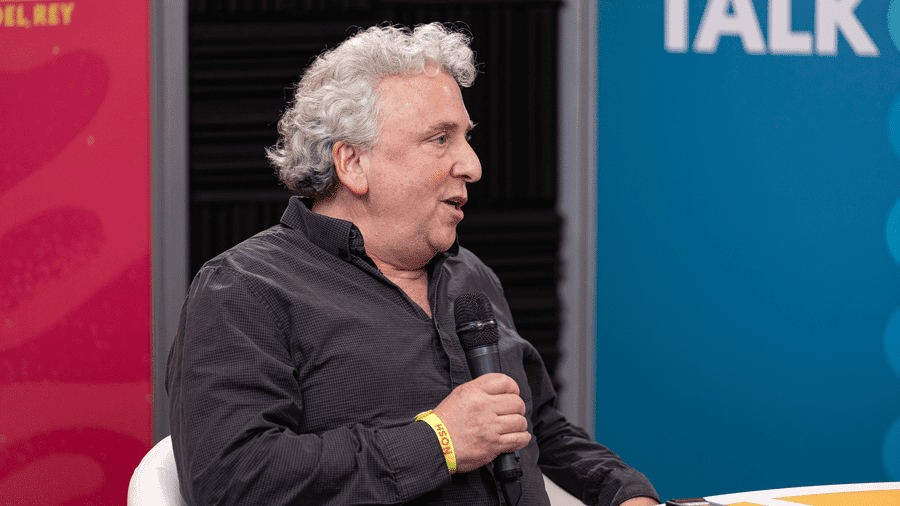
Josh Schroeter, CEO / Founder, South 40 Snacks, Inc.
Transcript
Note: Transcripts are automatically generated and may contain inaccuracies and spelling errors.
Speaker 1 [00:14] We're gonna bring on our final guest for this session of Elevator Talk. That person is Josh Schroeder, who is the founder and CEO of South 40 Snacks. Josh, great to see you.
Speaker 2 [00:23] Hi, thanks for having me. Hi. Hi, nice to
Speaker 1 [00:26] see you. I am very excited to meet you, Josh, because you were so kind, at least you and your team, in sending so many.
Speaker 2 [00:56] Alright, well, so real quick, just by way of background, I'm, uh, I was the one of the co-founders of Sahali Snacks and, um, now South 40 Snacks, and I gotta say that you know there's only one reason why I do this stuff and it's really because there's an opportunity, I think, to, you know, kind of bring true innovation to a category. In the case of Sahali and Trail Mix, I didn't like the trail mix that was out there. With all due respect, I, I'm not a bar eater or never was a bar eater just because they didn't really appeal to me and so you know when there's an opportunity to kind of bring something to market that doesn't exist, um, you know, I was all over it so we have, you know, these ultra premium nut bars and fruit bars as well now that we're gonna be launching in January and you know I think what we are doing is really trying to. Take this notion of simplicity and transparency to a whole new level to really, you know, we've got some great predecessors out there that have done a great job in terms of simplicity of ingredients, simplicity and transparency of packaging, uh, but I think we're kind of next level and next level in the sense of ingredients, only 4 ingredients in our nut bars, but the fruit bars 1 ingredient or 3 ingredients. But also, you know, as we like to say, what you see is what you eat. It's a transparent bag like there's not a lot of claims plastered all over the packaging. It's really just, you know, straight at you and in the case of the nut bars you can see, you know, we have more nuts and more premium whole nuts than any other bar in the market.
Speaker 1 [02:38] So I'm sure Lee is gonna say the same thing that I'm gonna say, which is when you mentioned your predecessor, uh, Josh, I feel like it's, it's gonna be hard to get through a conversation with a retail buyer or a consumer without saying kind. Um, is that possible? I mean, do you, do you always have to kind of, I, I guess how do you address that point of the conversation?
Speaker 2 [02:58] There's a lot of bar fatigue out there. And when you talk about bar fatigue, Kind Bar is usually the first one that pops into people's mind, you know, it's, it's really, um, I mean, yes, they, they would be our closest competitor, I would say Kind Bar, because they are kind of the nut bar. Um, that's it. bar is a fruit bar, um, but you know, when you look at kind of just, just break it down and deconstruct it, it's, there's really no comparison in terms of premium whole nuts or whole tropical fruits with our fruit bars there's no apple. We don't add apple, um. The way I think about it is no cheap fillers really um and one of the, the challenges, but it's also I think an opportunity is our cogs are all over the map. You can imagine, you know, the cost of a pistachio bar when it's mostly pistachios and not much else versus say a peanut bar very different cost structures associated with it and so, you know, but I, uh, we just wanna be absolutely transparent. Yeah, there is a price difference between pistachios and peanuts. And we're not gonna line price, we can't line price and so you know that makes a bit of a challenge in the retail environment, but you know it's, that's the way we roll and we'll just deal with that. So
Speaker 1 [04:17] well that brings up a good point. I mean if you can't line price because of the ingredients from one line to another, is that, have you run into that issue, Lee, and you know how have you addressed it with retailers?
Speaker 3 [04:28] Yeah, abs it's, it adds some complexity for sure, especially when promoting your product, um. How many price tiers do
Speaker 2 [04:36] you offer? So we just have a 2. We have a premium price tier and then kind of a core tier, um, and a lot of retailers will line price, right? They're gonna average it out and cost it out. And so if customers walk in and they see a pistachio bar and a peanut bar at the same price, what do you think they're gonna buy, which is why our pistachio bar is like flying. Yeah,
Speaker 3 [04:55] we had two tier pricing uh in the early days with our almond butter line versus our peanut line and to your point, they'll margin up to um just either make more margin on your peanut product or lose a little bit of meat in the middle. And so then that would really drag your revenue of your peanut product which is a much stronger seller for us than the almonds. So we ended up just finding. a place that we were happy with a margin that was comfortable enough for our almond product and then we line priced it but you know you really have to figure out like you said with pistachio like you macadamia, you have some really beautiful beautiful varieties um how that's possible. Uh, but certainly 2 isn't out of the question. I feel like if it's different enough um and then just figuring out your promotion strategies so. It's not adding too much complexity for consumers when cause you do wanna promote them all at one time. I would imagine, but then you're putting up different tags and different price opportunities and maybe you just find a promotion and then everything moves at a however many bars for $5 or whatever.
Speaker 2 [06:00] And there are some retailers that are really price sensitive, you know, and so it's like, OK, well great, these are not for you, but you know we can do a lot with the peanut bar, the mixed bar, and the almond bar. Um, one more point, um, OK, we've moved along to, um, this picture, so I think another really important piece of what we're doing because our bars, we're not pushing functionality, right? We're just all about taste. Our bars have excellent protein because we have more nuts than any other, you know, than any other bar. So the protein is excellent, but we don't add functional fillers, we don't add functional powders, um, we just, you know, those items just don't taste that good, so we don't add them. But the other piece that's important is I think how do, how we go to market. So, uh, you know, our whole grocery strategy is produce. So we just launched in almost 2000 Kroger stores nationally. Um, we're in multiple Safeway divisions, and it's really all about produce and it's about merchandizing the product in a way where it really pops and, you know, big bold displays and we, we can provide kind of incremental revenue to, you know, produce departments where they're kind of looking for exactly, you know, those kinds of opportunities. So we're very much kind of retail driven thinking about how, what solutions can we bring our retail partners. That'll help them um achieve their goals and one of the main goals is also um you know if we jump to the next slide is kind of sustainability and helping them reach their ethical sourcing objectives uh and what we are doing with each and every one of our bars is you know we can. We have a very deep supply chain partnership where um we know exactly where our nuts are coming from, origin origin stories, who the suppliers are, and kind of what are they doing, you know, in terms of um ethical sourcing and sustainability and so that you're gonna see a lot more of that as we go forward, uh, we're gonna be adding QR codes to every one of our bars. So you can go to origin and learn more about the nuts, where they come from, how they're sourced, and kind of what, what are sort of the value equations associated with each and every one of those ingredients.
Speaker 1 [08:04] I'm really glad that you brought up the produce component of what you do, Josh, because this is something that's very applicable to folks in our audience who want to have their product merchandise in a certain part of the store. How do you convince a retail buyer to get. In a place that you want your brand to be in, and this is also a question for Lee because when you guys started out the idea of having a bar and a cooler set was just unheard of. So I mean let's start with Lee actually, you know, when you are asking a retailer to put your products in a certain place in the store, what's most effective in getting that message? What's most effective in getting them to do that?
Speaker 3 [08:38] I think it's very smart what you've done here. We saw like pistachios take. Over those beautiful displays um in produce. Produce has a lot of flexible space and they're not as schematically driven um as other parts of the store and so we're in produce, um, in quite a few of our retailers across the country, otherwise in dairy, um, but produce gives a lot of flexibility and space and so I think that's super smart, um, we, I, I and it it's all about then that. Incremental sale like they don't want a messy floor, but what is that offering them? And so um and what is that offering their consumer and to also make sure that it isn't gonna upset kind of the person that maybe would want your product over in their aisle that maybe it makes more sense, right? But I agree with you. What that picture I just saw there is way more disruptive and so if you can find your angle to share that it makes sense then. Um, you can really stand out. Like produce wouldn't seem like the natural place originally for Perfect Bars, um, but it offered, uh, that's where you find a lot of now these beach heads for refrigerated snacking because they kind of have the space to be a bit more flexible.
Speaker 1 [09:49] Absolutely we've got 30 seconds left, Josh, but you know what was your approach to talking to retailer retailers about getting that space?
Speaker 2 [09:56] Yeah, I mean, I think first and foremost I, I don't bring to them commodities, right? And then you know you can look to the uh to the future we're gonna be doing other nuts and fruit again because of the supply chain relationships that we have developed. I'm not just bringing them another cashew, right, or another cashew bar. Um, there's a story behind it, and I think with the clear transparent packaging, kind of the solution, uh, you know, kind of solution provider mentality that we have when we talk to retailers, they wanna talk, right, because it's again it's, it's not just a commodity, it's not just some co-packed product that you know you're pitching, it's really about solutions, and I think that's my approach.
Speaker 1 [10:37] I love that we ended there. It's about solutions for the consumer, for the retail buyer. Um, and giving them a reason to say yes, and I love that that that we're ending kind of here on that. Josh, thanks so much for joining us. Lee, thank you so much.
Speaker 3 [10:52] Yes,
Speaker 1 [10:53] you now you get to eat. Thank you so much for all your contributions to this session. This was amazing. Once again, the most awesome person here, no, no, no offense, Josh, but the most awesome person here at Naj Live. Thank you so much for doing this with us. Thanks everyone watching at home or in their offices, but don't.