Search across the BevNET CPG Media network including BevNET, Nosh, Brewbound, Taste Radio, Nombase and CPG Jobs.

BevNET Live Winter 2023 - New Beverage Showdown Finals - Round I
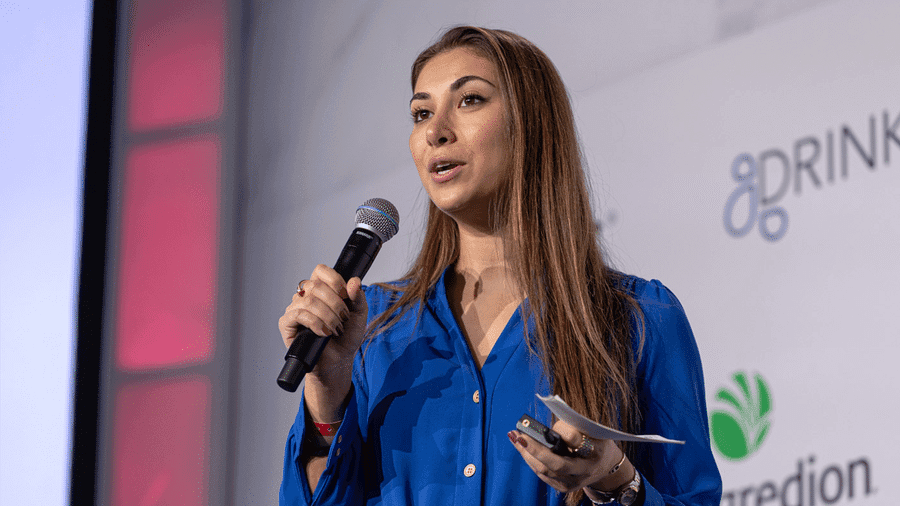
Ariana Farahani of Plant Press, Jonny Locarni of MAGIC CACTUS, and Blake Berman of Spade pitch their brands to an industry expert panel of judges including:
Kristen Bareuther, President, Head of Investment, Asahi Group Beverages & Innovation
Dan White, Chief of New Revenue Streams, The Coca-Cola Company North America
Ken Sadowsky, Sr. Advisor, Verlinvest
John Craven, CEO & Founder, BevNET.com
Transcript
Note: Transcripts are automatically generated and may contain inaccuracies and spelling errors.
Ray Latif [00:10] Good morning. I'm Ray Latif, the editor and producer of Bevnet's Taste Radio podcast, the number one podcast for the food and beverage industry. I'm also the host of Bevnet Live's new Beverage Showdown. We've reached the final round of the showdown, which is sponsored by the new revenue streams unit of the Coca-Cola Company, North America and gives early-stage and promising brands the opportunity to present their business plans and products to a panel of expert judges and the Bevnet Live audience. The winner of the two day competition will receive an industry awareness package worth $10,000 and join a short list of brands that have triumphed in the showdown, including Health Aid, Malk, Can, Rice Brewing Company, and Hop Lark. Out of the 12 semi-finalists who presented yesterday, 6 have made it to the final round. Let's talk about the rules for the final round. Each of the 6 brands will have 5 minutes to present and receive 5 minutes of immediate feedback from the judging panel. The final round is split up into a morning session and an afternoon session with 3 brands participating in each. As I mentioned, each of the brands will have 5 minutes to present. If they attempt to go over the 5 minutes, they'll hear this sound. That shocked our photographer over there. I'm sorry about that, Gerard. Uh, after all the brands are presented, the judges will convene and choose a winner. We'll announce that winner on stage here at 3:15 p.m. Pacific time. Just to note, there's no audience voting in this round. Let's introduce our esteemed judges, beginning with Dan Weitz, who is the chief of the new revenue stream revenue streams unit for the Coca-Cola Company North America. In his role, Dan drives new business models and opportunities, including a category expansion into alcohol and coffee, along with the integration of fast growing premium brands including Topochico mineral water and body armor. Up next we have Christian Breither who is the president and head of investment for Asahi Group Beverages and Innovation, an investment fund launched in 2023 by Asahi Group Holdings, which is a global leader offering a diverse selection of brands centered on beer, alcohol, and non-alcoholic beverages as well as food. Next we have the one and only Ken Sadowski, who is a beverage industry veteran, investor, and advisor known to many as the beverage whisperer. He is the senior advisor in the United States for Verlinvest, a Belgian-based investment company backed by the family controlling beer giant AB InBev, as well as serving as a director at Vitacoco, Hint, and Life Aid. Someone everyone knows, John Craven, who is the founder and CEO of Bevnet. He is a widely recognized authority on the beverage industry, frequently cited in mainstream media, and his vision shapes the editorial, publishing, and positioning of all Bevnet properties. This is a stacked group of judges right here. They're gonna have some great feedback, advice and insights for our panelists today, our presenters today, excuse me. And our first presenter for this round is Ariana Farahani. Who is the founder and CEO of Plant Press. Come on up. How's it going? Microphone? Your clicker and your timer. I just press that button right there, yep.
Speaker 2 [03:33] Hello again everyone. I'm Ariana, the founder of Plant Press. So I wanted to just start off with a little bit about who I am and how this tiny idea blossomed into Plant Press. So cue video. I was a science girl on my PhD path. I spent countless hours in the library drinking coffee. There were no energy drinks out there, even the ones that claimed to be healthy, that were actually good for me while tasting good. So I sought out to make one myself. I took a kitchen recipe to a formulator, and I did my market research. Soon I was ordering pallets to my parents' home and doing pop-ups. to get consumer feedback and refine the product to a place where it started taking off. We started getting orders from stores and events, and the data proved that I wasn't the only one who wanted this, and Planet Press was born. Soon enough, we got into Erwan and were flying off their shelves, and before I knew it, I was getting requests from some of the world's best DJs because they want to stay healthy too. And that's how I went from a science girl to a CEO. So that was a little bit of background. Um, but basically everything started with this need. I was drinking a ton of coffee every day. And I wanted something that would replace my like 2nd, 3rd, 4th cup of coffee that tasted good but was good for me too. So I did what I do best. I take hypo. I test them. I look at the data, and I refine, and that's exactly what I started doing. So everything from packaging to flavoring to where it sat on the shelf, I spent every Saturday and outside of my job talking to consumers and seeing what resonated with them. And I think the biggest thing that we can look at is why clean caffeine is written directly on the label. I kept hearing Plant Press meant nothing to anyone. It's like a really small startup, but clean caffeine did, and that worked, and we saw a ton of sales just by changing a small thing like that. So essentially that gave way to this consistent pattern of testing everything until it got to a place where it was selling with just samplings. So the product, so caffeine is pretty simple to understand for most of you, and most people know how they're going to react to one cup of coffee. I think what I saw from a lot of data in the marketplace was many of the energy drinks just had too much caffeine, like 200 mg, 150, and a lot. Of people who weren't typically drinking that didn't know what 100 mg meant to them, but they did know what one cup of coffee did. So I kept it as one can is equivalent to one cup of coffee. It's predictable. You know how you're going to feel, and you can gauge it with everything else you're doing or drinking in your life. Sugar. I thought it's, I would rather have 20 calories of natural sugar that my body knows how to ingest and digest versus a zero calorie sweetener that's full of chemicals and leads to stomach issues or other problems, and the market resonated with that. There were a whole bunch of people that didn't want to drink sugar alcohols or fake sugars or taste after taste, and so that's why we made that move. Vitamins, electrolytes. I don't take mine every day, so this was helpful, and it's also hydrating, and that worked. Then I kind of looked into the industry data. It is a huge industry. It's a $450 billion caffeine market. $90 billion of it is just the traditional energy drinks that we all know of. But at the same time, Americans and people globally are making better choice. Choices for their health. They're looking at labels. They're picking things that aren't going to be so detrimental, but the energy drink market really hasn't kept up to meet those needs, and the products that were coming out still didn't have healthy, clean ingredient labels that also tasted good and were effective. So that's where plant press comes in as really this disruptor meeting and filling this gap in the marketplace, keeping the caffeine content at 100 mg equivalent to a cup of coffee, effectiveness. Hydration and essentially using all natural sweeteners as well, and we saw this through the amount of momentum we got from people like DJs and NBA players that were coming back and reordering this and even just from my on the ground days of like working at pop-ups at banks and seeing the velocity of people deciding to order this to their homes. This was essentially that pioneer brand in this marketplace that we all thought was so crowded. Team, there's obviously only so much I know, but I aligned with some of the best people in the industry to help guide everything from branding to operations to managing cash flow and money, because growing a brand requires a huge team as well. And we've up to this point in a year, we've grown to over 112 retailers, and we are headed to even grow further next year. So thank you guys.
Ray Latif [08:41] The judges may have some questions for you. If you can slide over here so the cameras can get you. There we go. Dan, let's start with you. Uh, it's a huge market for energy drinks. I think $90 billion is what you had on one of your slides, but you know, what do you think of the opportunity for clean energy drinks and within that plant press is opportunity? Yeah, I,
Speaker 3 [08:58] I love it. I think, um, and I guess what I love is the, I said it's the There is a cultural fit, a product fit, and may need just a bit more edge. But what I love about it is just the clean 100, and in a game, I can think it's the antidote to the more, more, more that we're seeing in energy, um, and the more, more, more that you may be seeing in electrolytes. And so I think the, um, the antithesis is probably true and, and, um, I, I, I think, uh, I think there's a nice fit in the marketplace for it.
Ray Latif [09:30] Kristen, what do you think about the, the combination of functional ingredients? You have electrolytes, vitamins, caffeine, low sugar, um, within plant rice. It's, it's a lot of different functional ingredients, I feel like that you're combining here and, and different things I get out of this beverage, but I have to say, to me it really comes down to taste. The taste was really good. Um, and I have to say that combination, I feel like a monk fruit and sugar shows through in the product itself, and if you're really looking for somebody to replace something that's part of their normal day, I feel like your product really hit that spot. I could have a few of them, so it was great. Ken, uh, Kristen talked about the taste. What do you think about the packaging? I like the packaging. I like the hierarchy of the packaging, but I think the brand should be bolder and the clean caffeine should be a little bit smaller. Um, but, and it also resonates or makes me think of United Sodas with that just one color and sort of a matte finish. So it's, it's in a sleek can, not a regular, you know, soda can or whatever, but I think generally it's, uh, it's really well done. John, in terms of the messaging, uh, Ariana outlines that each can has about 1 cup of coffee, or the caffeine's, uh, the, a cup of coffee worth of caffeine in each can. Um, what do you think about that messaging for average consumers or consumers of energy drinks more specifically?
Speaker 4 [10:51] Yeah, I mean, I think it's pretty simple and straightforward, um, you know, it's a point of reference that I think most people understand in terms of at least like the effect that you get from it, um. You know, I think, um, just going on top of that, I, I do feel like, you know, calling out some of these like low calories and stuff on the front of the package would be helpful too. Um, you know, you really do have like incredible flavor in there. I think the, the agave monk fruit blend, like the other judges said, like really well done, so.
Ray Latif [11:22] Dan, can I come back to you for a second? You know, again, I asked your colleague Jenny this yesterday. It seems like we've seen a lot of better for you, quote unquote, healthy energy drinks come to market. Not a lot of success there. I mean, where is the runway? Where do you see this opportunity for PlatPress? Yeah, I,
Speaker 3 [11:36] I, I think the piece that I like the most is that you see healthy energy, but you still see it with the more, more and more, right? And so I think what we get to is the simplicity of what the delivery is of 100 mg. Caffeine is really easy to understand. I think about hard seltzers as a crossover, you know, and that idea that it's just 100,100 calories, 5% alcohol, that is really easy math for people to do. And I think, you know, you don't have to go too far away from the press of the past few weeks to look at it and say, you know, the idea of more, more, more is probably going to tail back or at least people are going to start to look at the side of the can and say, you know, what's, what's, what's all going on in here?
Ray Latif [12:13] Excellent, great feedback, great presentation. Well done. Thanks. Thank you, thanks. I can. All right, so our 2nd presenter for this part of the New Beverage Showdown is Jonny Locarni, who is the founder of Magic Cactus. Come on up, Jonny. that
Speaker 5 [12:42] Hey everyone, I'm Johnny LaCarni, founder of Magic Cactus. So yesterday I spent a decent chunk of time up here talking about the backstory, why the brand exists, um, and how it happened, but I do want, I do want to touch on that for our new panel of judges here and anyone who may not have been there. But I want to really focus today on diving more into what the product is, what's in the can, and why anyone should care about that outside of the story. So to make a long story short, my dad struggled with alcohol for years and Cannabis mocktails proved to be an incredibly effective alcohol replacement. Unfortunately, he lived in a place where uh these products were not available because of laws and, you know, cannabis is illegal, so he had no access to dispensaries, and unfortunately, uh, in September of 2020, he did pass away. Three months after he passed, we exited our existing business in the cannabis industry and I shifted all of my focus towards putting an alternative out into the world that not only can truly stand in the place of alcohol, but also is available in as many places as possible, especially those without access to dispensaries. So let's dive right in and talk about what makes this thing magic. Starting with a base of sparkling water and real prickly pear cactus, we have real juices and a tiny infusion of THC designed to mirror the potency of a single alcoholic beverage, THCV to provide an uplift and clarity function to the effects, and CBD to calm the mind. Because these active ingredients are derived from hemp rather than cannabis, we are able to and are currently selling direct to consumer to a much wider network of states than our cannabis counterparts, and we can enter non-dispensary retail channels. This is where we really stand out from what else is out on the market in the THC space. We have L-theanine, a natural adaptogen found in green tea, to add even more function and clarity. And then key electrolytes like potassium and magnesium to replenish for a truly clearheaded drinking experience both during consumption and the morning after. So let's, uh, zoom out for a second. We want to talk about kind of why we think this is the perfect brand at the perfect time, and there are a few reasons. Um, first off, this overall shift to premium, unique, and ready to drink, and the way I just said that, I realized that kind of rhymes, so we might have to keep using that, but My point here is there's been an overall shift starting with COVID, but definitely here to stay in this kind of drinking experience. We, you know, consumers have proved that they are willing to pay a premium for more unique drinking experiences from brands that they actually resonate with, starting from your sparkling waters all the way to your ready to drink cocktail. Next we have this spike in demand in a healthier buzz, and there are a few examples of this. All of these hard kombuchas and probiotic drinks for gut health, you know, seltzers boasting antioxidants, vitamins, electrolytes. You get the point here, but for us there's one problem with this. It's still alcohol. We joke it's like putting sugar-free frosting on a chocolate cupcake. You know, it's a step in the right direction, but foregoing the cupcake is probably a better, better plan for your diet. And then of course we have our alcohol alternatives, our non-alks, so we really see this in the form of three different avenues. Um, first are these functional and adaptogenic beverages, and I hope this slide doesn't get me beat up in the parking lot after this, but uh we're going to go through each one. So, you know, these are delicious. They aim to provide some sort of cognitive effects through nootropics, adaptogens, and the like, and they are delicious, by the way. The function is fantastic, but we're just not so sure about the buzz there. And then next we have our, of course, our low dose THC beverages, which is technically where we fall. And um they nailed the buzz. They absolutely nailed the buzz, so it's kind of a response to these functional beverages, but we're not so sure about the function here. Most of these products are just water, sugar, and cannabis. I'm definitely getting beat up now. Uh, and then last, of course, we have our, uh, just our cannabis bucket. This is anything you can find in the dispensaries, gummies, things like that. Um, you kind of see the pattern here where this is going, functions, not so sure. Uh, and we found the perfect emoji for the buzz. For someone who's new to cannabis, the buzz is just completely unapproachable. So, really, Magic Cactus was born out of one obsessive focus, to create a drinking experience that combines the elements that we love about both alcohol and cannabis, but drops what we hate about each one. We've created an approachable buzz with real function, and we feel this is a massive white space and the beginning of non-ALK 2.0. People are begging for a healthier buzz without sacrificing function, and Magic Cactus is just that. We feel we've created a modern drinking experience, or what we like to boldly call a drink that won't ruin your life. Thank you.
Ray Latif [17:45] I'll take that. Thanks. I uh did see Melanie Master and and Jake Bullock in the parking lot. They're both waiting for you. Yeah, you can just slide over here. Yeah, Kristen, let's start with you. I'm curious to see your thoughts on the opportunity for Magic Cactus, particularly given your role. Yeah, no, listen, I really like the fact you called it modern elixir, and I've been thinking a lot about when you're not having a drink, what are you drinking and what are you looking for? One of the Things I found in your product, I really like this kind of mouthy feel. It was a slightly different flavor profile, but it almost makes you salivate a little bit, which is what I think you get from a beverage alcohol product. So that was really intriguing to me, but I really like the name and the concept of modern elixir. There's a little quote up there that says Magic cactus has changed my perception of the THC CBD drinks or of THCBD drinks. Did it change your perception, Ken? Yeah, well, I mean, I remember back when I was in college, the wake and bake occasion and uh Was it just an occasion or is it a little more than that? Well, it's, it's a gentacular occasion, right?
Speaker 3 [18:52] A couple of years.
Ray Latif [18:53] So, um, you know, I wonder what the day part is that this is appropriate for because for me it's all day. No. Well, Jonny, do you want to address that? You know, what is the data usage? Yeah, try it. If it doesn't, we have another one. There you go.
Speaker 5 [19:13] Um, you know, that's, that's a really good question. I think when we were formulating, we definitely wanted that uplift. So we explored things like, you know, caffeine and whatnot, but we really, you know, 70% of the people we talked to say they also use it for sleep. So we had to find this balance of creating that uplift without sacrificing sleep. Obviously, if you have a caffeinated beverage at 8:00 p.m., that's not good for sleep. So THCV was perfect for us. Um, not only is it, does it have an entourage effect with the THC and the CBD, but also it gives you that uplift without sacrificing your sleep pattern.
Ray Latif [19:42] And I guess my other question is about the price point relative to peers because I, I don't really shop for this category at this point, so.
Speaker 5 [19:51] Uh, we are competitively priced with peers, um, I think. I'm, I don't want to keep talking about can all day, but I think we're similar to can as far as, uh, price per can, and, um, I think similar to a lot of the beverages. I know we're cheaper than some of the others we've looked at. Um, so we're probably right in the middle. We do have that functional element that adds a little bit of a premium, but I don't think our price reflects that too much.
Ray Latif [20:15] John, can I ask you about the taste and the packaging? What are your thoughts on both? Yeah,
Speaker 4 [20:18] I think, um, you know, the taste was really light, kind of tart, um, you know, it definitely had like a pretty unique taste to it, uh, enjoyable one for sure, um, you know, definitely like the branding too, I think, um, the only thing I would maybe caution from what I saw is, you know, you had the chart where you're showing all the stuff that's in it, you know, I think part of the problem that we saw with, you know, CBD drinks and THC products. is that they're like overly complicated and this new sort of, uh, you know, the Delta 9 products seem like they've managed to simplify it down just to THC and CBD. So I would just caution like making it more complicated, um, because I do feel like You know, just the THC component, the solid bra, the enjoyable flavor, like you've got some good stuff there. So you know, again, don't try to overcomplicate.
Ray Latif [21:09] And Dan, Jonny outlined this opportunity for booze-free buzz. Do you see a big opportunity there as well? And if so, what do you think of Magic Cactus's opportunity? Yeah, I love
Speaker 3 [21:18] it. I, I love that, but I do. What I love about this one is this is a cooler brand, not a fridge brand. I mean, you can see this in a cooler. You know, like when you talk about an it factor for a brand, you can see this being pulled out of a cooler at a tailgate, pulled out of a music festival, and, and so you see it's like place in the world, which I think is really neat. Um, you know what, probably be remiss if we didn't say that, you know, like you're brave enough for sharing the story about your, about your dad and, and, um. And what a testament and tribute that you, uh, would carry that on. So that, that's wonderful. We, we could all be so lucky that that's the case. But I think that, you know, when I think about, um, that, uh, the overall market, you know, um, it's what I always wonder about, uh, CBD and THC is that will it become a category unto itself, or will it be an ingredient? And I think what this rendition proves is that it could in fact become a category.
Ray Latif [22:12] Appreciate that. That's great feedback. Well done, Jonny. Thank you so much. All right. Our last presenter for this part of the round is Blake Berman, the co-founder and CEO of Spade. Come on up. That's quicker. And your timer.
Speaker 6 [22:36] Hello everyone, I am Blake, one of the co-founders of Spade, a healthy soda made clean and simple. Spade is all natural, zero sugar, zero calories, and has just 6 simple ingredients, and that's including water. More importantly, as you all know very well, taste is king, so spade is full flavored. Think the taste of traditional soda but with the health qualities and nutrition facts of sparkling water. Additionally, spa is boosted with hydrating electrolytes, more so to add to the product's versatility, which I'll touch more on later. Spade is entering a burgeoning category that is healthy soda. This category was formed by a few new major players, but the approach has been predominantly functional ingredient focused with prebiotics, probiotics, nootropics, etc. At Spade we believe that less is more, which is why we went with a more simplistic approach. Which is why we went with a more simplistic approach. Um, we Sorry, I'm trying to come from memory here. We Sorry guys. You got it. Being that we are coming from a more simplistic approach, we are able to save on cost of goods and target a broader demographic of consumers. Additionally, we also wanted to ensure that our product is fully scalable, not just to reach the early adopters in California, but to the entire country. Further adding to the product's universal fit, this product was designed and formulated for greater consumer engagement. We wanted to create an extremely versatile product that can be consumed for multiple uses outside of just a refreshment. Spade can be consumed as a sports hydration beverage, a cocktail mixer, a non-alcohol, non-alcoholic alternative, and so on. Spade is consumed by soda lovers, CrossFit athletes, nightlife goers, moms, kids, and everyone in between. Additionally, spade is shelf stable and has some of the strongest margins in the game at over 67% delivered to the customer. Equally as important is that our supply chain is fast and efficient, being able to receive products within 4 weeks of PO and less if we already have ingredients on hand. Our margin will also continue to increase with economies of scale. We SRP for 279 right around our competition's price range. But we feel that we want to be just below 250 and we'll be able to get there once we grow up in scale. We are also fully manufactured in the United States. And we're to date an entirely bootstrapped brand. We recently just launched in July, mostly into independent natural retailers across San Diego. However, we recently just got confirmation from 7-Eleven corporate that they'll be onboarding us with a test run in 100 stores before opening it up for national expansion. Outside of that, we also have plans to expand into 2000 more accounts by summer of next year. This is an omni-channel approach. We'll be approaching gyms, hospitals, schools, cafes, bars, nightclubs, and also more independent natural retailers. And from there we'll then begin approaching national big box retailers like Sprouts, Albertsons, Kroger, etc. To help us execute on this plan, we've hired Caden Schwab. Our director of retail sales with almost a decade of retail experience, we also have a powerful team of advisors like Dom and Alina who both spearheaded growing their watermelon water company from 0 to $30 million in revenue in less than two years. We also have Matt, who is the brand manager at Truly Hard Seltzer, and Vanessa, the former director of ecom at Anheuser-Busch. We've got a great team behind us. To wrap it up, spade is not just a soda. It is a game changer in the making in redefining the soda category. Thank you so much for your time.
Ray Latif [26:48] All right, if I can ask you to slide over here. Well done. Uh, Ken, let's start with you. You know, we have been seeing a lot more better for you sodas come to market, typically with a functional component. What, uh, Ben outlined was something a little different, something that was more simplistic in nature. What do you think of that opportunity? I think it's, uh, it's good. I guess I have a couple of other questions instead of uh going on your direction, Ray, but where, where does the name Spade come from?
Speaker 6 [27:16] We were when we were going through the naming process, we had like a list of 60 names and we really wanted something that was short, memorable, bold, and also kind of had a fun vibe to it, and we felt that when Spade came to mind that that was the one that hit all those pillars, so it has no direct meaning behind it, but that is the name or the reason why we got the name.
Ray Latif [27:35] OK, um, I like the doctor spade. I, you know, we, we as judges only got two skews, so seeing the picture of the full product line is better because it, the two skews that we got were good tasting, but on the shelf, I feel like they would get washed out. But the product line looks better. As a whole. Ken said they were good tasting. Do they live up to the types of beverages, the types of sodas that people might expect? John,
Speaker 4 [28:02] yeah, I think, I mean, I guess I've tried them all outside the tasting, but you know, I think the classic soda flavors to me seem like the stronger of the line. They all taste good, but You know, you have really nailed just, you know, replicating classic flavors in, you know, a fun, enjoyable way. So those seem like the stronger ones
Ray Latif [28:24] and it's zero sugar, zero calorie formulation. What are your thoughts in terms of how that kind of fits into the overall brand?
Speaker 4 [28:33] Yeah, I mean, it's, uh, it's interesting. I think, you know, if you look at a lot of the, you know, the poppy and lollipop, you know, they're sort of neither are zero calorie, and I guess they have sort of like the promise of, you know, a healthy sort of additive to it, right? And this has just gone back to, you know, zero with really good flavor. So it's different. Um, I think it's hard to say, you know, your competitors for on the zero calorie are much stronger than at the mid, right? You've got Coke Zero and stuff like that. So I could see it being a little more challenging of a journey perhaps, but again, you're also kind of doing something that fewer brands are doing, so.
Ray Latif [29:12] Dan, I'm curious as how you, how you would evaluate a brand like this given uh how much background you have in this sort of business. Yeah,
Speaker 3 [29:19] I mean, well, first, um, what I'd say is, uh, this, this shit ain't easy. You get up here in front of people and have 5 minutes to tell your story and then have someone from one of the, one of the bigger brands and, you know, esteemed judges here with, so, so it's not easy. In fact, I, I, I brought my entire team here just to see how hard it is for founders to come stand up on a stage. Listen to yourself, tell your story over and over again and call it down to 5 minutes. And I think um it's a real testament to everybody who comes up on stage to do that. So that's, that's key. I think, I think you got something with um spade that's almost, and so what I, I like the brand. I actually like the um the, the antidote to lollipops and poppies, you know, um, in the sense that it um it comes across very differently um with those like colorful and delightful, you know, kind of, um, uh, flavors and, and And kind of look. So I, I, I think, you know, I'll, I'll use the pun you probably said 15, 20,000 times, but you know, I dig into the kind of let's call spade a spade. Oh my gosh, you said it. But this idea is that, you know, it, and show the distinct differences and drive the edge from that. It's a great name, you know, and um and what you want to be able to do is kind of tell the truth of what, of what you're trying to accomplish in the marketplace, which I think is great.
Speaker 6 [30:37] Thank you so much.
Ray Latif [30:38] Kristen, you get the last word for this part of the round. Yeah, I was just going to say it's a really competitive space that I think you're trying to operate. The concept of a premium soda, I think, is, is really interesting in terms of where you're going. I liked a lot of talking about margin, how you're going to price your product, because, as I think about succeeding in this space, I think you're going to have to be highly conscientious of how you place your product and how you're priced on the shelf. So, but I really like the Dr. spade. I have to say it was kind of unexpected in terms of the flavor profile. Excellent. Great feedback.
Speaker 6 [31:10] Thank you guys so much.
Ray Latif [31:11] Well done.