Search across the BevNET CPG Media network including BevNET, Nosh, Brewbound, Taste Radio, Nombase and CPG Jobs.

New Beverage Showdown Finals - Round I
Transcript
Note: Transcripts are automatically generated and may contain inaccuracies and spelling errors.
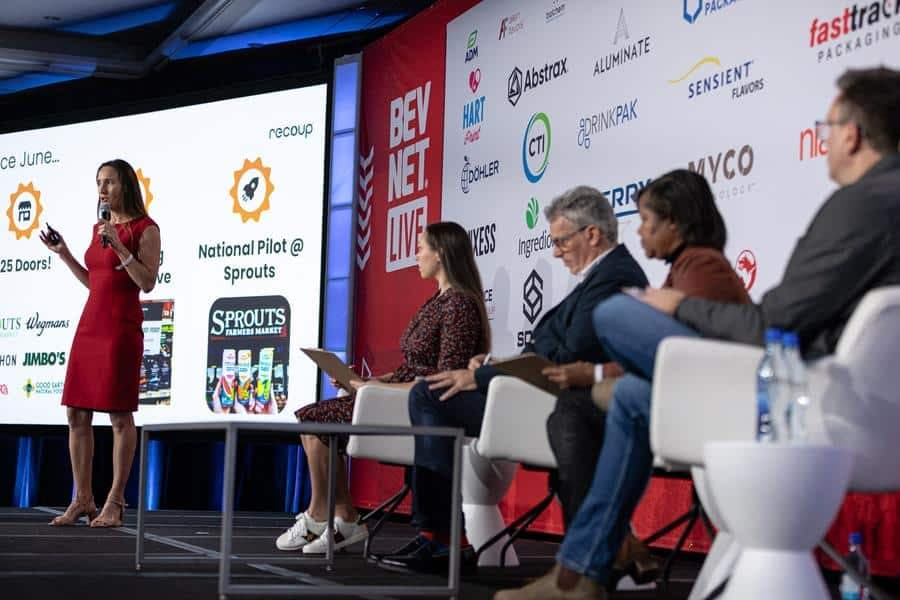
Ray Latif [00:37] Good morning everyone. I'm Ray Latif, the editor and producer of BevNET's Taste Radio podcast, the number one podcast for anyone building a business in food or beverage, and I'm also the host of the New Beverage Showdown. Thanks so much for joining us. This is, ah, well done, Monica. I was waiting for it and I didn't get it except for Monica. Actually, I'm a little out of breath because I ran upstairs. That's probably why I stopped too. Uh, this is the final round of the New Beverage Showdown, which is sponsored by the new revenue streams unit of the Coca-Cola Company in North America and gives early stage and promising brands the opportunity to present their business plans and products to a panel of expert judges and the Bevnet live audience. The winner of the two-day competition will receive an industry awareness package worth $10,000. And join a short list of brands. Yeah, you can clap for that too. Well done. And join a shortlist of brands that have triumphed in the showdown, including Poppy, Health Aid, Malk, Can, and Hop Lark. Out of the 12 semi-finalists who presented yesterday, 6 have made it to the final round. Let's talk about the rules for the final round. Each of the 6 brands will have 5 minutes to present and receive 5 minutes of immediate feedback from the judging panel. If a presenter attempts to go over the 5 minutes, they'll hear this sound. Nobody wants to hear that sound, certainly not me. Uh, the final round is split up into a morning session, this being that, and an afternoon session with three brands participating in each. After all the brands are presented, the judges will convene and choose a winner. We're going to announce that winner here at 3:10 p.m. Pacific time. Just a note there's no audience voting in this round. All right. Let's meet our esteemed judges. Beginning to my left with Suzanne Decker, who's been with the Coca-Cola Company for almost 4 years and is currently, currently leads Dunkin's RTD iced coffee. Upon joining the company in 2021, Suzanne supported Coke's ARTD portfolio and supported the launches of Topuchico Hard Seltzer in the US and Canada, Fresco Mix, and Jack and Coke. I got to tell you, I was a little skeptical about that Jack and Coke can, but it's really good. If you haven't had a chance to try it, you should. All right, up next we have Ken Sadowski, who's a beverage industry veteran, investor, and advisor known to many as the beverage whisperer. He is the senior advisor in the US for Verl Invest, a Belgian-based investment company backed by the family. Controlling beer giant AB InBev, as well as serving as a director at Vitacoco, Hint, and Life Aid, the wonderful Ken Sadowski. I don't know if you, OK, anyway. All right. Next up we have Sabrina Pierce, who is the senior vice president of Sales West for CA Fortune, a national food and beverage broker, which recently acquired the company she co-founded, Navigator Sales and Marketing. Prior to Navigator, Sabrina served as the senior vice president of sales and merchandizing for Albertsons, Southern California and previously had 10 years of experience in sales and marketing roles with PepsiCo's Frito-Lay division. Welcome, Sabrina. Last but certainly not least, we have John Craven, AKA BevNET Craven. He's the founder and CEO of BevNET and a widely recognized authority on the beverage industry. He's frequently cited in mainstream media. His vision shapes the editorial, publishing, and positioning of all BevNET properties. Mr. Craven. All right. Let's get started with our first finalist for the final round of the New Beverage Showdown. That is Susan Buckwalter Hartmann, who is the co-founder of Recoup. Come on up. There we go. Clicker, please keep an eye on your timer. OK. Thank you. I'm so grateful to be here. I'm the co-founder of Recoup. We are a gut-healthy hydration beverage brand, and we are the first regenerative organic certified beverage brand. One of the judges yesterday said it's like standing on this stage in 2002 and being the first organic certified brand. It's a huge competitive advantage. It's part of our mission and it's opening doors in retail. Right. Oh, little button. OK, thank you. Um, so we are championing your daily dose of resilience with 3 proven ingredients. We have prebiotic fiber for gut health, real ginger at a functional level for digestion, and ultra hydrating maple tree water. Now when they tap the trees to make maple syrup, what comes out is not pancake syrup, it's actually an ultra hydrating water with minerals and electrolytes. And we use that as a great ingredient for people and the planet. So maple tree water is just as hydrogen as coconut water with half the calories and much less climate impact. It has almost zero waste. Our maple farm captures about 763,000 tons of carbon each year, and so we have a positive climate impact, and we're helping to preserve forests. Recoup comes in three delicious flavors. We have a tropical pineapple passion fruit ginger, a juicy watermelon blood orange ginger, and a super fresh lemon lime ginger. It retails for around 299. And we're differentiated from the competition, so we're the only one delivering gut health and hydration, which is actually key to gut function. We have no added sugar and no stevia, which I get consumers thanking me for every day. People are tired of stevia and everything. We have 6 g of sugar or less, 40 calories or less. We're USDA organic certified, regenerative organic certified, and we're minority owned and female co-founded. We were inspired by personal experiences. So my co-founder Siwat actually spent the 1st 3 years of his life in the hospital. He went through 10 major surgeries before he was 12, and his mom is Thai, she would make him ginger home remedies. Those remedies played a big part in his recovery. He went on to get a master's in physiology from Columbia and his MBA from Cornell, and that's how we connected. I brought an experience in brand management, so I was at Unilever, Campbell's, Eos Products. And also a passion for hydration. As a college athlete, I did the heptathlon, so 7 events in track and field. I was always dehydrated, always thirsty, and I feel like I've been on this lifelong quest for healthy hydration. We have an amazing team of advisers with experience across the consumer products industry. And things are going really well, so we launched in June. We're in 625 doors Sprouts, Wegmans, Ewan, Jimbo's, Mothers, Good Earth. We're a pioneer for regenerative. So this is a picture of us on a regenerative organic certified NCAP at Sprouts. We're there with Patagonia Provisions and other amazing brands. It was a pilot that started October 1st. It was supposed to last 90 days, and 2.5 weeks in they called us and said, You're almost sold out. We need more, and we want to offer you a spot on the shelf in February, so we'll be national at Sprouts starting in February. And thank you, yay. Uh, we have strong growth, velocity, and repeat. So 6 to 12 units per store per week without promo. When it goes up, promo, it goes up, you know, 30+ units. And from Instacart, we can see we actually have 50% returning customers. So people are trying it and they're buying more. In terms of margins, we're at around 30% right now, but we're still producing a smaller scale, so we'll be in the forties or around 40% starting next year. And our consumer is a wellness-minded, fitness-minded millennial and older Gen Z female. She's going to hot yoga, and that's one of the key strategic channels to meet her in fitness studios and to be part of her wellness lifestyle. So all the touch points along that way, whether she is finishing up a workout and wants something that feels like a continuation of self-care, or she's running errands and wants to pick something up as a, you know, healthy lifestyle drink. We're there to support her in her daily dose of resilience in terms of health and wellness. So January is always a big time for that. On January 1st, I will be live in millions of households on HSN, so actually presenting gut health and hydration to the rest of the country. And recoup is really building that community and being part of that journey that she has, so we use our Instagram followers and our community on newsletters to really workshop our label, workshop new flavors, and get her feedback along the way. So we are growing, we are raising capital, and I hope you'll join us on our mission to champion resilience for people and the planet. Thank you. There we go. Slide up to this X here. Fantastic. The heptathlon, you did the heptathlon in college. True story, John Craven also did the heptathlon at BC, so, uh, this is. drinking, jogging, it's not really a true story, but I think it would be a cool one anyway. I like mini golf. John Craven, you know, people love to try beverages, but they may only buy it once if they don't like the taste, and we saw the competitive analysis that Susan put out there. Some really tasty beverages in there. Does recoup fit into that category? Do you feel like it's a great tasting beverage? Yeah, I
Speaker 2 [10:13] mean, I think the taste is definitely, you know, pretty solid, giving like the calorie and sort of sugar content of it. And you know we've seen a couple of iterations of your product in the past like year or two. So I mean it feels like it's progressing forward. Um, I think, you know, in terms of like feedback for the future, I think, you know, just figuring out how to make this all like a really tight message will probably help it like, you know, go even bigger. Um, you know, right now you're obviously making progress, which is great, but, um, you know, it's hard when like your product ticks a lot of boxes to like really dial that into something that like. You know, feels approachable, um, so that, that feels like the thing that maybe needs a little work right now, but, um, you know, I feel pretty good about where the liquid is at with the two flavors that we tried. So, uh, again, you know, compliments for just progressing this thing forward. So
Ray Latif [11:05] thank you. Sabrina, how do you evaluate the regenerative or organic aspect of what Recoup is doing?
Speaker 3 [11:12] Yeah, I thought you did a great job and um also just looking at how you compare to your competitors uh was very strong, um, and I think it's hitting on the right trends. You see so much being done and not enough yet in er in regenerative farming and all of that. You're starting to see a lot more of that. Um, your price point is great too. Um, I would just ask in terms of How you're going to stand out versus your marketplace and versus your competitors. What are some of the other marketing ideas that you have?
Ray Latif [11:49] Sure, so you know we're still small budget right now, so a lot has been kind of bootstrapping with our community. I think TikTok shop and building our TikTok following in that hashtag #guttalk, you know, very specific niche communities, is a really great opportunity that we can do even as a small brand. I will say that our Sprouts pilot, we hadn't even turned on a lot of the marketing, and it was flying off shelves, so. The packaging is, is working and it's grabbing people's attention, um, and then you know just really leaning into that community, knowing and getting feedback from our consumer and, and growing that relationship. Thank you. I asked this yesterday, Ken, but what do you think about the dual functionality of what recoup is doing, gut health and hydration.
Speaker 4 [12:27] I mean, I've been involved with several brands that had an initial hierarchy of where they thought the consumer would resonate and find the product, and yet it's not at all what we thought as sort of the caretakers of the brand, but I caution also the kitchen sink-ish way of putting the product out there. So I think initially 625 stores, it's fine. To have, you know, sort of a wide cast a wide net, but at some point you're going to have to hone in. On where the product works, especially when you start talking about the positioning in the store. You want to be with your peers.
Ray Latif [13:09] And Suzanne, uh, we heard Susan talk about, uh, the target, and it sounded like it's a female consumer. What do you think about that positioning, and could you also talk a bit about the package, the label design? Yeah, um, I think, uh, I think the, the packaging is really beautiful. Um, I think, uh, showcasing kind of what you can expect to taste in the beverage is great, um, especially with a new product coming to market, educating that consumer. Um, I think the packaging does skew a bit female, um, but I think if that's your target, then that's fine. Um, I would just love to see maybe a bit more um education for the consumer, maybe not unpack, but in some of the marketing materials, um, I think sap is a really interesting ingredient, um, but as a consumer, I would think, oh, it's a sweetener, it's not a functional. Ingredient. So really interesting. Great job. Thank you. I was going to say that's why we lean into it on back of pack. We don't put it on front of pack, and when I say ginger, like my target turns around. So that's a great way to pull her in and then it's we can tell her a little bit more and educate her as she's in the brand. Thanks. Well done. Excellent job. Thank you so much. All right, up next we have Aaron Wisniewski, the founder of Gitup. Aaron, come on up.
Speaker 5 [14:33] All right, um, so if you saw Heidi Dillon's presentation last night, um, it's pretty clear that we are all drinking less, but what I think is even more interesting is that people aren't just cutting down on drinking, is that they're leaving behind the bar scene entirely in favor of run clubs. What am I doing wrong? Oh, we got it. OK, we're good that they're leaving behind the bar scene entirely in favor of run clubs and pickleball leagues and volleyball meetups. And for those people, that golden hour after the workout isn't just about hydrating and recovering. That's the time to relax and socialize and meet people and even date and network, um. And uh for those people, effectively golden hour has replaced happy hour. And while some people might be happy sipping a booze-free margarita, uh, for a lot of us, that doesn't cut it, right? Mocktail style drinks can make us feel like we're cosplaying as alcoholics or sitting at the kids' table. Um, if it's not obvious by my passion, I'm one of those people, um, but I'm also a professional beverage designer, so in order to savor and celebrate golden hour in the way that it and we deserve, I designed a drink jam packed full of fun stuff that makes your mind, mood, um, and mouth feel great while hydrating and restoring your body. So the drink is called GENA, and there are 3 things you should know about it. Number 1, it's made with deep ocean minerals from thousands of feet beneath the surface of the ocean where the water is rich with the same 70 minerals and elements that gave birth to life itself, and they are still critical in every biological process, especially hydration and recovery. If a drink is a house, this is the foundation. Each flavor contains different potent, uh, potent blend of adaptogens and nootropics like Gaba and L-theanine and LD caffeine and magnesium L3onate. They help you relax, calm your mind, and find your bliss. If a drink is a house, this is the walls and the roof. Um, and finally, an absolutely delightful arrange of flavors built around the intensely craveable taste of Gannet fruit. Ganne is this small green fruit that grows wild all throughout the Caribbean. Um, and the best way I could probably describe the flavor is if a lime and a lychee had a baby and that baby was raised by a guava. So if a drink is a house, these flavors are the decorations and the art and the furniture and everything that makes it inviting and turns it, turns it into a home. So, last spring, I canned a few dozen samples at my beverage lab and started bringing them to golden hours throughout Vermont and New York and it instantly clicked with the alcohol-free demographic as well as what we call the sober curious demographic looking for an entry point. Um, fast forward 1 year to now. Great. Bad at this. Um, fast forward 1 year to now, we went from a single SKU to 3 SKUs. We launched DSD in our home market, followed by a rapidly growing e-commerce store. We started nationally wholesaling through Fair and AirGods. Now we have a few 100 accounts throughout the US including on-prem, off-prem, and even gyms and fitness studios, and we launched nationally with Sprouts in just a few months. And there's a few other things we have cooking in the background that we can talk about later. But let's get back to the drinks because that's why we're here. So starting with Ganne Restore, this is the original flavor. It's hydrating and balancing, um, and a little bit regenerating. This is perfect for when you feel really depleted after a long workout or a long day and want something more interesting than a sports drink, but aren't ready for something stronger like a full, um, non-alcohol or even an alcoholic beverage. Um, Uplift is flavored with salted watermelon and formulated to gently energize the body and calm the mind, and you get this like focused, glowy feeling, which is perfect if golden hour is the beginning of your evening instead of the end. Uh, and finally, relax is flavored with cooling cucumber and promotes a deep, blissful, um, relaxed mind and calm body feeling that's perfect after a long day when you just want to sink into your cozy hoodie, um, or sink into the couch with your favorite, uh, favorite movie, favorite friend, or your favorite cat or dog. Um, to be clear, we're still a small brand, all right, but we've got a big vision and we've got a lot done in the last year with a very, very skeleton crew. Um, and most importantly, we have supported thousands of people who have made the really difficult decision to leave happy hour behind and celebrate golden hour instead. Thank you.
Ray Latif [19:21] Slide up here, please, to that X. There we go. Uh, Sabrina, let's start with you. In the sampling room, you were a little surprised that Guinness was a fruit, and Aaron described what it should taste like. Did it live up to that? Did you enjoy it? No,
Speaker 3 [19:34] it was, it was great. I loved it. I think the feedback is that the average person may not have ever heard of that fruit, and years ago we hadn't heard of maybe pomegranate or some other fruits, right, that have come on board and now are mainstream. So I would still just educate on the fruit and the benefits of the fruit, which therefore are the benefits of your beverage.
Speaker 5 [19:56] Excellent, thank you.
Ray Latif [19:58] Ken, I've seen you celebrate happy hour. I don't know about golden hour, but I don't know. Do you think you can build a platform off this kind of concept, golden hour?
Speaker 4 [20:05] At my age they're all golden hours. Um, no, look, I mean, I, my, my comments overall were, um, I do like that golden hour. It can be an ownable situation. I think it's a great, uh, moniker. I do like the idea of owning a day part and then just on some random other thoughts. I thought the, the packaging was well done for Instagram and social media, but maybe not for store shelf, so. Like the label, you know, the name of your product and fruit doesn't pop enough. It's not big, bold enough. And then I guess the last thing is, sorry for this long comment, but um what is the scalability of that fruit? Like if it's only from the Caribbean, you know, my Vitacoco background says we can get product from 20 different countries, so that's a watch out, I guess.
Speaker 5 [21:00] Do I, do I answer that? So, uh, maybe it wasn't totally clear, but we went through this really long conversation about should we use the fruit itself and the ecological, the economic, and the cultural impact of using the fruit itself since it's not cultivated was a no. So we did this sensory analysis, GCMS is how can we recreate the flavor of the, the fruit biologically identical but using like renewable local extracts and other sources. So it's the fruit, the flavor of that fruit rather than the fruit itself. And if you've ever had a Gne, there's actually not much fruit on the fruit. Um, but we can, I can talk about more
Ray Latif [21:35] Ganne stuff
Speaker 5 [21:35] later.
Ray Latif [21:35] Do you have any in your pocket?
Speaker 5 [21:37] Nope, no Gne in my pocket.
Ray Latif [21:39] I'm just happy to
Speaker 5 [21:40] see all of you.
Ray Latif [21:43] That's probably when I should step off stage. Oh dear. How do you follow up on that, Suzanne? I don't know, well, An ocean mineral cocktail. As someone who has worked with cocktails in the past, you know, what do you think of that positioning? Is that something that could be scaled? Is that something that people are looking for? I think it's super interesting. I mean, obviously at the Coca-Cola Company we deal with one of the best mineral waters on the planet, so I think minerals are huge, and I think the consumer is starting to understand. Those benefits. My only question would be how not sustainable, but how feasible is harvesting those minerals, uh, and, and what is that process like? That would be my concern from a scalability standpoint and what kind of um expense is involved.
Speaker 5 [22:34] Totally, uh, relatively straightforward and very sustainable. The high-tech version of it is that we have a partner with a 5 kilometer long pipe. And they're Taiwan-based and so that kind of archipelago of islands is at the edge of the marine shell. So that 5 kilometer pipe actually accesses the deep ocean water. We just pump that water up. It goes through a slight desalination, so it's not too salty, purification and analysis, so there's no toxins or heavy metals or microbial, and then it gets shipped to us in essentially, you know, empty 2 L bottles of Coke, and then we add like a shot of ocean minerals per drink, so very sustainable. And relatively straightforward and there's also like not too much pressure on that one supplier so we have backup suppliers too in case something would happen recently to us was the earthquake disrupted that supply chain.
Ray Latif [23:23] John, you get the last word on Ginne.
Speaker 2 [23:25] Sure, I guess one thing I would just mention that we didn't talk about yet, I think you know this whole golden hour thing, I mean, I think what you've created, well, first of all looks beautiful too, but You know, that's an interesting like approach that doesn't really kind of resonate with or or feel like it's communicated on the product and to some extent I think after seeing this and kind of what you want to be, I kind of wonder if the name of the brand needs to change just in that it really pigeonholes you into like a specific flavor and you know, I hadn't tried that cucumber flavor before and that that was really delicious, um, you know, it does sort of, you know, seeing this tasting the cucumber thing. Deep ocean mineral cocktail. It just feels like the Gin up thing is maybe, you know, something that you don't want to lean too hard into, um, but I mean this stuff and, and I think the positioning of it are great, so.
Ray Latif [24:18] We are at a time, so I wish I could have you.
Speaker 5 [24:20] I'll get you later. We'll
Ray Latif [24:21] talk more later. Well done, Erin. Thank you so much. Well done. Thank you. All right. Our final presenters for this round of the finals are Amy Bett and Sarah Wilson, the co-founders of Melo. Come on up. Grab a microphone. Oh, Amy, good to see you. Grab a microphone. And please keep an eye on your timer.
Speaker 3 [24:56] Hi everybody, I'm not going to lie, I was super nervous to get up here yesterday, but the can of Mellow that I drank just before walking on the stage really helped to relax my nerves. For those of you who weren't here yesterday, my name is Amy Batt. I'm the CEO and co-founder of Mellow, and I'm so thrilled to introduce you to my beautiful co-founder, Sarah Wilson.
Speaker 6 [25:15] Hi everyone, we are so privileged to be here today at BevNET Live showdown, sharing with you our carver brand Mellow, and why we think you're going to love it as much as we do. So, what is mellow? At its core, mellow is designed to help you feel calm. It's main ingredient being cava, helps you relax, unwind after a busy day without compromising how you feel the next morning. Mellow is a sparkling, non-alcoholic beverage that comes in two delicious flavors that we've created. The first being passion fruit, orange, and guava, and the second, the much controversial, banana cream. Mallow was designed for the health conscious, busy consumer. It has zero calories, zero sugar, and all-natural organic ingredients. Now, if you're not familiar with kava, it is a traditional drink from the Pacific Islands and Hawaii, made from the root of a kava plant. It has an earthy, sometimes gritty taste, and it's typically served in a coconut shell. So essentially we have taken the traditional carver experience and modernized it for today's consumer, offering a much more smooth, delicious flavor, where you can actually feel a real effect within 10 to 15 minutes of drinking just one can. So fun fact, I actually grew up on a small island called Port Vila, Vanuatu, amongst the Pacific. So I grew up very much immersed in the culture of the local people. My family owns a farm, which grows kava, which is where we distribute all of our kava from, and it's shipped right here in LA, which is where mellow is made. Um, where am I? Um, Amy and I actually went to boarding school together. So a few years ago, we got chatting together with our husbands about how hard the chapter of life that we were in at the moment. We've both got 3 children each, we had busy careers, and just the general burnout. So therefore, Mellow was born from a need that was deeply personal to us.
Speaker 3 [27:30] A stat that really stood out to us was that 37% of consumers are cutting back on alcohol, and that's something that we were really experiencing for ourselves. After countless trips to Sarah's family farm in Vanuatu and a move from Australia to LA, we dove headfirst into creating Mellow. We're focusing on proving our product here in LA first before expanding into other markets in the US with local distribution thanks to Hi Touch, we're now driving retail growth through the natural food chain, and we're really focused on making sure that as we do that, people understand what. We've created a marketing and sampling campaign where we can really understand our consumer, gather those insights to refine our product, and then use that in our marketing messaging to make sure that we're scaling sales online as well at the same time. We launched into lessons and we were really excited that we sold out through our first product within 2 weeks, before even starting our promos and our demonstrations. So who are actually our customers? Sarah briefly touched on this, but we created Mellow for basically women in their thirties who are juggling multiple responsibilities just like us, kids, work and life in everyday general. Um, but whilst this is the case, we were super surprised to realize that our audience is actually a little bit more broad. We've got men in their 50s and 60s buying Mellow, and we've got young adults in their 20s as well. So what about the numbers? Mellow is a high quality, premium product. We source really great organic ingredients and Cava from Sarah's family farm. So our price point is 575, but this does align with other better for you beverages and um and that do deliver real effects. So um we're really ensuring that we have healthy margins so that we can build a sustainable long-standing business. Our sales have been growing steadily. We've been seeing about 25% month on month growth, which is really showing us that the consumers are willing to invest in a product that, you know, makes them relaxed today but then feel better tomorrow.
Speaker 6 [29:46] We're excited to announce our partnership with the UN and International Trade Center. The partnership supports the Pacific islands.
Ray Latif [29:57] Well done, well done. Don't worry. up to this
Speaker 3 [30:02] I didn't look at the time at all then.
Ray Latif [30:05] Well done. All right. So Ken, we've seen cava beverages come to market in the past, but what do you think about Mellow in terms of creating a platform for Cava that really breaks through?
Speaker 4 [30:16] I think they did a good job of masking what can be a nasty aftertaste or even front taste with cava, so congratulations on that. I also like the idea that they're doing their own samplings, and I'm really a big fan of shameless self-promotion by them saying that they used it before they came up here, so they're not nervous. Uh, also a big fan of banana if done properly, so well done.
Speaker 3 [30:42] Thank you.
Ray Latif [30:43] Great. Uh, Suzanne, there are folks in here who are familiar with Cava, um, mainstream consumers may not be so, um, the front of the pack can help educate quite a bit, but what do you think about the front of the pack, the label as doing such? Um, well, I think the packaging is beautiful. I think it's very simple, um, aesthetically pleasing, not much in the way of communication as to what cava is, um, and I personally was not familiar so much with cava and what kind of what to expect, um, although I would maybe suggest using romance copy on the back of the pack and keeping that really clean line on the front.
Speaker 3 [31:19] It's great feedback. Thank you.
Ray Latif [31:21] John, in terms of functionality, uh, are consumers looking for the functionality that Cava offers?
Speaker 2 [31:27] Yeah, I mean, I think that's the big question is do people who are stopping alcohol consumption or moderating want to replace it with something else, be it, you know, cava, I guess cannabis, all the other things that are out there, may be vying for their, uh, attention, and, you know, to that end, you know, I think we touched on a little, like, obviously there have been cava drinks before. I mean, I got it. I don't know how many have tried to launch and haven't made it and you know, will this sort of like, you know, alcohol moderation uh movement actually be the catalyst. Um, I think that's sort of, you know, the big question for you guys. I mean, if not, I think, you know, educating on this is, is pretty challenging, um, and time consuming. I, I do think, you know, in terms of cava products I've seen like this definitely feels like one of the best like put together and drinkable products. I like both your flavors. The as Ken touched on, you know, the banana is really nice, so you know, some good stuff there. I think it's just a question of like if at a macro level awareness and demand for cava grows or not.
Ray Latif [32:34] Sabrina, can you talk about the price point and the focus, the distribution focus in California, your thoughts on
Speaker 3 [32:39] both? Yeah, I thought it's a great idea to start in California, not just because I live here, uh, but we do know as trends start here, they start on the coast and work their way in, right? So that makes a lot of sense. One thing I do want to call out on the packaging, it's, it's bright, it's colorful. Um, it was hard to see the flavor. Right, I got the um what was it? I've, I've forgot what I put in here, relax and and and I got that, but I, it was hard to read the flavor and hopefully with the pink and green was at the hideaway Island, you did some great things with Wicked movie coming out because everything I saw was pink and green, but just opportunities to take advantage of trends in the market and how your brand can fit. Yeah, we were kind of in line with Barbie as well when that came out. Thank you.
Ray Latif [33:31] Yeah, I can go ahead.
Speaker 4 [33:31] Just one thing on the, you know, market readiness with a price point of 575. Go 99. Retailers are gonna want that extra margin or build it into your margin somewhere. OK,
Speaker 3 [33:44] thank you so much.
Ray Latif [33:45] Yeah, great advice. Great presentation. Very well done. Thank you so much. Thank you. Alright, excellent presentations. We'll be back with 3 more at 1:30.