Search across the BevNET CPG Media network including BevNET, Nosh, Brewbound, Taste Radio, Nombase and CPG Jobs.

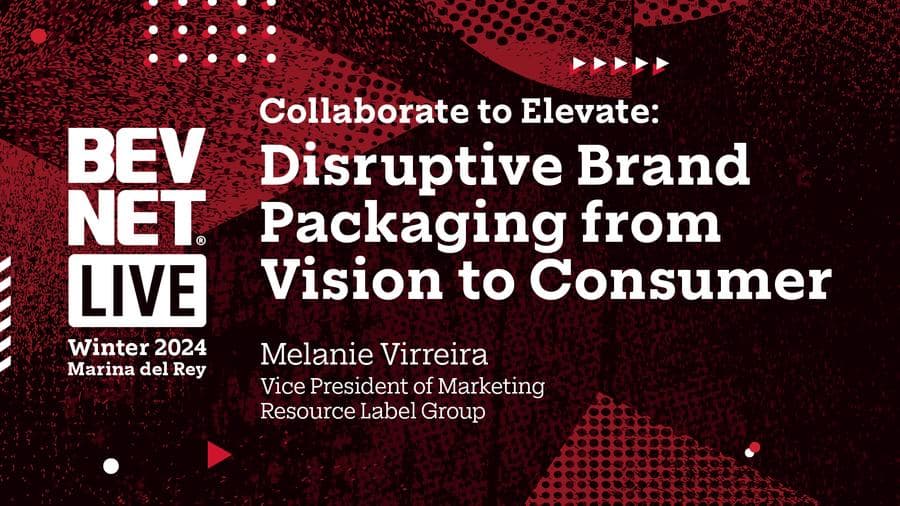
Sponsored Workshop: Collaborate to Elevate: Disruptive Brand Packaging from Vision to Consumer
Transcript
Note: Transcripts are automatically generated and may contain inaccuracies and spelling errors.
Speaker 1 [00:18] It all started with a challenge. In just 8 weeks, how do you create a moment that stands out in the competitive world of functional beverages? 2 weeks, worst case 6 weeks.
Speaker 2 [00:28] Oh God,
Speaker 3 [00:29] 6 weeks is not going to work. I
Speaker 1 [00:31] keep worrying about the size. We figured it out. We got it fixed. Yeah, they just, they just sized it to 110 and I already reapproved it, so it's just going to be. I actually don't know what problem you're talking about. I was talking about a different problem. A formula so unique and effective it's too expensive to ever exist in retail. I honestly thought that this could potentially really ruin my reputation.
Speaker 4 [00:59] And the second law of physics that can't be usurped in our industry is you can't out print the
Speaker 1 [01:03] quality of the
Speaker 4 [01:03] artwork.
Speaker 1 [01:04] Price Plow, Savage Nutra, Nutra Media, McDowell Label, and Macro all coming together to make it happen. Parking it somewhere near the convention and then hand walking the rest of the stuff with our sort of army of people that are all working for these different booths. The design couldn't just be a can. It had to be a bold statement of innovation impossible to ignore. So they're going to be hopefully submitting the can from a design perspective for awards for being like innovative. Yeah, so if you don't know who McDowell is, they're the most awarded label printer in the world. And what about the activation? Could it take the industry by storm? Could the buzz spread from booth to booth, lighting up social media and becoming the highlight of supply side west? And I'm like, I'm bouncing from booth to booth. Like if you want a drink, you can go get them.
Speaker 2 [01:52] It's in 6 different
Speaker 1 [01:53] places. The sense of your said it was their most lead generating sample they had, and they had a lot of samples. PLT came over and found us at someone else's booth freaking out about how well it worked. The
Speaker 2 [02:06] magnitude and the timeline of
Speaker 1 [02:08] this project, we're talking lightning speed. This is amazing, like perfect lemonade, no artificial real flavor.
Speaker 4 [02:17] to it. It tastes
Speaker 1 [02:17] really natural. This wasn't just a pride. It was a moment shaping the future of functional beverages. And now the next step introducing Bevnet NRG, a new vision, a new flavor, and a new way to fuel the future of functional beverages. John was kind enough to really kind of up the stakes in the project. Now we're talking about baseball. We're doing a fireside chat at Bevnet. This is where innovation becomes action. Hey everyone, I am so thrilled to be here with all of you today for what promises to be a lively and inspiring conversation. By way of introduction, my name is Melanie Vieira, and I head up marketing at Resource Label Group, which is a premier label and packaging supplier to the beverage industry and beyond. And I've been 18 years of a career in packaging and innovation and branding and while I've just been on the periphery of this whole thing, I can tell you it's pretty unique to the industry. You see, the beverage industry, just like many others, often struggles with one familiar challenge. Silos. Formulators, designers, manufacturers, and co-packers often work in isolation. And they go and work on their one individual piece of the puzzle. And the result, missed opportunities, really slow timelines. stifled innovation. and products that just don't quite live up to their expectations. But this summer an incredible group of industry leaders decided to rewrite that story. They came together not as competitors but as collaborators to create something truly groundbreaking. The most preposterous energy drink that has ever been made. And it gained attention for all of its efficacy of its ingredients and a blinged out label. They built something truly disruptive, something that turned heads at supply Side West and left everyone buzzing. Both figuratively and literally. But I would say these 5 rock stars did not come together to create a beverage. They wanted to create a statement. A statement about what can happen when you break down silos in the supply chain and embrace collaboration. From formulation to design to production, every step was approached with boldness and creativity. And now with their 2nd edition, limited edition beverage that was debuting here at Bevnet. I am excited to see and dig in on how they pulled it off in 8 weeks, no less. They've challenged the norms and proven what can happen when you stop competing and start collaborating. And while I've been lucky enough to witness this from the sidelines today, I get to bring you into the conversation too. This is a story of rethinking speed to market, leveraging expertise, and designing with the consumer in mind. It's about solving the very real challenge of innovation in an industry that is stuck in the status quo. So let's jump in and bring on the dream team that made this all happen. Around cause he ain't got it. The collaborative cowboy himself, Ben Kane, he's like the mythbuster of sports nutrition and supplements. He's the brain behind price plow. Oh. The go to source for breaking down trends, calling out hype, and making sense of the science. Basically he's the guy who keeps everyone honest in an industry full of big claims. When he's not orchestrating game changing collaborations like Expo Energy, he's busy proving that being a jack of all trades is actually a superpower. Welcome, Ben. Next up, Joey Savage, the harbinger of innovation. He is the mad scientist of functional formulation. He's the guy who thinks, why stop it breaking the mold when you can just blow it up. Whether he's innovating with Savage Nutra Glaxcon or Nutribolt, Joey's all about making products that turn heads and change minds. If you ever had a sports drink that actually worked, chances are Joey was behind it. He's also the guy that wouldn't let this whole idea die. Next up is Taylor Knox, our visionary designer. Taylor is the design world's secret weapon and the guy who makes sure your brand doesn't just sit on the shelf, it demands attention. He's the mastermind behind the sleek head-turning package of Expo Energy and Bev Energy. His mission to make design that works. When he's done, people can't help but grab it. If your brand needs a face lift or a glow up, TK is the guy who will take it from me to whoa. Just be ready. He doesn't do boring and he doesn't hold back. And of course my colleague John McDowell, the label legend known as the most awarded in the industry, John takes wild design dreams and turns them into realities that win trophies and hearts. He's a guy who never says we can't do that. Instead, he says, let's make that even better. With a knack of breaking the rules with what's possible in a Rolodex of trade secrets, John proves that labels are actually storytellers. If your brand needs to shine brighter, bolder, and better, or perhaps it's just not delivering on expectations, John's the man to call. Just don't ask him to settle for good enough. It's not in his vocabulary. All right, Austin Holt, our dream maker. Austin is the guy you want on your team when everything is on fire and the clock is ticking as the supply chain ringmaster, he's the one who somehow pulls all the materials, timelines, and moving parts together to actually make the product happen. His secret communication, spreadsheets, and probably a little bit of magic. Austin's unofficial title, Chief Herding cats Officer. If you think collaboration is hard, Austin will convince you it's a walk in the park, assuming you don't sleep for eight weeks. with And our final Macro Cap Labs member is Lou. Lou is Macro Cap Labs's secret weapon and the ultimate R&D maestro. With over 9 years of making the impossible possible, Lou's the guy who takes wild beverage ideas and turns them into shelf-ready, head-turning projects. He's the bridge between creativity and functionality, the one who makes sure your Big idea doesn't just sound cool but actually works. Known for his precision, innovation, and a touch of mad genius, Lou doesn't just exceed industry standards, he laughs at them on his way to setting new ones. Think of him as the wizard behind the curtain, except with a lab coat instead of a robe. All right, the gang is all here. Welcome everybody. Let's kick this thing off. I'm gonna start with Ben. All right, Ben, tell me how this whole thing started, um, because I'm sure no one in here is surprised to hear that it wasn't some like formal brainstorming session. I'm pretty sure it started at a bar. This idea came together in a bar called Alchemist Embarrasser in Princeton University. Uh, TK and Joey visited me in Jersey and no one ever comes to Jersey. For some reason, to visit me, so it was special to start, uh. We were talking about a couple of different ways that we wanted to flex in the industry and uh Austin and I had already been talking about a friends and family type project. Um, if you guys imagine going to, um, you know, an NBA game, you see celebrities on the side wearing sneakers that you can't actually buy in store. We wanted to create a, a FOMO in our industry, uh, but Joey and TK have a way of not letting things be done on a small scale, and we have to turn things up and that day we decided that we're going to put a force multiplier on this project and turn it into the thing that everyone was talking about a supply side. So that was actually 8 weeks out from supply side, uh. That day we all went home and went straight to work on creating a beverage. And at what point did you think that 8 weeks is absolutely ludicrous? Someone said it couldn't be done and I think that was why it got done was because that was me I was. TK said it couldn't be done in 8 weeks and uh you can't tell TK or you can't tell Joey not to do things, especially like, yeah, uh he's the reason we had a walkout song today, you know, like. Sorry, I had to sit through that. Uh, and that really became part of the flex. Not only is it the most expensive energy drink that would never, you know, be able to be commercially viable, but we did it in a time frame that doesn't seem possible. Yeah, I think that having been in this industry a long time, uh, like having a phone call in 8 weeks is often a challenge. So I, I am very impressed with the ability to actually deliver physical goods in 8 weeks, so congratulations. Um, A question that I have, as I was talking to each of you individually, what was funny was everyone at some point in time had A similar idea. What was it about this idea, this group that, that kind of made it special, and, and I'd love to hear from Ben. You start and then like anybody else that wants to chime in on this. So what's really cool is, uh, everyone here has tried to do a piece of this before, um. And I'll let everyone talk about how they had their own uh version of this, but everyone's tried to do a drink at supply side, and I think what we all realize that, you know, in our own verticals, we are the people for this, and when we came together, we could, you know. Put aside competition and all own our own strengths. So that's what really made it work really well was that, you know, for if for one reason or another it didn't work out on our own when we all came together, we were able to do something like really wasn't possible. So who was actually in the bar? It was me, Joey, and TK. OK, OK. So then how in the world do we get the rest of the crew here? Well, so Austin had already signed on for a crazy idea of creating drinks, and so I basically told Joey and TK we were already in, it was fine. And then I called Austin to apologize and ask if we could actually do it. Um, we were a little bit against it. It, it was, uh, a lot different than the original idea. I think Ben was like, hey, I, I want to make some benchtop samples of, you know, just to send some friends and highlight some ingredients, and somehow benchtop samples turned into like 50,000 cans. So that escalated pretty quickly, but he called me. I think he was slightly under the influence at the time, and, uh, he's like, Hey, we, we have this crazy idea, and it was so crazy. I was like, this just might work, and we really I look at it as a huge risk, but a massive opportunity as far as like marketing goes, and it really highlighted, I think everybody's strength at what we do best because a lot of the time someone has a great idea, it's just you're always missing a piece of the puzzle, and we're able to put all the pieces of the puzzle together and really create something I think truly unique, and I don't think really anyone else could do it. Yeah, I mean, I don't like, how did, how did John get selected and into the crew? I think that's me. Well, so previously we kind of tried this concept before with uh like a digital printer, and they didn't have the right seaming um machinery, and we send them over to Macrocap because we were gonna do like a small run for our promotional thing and uh they busted at the seams. So like if anyone who's done cans or have tried, you've done R&D and you know that like. There, everything could go wrong. It's Murphy's Law, right? So the first time we tried it, all of our seams busted, and I said, well, if we're going to do this, everyone had already signed up to say that they're going to like basically donate their service, but I said we're going to have to actually buy the sleeves. And would you, anyone here knows if you've had to purchase artwork or sleeves or anything like that. Like it's, it's real, it's hard money every single time, even the testing, even the small runs, even the sample batches. So I was like, we're going to have to come up with, you know, for $50,000 x amount of dollars in order to make this happen. And Ben said, why don't you just call John McDowell because you know him, right? And we, we do projects together and I was like, yeah, but look, man, it's labor, it's, it's, it's materials, it's costs, you know, this guy's not just gonna say, yeah, I'm gonna give you 50,000 sleeves. Um. And we had a quick little email and like a two-minute chat on the phone and he, he committed immediately. So that was like the last linchpin like domino for me to say like, oh this is real, this is gonna happen if John's in, I'm in like we're in, like we're gonna do this. John, what was your thought when you got that phone call?
Speaker 4 [15:52] So first of all, anytime you get a call from both TK and Ben, it's kind of one of those moments and times where you, you're going to pay attention. And TK and I have lamented over the years of serving, you know, tried and true brands as well as emerging brands that there's such a precipitously large gap between what consumers want and demand. And what very creative and ideating brand owners want to deliver and that chasm exists in supply chain. So the excitement for me and the immediate engagement for me was to basically execute, or as Joey likes to say, flexicute, uh, clearly and effectively a pathway for brand owners, that's fun, that's exciting, invigorating, and. has no holds, no guardrails to it, so we were able to execute velocity to market. Um, and with TK's creative talent and the team behind the veil and McDowell label execute, uh, the, the printing side of it with virtually no limitations. So that was for me was the fun part was we had a blank canvas, uh, and there were no rules.
Speaker 1 [17:02] I love it and, and we're going to talk about the label and the product, but before we move on, I know we showed a video to kind of explain to you what happened at Supply Side West. Can I, did anybody hear about the Expo Energy at Supply Side West just to understand if there's any background? OK. Uh, Joe, I'm going to hand it to you. Why don't you tell me kind of what, so we have this idea and then how did it actually manifest at the show?
Speaker 3 [17:29] So there, this, uh, I mean, it, it's, it's a tool out of necessity for one thing, um, because there really aren't any energy drinks available at Mandalay Bay in Las Vegas, and it's really kind of irritating for those of us who actually kind of thrive on that stuff. They've got like 3 or 4 different Starbuckses, and if you do want an energy drink, you got to stop off at one of their little casino stores, and the only thing that you're going to have there is Monster and it costs $7. So this is kind of a tool to fix that problem, but The thing is, when it came to the innovation part of it is that we wanted to do an energy drink that was absolutely first of its kind. And the thing about this is this is an energy drink that we have the audacity to call an energy drink without any caffeine in here whatsoever. Now we do have a downstream metabolite of caffeine called paraxanthine, which is actually kind of nice because it does all the the the neurotransmitter fun stuff that caffeine does without like the increased heart rate. So if you have had coffee today and you're like hesitant about whether or not you want to drink this, you're probably not going to have any problems with like any kind of contraindication. The other thing that we wanted to do is we wanted to bring a bunch of ingredients to the table that really no one's ever seen before, especially in the energy drink format. We wanted to do this in a way that was like, hey, you should really pay attention to GBHB exogenous ketones. You should pay attention to the paraxanthem from TSI. We also have Cognizant in there from K Oaxaca, and that's that's available in a few different energy drinks, but I mean everybody loves that stuff. And then we went the extra mile with two extra ingredients. We went with Zembrin from PLT Health, which is really nice because it's really, it's mood uplifting. It kind of synergizes with the appetite suppression of the GBHB, so it's like kind of a fun thing there. And then we also included a really unique antioxidant called ergothionine, which is Mitopprime by NNB. But if you don't know about any of that stuff, they're worth looking into. These are all experiential kinds of ingredients, so you're going to feel something from each individual one of them. But you know when we put it together, like the sum is greater than the individual parts. You can take any of these things in isolation and it's not going to feel the same way as it does in this kind of a beverage right here. And then we had to find a flavor company that we liked. Shout out to Tyrus. He's over there in the back with Sense of Pure Flavors, and Tyrus is really good at working with us. He's been working with Macrocap for a long time. He was shooting out different samples to us, and we're just going through it and like. If you're going to have this caffeine-free energy drink available at Supply Side West, which is a really big international kind of show, you have to have. An unoffensive flavor, if you will, and that's why we went with lemonade. Lemonade is internationally known anyone knows what lemonade is. And if you try the lemonade, there's a little secret kind of flavor that's in there, and we'll reach out about that here in a bit. But you know, it's, we just try to do a lot of firsts. So first without any caffeine, first for a lot of these ingredients in an energy drink beverage, and the best in class label and flavor.
Speaker 1 [20:20] I love it. And then, what made it go viral, because that was how I got involved. It's like, what is taking over supply side?
Speaker 3 [20:30] The plan amongst all the collaborators, because each one that is on this this can whether you have the Fanatical Miami Vice looking can. This one right here, you, you have like a little key that shows all the different vendors and stuff that provide the ingredients. Our plan was if each of these people, like a potluck, you know, provide their ingredients and stuff and everyone comes to the table with, you know, their dish, so to speak, that we Create this thing and when we disseminate them, each booth had an entire pallet of this energy drink to give away, which is like a nice flex of like hey we collaborated with all these people here's a really nice way that we're going to showcase our ingredient and we're going to let you experience it in this particular application, this medium, and you know if you like the way you feel and if you like the way that it tastes, come back to us and talk to us about our ingredient and it was perfect because it was lead generating for each of the different vendors that we worked with, so it was a win win all around.
Speaker 1 [21:24] I love it and I mean it got so much buzz and so many people knew about it and honestly, the packaging is so sexy and so I'm going to switch gears from the actual show and I'm gonna move over to John and TK and I'd love to before we kind of do show and tell where we hand stuff out and look through giant magnifying glasses, um, tell me about We'll start with Expo Energy. Tell me where the design kind of started and how it evolved, because you know collaboration is messy and I mean this with all the most love and sincerity. You guys have a lot of opinions, so I can imagine coming up with a final design was tricky. Well, yeah, like if anyone has this, you could see it. You'd look at it and you'd probably like that's a, that's a that's a shitload of copy. Like you would never put that much copy on a PDP um but this is not meant to be a brand, it's meant to be a business card. And um that's because we design for our audience and that's the whole point. That's why we made a Bevnet version for you guys because you all are that audience, we knew it probably intrigue some sort of interest. So in this case, um, because we knew we had all these collaborators and all these logos and they all need their own tidbit of the story that's on them and this is all for industry insiders, supply chain people. Uh, first of all, you have to use all these logos. So what reminds you of another thing out in pop culture that, that has tons of logos on it all the time but still looks sexy, and that, that's F1 to me. So we immediately went to this idea of, well, it has a supercharged engine inside of it with the engineering. It needs to have a supercharged, uh, look to it when it comes to the branding. Um, so. Uh, did you see the font type, the, uh, the typeface we're using, it's very similar to Formula One's typeface. It's Formula typeface and we use different types of weights on it. Um. And then comes the color, so you have to make it really bright and very fun and vibrant because when you go to like natural foods and ingredients expos, which is where this originally was placed at, most of the brands there are like a green or a blue. They're usually earthy tone colors and stuff like that, and you get an international audience. The weird thing is there's not really anything loud and fun and flashy. It's just really easy to stand out when you know how to use color and it's like, well, let's go and find the most vibrant colors we can find. Let's find the primaries we can find. Let's add textures. Let's add depth. Let's add multiple different print technologies that we know that John can do because we know that he has all of the the toys in the toolbox. So how do we get Color fidelity, brand, storyline, all these logos in one place, but it'd still be fun and it'd still be engaging, and that's when we came up with, with basically what you see here. Um, and we did have different formats, whether you do it horizontal or whether you don't put that giant paragraph on there or, um, you know, there, there was a lot of different versions, but this is where it landed, and again, we only had 8 weeks to do it. So at some point I just say, hey guys, I, this is good, trust me. And uh they and everyone gives their feedback nods on it and then we, we move forward. I love it. um so let's let's start some like show and tell and stuff. We've got some um some boards of samples that are gonna go around and John, I'm gonna ask you to, to lead us through. I've, I've been in packaging a really long time. And I've seen a lot, a lot of innovation, a lot of interesting use of embellishments. This is definitely a situation that I would say, no one said no. There's a lot going on and, and I would love for you to take the crew through, um, both Expo Energy and BevNRG just to see all the different things that are available and as of the inside, it's very preposterous, lots of stuff, so you pick and choose. They're all great. So I'm going to make a little switch here.
Speaker 4 [25:23] Thank you. This is a 13 color shrink sleeve that employs a variety of different combination printing technologies and to start, one of the biggest challenges getting back to the Formula One high performance-esque appeal to the branded package to pair it and mirror the high performance efficacy and functionally active beverage inside it. We chose to go with a palette of chartreuse colors which historically burn out. Extremely quick and inconsistently. So we wanted to demonstrate that there is a way to execute this that will position consistently, will not burn out quickly, so for the entire life cycle of the brand, no matter where it's positioned, what it's exposed to 2500 kelvin watt, 5000 kelvinwatt, natural light or otherwise, it exhibits all the same necessary brand essence criteria. In terms of the technologies, we've got a holographic foil that was micro embossed into the sleeve. We've got tactile doming which gives a multidimensional effect and feel which is very sensory engaging. We've got a heavy tooth texture varnish that complements and augments that, and the importance of that is. To triggers psychological ownership, and so as a brand owner, if you can invoke the law of attraction. Create, you know, high fidelity, high impact shelf appeal that draws the consumer in and then they so much as goes to grab it, engage with it, and it excites their senses, you get to be able to invoke that psychological ownership. And so there's a, there's a relationship between brand and consumer literally from point of purchase all the way through to consumption, cradle to grave, and that was the ideation that we wanted to net an effect with that. One of the things, having the privilege to work with TK as closely as I have over a variety of different projects is we wanted to be able to exhaust as many colors and employ the widest gamut of color possible without disrupting the brand essence criteria, and one of the ways that we did that is from a print execution perspective there's multiple screen tones or vignettes, if I may. That are screening or blending into and out of one another, both horizontally and vertically and they Unique execution of that is if you study that if any of you have the expo energy and you study that that's in your hand, there's no discernible point of transition between where any of those colors meet and connect, and that's the artisanal part and dare I say that that. Hard part. Of being able to execute that and so that's really one of those differentiators said humbly and softly between those who can versus those who aspire to. So you'll hear an expression from me often if we ever get an opportunity to explore further, and that is simply freedom of design. You'll never hear the word no from the team at McDowell and Resource Label Group unless it's spelled K N O W, because we're vetting more information. So take heart and be encouraged. You have freedom of design. There's limitless opportunities. I've challenged TK on multiple brands. The record right now is 27 colors, so we would love to partner with you and see if you can set a new threshold and a new frontier. Are there any questions on this particular sleeve, any of you that have the can or That you want to go
Speaker 1 [29:20] ahead in the back.
Speaker 2 [29:22] So, like, I, I see the prototype being a can. What other like types of vessels have you?
Speaker 4 [29:30] I'm sorry.
Speaker 1 [29:31] Oh, I, I'll repeat it. So she was asking, she sees the sleeves on cans. Um, I think she said she loved it, and she said, what are other vessels that, um, that you label like with shrink sleeves or otherwise, John?
Speaker 4 [29:45] So the beautiful thing with shrink sleeves is you get 360 degrees of commercial real estate and with the technology of improved resins today you can have limitless options from a structural package. So you can have a package that has virtually 0% to shrink and has arguably no incumbent shrink force required or you can have a branded structural package or container that has exceptionally romantic and curved features to it. So there are different films with different resins that have different properties and characteristics so that they can be applied and shrunk uniformly to the container to where it's, there's no distortion. It's all intended by design.
Speaker 1 [30:35] Did I answer sensitive labels are also an alternative, so.
Speaker 4 [30:39] Did I satisfy your question? OK. That's a great question.
Speaker 1 [30:44] You want to switch over to um to BevNRG? And, and TK, maybe while he's, he's walking through you guys can tag team around. This is a very different design, um, intentionally, so, uh, it was a collaboration effort, um, specific for this event. Uh, we wanted to, to, to bring another type of experience for the audience of Bevnet. So, um, TK, John, y'all wanna highlight any kind of unique things on this one? I,
Speaker 4 [31:12] I'll, I'll start on this, and then I'm gonna tee up TK. So two different audiences, uh, supply side, it was a completely different audience and a la the design that was created for that. So we went from F1 high performing looking package to a more mature, luxurious car. And what's really interesting is Early on in this project, and as you've heard, there's a very tight timeline, but early on in this project, there was a different flavor profile. And so the canvas was an exceptionally carbon rich and bold black, which for shrink sleeves is not easily executed and so we were really excited about that as the black canvas to support the flavor at the time with a lot of other immersive and experiential technologies. But as the project pursued, We made the decision, uh, let's, let's up this one more criteria, and we reached out to our partners at CTI, and if we've got Daniel, Maria, uh, Ricardo in here, great partners, and we said, OK, let's do something that employs either color shifting or thermochromic technology that will take that experiential immersive engagement for consumers up to the next level. And of course, mind you, we are We're burning daylight here. We're breaking the speed barrier in terms of timeline. I've
Speaker 1 [32:56] got like one week to design in place.
Speaker 4 [32:59] Oh, you had more time than I thought you did.
Speaker 1 [33:01] Well, I did it in like 2 days,
Speaker 4 [33:03] and so we reached out to CTI for an exceptionally large ask, and they were magnanimous and gracious to engage with the same level of fervor and excitement as all the other collaborative partners, uh, but what they had in inventory to meet this respective timeline was a different color palette, so we had to shift. Ever so feverishly and dynamically from not only a flavor profile but a completely different design and from that perspective, I'll tee you up.
Speaker 1 [33:36] Yeah, so the, uh, it was awesome bringing CTI in because we've been talking for years about color shifting ink and how you implement that, and it, it makes most sense in beverage, right? Like you've seen them with Coors where they, where they do that, that blue shift, and it's because of the temperature change, right? Um, so we were really excited that they were like, hey, we'll, we'll. We'll donate some of our ink so you can start working with them, but, um, it takes a long time to test these things, like to figure out what the Pantone match for a certain ink is if you wanna, uh, you know, have a specific color for your brand. The cool thing about this is we don't have a brand color, right? So like we don't have a brand standard we have to necessarily go by because we can shift into anything. Um. But they had limited sort of like Readily available inks that we could use for uh certain colors and so we were like, well, we got plenty of blue. So then the, uh, the, the artwork turned to it's now a blue drink, right? So now, now we know we, we went from a, what was going to be a red drink, a red and black drink to a blue drink. So we have to change the, the strategy of how it gets designed. So, uh, BevNRG, as far as the design goes, and anytime we start a design project with any of our clients at Nutri Media, it starts with what we call brand therapy. And this is like a sit down. It's a whole exercise where we talk about your why, your what, your core value systems, your mission statements. I'm sure any of you guys who have done any brand exercises with the agency has probably done some sort of version of this where they try and figure out the who, the what, the why, the how, the where, what's the demographic, what's their age group like, where are they buying at, what channel specific. Um, and what's the vibe? What type of music is going to play on the, on the store when, if you had your own brand store, what type of music would play on the radio? Or, or, you know, we, we want to know what the overall vibe of a, of a brand is when we go into designing it. And we didn't really have that privilege this time. We just had, hey TK, we've got like a week. We need a sleeve design, um, and, and not only do we need a sleeve design, we need like a multi-layered textural design, right? Like there's, there's, there's levels to the print game of like a single layer print. That's in 4 colors to 13 colors with multiple different screens and plates where there's knockout, there's embossing, there's embellishments, there's gold foil, there's micro shimmer technology, there's color changing ink. There's a lot of technologies that you have to build the additional layers for in an art file so that when it gets over to the print side, they can understand how are we going to engineer this thing.
Speaker 4 [36:07] Right, absolutely, even more so, do it in a hierarchy where all these technologies actually complete the brand identity versus compete with it. So we've reviewed brand essence criteria and art files in the past where there's a huge mess. So a lot of times we'll ask simple questions to brand owners what's working, what's not, and even better if. And when we get brand owners engaged to answer that third question, that's when we, you know, forge new frontier and territory and employ some really exciting and innovative technologies.
Speaker 1 [36:42] I'm glad you hit on brand essence criteria. So if you guys aren't familiar with that term, it's one that me and John use all the time, and this is what's really specific to shrink, but you can see it in other different types of packaging and print types. But Shrink is really where you have the most tools in a toolbox, in my opinion, as a designer. Brand Essence criteria is the, the The functions of the label that make it unique to your brand so that you know that no matter what, how that gets printed in anywhere that it's going to show up in the world in any sort of marketplace or on any sort of shelf, that there are unique attributes to it that are only specific to your brand. That, that make it unique, that makes your brand stand out. There's ways you can do this with color. There's ways you can do this with shape, but how do you also do this with bumps? How do you do this with textures? How do you do this with color shifting inks? How do you do this with the technologies that you have at print that you can make it unique, designed specifically for your brand. that it's yours. It's like your secret sauce and everyone else wants to know how you did it, but they can't do it because then they're just copiers, right? You know, so you can implement these this toolkit of what you have over at McDowell Label and Resource Label Group in order to create these unique experiences that are unique to this particular can, and then we can implement similar technologies for anything else if we want to do it down the road and it could be completely different, a completely different brand essence criteria. But that becomes a part of your brand standard, right? Like when you get, when you work with a, with a design agency, they should provide you a brand standard or a playbook, if you will, of like what your logo looks like, what your, all your fonts that you use your typography, all of your color palettes, your patterns, your textures and stuff like that. But what if you also got a document that said this is where we put a bump map on every single texture when it gets printed on this type of substrate. What if every single time you use this type of hollow foil on this type of print standard, so no matter what this gold or this holographic or this type of silver is what gets used in this particular type of medium, and that's how you build brand essence criteria and you make it a part of your standard just like you would make a brand guideline, but it just goes further, deep, deeper into the print game. And then you can also build that out for other multiple different applications as well.
Speaker 4 [38:59] So for those of you that Uh, holding on one of these, the Expo Energy, uh, it's a 13 color execution. This has 2 more additional technologies, but we executed this with 10 colors, and by the way, both all in line. One of the things we wanted to do, you heard TK talk about micro shimmer technology. So if you look at the white on this, we wanted to create kind of a Cadillac Escalade-esque white that has that that not metallic, but just a bit of a shimmer. That really kind of serves as a supporting character to the brand identity and it and and that's on top of printing a very arctic white and if you have an ambient can, you'll see that the filigree appears silver. Well, that's actually the aluminum or as these guys like to tease me because I say aluminum, uh, the properties of the can showing through. Now what's important with that is. There are technologies to be able to create a window, whether it's a clear container, an aluminum container or otherwise, uh, where you have incredible clarity because if you don't do that, you can end up with what we've referred to as slang as the, uh, the wet t-shirt effect. And so it will not yield the ideal look, it will look like there is an error on the shelf with your brand identity. And in those clear areas is where we employed CTI's thermochromic technology. So once it hits a certain temperature, it will activate. And if you look over Joey's shoulders, a la Blue Mountains, so it becomes very interactive, very engaging. We employ the same heavy tooth texture, varnishes and coatings on this, so if you rub your finger over it, you can feel it. We employed a lot more doming on this, which gives that multi-dimensional or three-dimensional effect both visually as well as from a touch and feel. And then one of the kind of heroes of the package for geeks like TK and I is these blue dots that are very haptic on the side of the sleeve or the side of the can. So if you have a linen tester or a loop or one of the magnifying glasses with you, take a look at that. We have a technology called crisp. technology that we employ. And it's something where we love to employ it and it can be employed with spot colors as well as process colors and the oversimplification of recreating graphic brand identity in such a way that it's intended. By design is to have the ability to print and execute exceptionally crisp dots. That's if you look at pictures that are crisp with great clarity, whether it's print media, packaging media, that's the, that's the differential.
Speaker 1 [41:56] That's
Speaker 4 [41:56] the McDowell dot.
Speaker 1 [41:57] That's
Speaker 4 [41:57] the McDowell
Speaker 1 [41:58] dot. We're going to trademark that. All right. I, I do want to make sure we have time to just talk about the um. The exceptionally expensive formula that's inside the can. Um, before I do though, I would love to get an idea of, of where you guys sit in terms of favorites. We don't have favorites because they're all our children, um, but whose favorite design is the Expo Energy, the, the awesome Formula One. Bevnet Energy taking the win. All right. Well, I think it's because y'all are sucking up because we're here. All right. Let's, um, let's segue over to um to Joey and Lou and Austin and, and just make sure that we have time to, to talk about this absolutely ridiculously expensive, never been done. How many ingredient suppliers can we possibly integrate together in one beverage and somehow make it palatable? I mean, well done. That seems like an impossible challenge, so. I'm not sure who wants to take the stage here and like give us a little understanding of maybe it's Lou. How in the world did you do this? Um,
Speaker 5 [43:08] so you never know what you're gonna have to deal with when, uh, Joey comes to you with a formula. That seems to be the theme, but it's always exciting, uh, working with the number of companies that we work with as a co-packer, um, you come across a lot of obstacles, right? So typically there's Whenever someone comes to us with an idea, there's probably at least 1 or 2 times in a project where someone wants to do, I have this really cool ingredient I want to use or something like that, and I've just got to be kind of like the bearer of bad news that like, well, that's really not going to work in this one, but the thing that we take pride in as a company and something I mean no other co-packers in the beverage space really do out there is driving innovation for our customers, right, and also being problem solvers too where Originally, like they came to me like, hey Lou, like will any of a list of ingredients, like will these work in a beverage or something like that? And again, like I have to kind of shoot down a lot of ideas, but the thing that we like to do is think outside of the box and come up with solutions and maybe you can't use that ingredient, but what if we try pairing these other ingredients with it and then more often than not you come up with a better product than you originally intended.
Speaker 1 [44:18] Yeah, I felt like that was the theme that You each were breaking boundaries of what had been done just by sheer challenging of each other like the labels, crazy. The formula, I mean, it seems absolutely impossible and you rattled off a lot of suppliers earlier, Joey, and I just, is this like a business of favors? How in the world did you get all these people one to like participate in this and, and then make it actually work?
Speaker 3 [44:48] I'm a fan of a lot of these things. This thing on. OK, there we go. I'm a fan of a lot of these things and, and I've, this is, this industry is what I've done my whole life, not beverages, but dietary supplements and like I kind of take it upon myself to like bridge that gap where we have all these functional ingredients in the world of dietary supplements that are slowly but surely kind of trickling their way into functional food and beverage and I am here to help facilitate that lovely transfer of innovative technology into. Bringing more cool stuff into this beverage space and quite a few of these things like, yeah, I, I'm a, I've been a longtime fan of cognizant, a longtime fan of Go BHB. I actually launched a uh uh exogenous ketone BHB product back in like 2017 and back then, you know, I didn't understand the chemistry of what was going on and all that was available were certain BHP salts whenever I acidified it to give the flavor I wanted. I had a bunch of really interesting like citric and malic acid precipitates come out of solution and like I lost an entire batch in that and learning from those mistakes is kind of like what guided me here. And now they have like this free acid form which is in an aqueous solution, which is totally great to work. and I was so excited that this thing actually came to market, so I was like, awesome. The only problem is the flavoring of it, and it's actually surprisingly bitter. So if you ever have the opportunity to try exogenous BHB in the AQA solution, give it a try just once, just so you know that you never need to do it again. But the thing about it is like it's so bitter and and and so intense like that, that if you do put it, you know, dilute it in, you know, 16 ounces at the right, you know, concentration there, you don't even have to add a whole bunch of acid in order to put it into the flavor profile that you're trying to drive it, especially if you're doing something like leaning into citrus flavor, um. Where you can make anything that's like tropical or orange, lemon lime, you know, anything of that nature, or you can do like fusions thereof that it actually leans into it and it makes sense and you don't need as much citric and malic acid in order to like hit your pH levels for, you know, your, your, your process authority in order to make sure that it's going to be a shelf stable beverage, um, and the other things like. They're, they're just, it was first to market kind of like ideas where we wanted to use something like paraxanthine where it's not caffeine, it's caffeine-like, but it won't give you the same cardiovascular kinds of effects of like having too much caffeine. Um, and then the other things like ergothionine is a super huge favorite of mine because like it's a new flashy antioxidant that was found in mushrooms and The thing is, like, our bodies know it and it has like a mitochondrial transporter and it's, it's one of those things where it's like, you know, 2030 years from now, they're probably going to call it an actual vitamin instead of just like this weird exotic amino acid. Um. Oh, the dosage of it. Now, the dosage of this is, it's, it's expensive, OK. I cannot express to you like how many of these things are really very nice fancy things that are expensive. Ergotthine is like, I want to say like 1300 a kilo right now. Oh, you dropped it to 900.
Speaker 1 [47:58] Oh, there's a deal, everybody,
Speaker 3 [48:01] cocaine, just letting you know that. Some ingredients are more expensive than gold, but anyway, the point is we are putting in 25 mg in this can right now, which you're never going to find that in any kind of form of supplement food or anything like that. Go ahead and eat a whole wheelbarrow full of mushrooms. You might end up with 25 mg of ergo, but The thing is, like, it does have like an experiential kind of effect at 25 mg. You wouldn't think that this like amino acid antioxidant is really going to make you feel anything. And then like it's weird. It's like you're you're having the forbidden fruit of like completely obliterating all your free radicals and you're like, oh I wish I felt like this every day, you know, and you know it makes you, you know, aware that, you know, sometimes there seem some things that you can sense in your body that might be dragging down a little bit that you wouldn't have expected.
Speaker 1 [48:53] I just learned a lot of new words, mitochondrial, free radicals, all her but never all in one sentence. I add something? Yeah, please do, Ben. So when you guys see like each person here, I'm sorry, just to get a point across,
Speaker 2 [49:08] yeah. Oh, I wanted to echo something he said. Like I, I, I, I spoke yesterday and it's actually the same theme that you were talking about. I looked at that ingredient list. I know every single one of those ingredients. I proposed. in dietary supplement formulation shot down. What's that? How many times are they shot down? Well, different costs, different things, right? Yeah. And lots of factors go into it. But what I really respect and what I, and something I tried to message yesterday too in a talk was, yes, it is very challenging to overcome taste challenges with some of these ingredients, right? Zembrin is a very unique botanical extract derived from a very special source in Africa. Different things like that. What I love is that, and I hope we see more, is that, you know, we talk about transparency. We talk about helping people, right? But then I see these proprietary blends. What I can clearly see is a bunch of fairy dusted things that would be false promises in my eyes, but the consumer's naive and doesn't know any better. So you sprinkle some lion's mane and tell them it's good for their brain, they're going to believe you, right? But You can make a product like no proprietary blend. You see exactly what each of these ingredients are that are in there, and honestly, if you're a product developer, you can have a successful product with just one of those ingredients at that dose. Like, it's not a mistake they put 5 g of the GoVHB ingredient. It's not a mistake that they use specifically 250 mg of cognisant cetylcholine. Right. Because that's what the clinical research shows. conveys the benefits. So if you really want to do something good for the consumer that actually works and speak genuine and passionately about it, use dosing that we have evidence that shows is therapeutic and effective, you know, and leave it to the product developers to make it taste good and overcome those challenges in product format. But don't just fairy dust 50 superfoods and tell them it's going to do all these things. When there's basically zero evidence that it's going to do that,
Speaker 1 [50:52] yeah, let's leverage our experts. I think that's really important. This is honestly the benefit of this crew. It was all of them working together to make well that plus I think what we also missed is like all these suppliers provided the powder for this. Like the reason you're right that we use these numbers is because like PLT provided the Zembrin, cognizant provided the cognizant. It's going to be at clinical dosages. Um, and to your point, like, a lot of people looked at the drink. You, you asked what made it viral. It's because it's preposterous. You use that on work like it would never work on the shelf. It's an incredibly expensive, uh, product just from the labeling alone. So make sure you get one, OK? You're never gonna see it again. It's limited edition. It was surprisingly affordable. Sorry, yes, surprisingly affordable,
Speaker 4 [51:33] but we just had to clarify that it's not expensive. It's surprisingly affordable.
Speaker 1 [51:37] The point is if any brand here finds one ingredient and takes it home, to your point, that's a huge win, right? There are brands out there that leverage their entire brand on one ingredient, and we're trying to show everyone like there are plenty of other things that you can add in there at surprisingly affordable costs. So, um, I want to leave for like 2 seconds for questions, but I'm, I'm gonna do uh a lightning round. I mean it, guys. It's a lightning round, OK? This is not like spend 20 minutes answering the question. If you could give one piece of advice to brands looking to create something truly innovative, like, in a word, what would you recommend? I kind of go back to what John said. Don't just say no. We have an incredible panel up here, and I don't think any of us say no, and which also comes back to haunt us sometimes, but you know. We, we like to innovate. You can always make things taste good. Don't think that you can't just because of the ingredients that are in the beverage. Uh, I, I give major props to Lou and his team for, you know, this drink. If you were to ever take it to any other co-packer or R&D house, they would probably just tell you that it's not possible. And, uh, Lou, I, I probably want you to go a little bit deeper on, I know you said it quick, but I'm gonna take like two lightning round, people, um, just how, how you, how you guys did this.
Speaker 5 [52:58] Uh, well, we've had a lot of experience dealing with really difficult formulas. Obviously as a contract manufacturer we've had thousands of different formulas probably come across our desk and every different flavor obstacle that you could probably ever think of we've come across. Myself and my team have a A very personal approach to formulas that come to us, right? So we started out actually as our own brand, um, and I took a lot of pride in doing the flavoring for that cause it was at the end of the day, it was like our name was on that. Most contract manufacturers don't see it that way. It's, you're just kind of a project to them and then so like, all right, here's your lemonade flavor. All right, next. Whereas we still view it as now while it may be their brand. My name's still on that, so we take a lot of personal pride in making the products that we do end up manufacturing taste very good.
Speaker 1 [53:52] So your advice come to Macro Cap Labs
Speaker 5 [53:56] passion,
Speaker 1 [53:57] passion. I'm gonna go a little bit opposite, sorry, uh. It cannot be controlled. Uh, I mean, how many people, we, we all consult for brands that come to us with like a super passion like they found this specific herb and they think it's gonna save the world. I believe in all of them. Most of them are in these drinks, but, uh, when it comes to, uh, consumers, consumers don't care. You have to make them care. So it's all about communication. Uh, you can, I know plenty of brands that have really cool ingredients that have no clue how to market them, so it's all about communication. That's good advice. What you got, John, or TK? I would say make it fun. Like, if you're not enjoying it, then like, then don't do it. You're gonna hate doing it when it starts costing you millions of dollars. Like, like, make it fun. If you, if you're really like, if you're feeling it, uh, the same thing when we're designing. If I'm, I know when it's good, when I know I, I fall in love with it, even though there's lots of things that may change six months from now. You need to be decisive. You need to say, I'm ready to move forward with this. There's a lot of people who, who can't be decisive during this process and just commit. If you're not committing and you're not getting things out to market and not testing your marketplace, you're never gonna know whether it's gonna be good or bad. And you can use data analysis and all that stuff to do all that stuff. But really, once you know you're having fun and you're loving what you're doing, then you know you're onto something. So then you move forward and you, if you make a mistake, you just. Come back the next time and fix the next time around. One word, John.
Speaker 4 [55:26] would simply be the ethos of, of what we've been able to curate and cultivate here, and that is collaboration. You've got to invoke and bring in all partners to the supply chain in order to bridge that precipitously voluminous gap I mentioned earlier between brand owner and consumer, but the words collaboration. Thank
Speaker 1 [55:45] you, John. Joey, what's your final
Speaker 3 [55:48] word? Fearless authenticity. A full scent or whatever it is, and if you do run into a problem. Pivot, fail quickly. Get back up and keep moving.
Speaker 1 [55:59] Love it. All right, um, we're never doing a lightning round again because apparently they don't know what that means. Um, we, we're out of time, but we're all here. Um, we'd love to take your questions. Um, there's nothing going on right now, but I'm sure you're hungry, but please ask questions, hang around, um, meet the crew. Uh, we love to be here. Thank you so much for your time.