Search across the BevNET CPG Media network including BevNET, Nosh, Brewbound, Taste Radio, Nombase and CPG Jobs.

Sponsored Workshop: Double Your Beverage Business in 2024 - Session 2
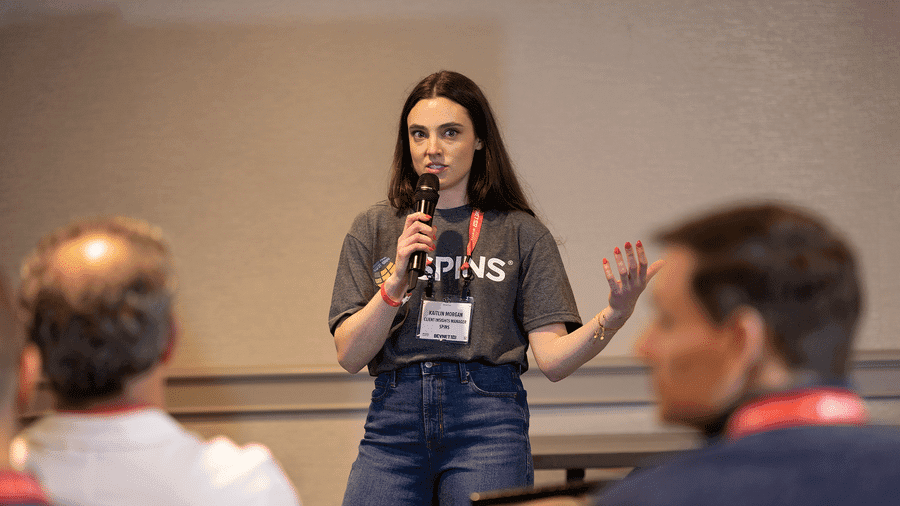
Join SPINS for an exciting workshop where they will first discuss how the Beverage category is doing overall, what functional ingredients, sweeteners and health focuses are driving purchase decisions, and more. In part 2 of this workshop participants will participate in three break-out sessions with SPINS:
- partner for success
- perfect your pitch
- optimize your promotions
Featuring:
Joanie Merriman , Client Insights Manager, SPINS
Kaitlin Morgan , Client Insights Manager, SPINS
Transcript
Note: Transcripts are automatically generated and may contain inaccuracies and spelling errors.
Speaker 1 [00:10] I'm going to go ahead and start off with promotions and how to leverage them as a tool as you're building your brand. Um, so, you know, a lot of times clients come to us and they're asking us, you know, what should I be looking at? Am I wasting money? You know, can you do a year-end review? Was, you know, a lot of times we didn't have like the capacity to plan out our promos. Were they effective? Was there a way we could have done them better? Um, what tips and tricks do you have? And so we kind of want to like start at the baseline and answer that question and provide you with some frameworks and ways that we think about promotion. So, you know, setting the stage for why are we using promotions, you know, what is the end goal of them and what does a successful promotional cadence look like? So especially when you're in an infancy stage of your brand, you're new to the set on shelf, or you're launching innovation on top of your base business, we really like to think about promotions as this stair step framework. So understanding that you have a. Base buyer that exists today. And in order to generate incremental buyers, you're offering a value and building up your base business over time. So with each promotion, the hope is, hey, we're offering a value, whether that's undercutting the other brands on shelf, whether that's breaking a price cliff in the consumer's mind that triggers them to try the product, um, we just want to engage them with the product. Step one is like, how do you flag it on the shelf or put it in a secondary display enough so that they look at it, pick up the messaging, and read the product. Step 2 is your promotion being deep enough that they make that purchase and they go home and they try the product. And step 3 is that a fraction of those people are converted to repeat base consumers, and that fuels this stair step cycle, um, to build the base business. So looking at key metrics and variables across promotion, starting with promotional types and how to leverage those. Um, so most commonly in the data, we're looking at TPRs in the upper left or temporary price reductions. So it spins, this means that you are discounting 5% or more off of your base price. Um, we'll talk. A lot about the KPIs associated with monitoring these and executing them successfully. Um, but first I just want to touch on what else is out there. Um, so in the top right, we have special packs. We have an image of cereal, so think this would be a unique UPC. So it's a box of Cheerios plus a toy inside, um, a way to Increase engagement, generate excitement, especially if you're observing stagnancy in sales. A lot of times we also see this in, you know, beauty personal care. So a brand launches a new product, they attach a trial size to the original, um, in hopes of converting that consumer, incrementally returning to that secondary purchase as well. There's also features, so think in store, um, you know, we have flyers, newspapers, ads, etc. a lot of copy there, um, and then I really want to talk about displays, especially if you're a newer brand and you're trying to build your brand. So like Joni mentioned earlier, a lot of times the goal here is growing the category. So, you know, you're solving for a problem, you're filling a gap, and so a lot of times your growth is going to come from lapsed category buyers and that's important to understand what is. Your product's positioning if that's the case and you're going after those lapsed buyers, understanding that they might not be in the soda aisle any longer and so understanding that is important so that you might need to invest in a display. You might need to understand that the person that you're trying to reach is no longer in the aisle and so leveraging those or leveraging them to just capture attention as they're walking by, but it wasn't on their list can be really important, especially as you're building a newer brand. And then looking at promotional KPIs, so, you know, fake data, we can ignore it, but, um, all in when we're assessing promotions, I think it's very important to contextualize and benchmark. Pretty much every promotional KPI is arbitrary if it's not benchmarked against is this good or bad for this category? Are we promoting in line with the category are we unnecessarily Spending um and hurting our own cash flow so it's a lot of benchmarking, which is why it's typically done for our clients in this format. And so what we want to look at is how much volume, like how much of your volume is coming from promotional sales and what does that look like compared to all the other brands on shelf with you? What does that look like compared to the category average? And then we want to understand what is the frequency of promotions? How many weeks out of the year are you on promotion and how does that compare to the other brands in the category. Beyond frequency, we want to understand the depth. So how deep are you going with these discounts, um, you know, we have clients who don't understand why they don't have effective promos and they're doing 10% TPRs and the category average is 45%, you know, so it's really important to understand, um, is this a category with very deep infrequent promo promotions or a category that has longer, um, more shallow promotions and then. Finally is Lyft and this is really the gold standard of was it effective or not. So, um, we'll dive into Lyft a bit here. So learning about Lyft, um, you know, we talk about this as the effectiveness of the promotion and so it's calculated by looking at your incremental sales, which those are the sales that would not have occurred if it wasn't on promotion. Um, so these people only bought the product because it was on sale. And we divide that by your base sales or the sales that were going to happen anyway. And once again, that number in and of itself, it's not a magic number, it's important to contextualize with all of the other brands and the averages, um, and it can also be a little bit of game theory within your own brand. So, you know, change things up a bit, run a 2 week promo instead of an 8 week promo and double the depth and see what the resulting lift was to the business, um. And so a lot of times, you know, that's important to look at and then also do a ratio of what was the resulting lift and how deep did I go. So you start to understand this ratio that you can compare across your promos to see how much additional business did I garner based on how deep I went. And so that ratio is kind of, you know, like your profit from the promo compared to how much you spent on it. And then, um, a lot of times, you know, from there we, we have brands that come to us and they say my lists are really low, they're down from last year, they're a lot lower than other brands. I know how to like look at this across brands, but why are they low and so especially in certain categories, um, and I would say, you know, beverage is one where there's a lot of competition on shelf it's really important, um, to. Understand the, the varying structures and so we're not saying that all of the time promoting super deep and infrequently is the correct approach, but what we are seeing, especially if you're a premium price brand, is that the lifts are typically much higher. Um, so a lot of brands like we are coaching to refine their promotional strategies so that they're running promos for not quite as long, um, but at a deeper rate. So, you know, again this is all context. Like you have to look at the shelf and it is retailer specific. So if you're at Publix, um, the first thing I advise brands to do is chart out every brand on the shelf that's, you know, on the shelf with you and put a dot on a graph for their base price and for their promo price. And then put in your proposed base and promo price and understand visually does your promo price. Put you right below the rest of their base prices because that's a lot of what's occurring at shelf, right? Someone's already in the aisle, they're looking at price tags, and you need to trigger them to consider your product. So if you're coming in at a premium price point, a lot of this is just, it's just a game of driving trial and, and giving them that reason to make that decision that one time. And then the goal is once they touch the product, interact with it, consume it, they'll come back. Um, and then, you know, here are a couple of different promo strategies and it's important to recognize, you know, as consultants it's easy for us to sit here and say go deeper, um, but we understand that's money out of all of your pockets, so it is important to prioritize within your budget. So there's different strategies. If we look at the top strategy, you know, the base price being $3 we're promoting down to 2 33% discount. What's the resulting lift? Uh, we had 4000 incremental units sold or a 300% lift. Um, so back to that lift to depth ratio, again, not a magic number, just a way to keep a pulse check. If you had 300% lift and you went at a 33% discount, we'll call that, um, a 9, you know, for percent lift per discount. In promotion B, again, $3 base, $1.50 promo. So we're going deeper. This is a 50% off promo. The resulting lift was higher as expected. Um, so 5000 incremental units, 400% lift, you know, so the lift to depth ratio is actually lower. So that's where you take a step back and you say, OK, like what is my priority here? Do I need to. Save cash and then we would, you know, instruct you on A. Like that's still an incredible lift number, you know, but if your goal is to protect your facing on the shelf, if you're working against a velocity number with a retailer, or your goal is to gain share as fast as you can, we would coach you towards B if you have to spend. So obviously important to contextualize with the cost on your end. Um, and then this is an improvement framework, um, you know, what's happening, so what do we think about that, and now what do you do about it? And so again we'll provide this resource, um, it's a decision tree you can follow along, but essentially again, if you're on the left and you feel like your promotions are effective thus far, once again, like I would say take it one step further and comp against. The other brands on the shelf, and I would also look at seasonality. I think there's a lot there with what's the seasonality of the product, what are the other brands doing, and what should your strategy be? And I think it's a really interesting like triangle that comes together because Uh, like turkey at Thanksgiving, for example. Like, what's the point of promoting when everyone's already buying? You, you would assume like a subsid subsidy, uh, Rate of like 9, 90% probably. Like you're not going to get incremental spend there. However, if everyone else is promoting in the set and you're not, then you're shooting yourself in the foot. So there's this like paradigm between what's the seasonality of your category, how do you introduce promotions at the lull times for your purchase cycle, um. You know, to maintain sales, but also sometimes promoting at peak times, so you need to keep a pulse on what are the competitors doing so that you're not arriving at a peak time and being the only brand not on promo. Um, so if you feel like you're doing it well, I would challenge you to take a look into seasonality data or competitive brand data. Um, if you feel like your promos are ineffective, you know, if you're losing money and you're just in the red, you've given it a year and you're still in the red, uh, evaluate that lift. Again, do that pricing exercise because if you're promoting or if you're discounting at 40. percent but you only have to be at 25 to come below the competition's base, you know, you can like lessen up a bit and still probably have a really good lift so um assess the depth based on competitive base prices would be my biggest recommendation um. If you feel like shoppers aren't aware of your promotion or your product, that's when you want to, you know, switch your spending strategy to those alternative displays in store. I think we've had a lot of brands with a lot of success, and they didn't understand that their product was solving for lapsed buyers, um, and they needed that additional placement. And then if the majority of units are subsidized or not incremental, meaning they were already going to buy it and now you're just giving it to them at a cheaper price, evaluate the promo windows. So once again that takes you back to seasonality and my only like warning there is make sure you keep a pulse on competitive strategies. So, um, tips, remember, be intentional. Why are you promoting? Are you generating trial? Um, are you trying to gain share? Are you trying to save money? Um, and then we can, you know, help leverage data to balance what your priorities are, but I think being intentional about what you're leveraging promo for upfront can be really, really helpful in simplifying what otherwise feels kind of overwhelming. Um, especially if you're a newer brand, you know, like we want to coach you to drive trial, so go just deep enough to captivate consumers. Don't go too deep, um, you know, protect your cash flow upfront. Use the best promo types. So once again, like understand what are you solving for in the set, um, and make sure that you are leveraging displays if needed, um, TPRs, BOGOs, especially as you're uh making larger pack sizes and then continually. Monitor. So we recommend on a monthly cadence, just evaluating the promos that you ran with these basic KPIs quarterly, um, make sure that you're hitting your lift targets, and then on an annual basis, take a step back and compare against the category benchmarks and other brands. So, um, yes, we love promotions, uh, we would love to chat with you more about them, but any questions on promos?
Speaker 2 [14:28] Thanks Kate for going through the promotions. Um, I'm gonna spend 15 minutes talking about pitches, um, specifically how to pitch, um, you know, either like a retailer or an investor and why you want to kind of spice things up accordingly. So thinking about, you know, your pitches and 4 tips to remember. We like to kind of, you know, bucket them in terms of like know your audience. So it's kind of like I just mentioned, are you meeting with a natural retailer, a conventional retailer? Are you meeting with an investor? Who is the audience? How much time do you have with them? Is it 5 minutes? Is it 20 minutes? Um, you know, are you actually there to speak to your data or are you just emailing it to them to read? So, really kind of grappling all of those variables to kind of get your message across in the, you know, most effective manner. Um, second is really the idea of using a framework. So, make sure you're not missing any key elements. Um, I do a lot of self-st consultation, so if you ever wanted to take a look, I'd be happy to. Um, but you know, use that checklist, make sure you're, you know, incorporating everything you want to incorporate that really communicates the message, um, and you know, the success of your brand. What's the problem you are trying to solve? What advantage do you bring to the market, you know. What are your products look like? What are your ingredients like, How do you fare against competition? So, really kind of, you know, making sure kind of that funnel approach is, you know, you are touching on everything to create that holistic compelling story of your brand or product. Um, third is really this clean and clear idea. Um, with that idea of these retailer meetings, um, you know, buyers are busy, they might have anywhere from 5 minutes to 15 minutes to look over the deck. So, how do you get your message across in that short amount of time? We kinda like to use the phrase less is more, you know, use the data that is really going to make the claim that you are trying to make. Um, it can be really overwhelming when there's a very, you know, data heavy slide and a retailer can't quickly identify what's my takeaway here. You know, you should be doing that for them. Get the insight on the forefront of the messaging, make it easier for them to see what you're trying to tell them. And then lastly is this idea of, you know, the four P's and the opportunity gaps. So the four P's, you know, we are thinking about product, place, pricing, and promotion. So, you know, identify those and also identify your opportunity. You know, what is your category look like in the market currently, what void are you filling, what increment, incremental revenue are you gonna be able to bring or provide? So, thinking about that, you know, broadly speaking, and I would recommend just having this on your desktop when you are like crafting a retailer or investors sell story. So, always kind of go through these, you know, checklist items essentially for every pitch no matter who you are targeting. So think, you know, how much time do you have, I have already mentioned that. You know, is the meeting in person or is it virtual. There is a lot to be said about like in-person body language and just like clarity of messaging. So think about that because it's gonna, you know, it's gonna impact your deliverable and your the way you are selling yourself. Um, how data savvy are they? I have worked with clients that have, you know, told me this retailer doesn't understand velocity, so we can't use that metric, and that's good to know. You know, if they only really want to look at your price or your dollar volume, stick with that. You know, they are, they are usually pretty clear in what their priorities are and what they are looking for. So, make sure you are adapting to that and, you know, catering your story to fit their needs based on what they are looking for. Um, and you know how do they measure success? So this is kind of, I think one of the most insightful and like interesting things about retailers. Um, at this past expo, there was, you know, retailers and one of the questions asked was, what are you looking to put on the shelf right now? And across 4 retailers, they all had such different answers. So like know the retail you're targeting, know what they are looking for, and you know, determine is this the right fit, like do their mission support mine, you know, what's important to them and do I fit that need. Um, and then I can mention this, but you know, will you be guiding the presentation or will they be reading it on their own? There is a lot to be said about clear and concise messaging, um, when you are presenting versus when they are reading it to themselves. We'll just keep honing this point on, but like the idea of simplify and exaggerate short amount of time, not everyone is data experts. Um, usually they are not data experts. I remember I was meeting with a brand and I was very early in my career and I started rattling off all these different metrics and he was like, I am not a data scientist, what's going on? Like this is, what are you talking about? And I was like, I'm glad you said something. This is not what you do every day, it's what I do every day. So, you know, think about that like make it simple and then exaggerate it, but make sure, you know, it's digestible and understandable for the retailer or investor. So, kind of focusing in specifically on the retail side of things and what that framework looks like. Um, you know, there are kind of retail elements and then these investor elements. I won't go through all of these, you can read through them and we will share them out, but you know they have different priorities. So, a retailer is gonna be really interested in how you, you know, compare to the current items they have on the shelf or the category that they have on the shelf, you know, is there a need for your product, um, is there an opportunity for shifting assortment based on what they currently offer? Um, you know, what is your velocity look like, what is your dollars, what's your price point? Really all of those different variables that aren't necessarily going to be super, um, you know, top of mind for an investor. An investor is gonna look at you. For, you know, answering things like what problem are you solving? You know, OK, should I invest in you? Like what are you bringing to the market? How, you know, how can I back you up to understand that this is really, you know, you've identified a problem and you're gonna help solve it, and I wanna do that with you. Um, you know, things like your total adjustable market. So of that total market that you can go after that time, what's attainable? What can you actually, you know, achieve? Um, growth forecast, competitive advantages, all that sort of thing. So really kind of remembering to cater to the type of person that you are meeting with. So again with this idea of framework, um, there's a lot of kind of words on this page, but it's the idea of like the introduction, the growth, and then the maturity of it all. So, the intro is really just like what are your wins, communicating those through things like your brand story, through things like, you know, your incrementality to the category. Um, your growth is gonna be things like your price, your trade, or your promotion, um, you know, your marketing strategy, those sorts of things. And then on the last, you know, that third leg is kind of that mature element of it. So, um, you know, what is your space to sales look like? Are you under space on shelf, suggesting that you need more distribution? Um, you know, are you like looking at an assortment, you know, I always like to use the example of, you know, with this unique flavor profile and this unique flavor world we are living in right now, um, identifying, hey, in the natural channel they are currently selling, you know, 15. Cherry limeade skews and sprouts, you have none, you know, like there's a huge missed opportunity here and I can help to, you know, fill that gap for you. So really kind of breaking out, you know, there is this void that I can help fill. Um, checklist, I kind of mentioned this earlier, but again like just always kind of keeping this on top of your mind. Um, so your origin story, the problem you're providing and the the problem you have and the solution that you're providing. Um, there's this, you know, crazy, it's very irrelevant to beverages, but there is a super cool dog food brand, and he went, you know, he went outside of dog food and just talked about, you know, the world of plant-based and like the culture and how much waste was coming as a result of dog treats, and he found kind of a sustainable option. That, you know, he could quantify the impact it was going to have on, you know, the, um, like health of the environment. And it was really cool to see that and it makes you know, to be able to quantify, you're like, wow, this is huge. So, being able to, you know, kind of communicate that story, communicate that angle to a retailer or an investor is really big. Um, making sure you have a marketing plan in place, you know, it's never really, uh, you know, it's always a little bit uneasy if you go to a retailer or an investor and you're like, yeah, I don't really know what's next. Like you gotta kinda come with, you know, your 6 month, your 9 month, your 12 month strategy. Likely that is subject to change, but at least, you know, communicate that you've thought about that, you have a strategy in place that you're planning to implement. Um, you know, the quantitative elements are gonna be kind of mention these, but like size of the market, brand versus category, um, velocity, white space, demographics, all that sort of thing. So to kind of give you like a live example of how we see this and um again bringing up actually I think it was a spins meeting but we had um one of the merchandisers from Foxtrot speak to us and it was really interesting because he mentioned the idea that every brand can be number one in some way. And that's like, OK, you know, I know you're finagling this to make yourself number one, so that can be important, but also, you know, being truthful and really just kind of highlighting your advantages without them being able to read right through you. So, um, you know, on the left here we have this example of three brands A, B, and C. Brand A dominates in volume. Brand C is much smaller in volume, but the growth is, you know, much more, you know, it's much bigger than Brand A. So that there's something to be said about that, you know, you're gaining traction. Um, the category leader, although really big, is kind of falling short, you know, it's flat year over year, whereas, hey, you know, we're small, but we're mighty, we have double-digit growth, you know, that's a huge advantage. Um, another kind of, you know, case study idea could be something around velocity, and I always like to say if you can tell a story around velocity. Do that. That is huge for retailers and it's truly so impactful because you're just, you're basically telling them our items are flying off the shelves. There is a demand for our products, consumers want them, you know, we can't keep up with demand or whatever it may be. That really signals, you know, that there is an interest, um, and kind of suggests the case for needing more distribution eventually. So in this example, again we have Brand A, B, and C, and Brand A, as you can see, has that higher velocity. So their average weekly dollars, um, you know, are about $15 whereas Brand C is only about $5. And so to me that signals, you know, hey, we are turning on shelves much more quickly than the other brands. Um, one of the things that spins does is looks at velocity across, I think there's like 6 or 7 ways, and each way, you know, you kind of determine which way is gonna be the most impactful depending on what you are trying to show. So, one thing that we like to use especially for emerging brands is, you know, average weekly units per store selling or average weekly dollars per store selling. And the benefit of that is it's taking into account distribution. And level setting the playing field. So, you think about, um, you know, Coca-Cola, like their distribution is huge and so you can't keep up with their distribution regardless if you're a smaller brand. But if you have, you know, only 30% distribution in the store, um, and Coke has 100%, the way we look at velocity is it's gonna level set that playing field and it's really going to determine based on the distribution that you do have, what is your velocity, what is your turn rate, and then you can really kind of compete with those big guys even though you might be a much smaller player. So there's a lot to be said about velocity and the impact that that has when crafting your pitch. Um, and this is kind of the idea around, this is more of the marketing side of things, um, it's really just getting your message across and making it stand out. So, here is the idea of, hey, we are looking at the top 10 new items in functional beverages. Here are the top 2 items and my brand has 3 of them. They stand out very clearly, you can see them bolded in green, look at that, you know, we are off to a really strong start. Um, you know, we've launched three of the top new items. Here's our velocity. Here's a pretty picture. It gets your, your message across in that exact, you know, theme of simplify, then exaggerate, clear and concise. Here, basically just calling out, like I mentioned, um, you know, highlighting it, product images, all that good stuff. Another example of this is, you know, same idea. You might already have one item that's selling in a retailer and it's doing well and you're trying to make the case for bringing 4 more items on the shelf. How do you do that? You quantify the opportunity. Hey, we have this 1 item on the shelf, and here's our velocity. Here's how we're doing. If you were to give us 4 additional skews on the shelf, here's our potential incremental volume that we could bring to you. Um, there are various ways to calculate this. We kind of have our own way that we like to do it, and although it's not an exact science, it's a great way to, you know, project. This is what we could do from where we are today. So, hey, we bring those 4 items on the shelf, look at that. We can go from 180,000 in volume to, you know, over 700,000 just by bringing those four items. So, again, the idea of quantifying it to the retailer. You know, showing it to them like, OK, wow, I can actually see that stair step of growth. Um, this is kind of another idea, almost out of time, so I'm gonna kind of breeze through this one, but opportunity gaps, they're big, similar idea, kind of another example. So, the investor framework, um, again, really focusing on the problem that you're solving, and this is what I've heard time and time again from investors is what are you aiming to solve, um, you know, what have others done and what is, what are you doing? So, the example of alcohol, people are tired of alcohol. We've seen that trending for the last year or so, but there wasn't a lot of good non non-alcoholic beverages on the market. Hey, we are toast. You'll probably see them at happy hour. They're delicious. We are now making this, you know, non-alcoholic entry point for consumers, really welcoming and it tastes good. So we have solved this problem. Total addressable market, um, and your serviceable addressable market touched on this, but it's basically the total market versus what you can kind of, you know, acquire. And then really kind of, you know, quick financials and forecasting. So, identifying retailers, what they are all about, um, you know, showcasing what you can do, your distribution currently and, you know, where you predict yourself going if you were to get in their doors. Sorry, I really sped through the last portion of that, but um if anyone has any questions, please let me know.
Speaker 1 [30:29] OK, great. And then we're going to spend the last 15 minutes together talking about finding the correct retail partners. Um, so we get this question a lot from clients, right? They're building a brand or they're trying to expand distribution and they come to us saying, where is my, uh, most sizable opportunity in retail? Where is my biggest white space in retail? Um, and the fact of the matter is, you know, 9 times out of 10 we're going to give you a calculation and we're going to rank those. in Walmart is going to be the first um because it's based off of how big the category is, how much volume the store does and what share you think you can achieve, um, and so you know sometimes that's a great first retailer for brands sometimes they are ready to go national with Walmart, um, but you know we wanna like pair this back a little bit and share with you some of the other considerations as you're building a distribution strategy. So, you know, quick visual here, you know, two ways that we've seen brands as they're rolling out their products, you know, the crash and, uh, the quick build and then the crash and burn and so we don't want any of our brands to see this. Um, it's really exciting when you get engagement and buyers are excited, but you know you're going to hear this a lot today. It's important to level set this against what can you do operationally. What can you spend on promotions? Where are your distribution centers? Where is your manufacturing currently? Um, and then, of course, from a data side, which we're going to help you with today, identifying where is smart distribution, not just large distribution, because we want to make sure that your brands, your innovation, your line extensions are building like the chart on the right steadily and sustainably. So 4 tips to remember alluded to this bigger is not always better. Um, from a data side, you know, when brands are trying to identify where should I be that I'm not today. I very rarely do that share calculation. A lot of times I'm saying, OK, what is your point of differentiation? Are you plant-based energy? Um, then let's go ahead and say like, all right, total store across the US, what's the share of plant-based energy? Is it 15% on average? So let's quickly look at what retailers have less than 15% on the shelf because that story crafts. Itself, you know, you can go to those retailers and you've already identified this is a list of retailers where I can go and my point of differentiation is closing a gap, um, you know, so just understanding that it's important to understand how much volume flows through these stores. If you were to get 1%, 5%, what does that amount to? These are important KPIs, but it shouldn't be the only indicator of success in retail. The right vibe is the second pillar. Great vibe, it sounds fun, but um, you know, choose a retailer whose mission aligns with yours. You know, we heard a lot about this from the panel at Nosh, but, um, you know, like remain intact with the core values of your brand and understand like who are you trying to reach with this product and where are they shopping. You want to make sure that the retailer is a good fit for your brand just as much as you're a good fit for that retailer and so from a KPI perspective. A lot of the time it's looking at pricing structure. Um, yes, it's good to have diversification in pricing tiers, but you know, if your price point is $3 above everything else on shelf, it's probably not a good fit. So understanding, you know, what's going on on shelf at that retailer, where do you fit in? Um, bucket three is mastering the metrics. So obviously I've already been spitting them out. Um, but, you know, if you do have access to data, there's a lot of metrics that you can use. So a lot of times we're looking at space to sales. So, um, you know, for the attributes for your. Product, you know, if you do have a unique flavor profile, can you find retailers that don't have this like Joni mentioned if cherry limeade is everywhere and there's a surgence of this across functional beverage, if you have that item, find retailers that don't and go to them with that value proposition. Um, you know, if you don't have access to data, go walk in stores and see what the pricing landscape looks like. See how many items are flagged as local. Visit the retailer's website. It's really remarkable how many of them will list their priorities for the year and their goals and showing up to those meetings prepared, um, to say, you know, I know you're trying to do this and I'm going to help you get there by doing Z is really impactful. And then scale accordingly so this really comes back to everything internal to your business but you know what are your operations? What's your budget, um, you know, for building distribution to the consumer you're just building presence, but to the retailer you're building relationships so it's really important that you know you're scaling at a rate that you can succeed, um, because you don't want to burn those bridges too soon.
Speaker 2 [35:23] Awesome. So, kind of thinking about the different types of channels and you know, the differentiating factors of those channels, um, there's gonna be pros and cons to both. So, within conventional and within natural, you know, there's gonna be certain characteristics and certain qualifications that make them different and might, you know, appeal to one brand more than the other or might make a retailer a better fit versus the other. Um, when I think about this, it kind of again really circles back to what Caitlin has been honing in on is find a retailer that is backed by, you know, your mission, your type of product, find where it's a good fit, you know, not only where is there a void, but, you know, do you align with the types of products that they're selling. Um, and scalability. So, you know, Walmart comes to you and they say we're gonna get you in 5000 stores, that's amazing. Can you do that? Do you have, you know, the supply chain to keep up with that demand? You know, can you make that happen? If not, be truthful, be honest, because you don't want to scale too much too soon. Um, we kind of like to say, you know, go deep and like in one retailer versus very widespread across a lot of retailers just to gain that presence, gain that exposure, gain that like consumer base, because once you have that, you know, deep penetration in one retailer, whether it's small or not, you have so much runway then to go off of when you meet with. Other retailers to, you know, prove what you've done in that one retailer. So, it's really, really beneficial and impactful to be able to kind of get that case study for yourself, use that to your advantage, and then start to scale your business across, you know, other retailers, keeping in mind, you know, what makes each retailer different and what works for you and what doesn't. So this, um, again kind of goes back to the idea of the pitch, but it's really, you know, the worst mistake ever is probably a little bit dramatic, but what we really wanna say is, you know, the same pitch is not gonna be. You don't want to take the same pitch to every single person. Um, there is a lot to be said about the type of retailer you are meeting with, what their current assortment looks like, you know, a wide variety of variables. So, you know, thinking about the category, the consumer, and the competition, make sure you come prepared to kind of talk about all three of those based on the retailer or the investor that you are meeting with. You know, all these brands that you are, you know, pinning yourself against, does that retailer even sell them? You know, make sure it's relevant. Um, you know, in terms of the consumer, is the type of product you are offering, is that the type of consumer that this retailer is usually going after? Is that the consumer that's usually in their stores, um, and you know, competition, so I can mention that one category. So, you know, like what's the growth trajectory? Is there a white space opportunity in the category? What does performance look like maybe from a total channel level to just this one retailer. Um, and I think, you know. What I see time and time again with clients' retail pitches is the lack of data included. And I think, you know, when people hear data, they hear expensive, and it's hard for them to find ways to incorporate it into their sales story. And so I think when you're thinking about this retail pitch, whatever retailer it may be, you know, leverage public resources, Mintel. Spins has great thought leadership on our website. Get those data points that are relevant to your brand and to the meeting that you are about to have because there is plenty out there and when you can really just kind of add in a little bit of a data tidbit, it can pay dividends in terms of, you know, making that compelling story.
Speaker 1 [38:58] Yeah, so leveraging data, you know, as Joni mentioned, you can go on Google Trends like the slide we presented earlier, but if you do have access to data, there's a lot you can do from a scorecard approach just with four simple measures. So if you're trying to explore, you know, where does it make sense for me to go after distribution with my product, you know this is a really great starting point. Like look at dollar volume, how much dollar volume is this category doing across the retailers. Um, and based on the saturation of brand landscape there, like what do you think you could take and share? So again, what's the size of the pie? Try and quantify that as best you can and what size slice do you think you could take of that pie, and that serves as, you know, one guiding post in terms of the resulting sales that you think you could achieve across retailers. Um, as Joni mentioned, another one is $1 percent change, and I think, I think this one can be really impactful because retail partners love when you come to them solving their problems for them. Um, and so for me, you know, I'm looking at benchmarks across the channel. So we told you today ready to drink beverage is up 8% across channel, you know, so find retailers that are lagging behind that benchmark and go to them and solve that problem. Say, I noticed this is a huge growth driving segment. You're lagging behind growth and here's how I can help, um. You know, and if you don't have access to data, once again like Joni mentioned, there's thought leadership with these quantifiable data points. Find the ones that align with your brand and add them into a slide, and you can go and walk these stores and identify white space on shelf without the dataset readily available. Um, I would say one of the most important is ARP. So again, especially with what you can spend on promo, it's really important to make sure that you're entering with the price point that you've established where you're going to succeed. Um, and so just being cognizant of the different price structure across retailers and making sure that you're entering one. Where you know you fit in or if you're at a premium that you can convey why to the consumer at shelf. And so I wouldn't be turned off by a price point lower than yours. I would just be prepared to justify, um, you know, what attributes or what enhanced value are you providing that can command that higher price point. And then, um, last but not least is the number of new items selling. Again, you know, this is in our data, probably a little harder to quantify without, but it is very helpful to understand what new products have launched at these retailers and what's been successful, you know, so to Joni's point with investor pitches, learn from the past, um, and help that inform the patterns to make sure you're set up for success. Quick AI case study, um, because everyone loves AI. So here's a bag of chips I made and just putting what I just said into practice. So, um, you know, we're at retailer X, they do $32 million of volume in tortilla chips. They are up 3.5% across tortilla chips, however, the natural channel at large is up double that rate, 7%. The average price for tortilla chips is $4.50 and they launched 25 new items that best performing were sea salt flavor and triangle shapes. Um, so putting that into practice, you know, size of the pie, $32 million. What do you think you could reasonably take of that and what does that amount to? So if you could achieve 5% share, that would be $1.6 million right there. That's a huge knowledge base as you're building your brand. Um, it's also important to know the retailer is underperforming. You already have your, your sal story crafting itself here, you know, you're up 3.5, the channel is up 7. Let me help you get there. We want to make sure we're capitalizing on that growth rate observed at the channel level. Um, your brand is, you know, in line, 50 cents above, that's OK. Just be, be prepared with your packaging and messaging with your brand to communicate why you command a 50 cents higher price point. Um, I think it can definitely be a lever for success to diversify pricing on shelf. There's plenty of research out there about premium pricing, diversification, expanding categories. Just be prepared to speak to that. Um, and then the top performing items are very similar to yours, and so this is where that's important because it could behoove you to go somewhere that didn't just recently launch a bunch that are very similar to yours. So, you know, it goes both ways. They've been successful. Do you think you have a distinction point that could make yours successful on top of that? If not, Might be pretty steep competition on that shelf. Um, and to Joni's point earlier, this is really why we want a baseline of smart distribution because you want to drive fast velocities and then use that in your future pitch decks to other retailers. I'm #1 velocity where I am. So you want to make sure where you are is smart and strong.
Speaker 2 [44:01] Awesome. And then to kind of wrap it up, um, we'll tell a cautionary tale. Um, the idea being, you know, again around these themes of too much too soon, scaling too big, too fast. So, in this example, you know, we're looking at a plant-based brand, um, it plays in about 1 to 2 categories, and it's, it's, you know, doing really well. There's a lot of runaway. It gets investor, um, you know, it gets investment in their business. Investors are very excited about it. There's a lot of, you know, um, hype around it, and they think it's gonna do really well. And then that's where we see kind of the downfall of plant-based products. They get distribution in all of these stores and all of a sudden the demand for plant-based products starts to decrease. As a result, their velocities are impacted, their velocity goes down. They're not, you know, providing a ton of incrementality to the category, and that leads to discontinuation of items and eventually, hopefully not potential bankruptcy. So, you know, the idea is like Like, no matter how good it can seem, you know, you always wanna kind of take a step back and level set your expectations. Slow is gonna be better. Don't scale too fast, too soon. You wanna really, you know, set yourself up for success and to do that, you know, you need to kind of take it slow and steady. Um, the smarter path, so essentially just the flip of the cautionary tale, is the idea of again the same plant-based brand, 1 to 2 subcategories, they're doing well. They've identified mission aligned, you know, features of their brand that differentiate themselves in the market. They use those to their advantage. They understand that plant-based products might be struggling, so they implement a very savvy promotional strategy to still drive that traction. Although plant-based might be struggling, there is still a consumer base out there. There are still consumers that are ready to try it out. How do you generate trial in a category that is struggling? You implement promotions. So, doing that in a very strategic way it can be, you know, it can be huge. Um, step 4 is, you know, as a result of that, you're looking at that strong growth as a result of your promotional strategy, your velocity went up. Now you're seeing growth. It took a long time to get here, but you've made it exactly where you want to be due to, you know, implementing that very logical and rational strategy behind it all. And then you become the most amazing brand ever. So, you know, the idea really just start slow, slow and steady wins the race. It's not, you know, a sprint, like take your time and really kind of identify the best strategy for your business given the market um and the current trends that are going on. Um, kind of breeze over this, but this is a really great free resource. I assume most people here are familiar with the Naturally Network. Um, really encourage you to kind of look into it if you don't know about it. Um, it's a great way to kind of get engaged with brands like yourself, find a community wherever you live, but also take advantage of the resources that they share. They are free and there is a lot of really, really insightful and impactful data to leverage. And that is it. Um, thank you all so, so much. Um, Really, um, you guys are the real ones. You stuck with us for 2 hours. Yeah, it's been a fun 2 hours. Listening to this raspy voice isn't always very fun. So, um, really appreciate it. I hope you guys learned something. It's really fun talking to everyone.