Search across the BevNET CPG Media network including BevNET, Nosh, Brewbound, Taste Radio, Nombase and CPG Jobs.

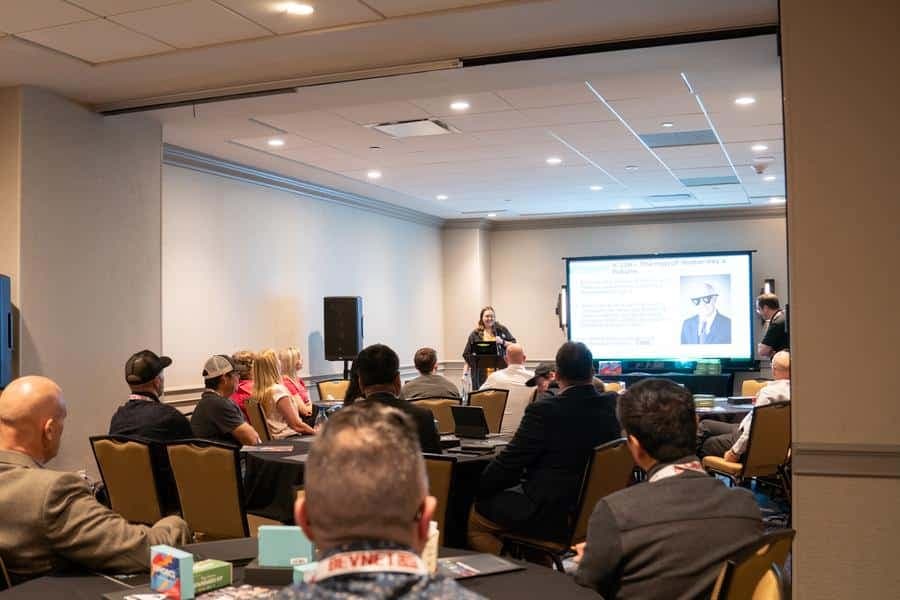
Sponsored Workshop: Hops! They’re for More than Beer
Transcript
Note: Transcripts are automatically generated and may contain inaccuracies and spelling errors.
Speaker 1 [00:10] Hi everyone. Welcome. Um, we are super excited to be here. Uh, we're gonna go ahead and get started, but, um. Yeah, OK, so, uh, hopefully you're in the right place. This is hops, uh, they're for more than just beer. And we'll go ahead and get going. So, um, I'm Shay Maloney. I'm a brewing solution specialist with John I Haas and co-presenting with me is Jeff Daly, our sensory manager at John I Haas. And today we're gonna talk, um, walk you through kind of what hops are, uh, a little bit of the botany and cultivation, and then how that that fits into the craft beer revolution and again how hops are really, uh, flavor, uh, for beer as well as other beverages. So to start out, um, we just wanted to get a little basic overview of what hops are. I'm sure a lot of you know that they are used in beer, but outside of that, um, they are also flowers. So this is the hop plant Hemulus luulus, uh, they grow up in vines, but, um, they, uh, really. Have been around forever. Uh, they've been in, um, around for over a million years, and, um, there are 3 known species, uh, the H.lupulus, which is the one that we think is important, and then there's Japonicus, which is an ornamental variety, uh, only found in China and Japan, and then there's also, uh, Humulus yunensis, which is in southern China, but there's not a lot of studies on it. It doesn't really have any value, um, but all of them are perennial hop, uh, climbing plants. So, um, again they've been around for millions of years, um, they descended from the Rose family, um, are, are directly related to cannabis as well, but they have evolved into their own. So these are uh dioecious plants, meaning that they have both male and female flowers on different plants. Um, male flowers are not really uh a value for, for brewing or, um, for flavor, but we do use them for, um, their DNA in order to make new varieties and things like that. Um, and hops are wind pollinated unless you're in a cultivating them on a large scale, you don't really want those to be wind pollinated. You want to be able to control that breeding. But um if you were to find hops in the wild, you're not gonna find them on those beautiful trellises and, and growing upwards. They're actually grown in hedgerows, and you'll find them by like stream beds and, and shady areas and everything like that, even though they do require a lot of sun to grow. So, um, a lot of comparisons are made between hops and cannabis. Uh, they are, of course, uh, cousins, but they are a little bit different. Um, the hops are perennial. We have to grow them every, um, or they, they'll keep coming back, and then, um, cannabis is an annual plant, but a big difference and one of the most important is, uh, hops have lupulin glands and, um, cannabis has trichromal glands, and they're on the outside whereas lupulin is on the inside. Um, both plants have essential oils that are super important for us, but, um, with cannabis you still have those, uh, psychoactive, uh, compounds on the stems, the stalks, the leaves, the flowers, where a hot plant doesn't have any psychoactive, um, uh, contributing compounds, and there's nothing that you won't find those essential oils or the alpha acids in the stems and the binds and things like that. So, uh, for growing, they have very specific requirements. Um, it's usually in these specific latitudes because they require 13 to 18 hours of sunlight. However, there are, um, really good examples of places that hops don't follow this rule. Um, most hops grown in Australia are all out of this latitude. Um, but the most important thing is 96% of American hops are grown in the Pacific Northwest, and 80% of that is grown in the 50 mile stretch from Prosser to Yakima, Washington. So, um, we have a harvest season every year. Um, it's usually August to about early October, but it's completely dependent on the weather and then how the season went that year, as well as water and, and if it was a rainy season, a wet season, a cold season, a warm season, um. And so there's all kinds of picking windows depending on what type of variety you're, you're trying to pick and what's really important is the farmers' intuition and skill. Um, they're, they've honed this over the years they know when things are ready like outside of analytical, um, labs and, and things like that to look at what they need to pick. Um, it's really their expertise of time after time knowing how to grow those plants, um, and for what this means for HAS is it's about 6 weeks of nonstop work because we host, um. We host selection during the harvest season, so brewers from all over the world come in and do hop selection during this time as as things are picked and processed. Um, hops also face, uh, several challenges. Uh, pests and diseases are a big one molds, mildews, mites, viruses, um, things like powdery mildew, spider mites, those are all really big things that can affect the hop plant as well as the quality, um, and that we have to be aware of, uh, during the growing season. So I wanted to go back uh to the orig the origins, um, which really focuses on the European cultivation of hops. Um, we've seen evidence of hops growing, um, even before pre-1000, um, which is really crazy, but it isn't until, um, a little bit later towards the 16 1600s, 1800s that we really start. Um, growing that and seeing purposeful, uh, planting where, um, hops get moved from European to the US and, um, it starts expanding for local needs rather than just hop gardens for personal use and brewing your own beers. Um, Nuremberg has been and was the biggest, most important hop market in the world starting in the early 1800s and, um, all the way through basically the 1980s. Um, it's the, it's still in the 1980s it was still the largest producer of hops, um, and then up through the 2000s, um, we have an increased interest in new varieties and, um, sustainability practices and things like that as climate change becomes more common, um. And so we also during the 2000s had the uh craft beer revolution, so lots of interest and flavor there. Um, so like I said, uh, hops started moving to the US, um, around 1620, and so it really wasn't common to see what the fields were, but, and they were only on the East Coast, so, um, the little red dot is where the biggest hop cultivation area was in that time. So really hops were only being grown in personal households for their, for their own use. They weren't being grown and and sold on like local markets. So, um, hops, uh, make a lot of hop products and that's kind of been around forever. Um, we've whole cone hops is the most traditional used, but we also have pellets and extracts, and, um, the history of those is actually quite surprising how far back it goes. So, um, whole leaf, uh, hops have been around the longest and been used the most. They are still used to this day. Um, if you've ever heard of some place called Sierra Nevada, they're a huge user of whole cone hops, but, um, and we saw the pellets come to rise in about the 1970s. Um, really though, the popularity of pellets didn't become, um. Big until the early 2000s because of ABI, so, um, they, the big boys, they were using things like pellets and extracts, but it really wasn't popular until later at the very beginning of as the craft revolution brought in some of the veterans from those industries they came in and really introduced, um, pellets and extracts to the craft industry. Um, and so, uh, extracts, um, improve utilization, and you would think that they would exist, um, past pellets, uh, but really there's been ideas for creating hop extracts since the early 1800s to improve hop utilization. So, um, early extracts we're using things, uh, like solvents and, um, organic solvents to extract hops which weren't great. Um, no one really wants hexane in their beer, but, um, by the 1980s we had, uh, ethanol as the primary extraction thing, but then as we moved, uh, more and learned more, uh, CO2 and super critical CO2 are the main forms of extraction for hop extracts today. So who are we? Uh, why are we here? So we are John I. Haass, and, um, to take you back, we've been around for over 100 years. Uh, George Barth started delivering, um, small to small breweries in the early, uh, or the late 1700s, and, um, as we went back to that, uh, timeline, um, this is when Nuremberg is the center of the hop trade and, um, so we founded John A. Haas founded John A. Haas in 1914. And, um, later down the line they became one group, so Barth Haas and John I. Haas, uh, acquired. So by the 80s, uh, we started our own private brewing comp uh breeding company um with Doctor Jean Probasco as the lead breeder. Um and then again, as I said, uh, we moved into uh innovating with super critical CO2 for extracts. Um, uh, in the early 2000s we formed a joint venture called the Hop Breeding Company, um, and that created varieties that are really well known today like Citra and mosaic. And then in, um, just a few years ago with Johnny Haas and our sister company Bart Haas we formed an innovation platform called the Greenhouse. So, but really what started it all is X 1114, the hop of yesterday's future. Um, this was first crossed in the early 1990s by Gene Prasco, our head breeder that we had hired, and, um, they were really, he was really looking for something new to bring to the hop industry. We had a lot of, uh, traditional hops, um, you'll hear them called the Chops, things like Cascade, Centennial, etc. but we wanted something completely different. Can anybody guess what in 2008 X114 ended up being named? It's Citra, so obviously a world changing hop, um, used, uh, all over the world today, um, a huge impact on the industry and helped birth the craft industry. So today, um, from the early 1900s to, to now we are a global brand. We have several sister companies. Um, Barth Ha Hawes Beta Tech is our branch for non-beer applications like the bee industry, um, and, and sugar alcohol, and then we have HPA, which is Hop Products Australia for the Southern Hemisphere hops, and then our smaller, uh, Yakima Valley hops can get, uh, hops to smaller companies. But all of this wouldn't exist without the Pacific Northwest and specifically Yakima, Washington, so if you don't know, it's a small town in the central, uh, district of Washington, so it is not rainy like Seattle there it is super sunshiny and is more like Central California than it is Seattle. And it's a huge growing region. What you may not know is that 70% of the nation's apples come from the Yakima Valley, as well as 42% of the nation's pears, a huge amount of grapes, and it is the biggest area of hop growing in the United States. So, um, and then mint, spearmint, and wine are also grown in the valley. So it's a high desert area, but it is super, super important for, uh, a lot of different economies, especially in agriculture. Which brings us to agritourism, um. The Yakima Valley, uh, produces so much produce and has so many things that are of value that. It already brings in tourists every year, so, um, like for hop selection, hundreds of breweries from around the world come just to Yakima Valley and and flood the tiny little town that is Yakima, um, for hop selection. Um, Yakima Valley's AVA is the is Washington's oldest AVA, um, and so it's a huge growing grape growing region and makes a third of the state's planted acreage of wine grapes. And we have places already there that are like Treetop being a huge producer of apple ingredients and apple juices. Lavamint is one of the largest producers of peppermint and spearmint, and then Del Monte has one of their huge, uh, fruit plants there because of, of all the fruit that's right there, obviously. So, um, all of this is to basically feed what we're gonna go into now, um, and Jeff is gonna take over from here, but basically we wanted to give you a background in order to see how hops really make a difference and how they go into flavor.
Speaker 2 [13:15] Thank you, Shay. So I know at least one person in the room knows what the crappier revolution was, but I don't want to presume that case. If you aren't aware, in America since 1965, we had 170 breweries, give or take, in the country overall. It was still a remnant of prohibition, but by the time we got to basically this year, we have 10,000 breweries. The next couple of slides, I'm gonna take you through a couple of hypotheses about why there was that massive growth, uh, in the industry overall. First, Desire for higher quality when there's only 173 breweries and fundamentally 80% of the volume is produced by Budweiser and Miller. Not a lot of options out there either. So What allowed consumers to make a choice when it came to wanting more beer and driving the growth in terms of more breweries opening? Well, uh, free income, disposable income from consumers has grown massively since 1965. But I don't think that's the case, uh, in terms of what caused this revolution. I think there's another couple of options involved. Now this whole story starts with 1965 because if you're not aware, Anchor Brewing with Fritz Maytag started here in California in 1965, and his philosophy regarding the nature of beer was not that beer should be a different type of beer should be brewed to be elite, but that people deserve higher quality, people desire, uh, deserve higher flavor, better flavor, and that beer really was the beverage of America. It was for everyone. After Fritz opened uh Anchor, um, in '65, there's a number of other events that happened, but you can see along this chain, there, the needle is not really moving in terms of more breweries opening. Uh, you know, 1990 through 1995, there was a number of major, now major breweries that opened, uh, and by that point we get to about 1100 breweries, but that's still, you know, that's respectable. That's 88 times more breweries than before, but we've got another 80,000% to grow to get to that 10,000 breweries. Now another element, another hypothesis is that, you know, the, the local watering hole, it needed to change, it needed to be for a different type of community, it needed to be more of a community, and that's especially important because, and this, uh, coming up is data from Putnam's bowling alone, there's been a precipitous decline in participation in third spaces by Americans since 1965. Unfortunately, his data ends in 2000 when his book was published, so I just took some liberties, uh, with extrapolating that data in terms of how we all feel about how engaged we are in our communities. And it's true, um, most recent studies that are by the NIH, uh, and those sorts of organizations, 1 in 3 adults describe themselves as chronically lonely. The generation that we're most concerned about, Gen Z, because they aren't drinking enough, uh, they do live in a state where 73%, uh, also describe themselves as chronically lonely. And the point of the book called Bowling Lone, when was the last time you went bowling? But why is this important? Why, why am I focusing on the communal aspect of craft beer? Well, it's because beer creates occasions, and I know that especially in this group, the word occasion is thrown around a lot. Tay Fredo talks about it all the time, like how do we create new occasions in order to get people to be in a state of mind where they wanna cap off that event with something special, something, a beverage that will really cement their experience and. Beer has played a big role in that, and beer creates community. It's, uh, an important part of actually the Yakima beer scene where every single brewery every week has multiple occasions regarding fundraising, but trivia is also a big one. It's my favorite because I just microdose Wikipedia, um, and also in the slowdown in the industry, even with the slowdown that we've seen over the last couple of years where we've, you know, been flat or declining about 1%. Uh, taprooms, the places where people can gather, those local places, those are still growing and maintaining an open state at a rate of 3 to 1 compared to traditional microbreweries. As Enova and all these places have been saying since about forever, consumer demand for more flavor is actually what's driving the industry, and that's the fourth hypothesis that I have for you today. And it's also where Has comes in, uh, with all these innovative products that we have in the back that we'll talk a bit, but. She talked about the original flagship sort of hops that were out there. Sierra Nevada, uh, Cascade was the first flavor hop. It was almost abandoned and not put out in the marketplace because it was too flavorful compared to the traditional varieties that were being used for at that point, uh, American lagers. Centennial came out celebrating the 100th anniversary of Washington State being a state, and it's been adopted by major brands like Bell's for Two-hearted, but. If you remember my chart in terms of openings, 1980s and 1990s was relatively flat, and I think, and I think I'll selfishly land on because it's our hop, uh, that citra was really the root cause in terms of opening up these industries, providing consumers with this new highly unique, highly flavorful, highly flexible hop when it came to creating beverages that people want, you know, it came out in 2003. Only 2 years later, GABF, the Great American Beer Fest, sold out 60,000 tickets in under an hour. And from there, about 500 breweries per year opened, and we still see growth today, uh, despite the statements regarding the, the health of the industry, we still see more breweries opening than closing year over year. Now Haass, because of the success of Citra, has come out with a number of other unique flavorful products or unique flavorful brands in the form of these different hops, and that has continued the trend in terms of brewers putting out more and more of these hazy IPAs that some bemoan, but some bemoan in public but really enjoy in private because we all have to have our political narratives. It's fine. Uh, but we get those flavor hops, and I'm gonna talk about this a little bit selfishly now because this is my program, because of the work that our company overall has invested in sensory as a quality and innovative platform. With Sensory Plus, it's a what I am not good at compliments. It's what some people are saying is a groundbreaking quality control program that involves the feedback loop of a highly trained sensory program to qualify both quantitatively and, uh, qualitatively hops that come in during harvest, provide feedback to growers, but also use in a statistical fashion to break down these different hops, these different hop lots, these different varieties. Fundamentally into building blocks that you would see in the flavorist industry. We can use different lots because they're different profiles, uh, in order to build flavors on top of each other in order to focus on building a year over year, year over year, year over year, product to product consistent, well, product, uh, that really highlights the best of what the Pacific Northwest has to offer. Now in terms of products, I mentioned Lupamax here, which is the kind of the flagship of the Sensory Plus program. It's a concentrated pellet that's very unique and highly useful in the brewing industry in terms of that consistency of the sensory outcome, but also savings to brewers because at this point hops are expensive and they're concerned about yields. But, and especially for you all not really producing beer, uh, we have a couple of other case studies to go through that I think you might find interesting. The first one was Hop Kick, which we released a couple of years ago. It's 100% all-natural, clean label, water soluble, 100% sugar-free. It's flavored without guilt. Uh, it's produced using a proprietary extraction technology, and it's the pure essence of hops. It's not some sort of ethanol extract or otherwise that really just pulls out some heavier sesquiterpene fractions or anything, uh, like that. It gets the full spectrum of flavor, and it's currently available in 4 unique varieties, Citru Mosaic, El Dorado, Centennial. We've got samples in the back. And it's really useful for a variety of applications. Uh, one of the main focuses, and Shea spearheaded the development of this product over the last couple of years was looking beyond beer and seeing how useful it could be in all these different contexts. You know, we were looking at hop waters back since 2019, but ciders still have a niche and they're growing. Uh, I think, well, with the new Gavin Newsom changing some things, we had a really, really friendly customer here in California producing a CBD tea seltzer using Hop Kick to cut into the bitterness that comes from those hemp extracts. But it's also through our trials internally and from feedback from customers, it's useful across the full spectrum in the CPG space. It's useful because at a low dose, as low as 250 parts per million, it provides nuanced flavors boosting towards flavors that are already in the product, provides some basic taste modulation, some bitterness reduction. When you go a little bit higher, uh, 0.1% to 0.5%, you get optimization of existing flavors that can be used as the warmth element to improve. So you have a lime crystal product that you're using for a beverage, and it's just not there yet, and to get to the flavor you want, you gotta use 6 different other lime products. You could try that, or you could try sprinkling it in this product because of the complex chemistry from the hop, it fills in those gaps that come from those incomplete formulations from other natural flavors. And finally, because we love the true to type hop character. Especially in hop waters, using it at 0.5 to about 1% or above is where you really get that massive hop sort of dry hop character. But for most intents and purposes, this moderate to low range really is useful. Case study number 2 is our newest product Euphorks, which is a natural flavor. It's highly concentrated. It's a blend of artfully and sensory, uh, selected hop extract oils, as well as other botanical extracts, and it takes us beyond what you can produce with just hops on their own. It's 100% FDA all natural. Uh, it's water soluble. It's also sugar-free, and its optimal use range is about a factor of 100 lower, uh, than the Hop Kick product. Uh, it really is intentionally developed all of these formulations so that these flavors, just like different hop varieties, can synergize with each other. It's not that two different flavors, like you'd get off the shelf from a flavor company, a cherry and a mango will be really harsh and not integrate well together. All four of these flavors were developed so that you could use 123, or all 4 in a given product. The 4 flavors that we offer are peachy keen, pineapple paradise, cosmic guava, and pomelo Daydream. They are complex from that chemistry of the hops. Uh, they lean sometimes in more of a nostalgic, uh, childhood soda direction like the pomelo Daydream that frankly just to me tastes like fresca, uh, or there's cosmic guava that us being in, uh, California especially, uh, has this really nice cannabis element. It, it, it's for beer to smell like the weed that we used to drink or the weed that we used to smoke, to quote Tony McGee from Lagunitas. But again, we aren't here to talk about beer because this is Bevnet. Um, a great example, and it'll be available tonight at the, uh, launch party upstairs and as well in the fridges in the sampling area, is our, you know, prototype. It's, uh, our hop water that uses both euphorics and hop kick, and it's an amazing beverage that uses just two base products that are both hop derived, very simple to make. Josh, can you move? Can I see what time it is? Oh, bangerang, OK. I was really worried that I was gonna take like an hour for that part. Um, now it's just the hands-on bit. Um, I'm gonna put one more slide up. We're gonna be available for, for Q&A in general, but the point of like the next 30 minutes basically is for you all to get up and go to the back. Uh, some of us will be mingling up here so we can answer questions, but go play with the products, go try the, uh, what we've brought here for you and try them and ask questions about them and your unique experience at that point. For you at the back bar we've got a keg grater, uh, with our hoppy hydrator. It's basically a euphorics and hop cake infused sort of Pedialyte situation, as well as basically a base Topo chico for you to make your own blends dosing into. Uh, on the side table over there, we've got whole cone hops because most of you have probably never seen a whole cone or touched it in your life. And we've got a number of different varieties, 8 different varieties. I'll be standing over there, especially because I lead that harvest intake sensor program, so I'm pretty familiar with whole cones. Uh, and so that's it for the presentation. Thank you all.