Search across the BevNET CPG Media network including BevNET, Nosh, Brewbound, Taste Radio, Nombase and CPG Jobs.

The Brilliance Of Boston’s Bina.
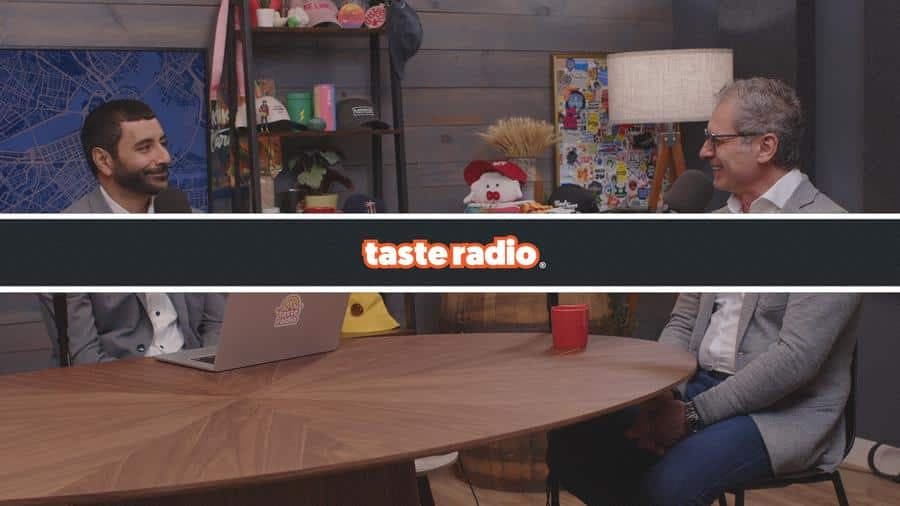
Show notes:
Babak Bina, Co-Founder, BCB3 Hospitality Group – A towering presence in Boston’s culinary scene for nearly four decades, Babak is a renowned restaurateur whose influence stretches far beyond the dining room. Known for his unwavering focus on hospitality and a bold commitment to innovative, globally inspired cuisine, he has helped shape the city’s food culture in lasting ways. In this episode, Babak shares insights into how he educates diners without alienating them, why pushing a city’s culinary boundaries matters, and what it takes to craft experiences that go well beyond just great food. He also discusses his philosophy of leading by example – whether it’s mopping the floor or bussing a table – and how culture starts at the top.
Transcript
Note: Transcripts are automatically generated and may contain inaccuracies and spelling errors.
Speaker 1 [00:03] Hey folks, it's Ray with Taste Radio. Right now, I am honored to be sitting down with Babak Bina. Who's one of the co-founders of BCB3 Hospitality Group. Baba, great to see you. Good morning. Yeah, thanks for coming out here to Newton, Massachusetts, not too far from your home, I assume.
Speaker 2 [00:18] Yeah, yeah, we've, we've moved, we've moved to Boston just recently. We're empty nesters, my wife and I, so we're in the heart of downtown Boston.
Speaker 1 [00:26] Nice. I don't know whether to congratulate empty nesters for getting to this point or what, what, what, what, what should I be saying here?
Speaker 2 [00:33] A friend of mine just had a baby Sunday, and I said welcome to the A tribe that will never stop evolving and we have a 19-year-old in New York City and we have another one in Boston that's about to graduate so it's an interesting trip that that really never ends it appears, yeah,
Speaker 1 [00:52] it's, it's interesting when I talk to folks who I have a friend who's 45 and he just had his first child and He's, he's like, wow, it's so tough, it's so difficult, and I'm like, yeah, it's for two reasons. One, you have a newborn, and two, you're 45 years old. It's kind of difficult to juggle both at the same time, being middle-aged and having a newborn, but you've been in the Boston area for some time. Um, talk about how you came to this city, this amazing city, and I mean, your contributions in terms of the culinary scene are pretty much unmatched at this point, but what, what drove you to Boston?
Speaker 2 [01:27] Thank you. I, I, I appreciate the compliments. Um, keep them coming. I, I, I,
Speaker 1 [01:32] you know, I'll, I'll try. I'll try. I have a few written down here, so,
Speaker 2 [01:35] um, I came about the business, the hospitality business in a, in a somewhat different way than a lot of people, I would say. Um, we had to flee the 1979 revolution of Iran, and my mom scurried me out of the country, although my dad had been saying for months, everything's gonna be fine, everything's gonna be fine. And um I think that I, I vividly remember the last day that she said this is it was when there were people fleeing the, the police and the military and they had scaled our boundary wall of about 12 ft and we're running over our flat roof and they were being shot at. And that was it. My mom said, I'm out of here. You can stay here if you want, but I'm taking my son and we're leaving and um We, we, uh, we ended up leaving shortly after on May 7th or 6th, I think if I remember correctly, 1979, and my sisters were going to university here, so it was a natural place for us to come to. We did think it was going to be temporary, but, um, obviously. Uh, decades have gone by and it has not been temporary. It was difficult. My dad passed away my freshman year and he was just 16 and he had just finally gotten here, um, and he passed away shortly after, so I took off a year and money was tight, you know, and, and I started as a dishwasher going back to how I got into this business, but 1981, I started as a, as a dishwasher in Pino's Pizza in Cleveland Circle.
Speaker 1 [03:00] I, uh, I go to Pino's every so often,
Speaker 2 [03:02] yeah, uh, I just wanted to fit in with the rest of the kids and, and Phil Petruciello, who was also an immigrant, obviously, um, the owner, his son was one of my best friends, so he gave me a shot. Minimum wage was 325, I think back then. I was getting under the table, don't tell anybody, uh, 290 or something, and, um, but yeah, BU was great, um, in a, in a sense that it allowed me to. I get the education that I, that my family wanted that I wanted, but at the same time it allowed, it allowed me to Expand my mind as to what potentially could happen, but I really didn't know what I wanted to do. So
Speaker 1 [03:40] didn't want to be a dishwasher your whole life, I'm sure, but I mean, the restaurant scene and being inside a kitchen, I think can be thrilling or it can be terrifying. But what was it for you?
Speaker 2 [03:50] Well, let me just say, Ray, that, that today if someone tells me, what do you do, I tell them I'm a chief dishwasher and uh my, my bigger boat is actually named the chief dishwasher. I'm proud of that start. I'm proud of the staff that make the restaurant business what it is. It couldn't possibly happen without them. Uh, every, every person in the restaurant. A contributes in a big way. It's not about me, frankly. It's actually more about them and what they do in our restaurants and has always been. The oldest staff member we have has been with me for 35 years now. So and he started as a dishwasher. He's a sous chef and has worked at many of our restaurants. I don't know if I answered your question.
Speaker 1 [04:33] I think you did. It's, it's I, I think it is thrilling because there is so much opportunity to be there and to be with people who really care about food and are passionate about food, um. On the other hand, when you go into the restaurant business and I've seen the back of certain kitchens and it's hot, it's busy, it's crazy. And it's fun, but it's not for everyone, I think. Where did you see the opportunity for yourself? Where did you see the It, where do you feel like the passion to open your own businesses came from?
Speaker 2 [05:09] I think a lot of people in the in the business call it the bug, catching the bug, and you know, I had caught the bug. I had caught the bug with the camaraderie that I felt, the family sense, the sense of family that I had at Pino's and with these fellows from the North End, many of them that that commuted to Brookline to work, and you know, there was, there was, there was discipline even in a pizza place. You, you couldn't go near the pizza table, if you were a dishwasher. You know, first of all, you were hazed, you know, go get the elbow grease, and kept describing where the elbow grease was and
Speaker 1 [05:46] What was the elbow grease?
Speaker 2 [05:48] It, it's metaphoric. It doesn't exist. I,
Speaker 1 [05:51] I know, but I mean, I guess how were you hazed, I guess is the, probably, you know, they
Speaker 2 [05:55] would send me down to look for the, uh, you know, the, the can, the jar of, of, uh, elbow grease that's down there. It's on the second shelf. I'd come back up. They'd say. Did you find it? I'm like, no. They're like, it's a blue can. It's sitting on the second shelf. We just got a delivery yesterday. Go, go back now. So, you know, as a 13 year old, 14-year-old
Speaker 1 [06:14] did that. Wow, they were like back then you could work in a restaurant at 1314. No, of
Speaker 2 [06:18] course you couldn't, but you know, come
Speaker 1 [06:20] under the table. OK, yes, yes, we've mentioned it a couple of times.
Speaker 2 [06:23] Yeah. Um, no, it, it, it, the sense of family and camaraderie. Um, it, it brings a lot of misfits. It brings a lot of brilliant people that can't really function elsewhere perhaps because they can't find their place, and the restaurant industry is just incredible. 1718 restaurants later, I can tell you that it's incredibly thrilling. It's, it's a Greek tragedy every day, and there are highs and lows, and I try not to really get hung up on the too highs and too many lows because They can be really, really at this point in my career, um, they can mess with your head.
Speaker 1 [07:02] What was the most important business lesson that you learned when you were starting out?
Speaker 2 [07:06] Being able to change your trajectory yourself, um, deciding that you're going to self-impose what you want to do. And then sticking to it no matter what, because I think that endurance, being flexible and changing paths as outside factors come in, those are things that you, you will eventually learn if you stick it through, but you have to have the perseverance.
Speaker 1 [07:38] When we talk about hospitality, and we've mentioned hospitality 1000 times on this podcast, it's sort of an industry term. I think general guests, consumers don't necessarily know what it means. What does it, what does hospitality mean to you?
Speaker 2 [07:50] We're from about the same part of the world, and um. I think that It's a little bit difficult for Westerners because since I was little, it was instilled in me when your guest comes to your home and how you take care of them, and it is thousands of years in the Persian culture to take care of your guests. It is embedded in us that if your enemy shows up at your doorfront and wants water, you give them water. So these are things that are really Some people have it in their blood. You can kind of tell when you're talking to them and you're interviewing them, and some people. They can't get it. And so for us, we want to hire staff and have people on our team that truly understand hospitality, that is, that they want to give of themselves more than they might receive in return. I believe that you certainly receive a lot, but I think that, that you have to put it out. You have to go the extra mile. You have to think about the other person first. And then hopefully you will get it back. I believe you get it back for sure. I've been so lucky because of that, because of doing first for others, and then it's come back tenfold.
Speaker 1 [09:12] Great food, great hospitality, I would think are keys to a great restaurant. You can't, you can't say both, but what would be more important? It sounds like you're so passionate about hospitality, and I can feel it, and I've seen it in your restaurants that hospitality has to be the foremost, the most important part. But what would you say between great food and great hospitality? Well,
Speaker 2 [09:33] I'll turn the table on you and ask you a question, OK? If you go to a restaurant and you have an incredible meal, And your server is rude, your server is dismissive, and the host that you that greeted you or Didn't say goodbye to you when you left. Are you inclined to go back necessarily? No. Second question, if you were to enter a restaurant and you were greeted like you were visiting your best friend's home and the server made you feel welcomed and would almost anticipate your, your needs before you would even ask for that steak knife that was missing at the table. And showed up with it. And made your experience great, but you were like, you know what, this pasta was overcooked or that steak was a little bit overdone. Would you go back to that restaurant?
Speaker 1 [10:29] Probably I, I can't say for sure, but probably because uh I think I can overlook slightly overcooked steak more than I can overlook rudeness.
Speaker 2 [10:41] So that's the answer and I think that um some chefs might disagree, but most chefs of of um. You know, the caliber that I have my business partner Jamie Bissonnette agrees that that it is. Extremely important for people to be taken care of and, and that's where hospitality for us is that it, it glues us together and you're going to have bad nights, you're going to have a bad meal that might come out, but if you dealt with it in a hospitable way and if you put the guest in the front and you made sure that they We were taken care of ultimately they'll come back. They'll give you, they'll give you another chance, but not if you were not hospitable and if you turned the tables on them and made them feel awkward or bad.
Speaker 1 [11:28] You can sense it, or at least I can, and if you're watching the video, you can sense it. Babak is very, very serious about hospitality and the importance of it. And I think customer service in general is one of those things that has really fallen off in every aspect of life. And so to be able to walk into a restaurant or I don't know, call your credit card company and actually have great customer service, it really does mean a lot. I mean, I have a Discover card and it's so funny because I get ragged on all the time where everyone gets, you know. You don't need anything to get a Discover card, right? What do you need? Like uh I'm hating on Discover while trying to say I love Discover, but anytime I call up the credit card company, they answer almost immediately. It's a, it's a human being. I can talk to them and they answer my questions and it's boom, it's done. Some other companies, complete opposite. Some restaurants I walk into, they're like, thank you so much for being here. Others are like Uh, do you have a reservation? No? OK, you're gonna have to wait a little bit. Sit down over there. I'm like, I'm giving you money. I'm giving you a lot of money actually in some cases. What? Why am I, why am I being treated this way? So,
Speaker 2 [12:31] well, you know, the funny thing is when you go to any business, name it, you go to The building department of any town or city, it's like the most boring place, right, and the most difficult place to deal with certain things. They're great public servants, don't get me wrong, I'm not trying to knock anybody, but You know, you get somebody that walks up to you and smiles and says hello and and and asks what it is you need. And I'm 9 out of 10 times, I, you know, they'll turn around and say, oh, you're in the restaurant business. Yeah, I used to be a bartender. I used to serve right during college. I did this, I did that, and these things are, again, um, you don't have to work in the restaurant business. To be hospitable. You go to a doctor's office. I, I went yesterday or the day before yesterday. And a You know, the receptionist was not very kind, you know, it's a, it's my annual, it's, yeah, it's like a little bit weird and, and it's my 1st, 1st time that I'm seeing this doctor, and There, there's There's no skin off of our nose to smile. There's no skin off of our nose to, to, to be kind. And you know, my, my wife and I have a foundation for children and young adults with disabilities, and we use horses to help them. That's where you see challenges, right? We are so lucky. We are so lucky to be. Um, most of the time able-bodied bodied and, and, and those who are not have their challenges, but they put one step in front of the other and they achieve things on a daily basis that are a breeze for us, and we, we, we do it without thinking, so. I think that the world would be a better place if we were just kind to each other and we were again hospitable to each other because it doesn't have to be in the restaurant business, it could be. And I walked in, you offered me something to drink, and, and that's hospitable. That's, that's greeting people in a kind manner and, um, and welcoming them.
Speaker 1 [14:37] I would agree, and I think in today's world we definitely need a lot more hospitality. From top down. That's also I'll say about that. Um, going back to food and great food and your restaurants are known for top quality food in every regard. The The presentation of the meals, the food itself, um, the ingredients, the, uh, the use of different, uh, merging different cultures, it's just, it's all done so beautifully and seamlessly. And I think Partnerships with people who can help deliver and help create in one way or the other, these delicious meals is critical, and I talked to Jamie about this a couple of weeks ago and How do you form, how do you foment great partnerships such that with your suppliers you're getting consistent supply of the food that you need, um, with your, uh, social and marketing teams that they are delivering on what you expect from them to promote what you're doing in the restaurants. What's the key to partnerships in your 30 years of doing this?
Speaker 2 [15:47] Ah, communication, honesty. A compassion. We're all human beings. We, we have bad days. We have good days. A Forgiving each other if something goes wrong and You know, a lot of, a lot of times we take things personally and it doesn't need to be that way. It's, it's, it's, um, we're all trying to work towards a goal. Identifying someone that believes in those same goals and wants to have the same passion that you have, it's not easy, but surrounding yourself with smarter people than yourself. Surrounding yourself with people that are willing to do the hard work. Um, that's what we're, that's where we're lucky. That's where we have thrived and certainly it used to be my sister and I that we put in hours and hours and we surrounded ourselves with, with great staff, and now it's my two business partners, Andy Carton and Jamie Bissonnette, and, and then you can widen that circle, right? It, it's, um, it's our general managers who are compassionate like us. Um, it's the people that are then under them or alongside of them. Um, these, we lead by example. When things go wrong, let's figure out, you know, why it went wrong, and, but more importantly, who do we need to make sure that they're OK, in the process? Um, I, I, I, I do want to say that the pendulum has gone a little bit the other way, in, in, I'm not saying coddling, right? Don't get me wrong. We have a business to run at the end of the day. But we still need to be compassionate if my driver comes in delivering. Whatever product it may be, I smiled to them. I welcomed them, and I offered them a glass of water. I tell them where the bathroom is. This is the first time they're at the restaurant. They'll remember that. I'm not doing it for them to remember it, but I'm doing that because that's, that's just my innate nature of, of doing that. And we, when our staff see that, they will emulate that. And so having partners that think in the same way, I'm very, very lucky that I've had um partners that, that think the same way and behave the same way and um uh yeah, we're having a lot of fun and, and, you know, we, we did not want to do what we've done at BCB 3 without Uh, first talking through all this stuff and agreeing that, you know, we're going to have rough, rough patches, and I don't need to do this. I do this because I love doing this and it's the same thing for my partners.
Speaker 1 [18:21] I think about the cuisine and the variety of cuisines that have been. Uh, that you have introduced to the Boston area via your restaurants, and it's amazing, right? I mean, when you think about a restaurant like La La Rock, um, which is one of the most celebrated restaurants, I think over the last 50 years in Boston, and Persian cuisine. I don't know. Were Boston area residents ready for that? How did you get them excited about it?
Speaker 2 [18:48] Wow, I don't think the show is gonna be long enough for us to talk about that. Uh, La La Roque was, was very, very dear to our heart, and to this day there, there aren't, there are people from around the world that, that will contact us and say, you know, we heard about this new Basque restaurant, Zurrito you opened. Well, what about La La Roque? Why, why don't you open another La La Roque and You know, everything has its time and place, and we were ahead of its time for sure. Uh, we conceived of the idea some 30 years ago, and we,
Speaker 1 [19:22] just for context, listeners, 30 years ago in Boston is very, very different than 30 than it is today. Boston is a completely different city than it was back then, I think, um, all the movies that you see now that characterize the Boston resident or a Boston person as having the accent and, you know. Uh, blue collar worker who is kind of crass. I think the majority of those characters existed 30 years ago, not today.
Speaker 2 [19:51] Um, I think that Boston has kept its name as a bean as the Beantown for a reason, and in fact Lalaro, the space that it was in, the restaurant that was in there was called um. So just before La La Roque, just so people can maybe remember this far back, there was a restaurant run by Odette Berry called Another Season. Lala Roque was there for nearly 25 years, and then Odette Berry was there with another season for about 20 years. Prior to that was a restaurant called O Beauchamp, and going back to 1905, there was a restaurant that was called Boston Bean, and It was literally just a counter and it was uh below a hotel that um that served, you know, simple American fare, Boston fare, and so. The, the, the trajectory of what Boston's gone through is pretty amazing. When Azita opened, uh, Toscano on Charles Street, nobody knew what risotto was. Nobody knew what, what focaccia was. They were like, Where's the spaghetti and meatballs? This can't be an Italian restaurant. It's certainly not if you're in Beacon Hill, um, and you know, we've come a long way. People know a lot about food. Um, when the Food Network came around, we were like, Oh my gosh, really? and then celebrity chefs, and so we've come a long way, and most of it certainly for good. Um, when you have a lot of obviously restaurants opening like it's New York City, but you don't have the population to support it, it becomes difficult, um, you know, people coming from outside of Boston and, and opening. 700 seat restaurants and that pulls it creates a vacuum. Um but yeah, La La Roque was, was an amazing restaurant and we imported all the ingredients thanks to our mom who went back and we actually were smuggling again, don't tell anybody, but When there was an embargo, we would ship it to Canada and then we would drive it from Canada here. We went through crazy stuff to get the ingredients and we always promised that we would not substitute anything that's that's grown here. And the reason for that was the authenticity that we wanted to create in the flavors that existed in the Laloruk food that exists in Persian home cooking, you know, the same way a grape varietal Chardonnay would taste different from Napa versus Sonoma, never mind the sub. You know, terroirs that may exist. It's the same thing with the ingredients that you would want for your for your food. So we wanted it to be as close to the way we grew up eating it as we could make it.
Speaker 1 [22:37] Did you feel like you had to have a point of reference for your customers, for your guests? Again, for the reason that maybe people weren't as familiar with the flavors or weren't as as adventurous as guests might be today, how did you get them interested in the cuisine?
Speaker 2 [22:54] You know, every restaurant is, is different as to why you do what you do. The core of what we've always done to this day with BCB 3 is we, we want to familiarize Bostonians and visitors alike to food that would not normally exist in Boston. Um, so I mean, we opened Somak and people might say, was there other Korean restaurants? Sure. Um, but, you know, once you taste food that Jamie, and his mother-in-law, um, soon have created for, for the restaurant and the recipes, uh, those are really homestyle recipes. Those are, those are the way she grew up eating, um. And the way So Jamie's wife grew up eating and so that was the impetus for it. We wanted to create that. And so for us it's about finding the unique things that that don't exist here and having it be an experience. So it's not just the food, it's not just the hospitality. Obviously what you see with your eyes are also very, very important and what you hear when you walk in with the music. A It's complicated. It's, it's, it's difficult to nail it, and it's difficult. You could have actually the perfect of everything, and then there are outside factors that change it, but Going back to why La La Roque or why we, you know, we felt that Beacon Hill with the well-traveled residents would understand it, would appreciate it. People who've been to Iran have had Persian food maybe in their friend's home, understand how delicious and how unique it is. There may be. 12 different ingredients and it's like a chemist chemist's lab. You have to make sure, and you have to make sure that the ingredients as, as volatile as they may be as raw ingredients, they could be more flavorful or less flavorful than that last batch. So you have to constantly be tasting, adding more, you know, we have one of the oldest recipe books that, you know, is a couple 100 years old, and you could see that it's a smidgen of this, a pinch of that, a hint of that. It's not a spoon, it's not a cup, because that's not how Persian food is made. And so that's what made it actually very, very, very difficult because it's the constant tasting and certainly great chefs do that with any other cuisine as well, don't get me wrong, but it becomes much more integral when you add all these different herbs, spices, nuts, fruits, meat, and, and then you're marrying them together to create something. On its own that doesn't exist on its own, it's, it's the, it's the sum of all the parts that make it so unique.
Speaker 1 [25:39] I love that you have been introducing new cuisines, new cultures via food, uh, to the Boston area, and you're doing it again with Zarito you mentioned Somac, but, um, Zarito is a Basque inspired restaurant and. The dinner I went to, uh, in late March, that was a collaboration between uh Zarito and uh Sushi at Temple Records was a really, really amazing collaboration in that. You merged, uh. Japanese cuisine and Basque cuisine in a way that I had never thought possible and it was amazing. Um, again, Basque food, what, what, what is that? I think you ask the average Bostonian what Basque food is all about, they really don't know. You ask the average Boston resident what sushi is all about, they'll be like, Oh, spicy tuna, and certainly that's not, you know, what we got at that dinner, but um. Getting people educated, getting people excited about something they don't necessarily understand. How do you do it in a way that makes them feel comfortable? Sometimes education is hard. It can make people feel a little on edge. Like, I don't want, I don't want to learn too much about this. I don't want to be too immersed in. You know, the, the background of all this, where this came from. I just wanna eat good food, but how do you get, what's the, what's the hook?
Speaker 2 [26:57] That's a tough question, um, to answer. It, it, it is almost foolish what we do. Um, or, or what we've chosen to do, you know, it'd be almost easier to just cookie cut these restaurants, right, and just find a great one and then just multiply it. But I think that for at least my partners and I, there is a, there is a part of our brain that that would not be satisfied, and that's why we've done all these new concepts and we want to make sure that we are challenging people. And, and hopefully we're not missing the mark in how challenging. Um, it's going to be for them. We, we don't, we don't obviously want it to be over the top, and Somac or Temple Records or Sushi at Temple Records, these three concepts. Just like you said, Ray, it, it, you know, OK, so sushi, big deal, but you go in there and you have what Kenta, um, our chef is, is creating there, and it's nothing like you've had before.
Speaker 1 [28:01] Yeah, shout out to sushi at Temple Records because it is. I mean, there's sushi and then there's sushi ad.
Speaker 2 [28:09] Um, he is really spearheading creating something that Boston has not had, and again, no disrespect to our peers, um, and, and, um, everyone has, has contributed to what Boston has become, and our part of our contribution has been, is, and will always continue to be, how do we inch this forward? Maybe before it was feet, we were moving the city's culinary direction. Now it's perhaps a slight direction this way, a slight direction that way. Um, you know, I'll, I'll use JM Curley as a, as a, as an example of What I thought at the time,
Speaker 1 [28:50] people with a gastropub in Boston that you, yeah,
Speaker 2 [28:54] um, and James Curly, named after the infamous politician James Michael Curley, um. What is an example of, I, I got mad actually. Um, we had created an incredible restaurant called Bina Osteria and Bina Alimentari, a side by side gourmet food shop and restaurant at the Ritz-Carlton in the North Tower, and, and of course the bottom in the world fell out in the economic world and, and, um. You know, we hung in there, but it was, it was very, very difficult. It was beautifully designed by, by Nader Tehranni, who is this incredible designer architect, and it was so unique, so avant-garde, so forward that it didn't fit Boston, and we were, we were, you know, I think if the economy hadn't, hadn't collapsed, we could have gotten people to come along. But I said, fine. You, you want, you want down and dirty, great food and, and, and, uh, so, so the next place, JM Curly, we built with going to Lowe's and picking up the fixtures and, and, um, you know, designing it myself, going back to the original sort of way that I started and, um, and it was a huge hit because people really wanted no frills, and the staff also didn't want to get dressed in. Tuxedos and, and, and fine dining sort of attire and we, we, we crushed it and then we created a little speakeasy behind it called Bogie's Place which is doing really, really well still and keeps going up against the big boys and winning best steakhouse in the city and and then finally a few years ago I opened the Wick Shop which is a cocktail lounge next to all of those and Uh, walking by the, the, the wigs in the store, uh, every day for a few years, I kept saying this would make a great cocktail lounge that you would find somewhere else in London or, or New York or something, and ultimately, uh, just as we were coming out of the pandemic, I, I saw the opportunity and luckily I was able to take over the space and, and convert it into what it is today. Um, Oscar Somoza, our, our, um, spirits director, uh, joined us and has created some incredible cocktails like nobody else in town. And he was in fact nominated for James Beard Award as a semifinalist. So we're very proud of that as well.
Speaker 1 [31:11] You're in your restaurants almost always, and I, and I think that says something, you know, leaders who are there. Even if your team might not want you to be there sometimes, but leaders who are there, I think help to remind everyone that they're going to do the work too. But hold
Speaker 2 [31:28] on, they do want me there. You know why? Because I'll bust the tables. I'll, I'll, I'll pick up that broken glass on the floor and mop the table if I need to because I'm not above anybody else. I'm at the end of the day, I'm the chief dishwasher. That's, that's what I do. That's what, that's why. It's about building the culture that I'm not better than you. You're not better than me either, and we're here to do. Our, our achieve a goal, and that goal is to make that guest happy and even if it, it, you know, I've been doing this for a long time. And um when I realized that I've overdone it is when I get home and I take the shower and my knees are hurting, my back is hurting, my feet are hurting. And then I'm like, why? It's like, well, I'm getting up there in age and um And I, and I just put in 14 hours, 3rd, 4th day in a row, and I I, I'm energized by it though, right? Once I walk in the restaurant, it's like that Energizer Bunny that, that gets hooked up with the, with the juice. I'm, I'm ready to go. I, you know, the busier it is, the, the happier I am, and I'm not thinking about the dollars because that's the other thing, thing that people get a little bit confused about. You have to be happy yourself. You have to create that environment that makes you happy and then make other people happy around you and have them create an environment that is this infectious happiness that when guests come in, they feel that as well, because if you're not happy, And you and I are having a fight and then we turn around and we smile. Guess what? That energy is going to translate. That energy is going to come out and so that's not going to do any good. So you can't fake it. You cannot absolutely fake it whatsoever. So you have to figure out a way to make yourself be happy as best you can because we can't always be happy every day. That's just, you know, it's a farce. But you can try and you could figure out what that's going to be. Is it going to the gym? Is it going for a walk? We tell the, we tell the staff, the managers, you know, if you're, if you're having a hard time, just go outside for 5 minutes, get some fresh air, break that cycle so that it doesn't translate to it spinning others into a different situation, but creating that culture which we didn't talk about, but hospitality comes from the culture that you want to create, and, and we try to work on it every day and talk about it and um weekly, daily, hourly.
Speaker 1 [34:03] Well, I think in a sense you did talk about culture. You talked about The fact that Your staff, your team, you yourself need to always constantly remind yourself that you are serving people food, that you are trying to make their evening because they might have been waiting a week to come into your restaurant and have a good meal, and your experience, uh, serving them food or welcoming them in it, welcoming, welcoming them into your restaurant, um, can have such a huge impact and so everyone needs to be on the same page and I think. You know, the leadership starts from top down. If you're willing to do the hard work, if you're willing to be there, um, you're creating, uh, a culture where everyone is responsible, where everyone is moving in the same direction, because if you're willing to do it, well, then anybody else should be willing to do it as well. Yeah, so 100%, yeah, uh, you know, we talked about happiness. I'm so happy, Babak, that we had this opportunity to sit down. Thank you so much for coming out. I feel like I've learned quite a bit from you just in this hour that we've been chatting and I know our audience is going to love it as well. Um, anytime that you want to come back if you have an opportunity to, I know how busy you are, please stop by, uh, because I'd love to continue this conversation.
Speaker 2 [35:18] It's been a pleasure, really. It, it, it's, um. to talk about what we do and and get other people enthusiastic about it and and and think about the way they can make our community, their community better is is an important factor that we need to talk about more and more.
Speaker 1 [35:34] Absolutely. Once again, thanks so much,
Speaker 2 [35:36] Babak. Pleasure.