Search across the BevNET CPG Media network including BevNET, Nosh, Brewbound, Taste Radio, Nombase and CPG Jobs.

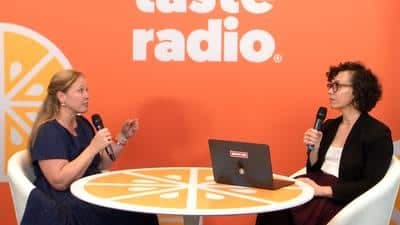
Taste Radio Studio featuring Proda & BevSource
Transcript
Note: Transcripts are automatically generated and may contain inaccuracies and spelling errors.
Speaker 1 [00:40] I am here in the Taste Radio live stream studio with Jeff Church, co-CEO of Proda Protein Soda. Thank you so much for joining us today, Jeff. It's great to have you here. How has, um, we've basically had a bunch of networking. Were you here yesterday for Bevnet Life? Excellent. Well, we are so happy to have you at the event, and you have a really interesting and unique product that fits into a category that we are seeing growing everywhere, which is protein. Can you tell our audience a little bit about Proda and your protein soda? Yeah,
Speaker 2 [01:18] so we're launching a brand called Proda, which is a protein soda. Uh, my co-founder and my partner Matthew Postleway, um, created it and You know, he has been approaching guys, a Hollywood celebrity. He's been approaching guy doing a lot of influencer type stuff in the protein space, so he's pretty, pretty, pretty good expert in protein, and he's been searching for a long time because his grandmother was losing her hair, and she, you know, they wanted to consume more protein, and she just couldn't, you know, proteins, as we get older, proteins are really hard to consume and getting, you know. But they. product. Great But, you know, Closer. When Matt had About 6 months ago. The protein space is big. The soda space is. If you can kind of, you know, get it right, it's a big a big opportunity.
Speaker 1 [02:44] Brands
Speaker 2 [02:45] coming in.
Speaker 1 [02:47] A little bit about the flavors that you have and what the skews are. Yeah,
Speaker 2 [02:51] sure, we've got 7 or 8 flavors that we've developed, um, you know, a couple of the core, um, orange, lemon lime type flavors. We have a, we have a root beer, but really it's about, you know, kind of the, the more trending flavors like the, you know, strawberry lemonade or cherry limeade. I mean, that seems to be what people, you know, really want to try, and, um, but it's all natural, um, you know, there's no natural sweeteners. There's, I mean, there's no artificial sweetener, sorry, it's all natural. It's all natural. Sweeteners. There's no artificial colors. It's all zero sugar. It's completely healthy from that perspective, plus it's got 10 g of super clean, efficacious protein in it.
Speaker 1 [03:31] Well, I think we should definitely get into the protein itself. You have a unique protein formulation that is centered on fermentation. Yes. Tell us a little bit about that.
Speaker 2 [03:42] Yeah, so we have two different products. One is a whey protein isolate, and then the other one is a precision fermentation. You know, a product that is very similar like a kombucha process that the product is fermented. This product is basically fermented from a yeast culture, and we're able to basically get the genetic equivalent to a, you know, to a cow. So it's it's really efficient. I think it's the future of protein. It's it's not, it's not GMO, so it's, it's a very healthy, it takes about 70% less greenhouse gasses than typical dairy it takes to make. It's it's great from an animal, you know, animal cruelty standpoint. Um, and it's a really efficacious protein. The protein's about 1.7 times BCAAs and leucine that you typically have.
Speaker 1 [04:34] Could you explain, could you explain for folks who don't know what that means? Could you dive into that a little bit? Yeah, sure.
Speaker 2 [04:39] I mean, the active ingredients and I mean the active things in protein that are really good for you are, you know, BCAA. They branch chain amino acids basically and they're the building blocks of protein. Then leucine is another really efficacious, healthy ingredient, and this product has about 1.7 times what a normal whey protein does. So we're super excited about really offering the consumer what the consumer wants.
Speaker 1 [05:42] is the is the kind that you use in protein soda, and that's modeled after a whey protein, is that right?
Speaker 2 [05:50] It's modeled after a whey protein. We do both. We do both both WPI and the precision fermentation, but because we really want the consumers to make their own choices on it. But um, yeah, that's the one that, that's the one that we do. It's super efficacious. It's very clean. You don't really taste it, um, you know, and we'll be launching a 25 g shot. In the second half of the year it's a 3 ounce shot that is you hardly taste the protein in it, so to get 25 g of protein is amazing.
Speaker 1 [06:18] You know I've been talking about this with colleagues and folks at the conferences there's so much protein everywhere and I think people are starting to wonder how much of this can my body digest? How do you communicate to your consumers and the folks that you're. Trying to add into your ecosystem, how do you communicate to them all of these great benefits that you've just told me?
Speaker 2 [06:42] I mean, you really, it's, it's very difficult to educate consumers. You really are educating your retailer community so that they're the gatekeepers to get on the shelf, and once you get on the shelf, you really want the product's taste, you know, to do the talking. And then as people get, you know, they like to start getting attached to the brand. It's really about taste. 93% of consumers choose because the tastes in many of the brands that you'll see like Expos, they kind of get it wrong. They don't get that taste profile right. It's got to be really good or people won't repeat on it. So we really want people to repeat on the product because it just tastes amazingly craveable and amazingly good. And then all of a sudden they turn the can around, they start doing a little investigation. They go to the website and then they start to learn about it, but it's very difficult, very expensive to kind of educate the consumer on a mass on a mass basis without a massively big budget.
Speaker 1 [07:31] It's not that hard to get the product on the shelf. It's even sometimes not that hard to get somebody to try it once, but in order to get consumers to buy something over and over again, it absolutely has to taste good. What, what was one of the biggest challenges from a taste perspective when you were formulating Prota? Was it? The protein itself, was it the sweetness? Was it the flavor profile? What was one of the most challenging? Yeah, I
Speaker 2 [07:56] mean, my partner and I, although I love sweets, my partner loves energy drinks and loves the sweet energy drinks like a Celsius would have or Noco would have, and a lot of that sucralose based. This product is not, doesn't have sucralose in it. And suclose, if you're used to it, people really like it, and, but we didn't want to go with an artificial sweetener. We wanted to go with a natural sweetener, you know, so making that adjustment back and forth, um, I have a less sweet, you know, palate and just kind of balancing, and the way we do it is we come up with uh, we argue a lot, number one, you know, but once, once we're done arguing and once we get it right, we work with great, you know, great formulators, um, a sense of pure and Blue Pacific. They've been really great, you know, flavor, flavor houses, and And then we take the product out to consumers and we have it tested by about 50 consumers and we let the consumers tell us because my opinion, your opinion, my partner Matt's opinion doesn't really matter. What matters is what the consumer thinks.
Speaker 1 [08:51] Well, last question for you. Not only are you a, uh, CPG expert, a beverage formulator, you also have a chat GPT for CPG. Tell us a little bit about that. Yeah,
Speaker 2 [09:03] thanks. I'm super excited about it. It's, um, if you go to a chat GPT or Perplexity or large language models, they're great, but they don't give you really specifics. And so what I've done is I've uploaded about 5000 CPG related articles, a lot of my own stuff and other people's stuff, and Um, some books and some, I do some accelerators and boot camps and I've uploaded that information and when somebody has a question, it goes first to my file and then it goes to the internet through a large language model so it gives you about a 20% better response from a CPG perspective and then we've got these things called gurus that are really great because they, you know, if you want a white space innovation in your segment that you're in, you just click on it and it'll bring up, it'll do a search for you so you can, you can connect with me on. LinkedIn and I can get you connected into it if anybody's interested.
Speaker 1 [09:52] You heard it here 1st, 1st, everybody, if you want to hear more about the chat GBT for CPG and or pro protein soda, please reach out to Jeff Church on LinkedIn or anywhere else you know him from. Jeff, it was so great to have you here. Thank you so much for joining us studio
Speaker 2 [10:12] as an advocate of small emerging brands. This is where it really happens is these emerging brands are the catalyst for the future.
Speaker 1 [10:18] Thank you so much. You can head right over here with your microphone, and next up we have Bob Williams, senior technical services director of BevSource. Bob Williams, great to have you here. Thanks for having me. How you doing today? Very good, thanks. Are you getting in today for the show? Did you show up yesterday? Got in last night. Excellent. And how many? I, I know that you and your team have been. Here before, how many Bvnets is this for you? Is it too many to count?
Speaker 3 [10:47] Oh, that's for myself it's probably 3 going on 40,
Speaker 1 [10:51] excellent, excellent. Well, it's great to have you here. I think so many folks in our audience know exactly who BevSource is and what you do, but for anyone out there who may not know, can you tell them a little bit about who you are and what you do?
Speaker 3 [11:06] Yeah, so, um, we're part of a larger platform called FBS Solutions. So FBSG is Food and Beverage Solutions Group, and, uh, really it's a platform that was created to, uh, provide businesses of all sizes that needed support to help them navigate through the beverage and food industry. Um, FBSG is made up of three divisions. It's BevSource, outsource, and ITI Tropicals, and BevSource provides essential services and the expertise to help really develop, produce, and scale innovative brands. And to give you an example, if you have a beverage that you're looking to create, Um, we can develop a formula for you. We will source all of your ingredients. We can source all of your packaging. We'll put together a cost of goods cash schedule for you. We'll even go out and find you a co-packer to partner with, and we'll even manage your operations to deliver you a shelf stable product for you to take to market.
Speaker 1 [12:10] Well, bringing a beverage to market is certainly not easy, but you guys make it a lot easier. The co-manufacturing environment shifts all the time during the pandemic, of course, and then after the pandemic, you never exactly know what to expect. Especially if you're not in it day in and day out like you all, like you all are. Can you tell our audience a little bit about what the current co-manufacturing climate looks like and how you're navigating it to help especially emerging brands who may not be able to run 100,000 cans?
Speaker 3 [12:43] Yeah, that's a, that's a great question. Uh, you know, the uh. Uh, CPAC industry is, is constantly changing here. Um, some of the things that we look for in, in copackers or what an emerging brand should look for is, you know, first of all, um, capabilities, right? So. Does the co-packer possess the technical and operational capabilities to run your product? The second is looking at, uh, minimum order quantities. Um, do the co-packers, um, have the ability also to scale with you as your brand grows, right? Next is, uh, certifications. Um, if your product is organic or kosher, um, does the co-packer have those necessary certifications to be able to run your product? Um, next I would say is probably location, as you know, are they in close proximity to your distributorships and or market you're looking to sell into? And then lastly, do they have the ability to run your type product? So I'll give you an example, if you're an energy drink, you know, it's very different and more complicated than, you know, if you're running and producing a sparkling flavored water.
Speaker 1 [13:55] So you just mentioned location which is certainly an important part of choosing a co-manufacturer, and I hear a lot of confusion from founders who are launching brands about exactly where to put that. So you know some folks tend to find a co-manufacturer close to where they are because they're planning on launching in a. Regional market so they can go do demos and check on their stock. Some folks look for something that's more in the middle of the country so they can service both both uh the West and East Coast. How, how do you look at that kind of strategy? How do you help advise your brand clients on where to start?
Speaker 3 [14:33] Yeah, that's a great question. You know, in fact, um, kind of get that question, uh, quite a bit, yeah, right. And although it's important to have close proximity, as I mentioned, to, you know, your distributorships and your, your market locations, um, you know. However, you know, when it comes down to finding a co-packer for yourself, I think it's extremely important to find one that has a really good quality programs and systems in place. And although they may be a little bit further away from your target sales market, um, I guarantee you, you know, it's going to save you a lot more in the long run, you know, having less quality issues.
Speaker 1 [15:09] That's great advice. What, what is one of the, what is one of the mistakes you find founders make all the time?
Speaker 3 [15:16] So again, another great question, believe it or not, it's really the failure to visit and audit your co-packer. Um, and in fact you ideally would like to do that before you engage in any type of, uh, of contract or agreement. So take the time, schedule a visit with your co-packer, have them walk through the entire onboarding process, have them walk through all their mixing capabilities, lab testing, have them walk through all the equipment on the production line, and then even take you into the warehouse so you can see how they're going to manage and handle your, your inventory.
Speaker 1 [15:51] There's, there's so many things that founders need to be doing. Sometimes putting boots on the ground can be tricky when you're juggling so many things, you know, now that we have AI and folks are using it more and more in their businesses, that does free folks up a little bit to do. More like that where you're actually going and visiting your comman which is so important. How has AI affected BevSource and your, um, your sister companies? Are you integrating it? Are you competing with it? How does that play out?
Speaker 3 [16:22] Yeah, again, another great question. You know, with the implementation of AI, um, online resources, um, you know, those, those are great places to look when you're looking for CPAC manufacturers, and they'll provide, uh. You know, as far as the capabilities, um, and tell you a little bit more about their facilities. Um, however, from Bevor's perspective, you know, we really, you know, have a network of co-packers that we already use across the United States, large and small, and we have already vetted them. We've already gone through all their, their process capabilities, their packaging capabilities, uh, and we've already mitigated a lot of the, the concerns of our customers, you know, before they even go to produce there. So I think that's one of the big benefits that we offer, um, in addition to that, you know, we really have the ability to, um, accelerate that selection process, um, so we have the experience and the, um, time and resources to really kind of, uh, you know, reduce that timeline for that emerging brand where then, you know, it allows them more time to focus on their, their own business.
Speaker 1 [17:30] I've never heard a brand say they have too much time. It's, it always seems like the timeline is escaping them. Um, what is, what are some of the things that you find hold up, uh, founders from really settling on that co-manufacturer? What are some of the most common deal breakers you see?
Speaker 3 [17:48] Yeah, that's, that's a good question. You know, it's kind of navigating through the landscape of copackers and really kind of digging deep into a lot of their process capability quality programs that they that they have in place. So a lot of them don't have an In depth understanding of of what that looks like. So for example, you know, if you're going through a quality program, you know, are you asking about how they're handling, handling their allergens? How do they handle recalls? Do they have a good traceability program? Um, from sanitation standpoint, how are they valid validating their sanitation process? So these are all good things to ask, how they handle their thermal process, um, holds, all those are very good questions and sometimes emerging brands just don't know all the questions to ask to find out if they're, you know, truly in good capable hands.
Speaker 1 [18:41] You know, I would also think too in terms of speed to market the existing relationships you have with your co-manufacturing partners helps you get that conversation going. Sometimes just getting somebody to reply to a phone call or an email mail feels almost impossible.
Speaker 3 [18:59] Yeah, we have great relationships with a lot of co-packers throughout the United States again, large, large and small, so you know, a lot of times, you know, we can kind of again navigate through those proper channels to make sure those conversations take place and also we have the ability to again expedite certain timelines by having those relationships. So that's a huge benefit to the customer.
Speaker 1 [19:24] Well, you know, certainly the services that you provide brands and founders in the beverage community are incredibly helpful the fact that it's not just one vertical you have sister companies as well that allow people to be able to basically start up launch and. Run their entire businesses really entirely within your businesses and your ecosystem is amazing. Um, how do you uh one last quick question for you is there one point person that a brand would work with as they're working across your different verticals?
Speaker 3 [20:02] Yeah, so anybody working within one within our company, you know, we have certain individuals that will handle and manage that and direct them to the appropriate company to to meet those needs.
Speaker 1 [20:14] Excellent. Well, Jeff, uh, I'm sorry, Bob Williams. I was still stuck on the first one. Bob Williams of BevSource, thank you so much for joining us in the live stream studio today. I hope you have a great rest of your Bevnet Live day one. For everybody else, I am Melissa Travers, director of community here at Bevnet and Nash. Don't go anywhere. We are heading into open remarks and then we're gonna hear from Poppy. Thank you so much.