Search across the BevNET CPG Media network including BevNET, Nosh, Brewbound, Taste Radio, Nombase and CPG Jobs.

Taste Radio Studio at BevNET Live Summer 2025 - Blue Pacific Flavors
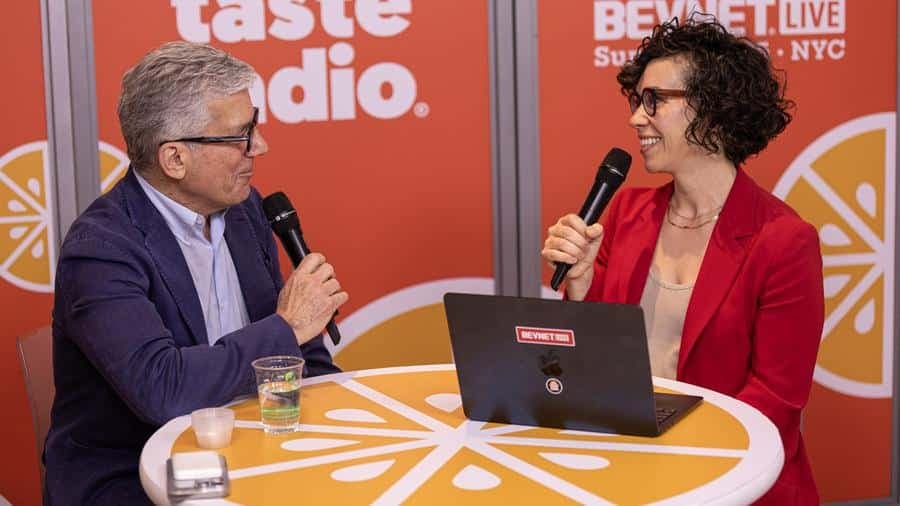
Featuring:
Donald Wilkes, Founder & CEO, Blue Pacific Flavors
Transcript
Note: Transcripts are automatically generated and may contain inaccuracies and spelling errors.
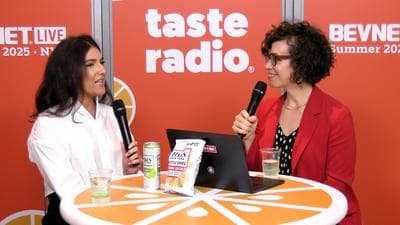
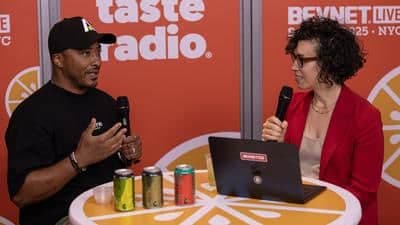
Speaker 1 [00:19] Well, next up I am very excited to be talking to Donald Wilkes, founder and CEO of Blue Pacific Flavors. Donald, it's so great to have you here in the live stream studio. Hi, Melissa, it's great to see you again. I feel like I was just talking to you about what the future of beverage and how that looks like on the non-base podcast, and we get to do it here at Bev Night Live.
Speaker 2 [00:43] I know. I was very excited by it. Thank
Speaker 1 [00:45] you. Well, it was, uh, it was great to have you, uh, on the podcast, and I wanted to dig in a little bit more on some of the topics that we discussed. But first, before I do that, you've been coming to Bevnet Live for a little while, haven't you? A
Speaker 2 [00:58] long time. I think we were one of the first, uh, companies that started, uh, promoting with, with the, you know, with the organization when it started. And, and it's, it's gotta be over 20 years ago, I think practically. I, I'm not, I don't, I'm sure John Craven knows the timing,
Speaker 1 [01:14] but I'm, I'm sure John has the exact number there. Well, it's, it's just so great to have folks like you, you know, here at the show who have been in Beveridge for so long and you've seen so much evolution, you can really impart some serious knowledge. To folks here who might just be getting their start, um, and you know you and I actually yesterday were talking a little bit about how important scale is and as a matter of fact that we just finished a panel, um, with Jeff about how strategists are looking specifically for brands that can scale, you know, but on the other hand we have another a number of beverage. Brands here who are sort of focused on bespoke crafted ingredients and products, um, for example, we have the Lucky Ox you and I were talking about that Uso and their beautiful beverages, beautiful brands, but how do you take something that's so crafted and so unique and bring it to scale?
Speaker 2 [02:11] Yeah, it's, I think it's one of the real challenges. Um, I think everybody loves those drinks because they are so authentic and that, you know, you could see the, the real soul of the products and, uh, I think one of the, uh, one of the panelists had mentioned that yesterday, and I, I completely agreed with that. I thought that, uh, you know, when you have that kind of passion and, and attention to detail when you're developing something that's artisan, It, it's very unique and I think people appreciate it at a different level because generally, you know, when you commercialize it and you scale, it's, it's kind of hard to keep some of that integrity, say, particularly if you're using just say juices, for example, or other specialty ingredients. And I think the problem for a lot of these Uh, as these companies, when they go in with the idea that they want to be the next Poppy, for example, and there's this whole aspirational aspect to the beverage industry that eventually we're going to sell and we're going to get this huge multiple. I think the biggest challenge for them is they, they don't understand really the, the nature of the supply chain. So if you're, you know, if you're going to go out and do a product, um, and you've got a, let's say, a significant amount of juice in the product or it's 100% juice or, uh, and no flavor added, for example, those juices, you know, given the various, um, uh, supply chain issues, whether it's a large, you know, multinational companies that take long-term contracts and, you know, and really are the first to get the actual, uh, uh, concentrated juice available. And the Smaller companies generally either have to pay a very high price or they get the, uh, less quality product that's available. And that has a problem because if their consumer is used to drinking, let's say, uh, a grapefruit juice that, that comes from a certain, in a place in Florida or even California, now all of a sudden that supply chain is all, you know, uh, tied up or not, or limited because of, say, uh, climate change, because it was a bad season. It's really hard because their product was completely focused on You know, the basis of the flavor, which is the juice. So the characterizing quality of the beverage all comes from the juice. So, you know, we tell our customers, look, it, it's very important to have authenticity, whether you want to go organic or natural on the flavor side. But what flavor does, I think, is, is to, it, to the, the extent that it maintains the consistency of the product for the consumer experience, but it also allows you to scale. So when you're looking at it from a, from an economic return standpoint, these businesses have, are they going to look at, you know, getting to say, a $400 million revenues. I mean, if you don't have flavor in that equation, it's going to be really hard to get there because the consumer is not going to have the same experience every time and every place that they drink a product.
Speaker 1 [04:46] That makes perfect sense. Um, so if we take a brand like the Lucky Ox and they're using an ingredient like preserved lemon, um, as uh doing what you do in the flavors business, how do you take an ingredient like that and then turn it into something that might be a little bit more reliable? Are you trying to recreate the flavor? Are you trying to do something. Maybe a little bit different so that you're maintaining the brand strategy, but changing the flavor. How do you, uh, how do you evolve that process?
Speaker 2 [05:16] So it's really interesting. We, uh, about 10 years ago, we had the idea, why don't we actually bring in a mixologist and we were looking at alcoholic drinks because obviously, you know, when you're a flavor chemist or an engineer in a beverage environment, You, you know, you're looking at it a little bit differently, you know, and what, what, what was missing for a lot of our technical people over, over the years, and, and I think in the industry was to have that artisanal aspect. And you've seen it with the colonologists, uh, like where you have a culinary artist and you have a, uh, uh, a food scientist. And so what we wanted to do is bring that experience in the beverage side. So we started bringing in people who were, you know, mixologists, uh, you know, the hot bartenders from LA, you know, A lot of the innovation comes out of LA obviously. So, uh, and we found that our people really took to it. It, it became really interesting and that kind of collaboration was really critical in achieving something that's close to a handcrafted drink, for example. And we do the same thing with the beverage. So if people come on, come onto us and they say, you know, here's our handcrafted drink, but now we have to scale it. We really look deeply at what they're using, what are the quality of the ingredients they're using. And how can we get as close as possible to that authentic drink that they've made. And that's the key. You know, there are companies that, you know, will give you a, you know, kind of a, a, a, a turnkey product, but I think what makes us unique is the customization aspect and the fact that we're artists as well, and we have a, a certain appreciation to that.
Speaker 1 [06:44] It almost to me sounds like you are in the business of storytelling with flavor. Yes,
Speaker 2 [06:51] absolutely. We think that it, it's very important, you know, our, our flavor, the, to me, when you drink a beverage or you have a, uh, any food and, you know, or you have a piece of chocolate, I always like to describe, chocolate is great storytelling. If, if you really want to look at the origin, you know, you can literally, it's like literally a time travel and you're going through different areas and they're all flavor profiles, right? Um, so maybe you'll pick up a little mango, a little tropical, then all of a sudden you're gonna get all these. Other very characterizing, unique flavors of chocolate and, and it comes from different origins. So each origin has a different profile. So I would say, yes, flavor is very much, uh, a, a, a, a, a, a storyteller. And it's, it's very important for us to kind of tap into the memories that people have as, you know, kids and all those experiences because that's what really drives them to come back to it.
Speaker 1 [07:41] And you know, I, I think that's such a good point. Um, some of the beverages that we have here at Bevnet Live, you know, they might be 3.99 on shelf, 4.99, it might be a 4 pack for, you know, 24.99 if it's not elk, so you really do. Need to take consumers somewhere if you're gonna be charging a premium price for that. So I guess also flavor is a journey like it takes you somewhere else for a little while. Yeah,
Speaker 2 [08:09] it's, uh, it's funny we did a, uh, a product, uh. And it was a tropical flavor. And we, we gave it a name. We called it the icy waterfall. And the whole idea was that we wanted to create this romantic kind of image and we have the color of it. It's like a very tropical blue ocean water looking color. And I think That's really what people, you know, want. They want to have something that's, that gives them some type of emotional response and connection and experience. And I think the flavor has to deliver, but I also think, you know, obviously, the branding strategy and how you present it and packaging, design, all that has to play into it.
Speaker 1 [08:43] Well, um, I love all of that we, um, I know that you've been, uh, busy over at your table over there. I don't know if you've had a chance to take a look at any of the beverages in the coolers. Are there any trends that you see sticking out from the beverages that are here right now, you and I. Talked a little bit about them on the non-based podcast, but is anything sort of jumping out at you from the cooler shelves?
Speaker 2 [09:06] It's, it's interesting because, uh, uh, yes, I think that, uh, obviously coffee and tea is still very much, you know, front and center in a lot of areas. Uh, hydration certainly is, is there, but a cleaner hydration. I think the biggest challenge right now for the industry is going to be, you know, how to navigate. This new administration in terms of clean label and, and that particularly for big beverage has been, I think, a very, very challenging time. You know, how do they really rethink who they are and how consumers are gonna change and what level of knowledge or education are they gonna have in terms of making decisions on what products are Clean label or not, right? And I think that that's going to be a big, big challenge. So, when I look at some of the products, they've got a lot of ingredients. Some of the functional ingredients actually are not, um, FDA grass, they're self-affirmed grass. And that could become a big problem, I think, in the future with Kennedy's administration. I think he's, he's definitely looking to, to get rid of self-affirmed grass because it's self-affirmed. It's not necessarily, you know, uh, panel-tested and, and, And, and obviously the data may not be as rich as somebody who's presenting through the FDA grass process. Can
Speaker 1 [10:15] you describe the two different kinds of grass, self-affirmed versus FDA
Speaker 2 [10:19] approved? Well, I'm not a, I'm not a regulatory expert, so I'll, I, I don't normally I have my regulatory person, but I, I, I'll give you the kind of my simplistic view of it. So, uh, FDA grass, generally, you have to submit, uh, uh, like a dossier and basically, It goes through a panel to approve, I believe. And then, and then self-affirmed grass is really where you can present the science. And if it, if it has no objections, they'll, they'll approve it. And obviously, it doesn't go through the same scrutiny. That the FDA grass, and also, FDA grass is very expensive. One of the challenges I think with the government is if you could make, if you, if the cost wasn't so great in terms of the process, it would be a lot easier for people. But because they have to do a significant amount of research and testing, uh, in advance to submit that, it can be very expensive. Well over 2000 $2000 to $300,000 a year. And that's a lot for a small company if you're going in on a, on a, uh, you know, on a new product. So there's a barrier right there. Uh, and then, and then on the, just on the ingredient side, I think it's really challenging if you're not going to have a, uh, an ingredient that is actually labeled cleanly as a, as an ingredient. I saw some products that are in there that actually are not necessarily ingredients that you can have on a beverage. You could call it a dietary supplement, but I don't think it really falls under a beverage category per se as a food. So that's where I think a lot of the entrepreneurs have to be careful.
Speaker 1 [11:44] Well, you've given us so much for somebody who's not a regulatory expert, that was very informative. Donald Wilkes, founder and CEO of Blue Pacific Flavors, thank you so much for joining us here in the Taste Radio studio and here at Bevnet Live. Um, do you wanna say goodbye to the audience with me? Thank you so much for joining us here. Don't go anywhere because we have the rest of our show ready for you to watch and enjoy. Thanks.