

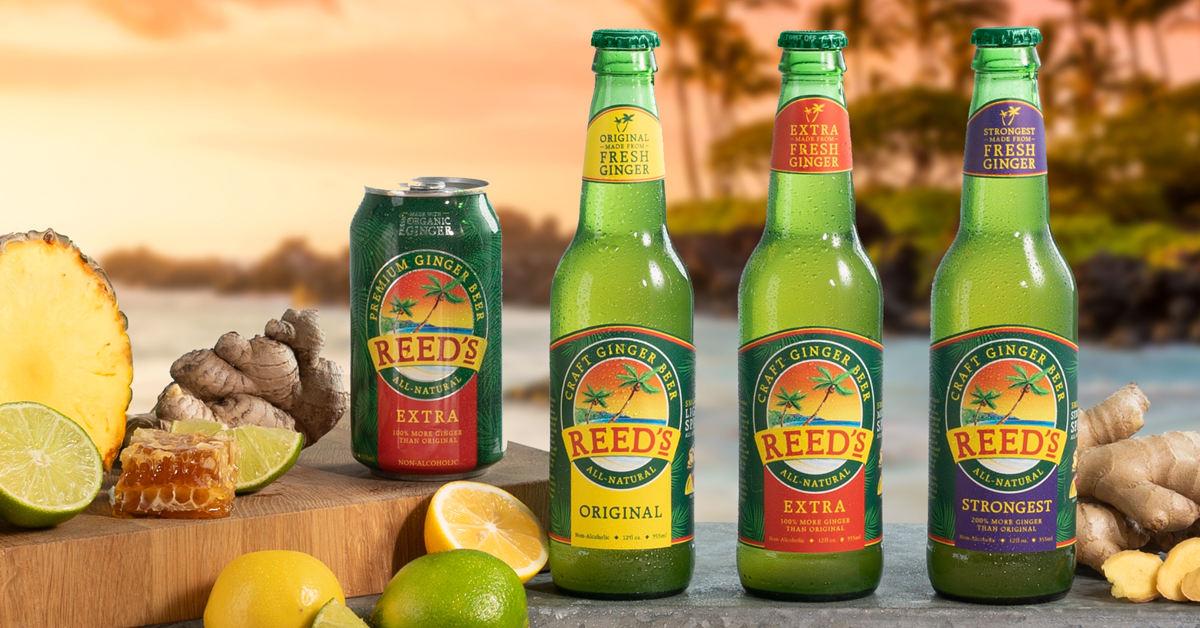
Despite announcing a double-digit decline in Q4 net sales on Wednesday, soda maker Reed’s expressed confidence that its de-levered balanced sheet and enhanced financial flexibility will help it return to growth in 2025.
In the quarter ending December 31, net sales fell 18.7% to $9.7 million. Gross profit, however, soared to $2.9 million (compared to $500,000 in the prior year period), with a gross margin of 30% versus 4%, driven by one-time charges in Q4 2023.
CEO Norman E. Snyder attributed the sales slump to inventory production constraints, vendor credit limits and short order shipments. The short shipments got to such a “dangerous level” that Snyder had to meet with key retailers to assure them a fix was coming, but he anticipates the brand’s “disciplined approach to operations,” new product launches and targeted investments in Q4 have set the stage for renewed growth.
In the fourth quarter, Reed’s closed a $10 million private placement that will go toward building inventory levels, enhancing personnel and boosting sales and marketing resources, Snyder told shareholders. The funding, announced in November, comes from Whitebox Advisors, LLC.
“This capital infusion will enable us to maintain inventory at optimal levels, ensuring consistent order fulfillment rates and reducing the short order shipments that previously hindered our growth,” said Snyder, adding that the brand is well positioned to capitalize on increased retail demand.
Although Q4 came with a fair number of hurdles for the company, it was not devoid of bright spots. As of December 31, Reed’s had approximately $10.4 million of cash and $9.6 million of total debt net of financing fees, compared to $0.6 million of cash and $27.4 million of total debt net of capitalized financing fees in the prior year period.
Additionally, the company gained over 1,100 new retail placements across Albertsons/Safeway for Reed’s Ginger Ale and Virgil’s Root Beer and Vanilla Cream. Meanwhile, new cans for Virgil’s have been added to NCG, Infra, Smart & Final, Harris Teeter, Giant Eagle and Stop & Shop, starting off 2025 with an additional 3,000 points of distribution.
The company is continuing to transition from glass bottles to cans at key retailers, including Whole Foods and H-E-B, which, according to Snyder, underscores its efforts to improve delivery and handling costs on a per-case basis and lower price points for consumers.
When asked during the question-and-answer session about the brand’s strategy with its ready-to-drink cocktail products, Snyder said Reed’s is still practicing an “inch wide, mile deep” growth philosophy with key retailers, like Whole Foods and Trader Joe’s, where there’s high brand recognition.
Though the alcohol portfolio “fell to the back burner” in the back half of 2024 due to challenges with billings and maintaining inventory, the company says it’s starting to reignite interest as the weather turns warmer. This interest includes rotations with Costco in Los Angeles and Hawaii.
Reed’s is also pushing new innovations, launching its previously teased multifunctional soda line. Available in four flavors – Berry Bubbly, Strawberry Vanilla, Lemon Grass Ginger and Root Beer – each 12 oz. can has 500mg of adaptogens and 2,000 to 5,000mg of organic ginger, depending on the variety. The brand has already secured 8,000 points of distribution for the new product line, set to hit store shelves between April and August.
Reed’s has yet to provide an outlook for fiscal 2025, but remains optimistic in its ability to improve service levels, lower freight logistics costs and further improve gross margins.
“Our continued execution of strategic initiatives enhancing distribution, refining our cost structure and launching innovative functional products provides a solid framework for success in the evolving beverage market,” said Snyder. “We remain committed to delivering premium better-for-you beverages that resonate with consumers while driving value to our shareholders.”