

NACS Review
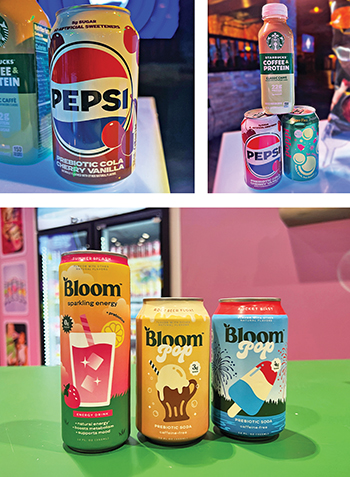
The future of soda and proliferation of protein were two of the hot topics at this year’s National Association of Convenience Stores (NACS) trade show in November, with major brands like Pepsi, Coca-Cola and Keurig Dr Pepper (KDP) showcasing category innovation.
“This NACS feels different,” Pepsi North America president Mike Del Pozzo told attendees at a pre-show reception in Chicago. In brief remarks, Del Pozzo backed the company’s boldness; this year’s embrace of innovation and “flexibility” is centered around long-term gains, or a “next chapter” for the company.
At the event, all eyes were on Pepsi Prebiotic Cola, the much-heralded innovation from Pepsi’s flagship line. Despite the functional positioning (3 grams of fiber) and the addition of stevia, the new drink still looks and tastes much like the original formula. The line is available in just two SKUs, Original and Cherry Vanilla.
Bloom, the female-leaning supplement brand, has quickly captured a foothold in RTD, first with Sparkling Energy last year (now passed 100 million cans sold, per the company) and most recently with its very on-trend fiber soda Bloom Pop.
The brand is planning to speed up the pace of innovation next year, CEO Greg LaVecchia told BevNET at NACS, with at least five new SKUs for each of its RTD lines, or one per quarter, with a combination of LTOs and permanent additions. The early signs are positive: Bloom’s first seasonal SKU, Crisp Apple, released in September, has already become its best-selling flavor, he said.
Nutrabolt-owned Bloom shared an early tease of next year’s products at the show: in Sparkling Energy, it is doing another seasonal limited release with the pink lemonade-leaning Summer Splash. For Bloom Pop, it’s going deeper into classic soda fountain flavors in January 2026 with Root Beer Float (3 grams of fiber) and in May with red-white-and-blue Rocket Blast (4 grams of fiber), the latter timed to arrive ahead of the 250th anniversary of American independence on July 4.
Both Bloom RTDs have thus far moved mainly through the club and mass retailers where its supplements took off, including Walmart and Costco. Now Bloom is expecting the aforementioned new flavors to open a path into c-stores, where brands like Alani Nu have earned consumer attention through a fluid pipeline of new flavor innovation and LTOs.
C4’s innovation track, meanwhile, features a few subtle shifts. The brand was a pioneer in bringing popular candy and confectionery licenses into the energy space, but now it’s moving towards pop culture with the November release of a Godzilla tie-in (Sour Blue Razzilla) for its Ultimate Energy line. That’s complemented by two additions to the core Performance Energy portfolio: Cereal Killer, available now, and Mango Fuego in January 2026.
As Nutrabolt’s RTD plays scale, it helps that each has ample runway to expand within its core audience: for C4, it’s sports performance and pre-workout, including its Ultimate sub-line that pushes into category-peak 300mg caffeine per 16 oz. can. There’s little bleed over from that proposition to Bloom, which slots in 180mg natural caffeine per 12 oz. slim can alongside prebiotic fiber and apple cider vinegar in its energy drinks.
Elsewhere, Coca-Cola was eager to emphasize creating “value” for c-store consumers by bringing its 7.5 oz. mini-cans from grocery store multi-packs into convenience grab-and-go coolers. Starting in January 2026, the mini-cans will join the 16 oz. cans, the 20 oz. and the 24 oz. plastic bottles in the company’s “four-package strategy” for convenience.
Coke also showcased the return of Mr. PiBB (ditching the PiBB Xtra original name) with a new can design and a spicier formulation that leans into the trend toward spicy-sweet, or ‘swicy’, flavors. Mr. PiBB is returning in both full-sugar and zero-sugar varieties, with 30% more caffeine than its previous incarnation.
Against the backdrop of dirty soda’s rise, Coke is also expanding the Cherry Coke line with a new Cherry Float flavor and Diet Coke Cherry.
Not afraid to add more energy to the lineup, Coke is introducing a BodyArmor Flash IV with caffeine. Launching in Q1 2026, the hydration-with-energy sports drink will have 2200 milligrams of electrolytes and 95 milligrams of caffeine. Previously announced, enhanced water innovation Power Water was also sampled at NACS.
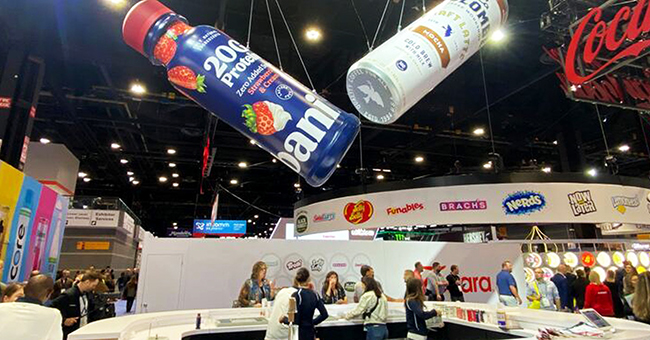
For Chobani, nearly two years after its acquisition of La Colombe, the company is staying focused on scale and customer acquisition as it continues to carve out a space for its single-serve cold brew coffees in retail – with convenience firmly in its crosshairs.
At Chobani’s NACS booth, Jamie McGeehin, VP of commercial strategy and development for La Colombe, said the company’s goals for 2026 are still gaining distribution and driving trial, while 2027 is slated to be a big “innovation year.”
Sampling efforts are a key piece of this strategy, she said, while establishing the brand’s presence in major chains like QuikTrip, Casey’s and Wawa helps the business to utilize their resources for trial-driving programs.
Bill Solomon, director of convenience at La Colombe, said he believes most retailers haven’t given single-serve coffee the chance the category deserves to thrive, but that’s starting to change even as the coffee category hazs struggled in dollar sales with topheavy declines stemming from Starbucks’ recent sales slumps.
“It’s spot on with the consumer from a health standpoint, a caloric standpoint and so forth, and it has a great indulgent taste to it,” Solomon said. “And [retailers are] beginning to give that a shot now.”


Receive your free magazine!
Join thousands of other food and beverage professionals who utilize BevNET Magazine to stay up-to-date on current trends and news within the food and beverage world.
Receive your free copy of the magazine 6x per year in digital or print and utilize insights on consumer behavior, brand growth, category volume, and trend forecasting.
Subscribe