

Buff Brews: Why Brands Are Betting on Protein to Fuel Ready-to-Drink Coffee Growth
Once confined to powders and sports nutrition products, protein is flooding the ready-to-drink beverage space as everyday, health-conscious consumers seek convenient, on-the-go nutrition that fits seamlessly into their established routines.
Against that backdrop, protein coffee – or “proffee,” as it has been dubbed on TikTok – is making inroads with a broad swath of shoppers who are seeking more from their morning cup of joe or afternoon pick-me-up. The trend spans everything from canned lattes to instant coffee powders to hand-crafted drinks made with protein-infused milk or cold foam. The brands resonating most aren’t chasing protein shock value; instead, they’re prioritizing a coffee-forward approach with a clean ingredient deck.
“What is especially important is that this segment is meeting consumers in their real routines. A lot of shoppers are replacing a traditional breakfast with something portable,” Charlie New, principal category merchant for beverage at Whole Foods Market, told BevNET via email. “Protein has become mainstream. Consumers associate it with energy, strength and feeling full. When you combine that with coffee, you end up with a product that feels like it earns space in the fridge.
Harry Lewis, CEO of functional coffee brand Bulletproof Coffee – which recently launched an instant High Protein Iced Coffee product – shared a similar sentiment.
“Protein moved from performance to every day. People want it in breakfast, mid-morning and [the] afternoon bridge. Coffee is already the full anchor in that routine. We felt the big opportunity was not asking consumers to add a new behavior…but upgrading the ones they already have.”
Unlike declining diet trends like keto and paleo, many are confident that the increased consumer demand for higher protein products will stick around.
“[The protein craze] is rooted in what works. We see a lot of trends start in fitness and active nutrition, and there’s not a better example than protein, where people realize what’s good for the physically elite is probably good for me too,” said Scott Dicker, a senior director of market insights at SPINS. “Protein tends to have a universal health halo.”
The new Dietary Guidelines – which upped the amount of recommended daily protein intake for Americans – and the rise of GLP-1 inhibitors are further cementing protein as a key growth engine of CPG innovations across both retail and foodservice.
How can coffee brands capitalize on this protein boom? What is the staying power of this trend in the category? What is the benefit for retailers?
More Than Sticker Shock
In the traditional protein shake and meal replacement category, a clear trend has formed: the more protein, the better. New entrants and legacy brands alike are pushing the boundaries of how much protein they can fit into a bottle, with some drinks surpassing 40 grams per serving.
But that isn’t typically the case in the coffee category, where brands are busy crafting lattes with a focus on clean ingredient decks and upgrading everyday coffee consumers’ daily routines.
According to Dicker, products containing 20-25 grams of protein are growing the fastest in the RTD coffee category, with whey- and animal-based proteins leading the market.
Projo, the winner of BevNET’s New Beverage Showdown 30, landed on 25 grams of protein for its Power Coffee because “it’s the amount most widely supported by nutrition research to meaningfully support satiety, muscle recovery and sustained energy in one,” according to co-founder Charbel Mawad.
The brand uses a dual-phase protein system made up of milk protein isolate, casein and certified grass-fed collagen. Each ingredient plays a different role: milk protein isolate provides fast-absorbing protein that helps curb hunger, casein digests more slowly and helps people stay fuller longer and collagen adds functional benefits for joints, skin and connective tissue.
“The goal with Power Coffee was to make something that fits naturally into real life: a single can that replaces multiple products people are already consuming, like coffee plus a protein shake or snack, while helping them feel energized, satisfied and productive throughout their day,” said Mawad.
Other brands competing in the 20-25 gram range include Slate and Super Coffee.
Available in four flavors – Caramel Latte, Mocha Latte, Vanilla Latte and Sweet Cream Latte – each 11 oz. Slate High Protein Iced Coffee delivers 20 grams of protein from ultra-filtered milk and 175mg of caffeine. The 20 grams of protein was designed for individuals “looking for a healthier way to add protein into their diet and find a healthy replacement for their coffee shop Frapuccinos or high-sugar drinks,” according to co-founder Manny Lubin.
“We don’t think [high-protein] is a trend. We think it’s an evolution of the diet,” said Lubin. “High protein not only helps build muscle, but it makes you feel fuller for longer. By adding more protein to your diet over an extended period of time, your body will feel the same amount of fullness with less calories.”
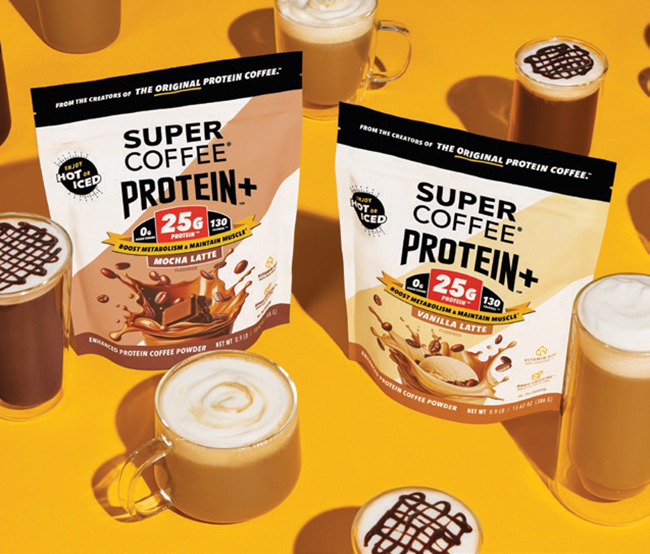
Elsewhere, Super Coffee – one of the first protein coffees on the market – has found success with its new PROTEIN+ product launched in April. Available in Mocha and Vanilla flavors and two formats – 12 oz. bottles and 14 oz. bags of powdered coffee – each serving contains 25 grams of protein and 130 calories.
In November, the brand surpassed $10 million in shipments with PROTEIN+, making it “far and away” Super Coffee’s fastest product line to reach that amount in sales, according to a posting from co-founder and CRO Jake DeCicco.
When Super Coffee launched in 2016, it initially focused on moderate protein levels paired with keto-inspired high fats and MCTs, alongside familiar taste and affordability. While higher-protein versions surfaced from other brands throughout the 2010s, consumer adoption remained limited and costly. Rather than rush in, Super Coffee took a patient approach, confident it was well-positioned to scale as the category matured.
That inflection point came in 2023, as protein coffee gained traction on TikTok and at-home use increased, reinforced by successful RTD launches – signaling it was time to act.
“We were very patient, but we always felt that we were perfectly positioned as a brand, when we saw the consumer turn the corner a little bit, to get in quickly with a really great offering,” said Super Coffee co-founder and CEO Jordan DeCicco. “We used all of our capabilities, all of our insights and all of our data to come up with a great concept. As soon as it launched, we knew it was going to be successful. It had immediate traction.”
Then there’s Throne Sport Coffee, the electrolyte-infused canned coffee brand founded by former Coca-Cola executive Michael Fedele and Kansas City Chiefs Quarterback Patrick Mahomes, which delivers 10 grams of protein and 150mg of caffeine per 11 oz. can.
The coffee is aimed at what Throne views as a gap in RTD options for “active” consumers, targeting use “before, during and after athletic exertion,” according to Fedele. To bolster its performance credentials, the brand secured NSF Certified for Sport status and trademarked “Coffee PLUS+,” highlighting functional additions like B vitamins, electrolytes and branched-chain amino acids.
While some brands center their product portfolios around protein, others view the demand for the nutrient as a golden opportunity for line extensions.
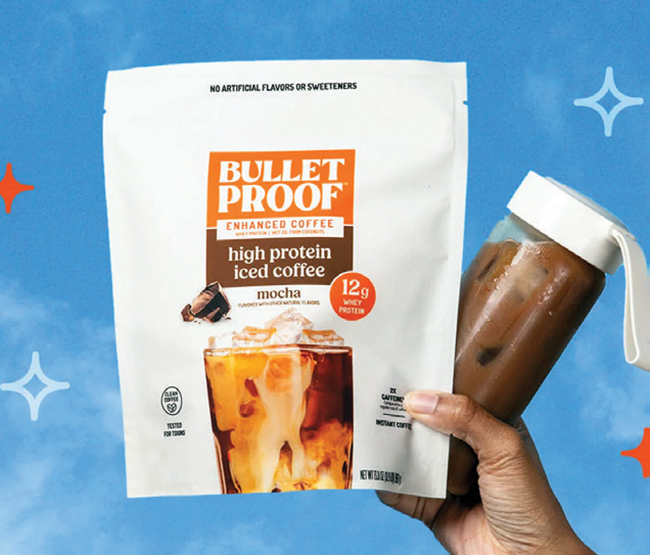
Often viewed as a pioneer of the functional coffee category, Bulletproof hit the market in 2011 with its flagship formula featuring premium coffee, medium-chain triglycerides (MCT oil), and grass-fed butter. In September 2025, the brand introduced High Protein Iced Coffee in Mocha and Original varieties. Each serving delivers 12 grams of whey protein, approximately 170mg of caffeine and MCT oil.
“What you will see from Bulletproof is that our invitation is always to expect more; your coffee needs to not only taste great, but also work harder for you,” said Lewis. “Our North Star will always be the notion that we’re coffee-first with added functionality that serves our consumers and improves their daily rituals.”
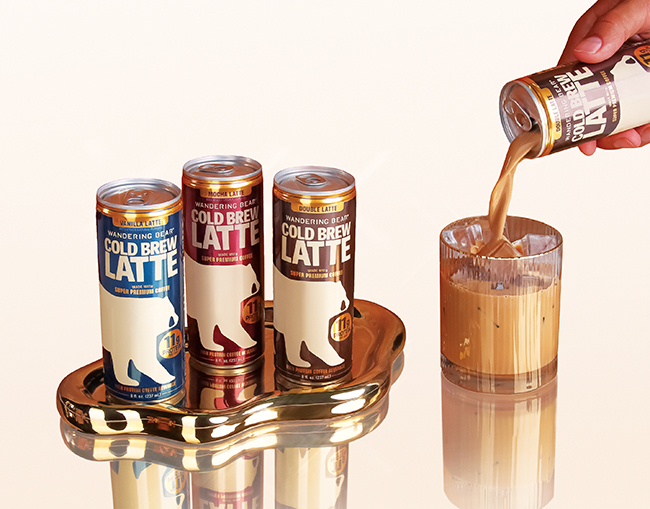
Also in September, New York-based Wandering Bear unveiled its first canned offering: a dairy-based cold brew latte delivering 11 grams of protein per 8 oz. can, available online and exclusively at Whole Foods Market.
Wandering Bear co-founder and CEO Matt Bachmann told BevNET that when the team began evaluating adjacent growth opportunities anchored in the brand’s coffee house-inspired ethos, it turned to protein from ultra-filtered skim milk to achieve functional benefits and café-style mouthfeel without compromising on flavor or calorie count. Although the brand simply set out to add dairy to its premium offerings, Bachmann noted that protein demand accelerated between the project’s inception and launch, aligning the launch with broader market momentum.
“This is a product that at its core is a super premium coffee latte that just happens to be better-for-you and has now gotten included in a cadre of what you might call protein coffees. And that’s not a bad thing to call out,” said Bachmann. “Our goal is not maximalist; if it’s maximalist at anything, it’s flavor.”
Protein may be dominating today’s diet trends, but Bachmann views its rise as a greater sign of growing consumer demand for more nourishing, nutrient-dense options.
“It wasn’t a market timing thing; it was a capability thing. We had finally gotten to a place in all of our years of experimentation where we didn’t just and meet the dimension of a coffee shop-inspired latte with the right taste and texture, but we were able to tweak the macronutrient profile in the formulation such that it had twice the protein, half the sugar and none of the saturated fat,” said Bachmann.
Securing Shelf Placement
According to Bachmann, Wandering Bear’s established relationship with Whole Foods and strong consumer recognition made the natural retailer a natural place to introduce its canned lattes. He added that certain retailers – Whole Foods among them – attract customers who are accustomed to discovering and experimenting with new products.
When Whole Foods evaluated the Cold Brew Lattes, what stood out was that they felt like “a natural next step for the brand,” New, of Whole Foods, said. Additionally, the retailer felt that the product clearly fits into how Wandering Bear’s customers already shop and drink coffee.
“Exclusivity also matters because it creates a sense of discovery and differentiation on shelf. It gives our shoppers something they cannot get everywhere, and it gives us the opportunity to build a bigger story around the launch,” said New.
Whole Foods carries the protein coffee subsegment because it creates incremental occasions and brings shoppers into the set with a new mission while serving a range of consumer needs, from clean, functional options with strong macros to more indulgent options that still meet nutrition goals, according to New.
Elsewhere, Projo is gearing up for a national launch with mass retailer Target in May. The Minneapolis, Minn.-based retail chain will carry single cans of the brand’s Vanilla Latte and Mocha Latte flavors at 1,755 stores and a 4-pack format at 550 locations.
“The fact [Target] took a bet on us this early, and the fact that they wanted to go straight to nationwide with us, is a really big testament to what we’re building and what we’ve created with our brand and product,” said co-founder Charbel Mawad.
The move comes as Target doubles down on its wellness set with a 30% assortment expansion across categories.
“Wellness” will also be factoring more heavily into the mass retailer’s marketing efforts this year, beginning with its Wellness Week promotional campaign in January that included in-store activations and a “Wellness Hub” at Target.com.
Extending into Foodservice
It’s not just grocery aisles seeing an influx of protein coffee; corporate giants like Starbucks and Dunkin’ have introduced protein-infused craft beverages as permanent menu items.
The move is likely driven by the coffee chain’s attempt to
capture a broader swath of health-conscious consumers on the back of flat comparable store sales that led to the closure of over 600 stores in North America.
In September, Seattle, Wash.-based Starbucks unveiled a new line of Protein Lattes and Cold Foam drinks, which deliver up to 36 grams of protein per 16 oz. Offerings include Protein Matcha, Sugar-Free Vanilla Protein Latte and Caramel Protein Latte.
“As we continue to get back to Starbucks, we’re focused on modernizing our menu with innovative, relevant and hype-worthy products that will resonate with our consumers. Our protein beverages tap into the growing consumer demand for protein in an innovative, premium and delicious way that only Starbucks can deliver,” said Tressie Libman, Starbucks global chief brand officer, in a statement.
In January, Dunkin’ jumped on the protein wave with the addition of protein milk now offered in its Lattes and Refreshers, its fruit-flavored green tea drinks.
The new menu items include Mango Strawberry and Refreshers, and three varieties of iced Protein Lattes (Caramel Chocolate, Almond and Sugar-Free Vanilla). All five cold beverages feature 15 grams of protein, while protein milk can be added to any other drink menu item.
Competing with Other Categories
While the protein coffee subsegment is benefiting from a number of tailwinds, the RTD coffee category overall is fighting against surging commodity prices as well as increased competition from burgeoning categories, including the $125 billion energy drink market.
“I used to call coffee the original energy drink. You’re seeing competition with energy products and innovation around sweetener use as well. A lot of these things are playing a role,” said Dicker.
“Energy had an incredible year in 2025, and I think a lot of people are optimistic about it, including new players coming in. I think that RTD coffee is facing that existential threat against energy,” added Nik Allen, global insights manager for consumer foodservice at Euromonitor
International.
As coffee commodity prices continue to rise, be it tariff- or climate-induced, Allen sees added protein and sugar reduction as target avenues for RTD coffee brands trying to compete with energy.
What’s Next?
Believe it or not, we still have yet to reach peak protein. As the protein coffee subsegment continues to grow and competition heats up, brands will need to double down on their value propositions to stand out on shelf.
“I see protein coffee evolving into a more established everyday segment, but with greater sophistication and segmentation over time. As more brands enter, the winners will not just be the ones with protein claims. They will be the ones who can deliver true product quality, better nutrition and a clear reason for being,” said New.
He continued, “Taste will become non-negotiable, and ingredient transparency will continue to matter. Customers will demand higher quality proteins, more thoughtful macro profiles and cleaner formulations without sacrificing experience.”
On a similar note, DeCicco said, “I can’t necessarily speak for how [protein coffee] is going to perform at the cafe level…[but] I love it for CPG because of the price point and the scale benefit. Brands obviously focused on creating the best products possible at the best prices should see success, but it’s going to get competitive pretty quickly.”


Receive your free magazine!
Join thousands of other food and beverage professionals who utilize BevNET Magazine to stay up-to-date on current trends and news within the food and beverage world.
Receive your free copy of the magazine 6x per year in digital or print and utilize insights on consumer behavior, brand growth, category volume, and trend forecasting.
Subscribe