

Brewscape: The Latest Craft Beer Brand News
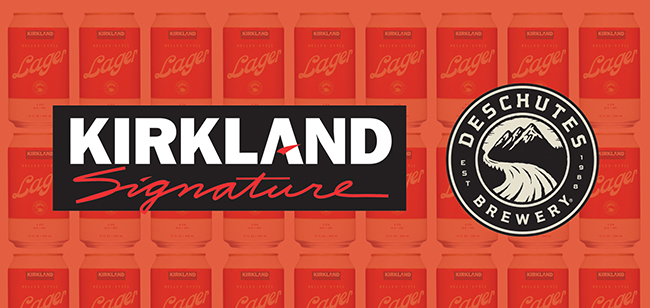
Deschutes and Costco’s Co-Branded Kirkland Beers to be Discontinued
Deschutes Brewery’s co-branded Kirkland Signature beers with Costco are being discontinued and expected to be out of the market later this year, according to a July 1 note to distributors from Peter Skrbek, CEO of the Bend, Oregon-headquartered craft brewery.
In the note, which Brewbound obtained, Skrbek wrote that “Kirkland Signature Helles Lager and Kirkland Signature Vintage Ale will be winding down in their current iterations by the end of 2026.”
The brewery removed Helles from its order portal last week, and the beer is expected to be out of stock at most Costco
warehouses between September and October, Skrbek wrote. He added that “Costco remains committed to purchasing everything that has been produced,” and distributors should continue to fill orders from Costco’s warehouses until Deschutes “can no longer fulfill additional orders.”
Deschutes began producing the co-branded beers with the club store in 2024, replacing the retailer’s poorly rated lager brand with the German-style lager priced around $13.99 per 12-pack.
“The partnership has been amazing and exposed the Deschutes brand to millions of consumers across the country,” Skrbek wrote. “The Kirkland Helles Lager won several significant awards and beat German brewers at their own style in some of the most prestigious global beer competitions.”
Although the future of Kirkland beer items is “unclear” at this time, Skrbek wrote that he “wouldn’t be too surprised if the lager makes a return at some point.”
Rhinegeist and Kroger Partner on Super Lager at Premium Light Price Point
Rhinegeist’s Cheetah lager is being reincarnated later this summer.
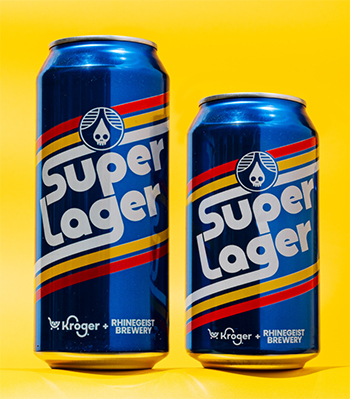
This August, Rhinegeist will relaunch Cheetah as Super Lager, in collaboration with grocery chain Kroger, a fellow Cincinnati-based business.
“Same recipe, wider reach,” Rhinegeist CEO Adam Bankovich said. “It’s the perfect way for us to provide an option for
shoppers wanting something that is everyday-affordable, easy-drinking, and so well-crafted that it stands out among the rest.”
Mike Davis, Kroger national category manager for beer, added: “Super Lager started with a simple idea – there should exist a premium lager at an affordable price that everyone can enjoy. With this very specific goal, Kroger sought to find a partner that could bring this liquid vision to life.”
Super Lager (4.8% ABV) will launch in Kroger stores starting in the Midwest this August, with expansion to Kroger stores in the Mid-Atlantic and Southeast to follow.
Packages include 16 oz. single-serve cans and 12 oz. can 12-packs.
The announcement highlighted Super Lager’s affordability. Rhinegeist VP of marketing Tracey Ireland told Brewbound that the beer will be priced in line with premium lights by state.
Licensing Deal Brings Nine Loko Intoxicating Hemp Beverages to Market
Four Loko-maker Phusion Projects has licensed some of its brand assets to Chuck It LLC for use in intoxicating hemp beverages.
Phusion Projects told Brewbound that it’s not manufacturing or selling “Nine Loko or any intoxicating hemp or cannabinoid products.”
“Those products are made and sold by Chuck It, LLC,” the company shared. “Phusion licenses certain brand assets to Chuck It, LLC for use on those products.”
In recent job posts for a sales specialist in Houston, Texas, Chuck It describes itself as “setting the standard for novel, next-gen products designed to resonate with a new wave of drinkers who want something fresh, something fun, something that feels like the future.”
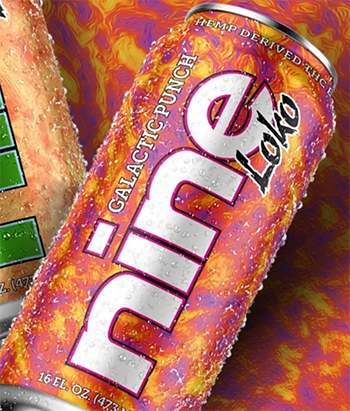
Nine Loko’s website calls the brand a “flavor first, perception-bending jazzy cannabinoid juice.” The brand comes in two flavors – Dreamsicle and Galactic Punch – with each 16 oz. can checking in at 10mg THC, 10mg CBC and 10 mg CBG.
The Nine Loko website FAQ says its products are only shipped and sold “in places where it’s fully permitted.”
“If it’s on shelves in your state, you’re good. If not … maybe you should write your congressperson,” per the website FAQ.
BA Harris Poll: Craft Beer Drinkers Are Increasingly ‘More Engaged,’ But There’s Still An Attention Problem
Craft beer drinkers increasingly want to spend more of their time and money at craft breweries and on craft beer. But getting general consumers in the door and turning them into craft drinkers is only getting harder, according to the BA’s 2026 Harris Poll Consumer Survey.
The annual survey collects responses from craft beer drinkers – defined as those that drink craft beer several times a year – and
general consumers. About half of the survey’s more than 2,000 respondents were deemed to be craft beer drinkers.
Overall, the latest results displayed “mixed signals” for craft beer, according to BA staff economist Matt Gacioch.
One of the more positive signals is “craft drinkers appear more engaged than they were a year ago,” according to Gacioch. Among surveyed craft beer drinkers, 85% said they drink craft at least monthly, marking a 10 percentage point increase year-over-year (YoY) and the largest percentage to do so since the BA’s 2019-2020 survey.
The percentage of craft drinkers who said they are drinking more craft than they were a year ago also increased – from 23% in 2025, to 28% this year – after four consecutive years of declines. With the increased consumption, the average visits to breweries increased from an average of 5.1 visits a year to 5.5.
Once at a taproom, consumers are increasingly likely to purchase products later, as 58% of craft consumers said they “purchased more of a brewery’s product after visiting its taproom,” up from 51% in last year’s survey. The percentage of respondents who said they purchase less after a visit declined from 25%, to 20%.
Craft consumers are also diversifying their beer baskets, as 50% said they purchase three or more craft brands a month, up from 45% in 2025, marking the highest percentages since 2016 (53%).
Still, craft continues to battle for the attention of total consumers and needs to, as craft drinkers’ numbers are waning; 46% of the survey’s total respondents said they drink craft beer several times a year, down from 48% in 2025. That rate was above hard cider (35%, down from 36% in 2025), hard seltzers (42%, flat YoY) and ready-to-drink canned cocktails [RTDs] (43%, up from 41%), and on par with flavored malt beverages [FMBs] (46%, flat).
Bale Breaker Buys Cloudburst Brewing in Founder-Friendly Deal
An acquisition that “just feels right to everyone” is in the works in Washington, Bale Breaker Brewing co-owner Kevin Quinn told Brewbound.
Yakima, Washington-based Bale Breaker has struck a deal to acquire Seattle’s Cloudburst Brewing as its founder Steve Luke prepares to move to New Zealand, where his wife has taken a job.
“It was the most feel-good way for him to get to move to New Zealand and support his wife in their next chapter,” Bale Breaker co-owner Meghann Quinn said, adding that expanding the business while craft is down felt daunting.
“It’s obviously a scary time to be thinking, ‘Let’s continue pushing the envelope in this craft beer scene,’ but we also just feel like we’ve always been pushing the envelope and trying to continue growing,” she said. “We think that this industry will circle back around, and I think this just helps position us in a way that sets us up for long-term success.”
Luke founded Cloudburst in 2016, following his departure from Seattle-based Elysian Brewing after Anheuser-Busch InBev acquired it. During his time at Elysian, Luke wrote the recipe for Space Dust IPA, now the fourth-best selling craft IPA in nationwide off-premise channels tracked by market research firm Circana.
CiderCon and Craft Brewers Conference to Co-Locate in 2027
Cidermakers planning their packing lists for CiderCon 2027 will have to invest in some warm-weather clothes, because the event won’t be held in Chicago this upcoming February as initially expected.
The American Cider Association (ACA), along with the Brewers Association (BA), announced that next year’s CiderCon will
co-locate with the BA’s own annual industry conference, the Craft Brewers Conference (CBC), April 5-7 in San Antonio, Texas.
Both cideries and craft breweries will have access to the two events with one ticket. Each event will have “distinct and
separate” seminars and community spaces, “but within one expo space, because then we only have one expo bill to pay,” BA
president and CEO Bart Watson told Brewbound.
“It’s going to be one event where that makes sense to share infrastructure, and two events where that makes sense for the two communities to do their traditions [and] celebrate,” he added.
ACA board president and Bauman’s Cider owner Christine Walter acknowledged that the ACA has been exploring alternative options for CiderCon due to the financial demands of hosting the event, paired with members’ expanded needs.


Receive your free magazine!
Join thousands of other food and beverage professionals who utilize BevNET Magazine to stay up-to-date on current trends and news within the food and beverage world.
Receive your free copy of the magazine 6x per year in digital or print and utilize insights on consumer behavior, brand growth, category volume, and trend forecasting.
Subscribe