

On-Premise Pivot: How Zero-Proof Spirits Are Finding Success in Bars and Restaurants
For years, adult non-alc (ANA) spirits have chased after major retail placements. Now, as they turn to bars and restaurants, is it too late to make a splash?
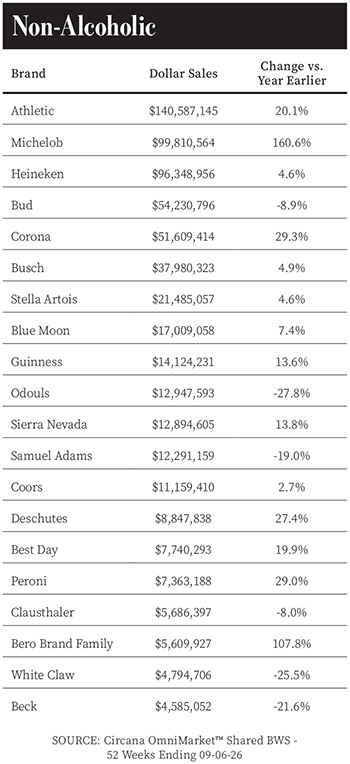
ANA beverage sales passed $1.08 billion in U.S. off-premise sales in 2026, with the real number likely higher when counting
on-premise and alternative channel sales. Still, the category is cooling: retail sales growth rates have slid from +31.4% two years ago, +23.8% last year, to 14.6% in the latest 52 weeks, according to NIQ.
More than halfway into 2026, the category is maturing and splitting into competing strategies, especially as brands circle new opportunities. Many of those are on-premise channels.
Dollar growth for NA beer, wine and spirits is accelerating faster on-premise (+44.3%) than off (+18%), and the format split is sharpening by channel: RTD cans dominate off-premise for convenience, while bottled NA spirits are becoming a bar-side reserve.
Off-premise still supplies scale (64.9% share of dollars), but on-premise channels are the fastest recruitment and growth tools, according to NIQ.
“The on-premise has always been that place for trial because the cost to try it might be a little bit lower,” said Kaleigh Theriault, NIQ’s Bev-Alc Thought Leader director.
Unlike in Europe, where bars and restaurants blazed the trail for zero-proof drinks, most ANA brands in the U.S. went from direct-to-consumer sales to retail, and now are expanding into the on-premise, where access and education, even among staff, is a challenge.
In the U.S., brands who charged into retail last year are now building strategies around bars and restaurants, but they have obstacles ahead of them.
NA Spirits At a Crossroads
NA beer sales have long been the bulk of the non-alc alternatives market, making up 80.8% share of sales. But NA spirits are the fastest growing in sales dollars (+40.7%), cases (+62.7%) and UPCs (+15.1%), according to NIQ.
NA spirit RTDs are dominating that growth: NA RTD dollar sales are up 61.5% compared to bottled NA spirits at 2%. Case numbers for NA RTDs are up 71.5% compared to 1.9% for bottled NA spirits, and UPCs are up 19.8% compared to 5.6%. Overall, NA RTDs represent a 75% share of NA spirits dollars. This also mimics the state of the full-proof spirits market, but whereas bottled spirits fuel mixology, RTD ANA’s fuel simplicity.
RTDs don’t require bartender education, making them an easier NA addition to a menu – whereas bottled ANA spirit brands now have to prove that their products will create higher spends and more repeat business.
“It’s all about disruption,” said LP O’Brien, creative director of beverage for F1 Arcade, at Tales of The Cocktail in July, in regards to NA drinks.
There are five NA drinks on her menu, nearly half the amount of full-proof options, illustrating how mainstream ANA options have become. But the math often isn’t “mathing” on NA spirits. Restaurants and bars face pressure to maintain their profit margins, and filling the backbar with dusty bottles of spirit alternatives is expensive compared to creating in-house items.
That means that high-end bartenders are trading NA spirits for their own, in-house concoctions, or else going with RTDs.
“When it comes to this stage of pricing, especially for NA, and especially when considering R&D, do you really need an ounce and a half of that alternative spirit if the emphasis and the goal is just complexity and flavor integration?” she said.
Meanwhile, the first wave of NA spirit options may have worked against new entrants.
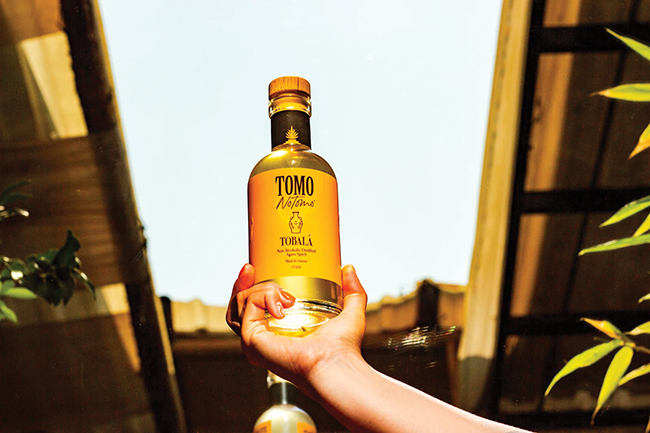
“Unfortunately, because a lot of agave specific non-alc products haven’t captured the best of ‘agaveness’ and with so many customers sending the drinks back, bars have been totally scared away from it,” said the founder of agave spirit alternative Tomonotomo, Amanda Chen.
Facing those headwinds, brands have had to find creative ways to earn their place at the bar.
“Shooting Their Shot”
Jill Sites, former EVP of sales at The Pathfinder, has argued on-premise is an overlooked growth lever for all formats.
“On-premise is a huge part of the flywheel for retail that not enough NA RTDs are focused on. You need to make sure that people are tasting the product,” she said.
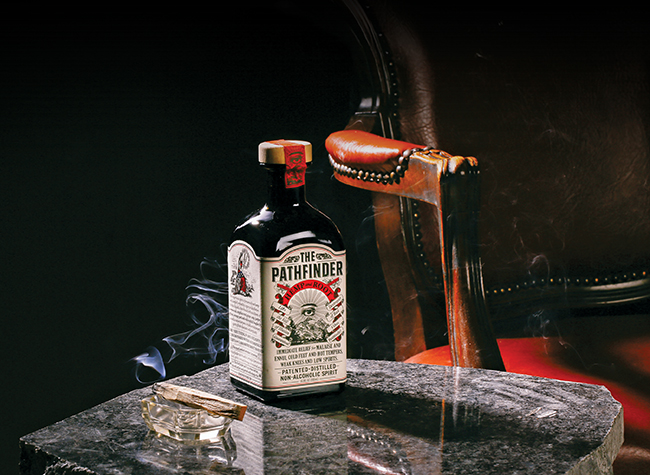
The Pathfinder, which has RTDs and an amaro-like alternative spirit, is addressing that gap by positioning itself as the NA or low-alc party shot. At Tales of The Cocktail, brand reps showed bartenders a low-proof version of the popular mezcal & montenegro shot – but subbed with The Pathfinder. To prove its place at the party, the brand paraded around a vintage dentist chair to bars where customers could take laybacks with the help of a mechanical arm.
That strategy helped The Pathfinder land at Patterson Pins, a bar in Baltimore, on day one. In the first year it has landed four cocktails on the NA menu, a cocktail on the regular menu, plus three beer and shot combos (two with NA beers one with a house lager) and even a shotski option.
“The focus on the NA shot offered a longevity alternative in our beer and shot menu that gave a new perspective for choosing NA alternatives,” said Patterson Pins beverage director Shaun Stewart.
Split Strategy
Other non-alc spirits have had to ditch their original strategies. Turned off by the price and taste of other non-alc agave alternatives, Tomonotomo pivoted from its planned merchandising around bartenders in L.A. and New York, and even from agave bars.
Instead, Chen has found allies in other locales: first, chefs at high-end Mexican restaurants, who want to stack their bars with premium options for their moderating guests have, given the brand a bump in resorts across Cancun. Now, Chen theorizes, that may have sparked new orders the brand is currently finding in Las Vegas. Unlike most agave spirit analogs that use agave spirit or natural flavors, Tomonotomo is based in Oaxaca and highlights its traditional production methods. Chen argues that the production story appeals to travel retail channels.
Hotel channels are now her biggest volume generators, with resorts in Las Vegas pushing for co-branded SKUs on their summer pool menus. Overall, NA cocktails have been gaining momentum in luxury hotels, with Hyatt’s The Lifestyle Group reporting a 32% sales increase over the past three years.
Functional mushroom spirits brand Little Saints has long focused on the travel channel, and is now positioning its bottles even more as a premium pour for on-premise use, complete with bartender education and menu development, while reserving cans for
retail. That strategy comes as the brand hits its fifth anniversary this year, with $28 million in lifetime revenue, a 50% year-over-year (YoY) retail growth rate.
Little Saints has feet on the street in five states, and each rep comes from a cocktail background. But funding on-premise activations is expensive. With a term sheet in hand for $3 million of a $6 million raise – the first time the brand has opened to institutional capital – founder Megan Klein is using the Series A to build a wholesale team as the brand begins to build traction in major retail and support its on-premise team.
“We’ve seen that when we can help the bartenders craft a really beautiful, low sugar, non-alc menu, then those cocktails turn a lot faster,” Klein said.
Those cocktails often include other NA brands, and even other ingredients, such as THC.
Other Buzzes Moving In
As alcohol alternatives grow, NA spirit brands are also facing competition from other adjacent beverages. Those include kanna, kava, THC, and functional beverages in RTD or 750ml bottle format.
At Brooklyn’s Soft Bar + Cafe, bartenders are formulating around kanna and L-theanine instead of traditional spirit substitutions. Victoria Waters of Dry Atlas, an alcohol alternatives intelligence company, has also flagged kava and kanna as one of the category’s “very proven, efficacious” functional plays – and noted interest may accelerate further as THC beverages run into regulatory headwinds.
But THC is still a competitor.
“We see a bit more of a skew towards younger consumers in bars and restaurants, and we see a little bit of an older skew in the off-premise,” said NIQ’s Theriault on THC ordering data.
On average, about 14% of on-premise consumers say they’ve tried a functional beverage that contains THC in the past six months. Because consumers seeking out these drinks are looking to “relax,” there’s more one-for-one swapping between alcoholic and THC drinks, versus alternatives with no immediate buzz, she added.
Distribution Obstacles
Spirit alternatives, like much of the ANA category, face another obstacle – distribution. Traditional distributors aren’t incentivized to promote NA products over major portfolio items, even when they’ve added them on the truck.
“Unless alcohol goes completely out of style – which I don’t think will happen – ANA is always going to be at the bottom of the priority list,” said Sites. “Dry January and Sober October are going to be the two pushes we get, otherwise ANA is an item on a truck that gets delivered.”
As a result, many bartenders seeking to get their hands on NA spirits have to work harder.
That’s part of the reason alternative models of distribution and curation have popped up. The Zero Proof, a leading ANA beverage platform, recently acquired The New Bar, a West Coast-based non-alc hospitality and discovery program, bringing together The Zero Proof’s national e-commerce scale, owned brand portfolio, and distribution with The New Bar’s relationships across hospitality, live events and culture.
With the distribution tier in a shakeup since Republic National Distribution Company’s collapse, smaller brands who lost their wholesalers could also take the opportunity to build a “great quilt for themselves in national distribution,” added Sites.


Receive your free magazine!
Join thousands of other food and beverage professionals who utilize BevNET Magazine to stay up-to-date on current trends and news within the food and beverage world.
Receive your free copy of the magazine 6x per year in digital or print and utilize insights on consumer behavior, brand growth, category volume, and trend forecasting.
Subscribe