

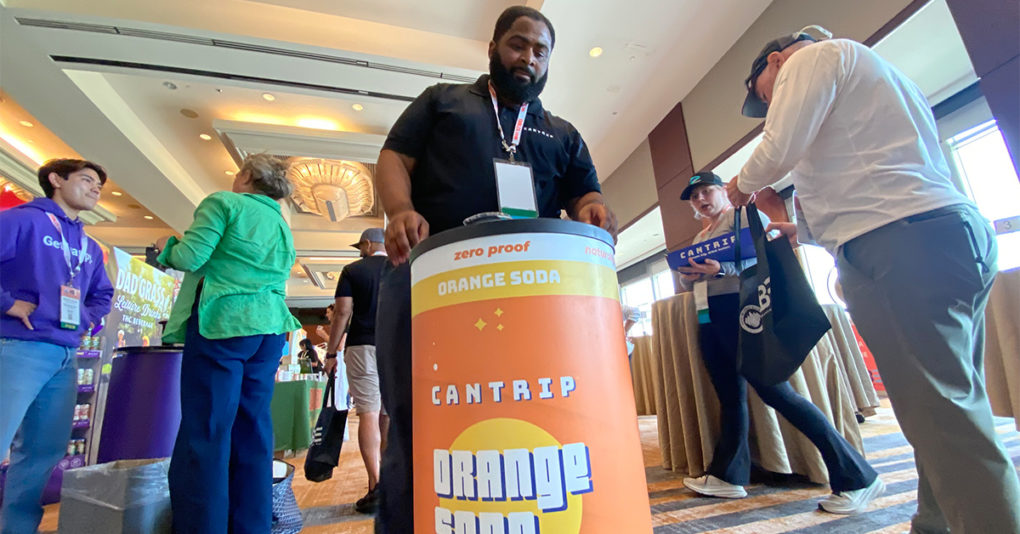
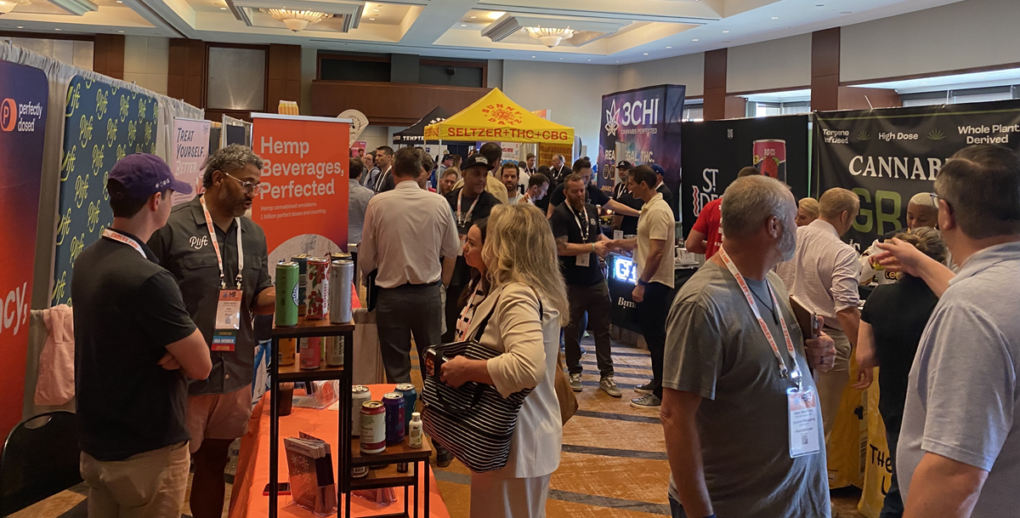
What do you get when you offer a taste of Fear and Loathing to the Shark Tank set? It may look a bit like the Hemp Beverage Expo, which held its second edition last week in Atlanta.
Headlined by an almost too-ordinary trade show held over two days within a ballroom at the Omni Hotel, the live sampling of dozens of hemp-derived THC-infused drinks ensured that by 5 p.m. the room has slowly drifted into a chill lilt, bringing the conference about as far away from the mad rush and anxiety of an Expo West as you can imagine.
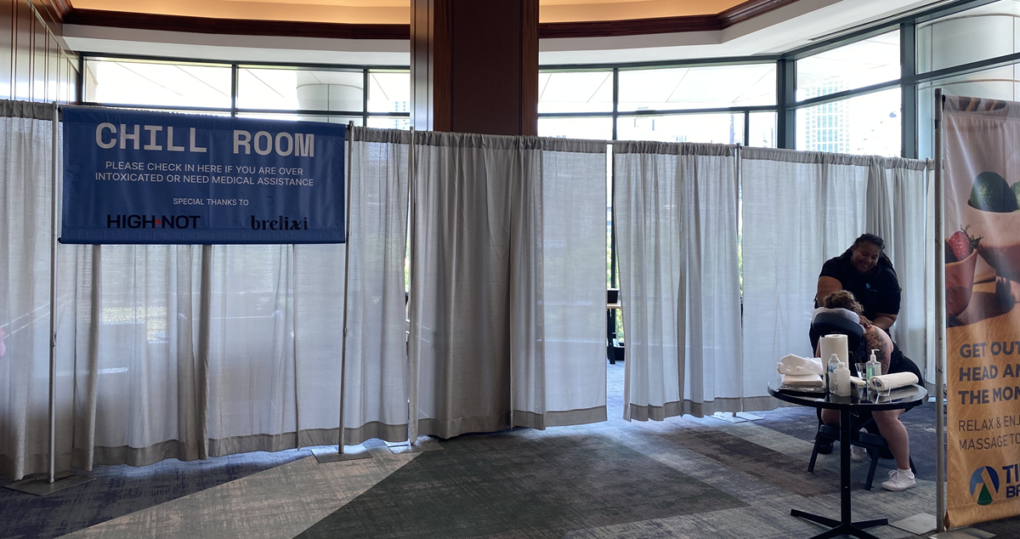
But despite the presence of a “chill room” (really a curtained off corner just outside the show floor with a couch for any attendee who gets too high and requires a snack and some Gatorade) Hemp Beverage Expo is at the end of the day another business event, one where brands, canning companies and ingredients suppliers meet and conduct business – albeit, perhaps, with a few more lawyers and regulators per 1,000 people than most CPG shows.
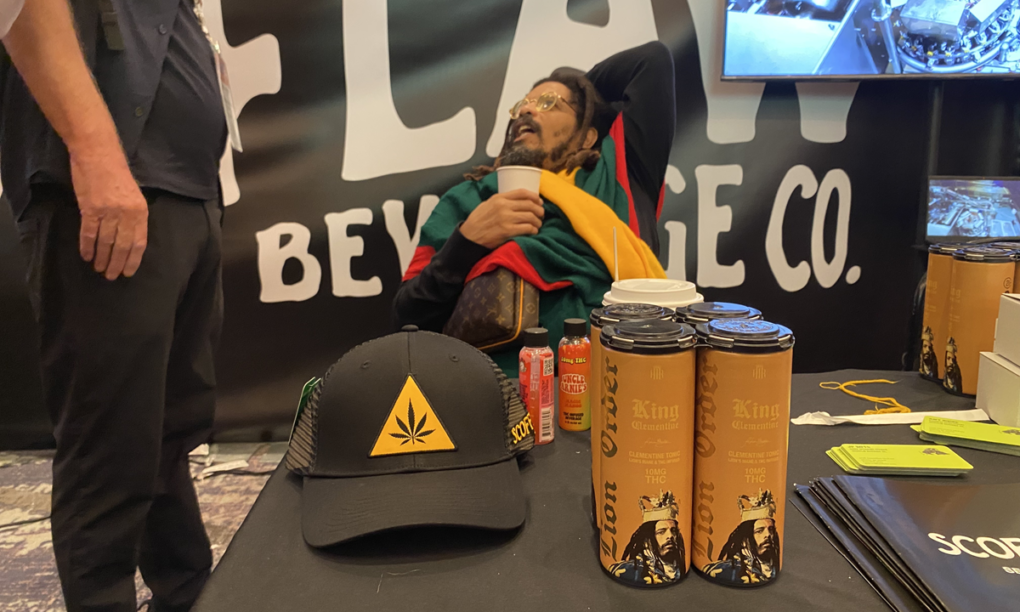
Brands like Nowadays, Dad Grass, Cantrip and Wynk served fully-infused samples at their show booths, while new innovations and brand launches were on display across the floor. Lemonades, sodas (both low and full sugar) and seltzers were all popular formats for intoxicating drinks – naturally feeding into the relaxation occasions a THC drink invites. Coffee from Subculture and a kombucha-based tonic from Goddess Juno stood out as unique takes on the hemp concept, while others such as “beer-esque” brand Wellbeing and startup Black Market leaned into the alcohol alternative approach.
Keeping It Chill
The relative normalcy was celebrated by the show’s organizers. George Jage, CEO of Jage Media and a co-founder of the Expo, said he viewed the tame nature of the event as a sign of success and step towards normalization for the entire hemp-derived THC industry – a sentiment that was echoed by numerous attendees and exhibitors interviewed on the show floor.
“A lot of people view smoking cannabis as something kind of dirty,” Jage said. “This is so benign, to be able to have a beverage in your hand and drink something that tastes good, so again, it’s the normalization.”
Initially started by the Hemp Beverage Association (HBA), the Expo held its first edition last year in Minneapolis with roughly 300 attendees.
This year’s show was four times the size, with over 1,200 registered check-ins on day one, Jage said. HBA president Chris Lackner said he believed it was reflective of the boom the entire industry is experiencing at the moment.
And the class of clientele increased as well: DSD distribution reps turned out in much higher numbers this year, although retailers were not in high attendance. One attendee suggested that retailers don’t need to seek out brands right now when they have all the drinks coming to them.
State regulators from Georgia, Connecticut and Virginia were also in attendance, and led a panel discussion on the first morning about how their states are working to ensure the market stays open and safe.
Regulation Can’t Kill the Vibe
Incidentally, day one of this year’s show happened on the same afternoon that the U.S. Senate moved forward with a bill that would close the Farm Bill loophole which created this entire market in the first place, proposing an all-out ban on intoxicating hemp sales scheduled to take effect one year from passage.
It’s a sad irony, and it’s one attendees were largely willing to acknowledge – but if you expect their reactions to be fear and panic that the doors are closing as soon as they opened, you’d instead be met with sober optimism that rationality will prevail and that ‘the genie can’t be put back in the bottle” (a common refrain heard from more than a handful of attendees).
Angus Rittenburg, CEO of infused brand Wynk, has been active in regulatory and lobbying efforts, and he expects that any final changes to the law will allow for the market to remain open in some capacity. But if worst comes to worst, he still has plans to fall back on for the business, with the state-regulated cannabis market being a top alternative.
“I understand the risk, and we have a mitigation,” he said. “It’s not the outcome that we want, of course.”
Regulation may be an existential threat for the hemp-derived THC business, but many see education as an even bigger hurdle; both consumer and regulator education.
Sabrina Powell, brand lead for beverage maker Five Flowers, said that any time a state issues a letter on hemp sales or rumors crop up of potential bans it has a lulling effect on the market as retailers get spooked. Fighting misinformation, particularly from the top down, is a constant battle, she said.
Austin Stallings, marketing director for beverage brand Herbal Oasis, which launched in January, said that the education fight also goes towards teaching consumers it’s safe and legal to buy the drinks both in-store and online.
“We are untraining consumers on how they’ve been trained for over 20 years when it comes to buying beverages in-store,” said Stallings. “We want to drive sales online.”
Which Way From Here
While almost everyone at the Expo wanted to see some form of regulation put in place for the industry, there’s still some disagreement here and there of just what these rules should look like.
Adam C., the CEO and co-founder of Black Market — who asked that his last name not be used due to potential conflicts with his other career as a cybersecurity expert – took the unusual, libertarian-styled stance that regulations on hemp drinks should be as limited as possible. He encouraged age restrictions for use and sale, but otherwise felt the industry should be free to grow within the open range allotted by the 2018 Farm Bill.
That’s the outlier stance, however, and many brands continue to work directly with government liaisons to advocate for a clearly regulated market. In-house legal counsel is a common expense for brands in the category.
But as mainstream distributors enter the space, individual interests will inevitably become more relevant to crafting any potential legal framework.
At the tail end of one of the first panel sessions on day one, Dawson Hobbs, the EVP of government affairs at Wine & Spirits Wholesalers of America, was asked if he could change one thing about the hemp beverage market, what would he do.
“Ban D2C,” the distribution exec said, without elaboration.
It wasn’t clear if it was meant to be a joke or not, but the boos were immediate. It seemed like he expected them.