

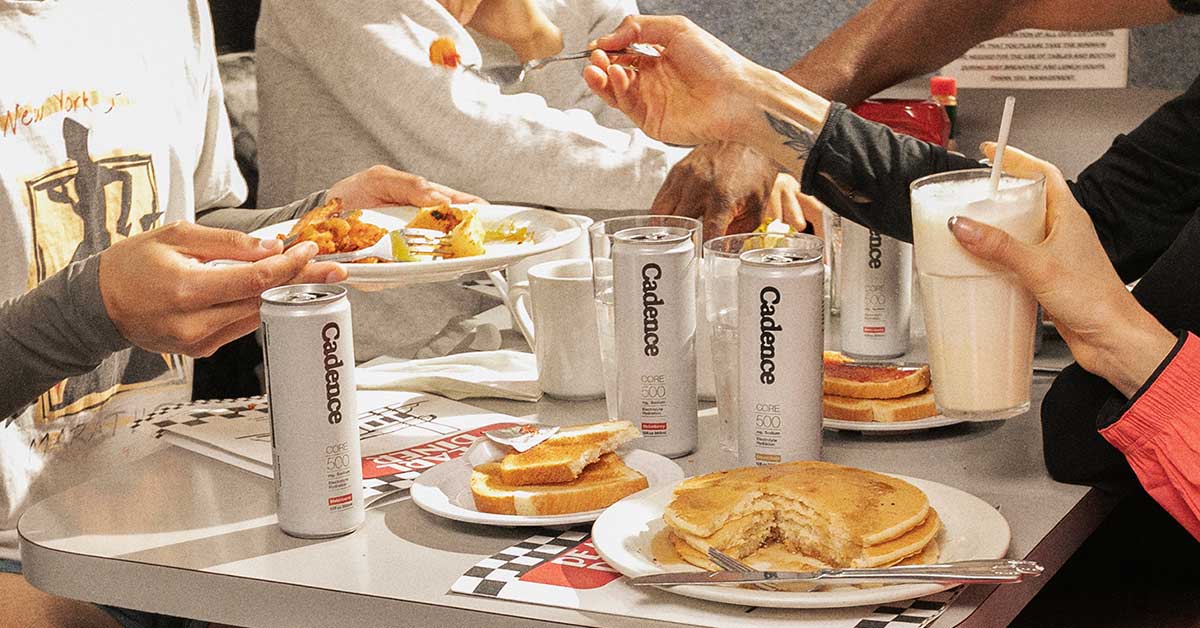
After eight months selling just a single SKU, Cadence is eager to make up for lost time.
The Brooklyn-based brand’s initial release – a citrus-flavored RTD beverage boasting 500 mg of sodium per 250 mL can – last July has served as the pilot test for its core proposition to deliver sports performance products with the optimal levels of salt to support high-level sports performance. Early traction (the product sold out all four production runs) for the drink has given founder Ross Mackay (formerly cofounder of Daring Foods) and his team the green light to grow the platform with a slate of new releases this spring, including more drinks, plus bars and powders.
“Almost every other month [this year], you’ll see something from us,” Mackay told us.
The expanded beverage roster now includes three new flavors in a larger 12 oz. format – Cream Soda, Melonberry and Cola, all with 500 mg sodium, 190 mg potassium chloride and 295 mg of magnesium lactate. There’s also three varieties of powder drink sachets (sold in 30-count packs) and two Fuel Bars in Chocolate and PB&J. The brand architecture is built to house the products under three hydration occasions: Core (everyday), Race (caffeine) and Recover (sleep).
Cadence’s next steps follow the methodical test-and-expand strategy it has used from the beginning, having launched its first RTD online in the U.S. after a three-month test run across Europe. The expanded portfolio has facilitated a move from direct sales to retail, starting with Vitamin Shoppe in April. The combination of limited availability and high demand has been an asset, Mackay said; for anyone that doesn’t want to buy a 12-pack, Vitamin Shoppe is the only place to buy a single can, sold cold and priced at $2.99 in line with popular energy drinks. Cadence has been a “really positive success” there so far, and has laid the groundwork for new retailers to onboard the brand in the coming weeks, the founder noted.
The goal is eventually to transcend from specialty outlets to a mass audience, something that energy drink brands like GHOST, Bang, Celsius, Bloom and others have done to great success in recent years. But that category is different from hydration and sports drinks, where upstart RTD players have been leaning into things like celebrity affiliations (Unwell, Barcode, Mas+ by Messi) or casual athletics (Local Weather, Leisure Hydration).
Against that backdrop, Cadence’s positioning at the intersection of wellness lifestyle and sports performance feels unique – and potentially a challenge for category managers. But the rise of other hyper-focused “modern hydration” brands like LMNT and The Absorption Company may herald a sea change.
“I’d say to a [grocery] buyer put this anywhere, because this will transcend into a lifestyle brand. I think [modern hydration] will be agnostic to sport or to performance or to whatever you want it to be. And I think it needs another few brands to prop that category up. But you know, whether it be us and LMNT with really good nutritional profiles, I think you’ll start to see, hopefully, us actually build that category together.”
Like the drinks, the Fuel Bars are as notable for what they include as what they don’t; in this case, protein. Instead, the product is pitched as “the perfect blend” of carbohydrates (40 grams) and salt (400 mg), a twist on the “banana, honey and coffee” that runners favor as a fast-digesting pre-race snack.
“We’re focused on that 30 to 45 minutes before you go to play pickleball or tennis or run, where you may grab a banana and a drink of water – let’s make that into a bar,” said Mackay. “I didn’t expect it to be such a fast-selling SKU, but it sold out in four days and we made several hundred thousand of these.”
Those, however, won’t follow the drinks into mass retail, Mackay noted. Future innovation – including a line of fuel gels for runners – will move primarily through Cadence’s website, with a limited brick and mortar presence at boutique running stores and coffee shops around the country.
“I don’t think that the value proposition of the bar is as impulse-driven as a protein bar. I don’t think we perform as well in a Whole Foods versus a David bar, for example,” he said. “I think the can is mass retail, and we are focused on the bar, the running gel, the carbohydrate mix being subscription-based online.”
Rather than number of store doors, Cadence is measuring its reach through collaborations with influential partners like Asics, Sweetgreen, running community Bandit and sport supplement maker RAW Nutrition, with which it released a limited-edition Watermelon Mojito flavor to mark its Vitamin Shoppe debut. Affiliations with such like-minded brands has earned the brand further credibility with a global audience of dedicated athletes, helping Cadence enter markets like Australia (last month) and Europe (up next).
“We have a really strong community behind the brand,” Mackay said. “It’s a community that we spend a lot of time building on the ground with running events, activations [and] partnerships. So I think for a brand [in] our infancy, we’re punching well above our weight.