


When it comes to CPG loyalty, distance runners are a marketer’s dream. Devoted to routine, they repeatedly grab for the same products to satisfy their training needs. But getting within arm’s length of those routines isn’t always easy. Some brands are racing for the pack, rather than the individual, chasing down entire run clubs with their marketing schemes.
For those unfamiliar, run clubs are formal (and informal) groups that meet regularly, pairing group exercise with social networking. Run clubs have experienced an uptick in membership in recent years as the COVID pandemic led many to prioritize fitness while also desiring more in-person socialization.
Experiential marketing has always been a key cog in introducing products to new consumers, but it has fast become a necessary tool to foster brand loyalty and create community. Communal events like road races and marathons have long represented opportunities to tap a fresh consumer cohort, but it’s forming a captive audience that takes it from low entry barrier to high return on investment (ROI).
So the new evolution is that brands are targeting run clubs and fitness groups, rather than individual runners at the finish line. Run club activations offer controlled environments where their social nature – either during training or at the actual event – can be leveraged for increased education and feedback. The ROI upside at run clubs could be higher than at in-store demos, where shoppers are often coerced into sampling a product they were not planning to buy, or even a race finish, where anything and everything appeals to a depleted athlete.
If implemented with follow-through and data tracking, activations at road races and partnerships with well-attended run clubs can become micro-influencer events that target a specific geographic region where a brand is attempting to enter or break into.
It’s a “hyper-targeted” and “authentic” type of activation, said Jack Shannon, founder and CEO of brand activation platform Recess.
“By partnering with run clubs, you are facilitating a partnership with that community and the leaders of these communities, who are effectively endorsing the product by sharing it with their group,” he said. “You also don’t have the really high costs of labor, tents, t-shirts and everything that goes into a traditional experiential marketing campaign.”
As a bonus, community-based fitness groups tend to be very active on social platforms, providing organic content creation at a low cost for a brand, Shannon added. This data can be collected and then brought to local retailers in the area as a proof point that there is pent-up demand for this type of product.
From CrossFit To Fit4Mom
Run club partnerships are a natural outgrowth of other group fitness activations, like CrossFit. Early on, RXBAR developed a following in CrossFit gyms, introducing itself to values-aligned consumers.
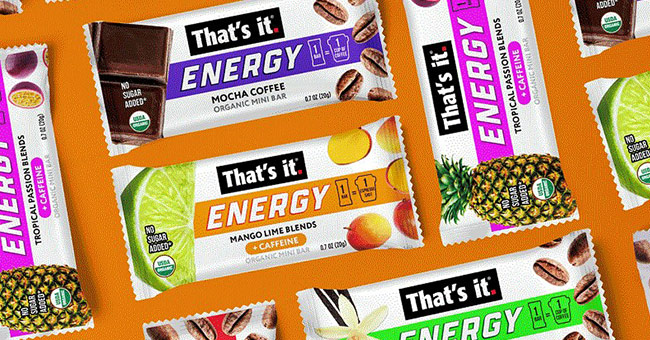
Taking a similar approach, dried fruit bar brand That’s it. saw an untapped opportunity within the fitness community. What started with providing free samples as “informal partnerships” to run clubs and exercise groups like Fit4Mom evolved as in-person community-based events like run clubs were popularized post-COVID, said That’s it. president Katie Eshuys.
“It was a little bit more transactional a couple of years ago, whereas now we have identified that run clubs have become a lot more mainstream,” she said. “We made the decision to be more proactive and go out and find partners that have scale.”
Those partners are lifestyle brands Fabletics and Lululemon, which have developed their own run clubs and have a dedicated consumer base that might not have been familiar with the dried fruit snack maker.
In partnering with lifestyle and apparel brands, That’s it. has also scaled its marketing approach to sponsoring the more traditional competitive races, like the Boston Marathon, where it becomes even more important to tracking ROI through earned media posts. Still, the race isn’t the only goal, according to Eshuys.
“We understand it’s really a long-term play. We’re not going to do the Boston Marathon and leave it at that,” she said. “The goal for us is integrating [That’s it.] in the routine of these runners and being a part of their daily lives. Creating a meaningful connection is about being associated with the runner’s performance or the happiness of crossing the finish line.”
The activations are also an important way to get product feedback. For That’s it., integrating within fitness groups and at events led the brand to innovate a new line of caffeinated energy bars that target fitness enthusiasts.
Think Micro And Local, Not Professional
Some brands dream of pro team activations, or imagine themselves at the big city marathons and the Ironman triathlons. But small events can have a higher upside, letting brands connect directly with a community that shops in a specific region, said Bob Lynch, founder and CEO of sports sponsorship tracking company SponsorUnited.
It can be used as a “micro-influencing opportunity,” he said, where participants in the run clubs are talking about what they tried on social platforms, and then shopping locally as well.
“For a small, scrappy regional brand, this is actually really important to build that initial groundswell,” he said.
Also, local run clubs run local events – making for concentrated, captive audiences where early-stage brands can tell their story, while also collecting valuable data for marketing campaigns and sales pitches.
While larger brands with deep marketing budgets like Gatorade, Nestlé’s Nuun and Athletic Brewing were the most active sponsors of on-site marathons in the last year, according to SponsorUnited data tracking, the smaller road races can be seen as a “low-cost, low-risk” way to gain brand recognition, Lynch said.
The average sponsorship cost for a local marathon (a few hundred to a few thousand participants) is between $250 to $5,000, according to SponsorUnited data. Even when taking a step up to a regional or mid-sized marathon (5,000 to 15,000 participants), the sponsorship cost is between $500 and $10,000.
“There’s an affinity that comes with sampling at endurance events because you are literally supporting the stuff that the participants are trying to do,” Lynch said. “Within run clubs, if you win over these people, they’re more likely to organically tell others about your product as well.”
Leveraging Trial Data Into Retail Partnerships
Launched last year, nitrogen-infused energy drink VALR was formulated to serve the “active-occasion” consumer as an NSF Certified for Sport, non-carbonated caffeinated drink, according to CMO Jonathan Kander.
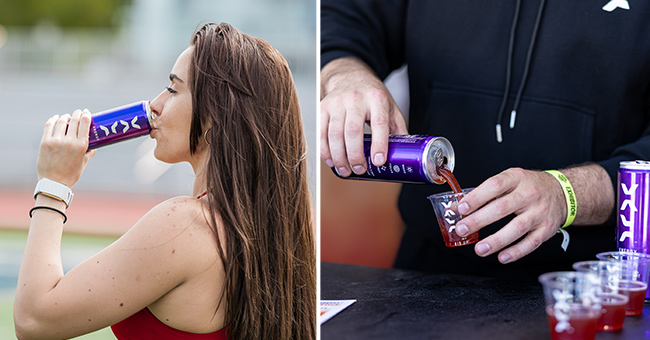
The value proposition for the 3-SKU brand “really clicked” when VALR did an expo activation at the Pittsburgh Marathon as part of the brand’s launch in local Giant Eagle stores, Kander said, leading it to seek out a run club partnership in Pittsburgh.
While VALR sponsors organized events like the Carry Forward 5K, the utility of working with run clubs in Florida and New Jersey allows the energy brand to become a consistent presence in a consumer’s life and bleed into the larger marquee events like road races and marathons, where VALR can drive consumers to local retail partners after the event.
“Run clubs are perpetual,” Kander said. “Every single weekend, we are part of their lives and part of their routine that will further expand into other occasions where they’re using energy drinks.”
Building A Connection
After years of donating drinks to local run clubs or fitness events in the Austin, Texas, area, yerba mate drink maker CLEAN Cause has taken its run club approach a step further by launching an app. The Recovery Run Club app helps users find local run clubs to join while also logging miles, similar to other fitness trackers.
The app supports the brand’s mission of addiction recovery through community-building by encouraging healthier lifestyle practices like long-distance running. To drive users to the app, CLEAN Cause reached out to recovery groups and sober living houses it has partnered with in the past, sending free gear and coupons along with QR codes to encourage downloads.
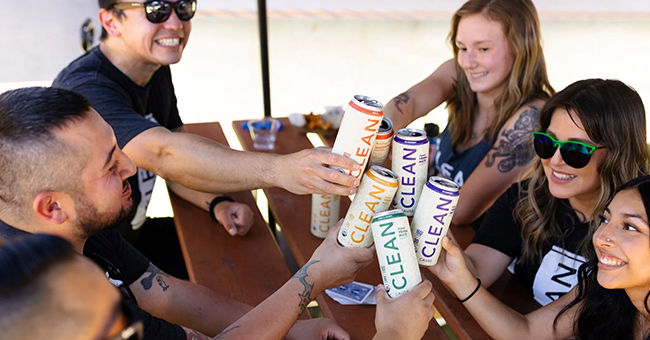
The Recovery Run Club app acts as an email collection resource for CLEAN Cause to use for marketing purposes, said CLEAN Cause VP of Marketing Execution and HR Cortney Hollinger. It also allows the brand to geo-target app users and track where coupons have been reimbursed, using that data when seeking new retail partners or regions.
Determining how to use that gathered data is key, said Scott Dicker, SPINS senior director of Market Insights. “Understand your consumer and really focus on price point.”
Similar to in-store sampling opportunities, demoing a product requires follow-through on how that product can fit the target market and consumer demographic.
“Just because a number of runners tried the product and loved it doesn’t mean they’re willing to spend $5 on it,” Dicker said.
Playing To A Brand’s Strengths
High-protein brownie and spread maker Elavi tried an activation with the Venice Run Club and sponsoring fun runs in the Los Angeles area after launching in 2020, but its founders felt that the brand wasn’t connecting.
“We realized this was not the best ROI because the behavior we saw was people just shoving food in their mouths and not thinking about the brand,” said co-founder Michelle Razavi.
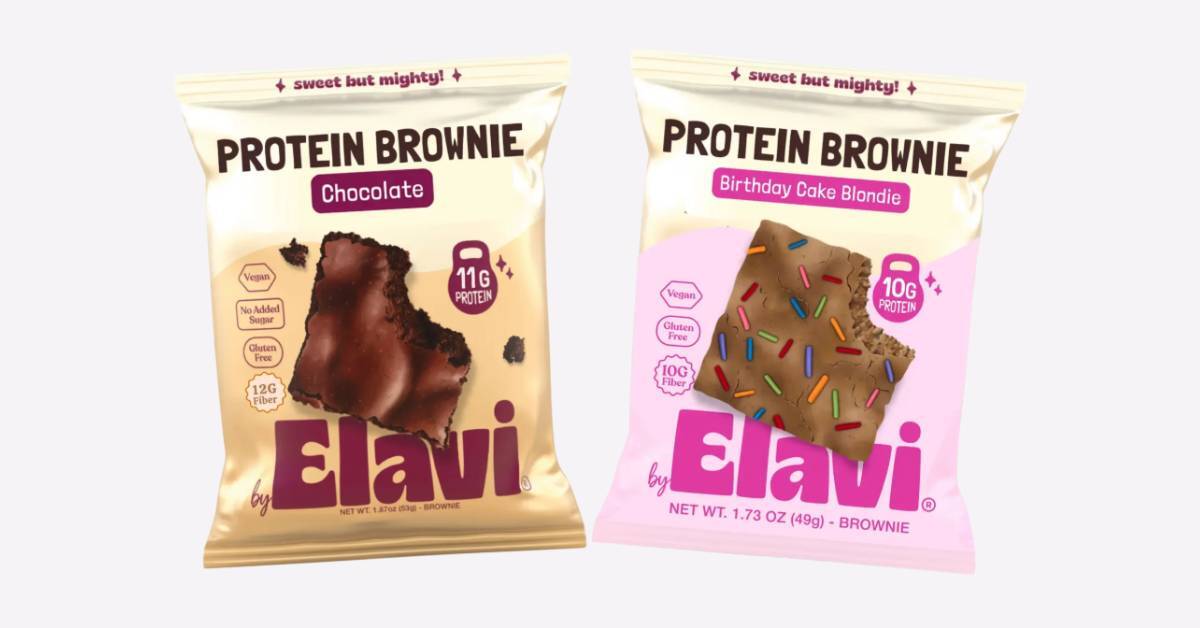
Instead, the co-founders discovered a different way in – by using their own backgrounds as Equinox fitness trainers. Their knowledge lets them connect directly with potential Elavi consumers at fitness events – often the cofounders teach a class or speak on a panel.
“We want to be on-site so we can explain why we created a protein brownie,” Razavi said. “We noticed that when people saw who was behind the brand, and it was someone that they could relate to, it would create more tags on socials and drive people to stores.”
Along with being intentional on when, where and how to get the best ROI from fitness activations, another best practice Elavi has found is incentivizing a purchase after trial.
“If you can include a coupon, you are making that next step a lot easier for that customer to try the product again and show them where they can buy more,” she said.