

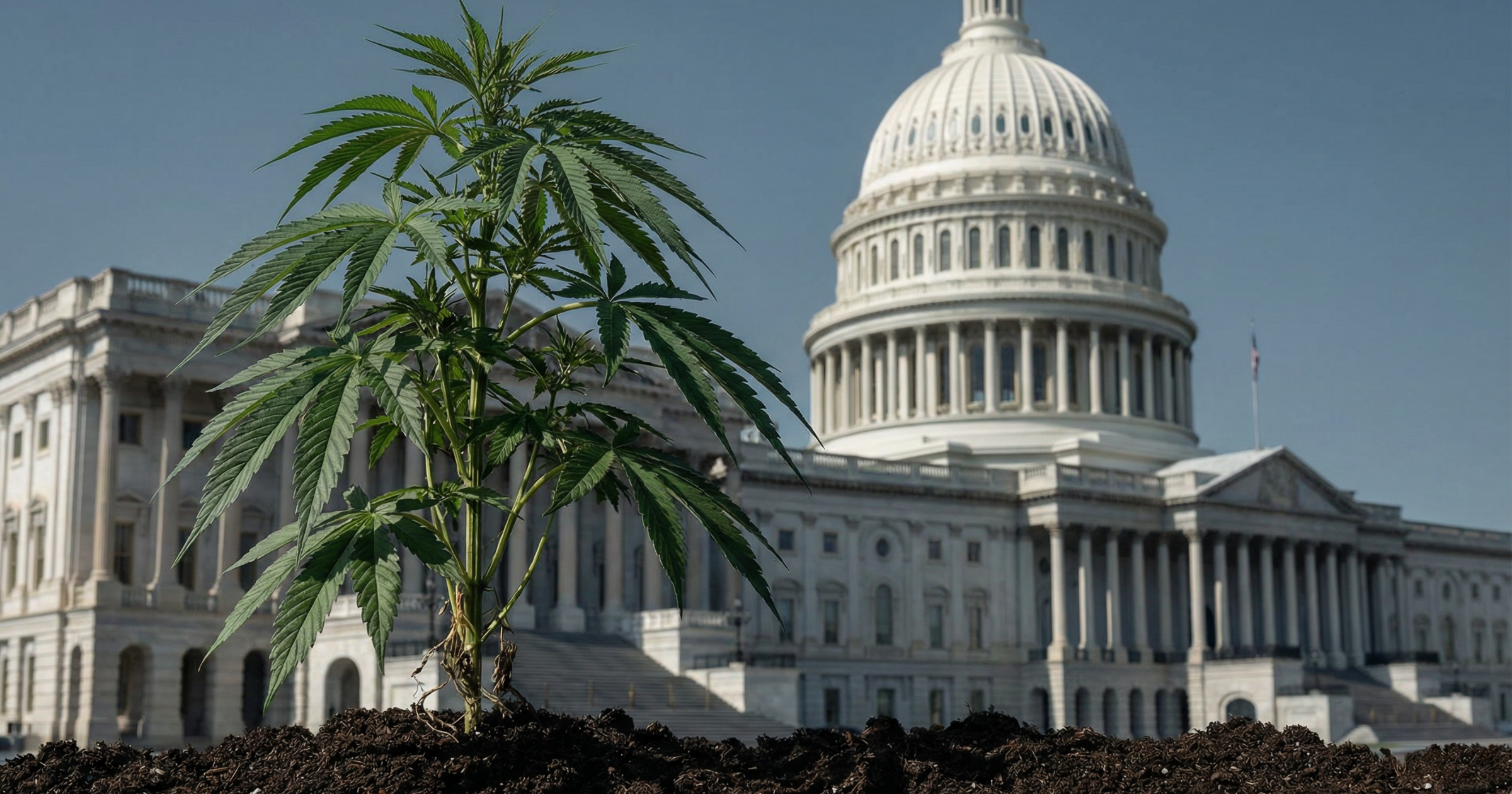
Hemp beverages may have earned a temporary reprieve from upcoming federal restrictions after the U.S. Senate passed a continuing budget resolution over the weekend that extends the deadline until December 11.
The provision attached to the draft resolution, expected to go to a vote this week, would delay hemp prohibition by 30 days from its original November 12 deadline. Synthetic cannabinoids that aren’t naturally occurring in cannabis will still be banned in November.
Should it pass in the Senate, the resolution would still need approval from the House of Representatives and then the President.
Industry advocates celebrated the news over the weekend as a signal that lobbying efforts were producing results, and as a sign that lawmakers see a path towards codifying a permanent and comprehensive regulatory structure for legal THC beverages, if not all hemp products.
“This action provides Congress with additional time to develop a thoughtful, long-term approach to hemp policy rather than allowing a sweeping ban to take effect without fully considering its impact on American agriculture, small businesses, and consumers,” said the U.S. Hemp Roundtable in a press release.
Christopher Lackner, founder and president of the Hemp Beverage Alliance, praised senators for “standing up for responsible hemp beverage suppliers and their supply chain partners.”
“We urge the Senate to quickly pass this legislation and send it to the House for their swift approval as soon as they return,” he said.
Diana Eberlein, chair of the Coalition for Adult Beverage Alternatives, called the extension “an indicator that there is interest in regulating hemp-derived cannabinoid products.” She encouraged supporters to “appreciate this moment,” but also to maintain the lobbying momentum.
“The House and Senate need to agree on a CR package, so our efforts in August and September will be critical to our success,” Eberlein wrote.
“We commend the Senate, the White House, and congressional leadership for their commitment to finding a consumer-focused solution,” said Jonathan Grella, spokesman for the Beverage Alcohol Merchants Coalition (BAMCO), a group advocating for regulating low-dose THC beverages within the existing three-tier system. “The Senate Continuing Resolution creates an important opportunity to achieve meaningful hemp regulation. While significant work remains, BAMCO is committed to working with policymakers to establish smart, safe regulation for low-dose hemp beverages that protects consumers and provides long-term regulatory certainty.”
The emerging industry has been under pressure since new legislation passed in late 2025 that would undo portions of the 2018 Farm Bill which allowed for hemp-derived THC beverages to legally enter the market. In the meantime, multiple bills backed by various interest groups have circulated through Congress, each proposing different regulatory and taxation schemes for legal hemp products.
As debate continues on Capitol Hill, hemp beverage makers have sought to both seize the moment and prepare for the future. Consumer demand for infused drinks remains high; the category grew 133% year-over-year between 2024 and 2025, according to a recent report by the Hemp Beverage Alliance. Despite the forthcoming restrictions, which would limit hemp beverages to less than 0.4% THC per container, one of the country’s largest grocery chains began piloting infused drinks this summer, while music festival Lollapalooza welcomed its first official THC beverage partner last month.
While supporting grassroots lobbying efforts to save the industry, leading brands like Brez, Cann and Nowadays have also recently introduced non-THC extensions that would allow them to continue operating if the proposed ban goes through.
“The coming weeks will be critical as lawmakers continue debating how hemp should be regulated moving forward,” said the U.S. Hemp Roundtable’s statement. “For now, we celebrate this important step forward and thank the elected officials who recognized the need to protect America’s hemp farmers and businesses.”