

What’s the best route from online to on-shelf sales? Lots of beverage types have had to consider that in the recent past, but no category has exploited the opportunity to sell direct-to-consumer as effectively as intoxicating hemp brands.
For many brands, the solution appears to be finding space with beer and liquor distributors – but are there dangers for the industry in following that path?
Having leveraged DTC distribution to meet the unique needs of the category, hemp brands are now facing a massive question: how to marry steady online sales with the larger opportunity within beverage-alcohol retail.
Hemp-derived THC beverages have already begun to align with beer and liquor DSDs to bring products into stores, but leaning into those established distribution networks means navigating a dynamic regulatory environment and making sacrifices in other channels.
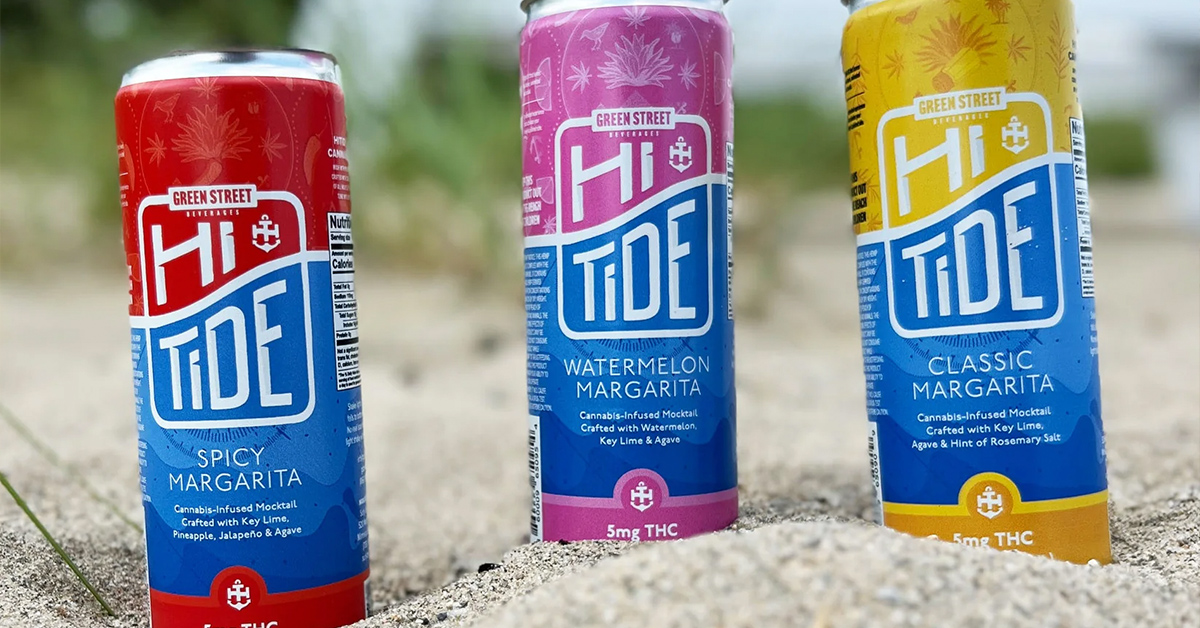
Minnesota-based Green Street Beverage has taken a more traditional beverage approach to DTC. The company distributes three hemp beverages, HiTide Craft THC Margaritas, HI*AF THC Drinks and cannabis-infused hop water Boundary Waters. It views its online business as a way to build into retail distribution, targeting the opportunity in on-premise locations like music venues and live event spaces.
They’re wary of over-indexing in any one channel. It could “crush a business if there is an unforeseen commodity headwind,” said Green Street CMO Jarrod Jordan, citing both the impact of tariffs on commodity and aluminum prices, as well as potential regulatory reversals around online sales of THC as potential speed bumps.
At least five states (California, Massachusetts, Connecticut, Tennessee and Arizona) have recently enacted rollback regulations restricting DTC distribution of hemp-derived THC products, according to the Coalition for Adult Beverage Alternatives (CABA), a hemp beverage industry group. There are several more states where dosage limits, distribution channel restrictions or pending legislation are also keeping brands from shipping products.
Proving Ground
That means that hemp-based THC brands have to navigate a shifting retail environment while also trying to find effective ways to introduce their products to prospective route-to-market partners.
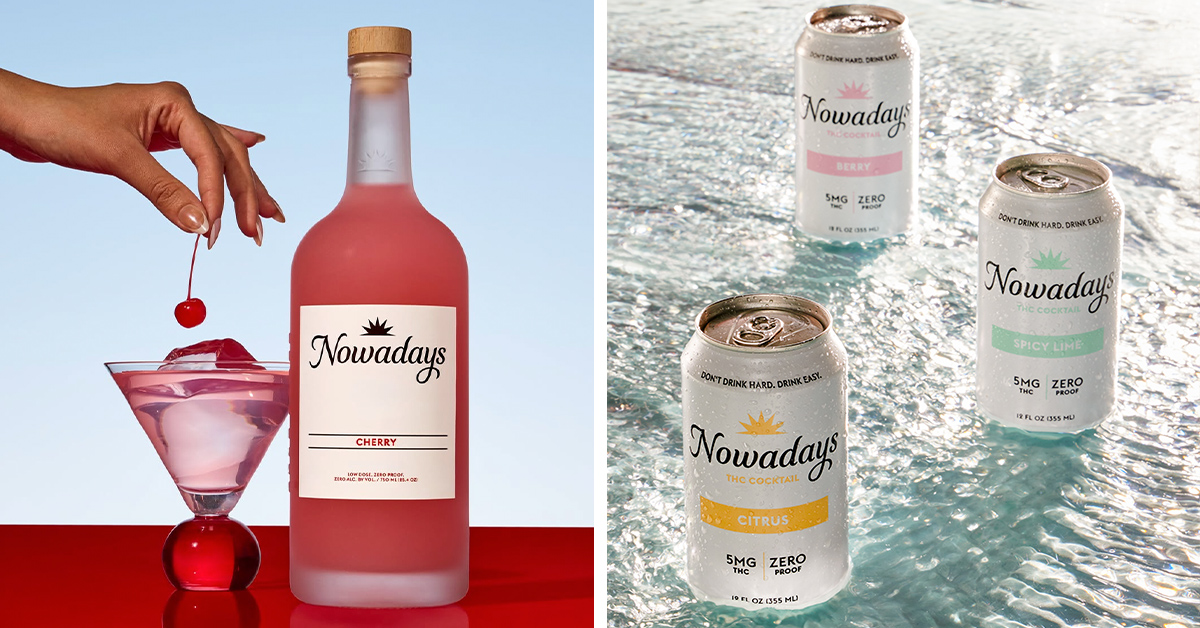
When intoxicating hemp brand Nowadays launched in 2023, it was targeting wholesale for its multiserve spirit alternative (it has since launched into RTDs and shots as well), said co-founder Justin Tidwell. “When we went into alcohol distributors’ offices, we pitched them on THC in a bottle and we got blank stares.”
Distributors and retailers needed proof there was a market for a 750ml format, Tidwell said, so Nowadays started online. The decision paid off, allowing Nowadays to accumulate sales data to bring to potential distribution partners and build out a retail footprint alongside its DTC business.
Despite Nowadays’ success via DTC, Tidwell said the future of intoxicating hemp beverages remains “conjoined” to the alcohol industry.
“The hemp industry desperately needs credibility and regulation,” he said. “Alcohol needs another revenue boost, and if you combine those two things, then you’ve got the next unstoppable product category.”
Yet, aligning with bev-alc is not necessarily the consensus opinion among hemp beverage brands because some hemp entrepreneurs fear the move could significantly limit how cannabevs are sold online.
Riding The High With Big Alc?
Currently, hemp beverage in retail operates in a grey area: differing stipulations state-by-state dictate how, what and where they can be sold. Whether it’s dosage per serving or labeling requirements, many hemp brands are forced to produce a variety of SKUs developed solely to fit specific regulations in certain markets.
Some industry groups – like CABA and the Hemp Beverage Alliance – have lobbied extensively to regulate intoxicating hemp drinks in similar, if not the same, way as beverage-alcohol products under a federal framework. Meanwhile, the U.S. Hemp Roundtable (which includes industrial hemp growers as well as hemp beverage brands) has called for more regulatory transparency without a full incorporation into the three-tier system of alcohol distribution.
“There was a period of time where people were saying: ‘I can’t believe we are doing this’,” said BRĒZ co-founder and CEO Aaron Nosbisch. “Then it turned into: Big brother alcohol can protect us and make sure that we can do this long-term. But that’s a shortsighted vision.”
Nosbisch contends that the hemp beverage industry should work within the three-tier system and use alcohol DSDs to distribute low-dose, THC drinks because there is a legacy of relationships and resources provided in those systems.
“But we shouldn’t be mandated to it. We need to reserve the ability to sell directly to our consumers,” he said.
The primary fear of aligning too closely with the alcohol industry is that it opens the door for the larger beer and spirits companies to not only shut down DTC and online sales but to take over the industry.
That’s been slow to happen thus far – one need look no farther than Tilray Brands. Once the stalking horse for Molson Coors to explore the cannabis space, it’s now pivoted under CEO Irwin Simon to focus heavily on a stable of craft beer brands. Despite moving into the hemp drinks last year, Tilray’s approach to this segment of cannabis beverages is growing but still unclear as it weighs the best distribution approach and product-market fit.
Still, defining the category’s relationship with the bev-alc business remains a pressing, vexing unknown. From one perspective, the opportunity to bring the category into the alcohol industry’s framework would make up for some of the losses affecting brands and distributors as consumers drink less.
While the framework for a hemp beverage category centralized under the oversight of Big Alcohol is still unclear, what is clear is that the companies serving the booze space are still looking hard at hemp, especially as it becomes more of an everyday, mainstream choice.
“Once you make something look good and interesting, defending it becomes incredibly challenging,” said Emily Paxhia, managing director of cannabis industry investment group Poseidon Investment Management.
The fact is, it’s “unsustainable” to think hemp beverages can survive solely in DTC, she said. “It’s a big fish in a little pond right now. But competition is coming and coming in full force.”