

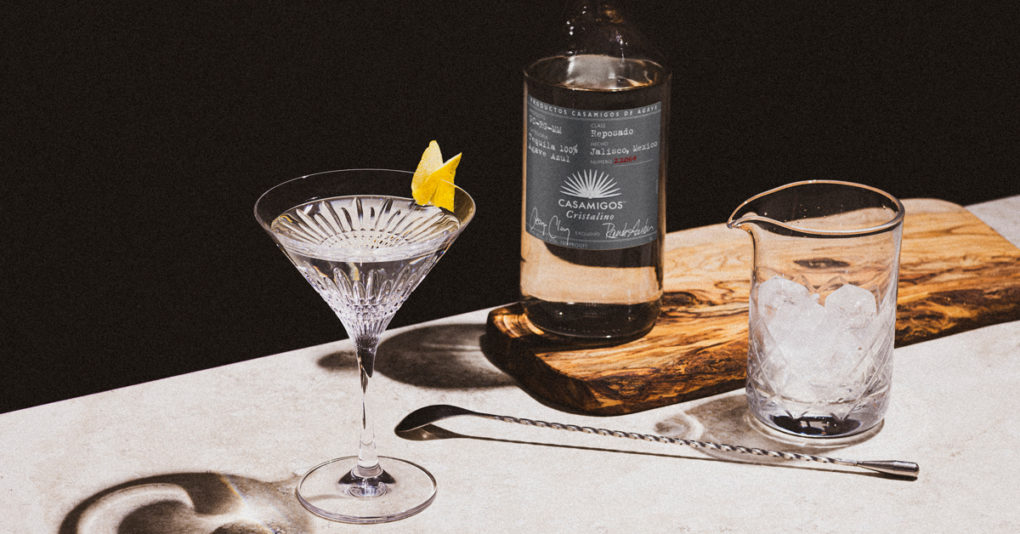
 Rumors that have long-circled major tequila companies – that their 100% tequila is not really tequila – have finally made their way from the cantina to the American court system.
A class-action lawsuit filed last week in the San Francisco division of the Northern California U.S. District Court offers lab results as evidence that Diageo’s tequila brands, Casamigos and Don Julio, contain adulterated tequila. The case marks the third in a series of class-action lawsuits accusing the spirits giant of false advertising to more serious fraud and corruption charges.
So what does the scrutiny mean for Diageo and the wider spirits industry?
Tequila’s Reputation At Stake?
The most recent case alleges that Diageo, with the help of the Tequila Regulatory Council (CRT) – the body that regulates the tequila industry – is engaging in “fraudulent scheming” and “racketeering,” under the Racketeer Influenced and Corrupt Organizations Act (RICO).
That’s the same federal law Rudy Giuliani popularized as a mob-busting U.S. attorney. If the CRT is proven to have conspired with major tequila producers to deceive the public into paying a premium for fake tequila, that would be a significant scandal and a blow to the category’s reputation – but it’s going to be tough to prove.
“To prove a RICO case is going to be a pretty high standard,” said Chicago-based liquor lawyer Sean O’Leary. The plaintiffs’ lawyers will basically “need to show through a lot of evidence that there’s a conspiracy between the two to defraud citizens,” he added.
What will be key to watch is if the plaintiffs’ lawyers can get the multiple cases through Diageo’s motion to dismiss, at which point Diageo will likely settle, said O’Leary. If the case does get to that point, it’s likely more class-action lawyers will smell blood in the water – or in this case, cane sugar in other tequila brands – and look for other consumers who claim to be tricked into buying falsely advertised agave products.
Diageo has, so far, only responded to the first lawsuit filed in May by two consumers in New York, accusing the brands of false marketing.
“These claims are without factual or legal merit,” said a Diageo spokesperson in a statement. “The complaint fails to allege a single fact that comes close to supporting the baseless claim that Casamigos and Don Julio Tequilas are not 100% agave.”
Diageo will likely stay on message, but this isn’t just a legal battle, argues Robbie Vorhaus, a crisis and reputation expert. “It’s a test of whether brand authenticity extends beyond mere marketing,” he said.
The Truth Will Set You Free?
For a company like Diageo, the best response is the truth, said Vorhaus. But the central question for Diageo is whether their truth aligns with the scientific evidence that the plaintiffs have presented.
Diageo’s playbook will likely continue to be categorical denial, “utilizing a regulatory body’s stamp of approval as a shield,” added Vorhaus.
For Diageo, “this is the critical moment to avoid a crisis going to waste,” said Vorhaus. That could mean unprecedented access to their distilleries, a new campaign focusing on their commitment to tradition, or even funding a public, third-party audit of their supply chain.
“The goal is to transition from a defensive to an offensive posture that reinforces the brand’s value proposition,” said Vorhaus. But of course, if the allegations do prove to be true, for a luxury brand built on the promise of purity, getting caught in a deception is a potentially catastrophic blow unless it can credibly regain consumer trust.
The lawsuits also signal a larger question on the horizon: are agave spirits the harbingers of transparency in spirits? So far, the push for additive-free tequila hasn’t applied pressure to U.S. spirits industries, such as whiskey. New TTB labeling is a long way off, if it does even require ingredient listings. The Trump administration’s Make America Healthy Again (MAHA) initiative, which has targeted artificial ingredients, dyes and other food additives, has also not made a big foray into bev-alc yet.
As of now, other major tequila brands are seizing the moment, signaling that the transparency conversation may start making waves beyond agave geeks or better-for-you-minded tequila drinkers.
The lawsuits follow a few years of controversy over the use of additive-free, a label tequila brands have been using to distinguish themselves from brands that use the 1% allowed ingredients in 100% tequila, such as potent sugary syrups and artificial colors. Additive-free advocates have butt heads in recent years with the CRT, culminating with the CRT denouncing the use of additive-free language.
The body even temporarily revoked Bacardi-owned Patrón’s export certificate in response to an additive-free ad campaign the brand debuted earlier this year. Last week, Patrón launched a ‘Censored Truth’ ad campaign featuring redacted visuals and bleeped-out language that emphasize its purity of ingredients – clearly doubling down on the issue as its competitors face controversy.
“At PATRÓN, transparency is at the heart of everything we do,” said Roberto Ramirez-Laverde, global senior vice president of Patrón Tequila in a press release about the campaign. “Our tequila is made with just three ingredients, and we think people deserve to know exactly what goes into their drink.”