

“Flavored alcohol” across categories has become a lonely bright spot for the bev-alc industry, which is finding itself particularly pessimistic in 2025, according to the latest monthly report from Bump Williams of Bump Williams Consulting (BWC).
Now past the midyear mark, “it looks like a long shot to post anything positive for the industry in 2026,” Williams wrote. However, what has been “on fire” is “flavored alcohol.”
“Flavored alcohol” – referred to as progressive adult beverages (PAB) by market research firm NIQ – includes flavored malt beverages (FMBs), hard seltzer, hard cider and spirits- and wine-based ready-to-drink (RTD) and ready-to-serve (RTS) cocktails, according to BWC’s definition.
The category has recorded $7.3 billion in sales year-to-date (YTD), marking a 2.8% increase YTD, Williams shared. Flavored alcohol now accounts for 13% share of total bev-alc dollar sales this year, a 0.7 percent point increase year-over-year (YoY).
However, growth hasn’t been universal across all flavored alcohol. When you extract out “flavored beer” – a.k.a. FMBs, hard seltzer and hard cider – those three segments have seen a 4% drop in dollar sales YTD, outpacing declines for “traditional beer” (-3%).
Spirit RTDs Continue To Climb, Even As Major Brands Dip
Fifteen flavored alcohol brand families make up 66.5% share of the category’s dollar sales YTD, led by Mark Anthony Brands’ White Claw Hard Seltzer ($1.2 billion, +1% YTD). The next three largest brand families are all in the red:
- Boston Beer’s Twisted Tea (-3.3%, to $756.8 million);
- High Noon (-3.5%, to $413.7 million);
- And Mark Anthony’s Mike’s Hard Lemonade (-8.8%, to $410 million).
Note, listed dollar sales and rankings are based exclusively on offerings that are included in BWC’s definition of flavored alcohol, and do not include extensions such as non-alcoholic (NA) or bottled spirits.
Other top 15 flavored alcohol brands families in decline YTD include No. 7 Boston Beer’s Truly Hard Seltzer (-18%, to $312.7 million) and No. 15 FIFCO-owned Seagram’s Escapes (-17.2%, to $90.6 million).
Meanwhile, the rest of the top 15 – primarily spirits- and wine-based offerings – are in the black, with significant gains recorded by:
- No. 13 Stateside’s Surfside (+205.4%, to $109.8 million);
- No. 6 Sazerac-owned BuzzBallz (+72.1%, to $378.1 million);
- No. 9 BeatBox (+42.1%, to $190.2 million);
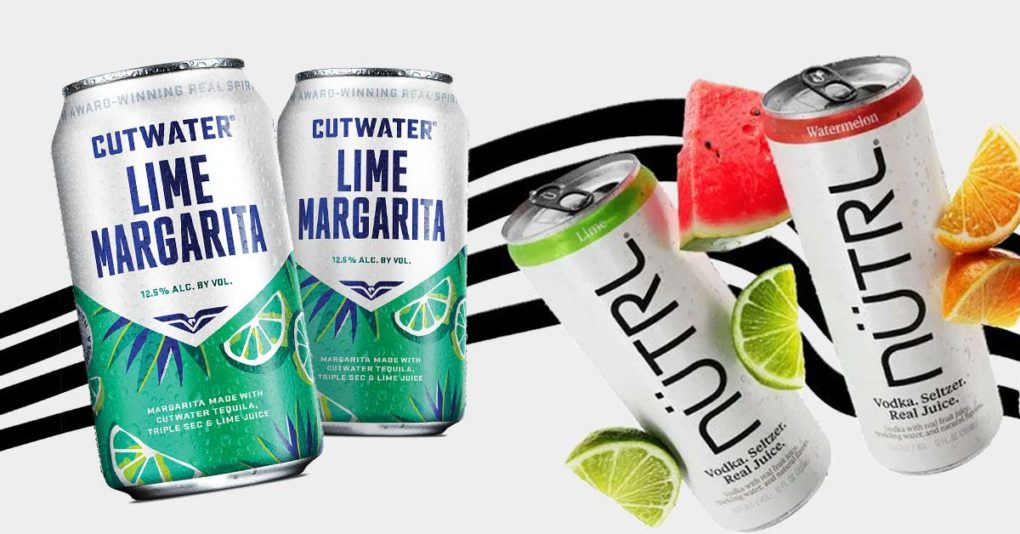
- No. 10 Anheuser-Busch InBev’s (A-B) Cutwater (+23.8%, to $162.7 million);
- And No. 12 Geloso Beverage’s Clubtails (+13.1%, to $110.9 million).
Other top brand families up YTD include:
- No. 5 Diageo’s Smirnoff (+2.9%, to $384.4 million);
- No. 8 Mark Anthony Brands’ Cayman Jack (+7%, to $193.2 million);
- No. 11 Phusion Project’s Four Loko (+1.1%, to $118.8 million);
- And No. 14 Boston Beer’s Angry Orchard Hard Cider (+1.2%, to $106.6 million).
“While the majority of beverage-alcohol remains a ‘traditional’ business full of legacy leaders and classic styles, a lot of those same brands are now being challenged for space (shelf and floor), visibility, awareness and share of mind by this diverse group of flavor pioneers and innovators,” Williams wrote.
Looking at spirit and wine offerings, total RTD dollar sales have reached $1.9 billion YTD through July 5 (+23%), according to the report.
“The continued growth of spirits RTD in NIQ data is particularly notable given that these products are available in only 40–50% of stores compared to their malt-based counterparts due to regulatory limitations on distribution,” Williams added.
RTD has achieved success despite its leading brand, Gallo’s High Noon, now starting to experience a YoY decline in sales – which speaks to the power of the depth and ongoing relevance within other leaders, added Williams.
Vodka Leads; High ABV Is A Future Battleground
Digging more into RTDs, vodka still leads, making up just under half of total RTD dollar sales, followed by wine (23.5%) and tequila (14.2%).
Looking deeper within the vodka RTD world, the category is further divided into seltzer (48%), juice (17%), tea (14.5%), and lemonade (10%). The latter categories have each gained share, while seltzer experienced a -16 point share decrease versus the prior year.
That shift away from seltzer styles could point to another trend: RTD products are driving the premiumization of flavored alcohol. While malt-based hard tea (-5%) and hard lemonade (-10%) are experiencing sales declines, spirits RTD tea (+157%) and lemonade (+104%), as well as wine RTD tea (+21.7%) and lemonade (+51%), are seeing significant growth in sales YTD versus a year ago.
“This swing in momentum certainly suggests a shift in consumer preferences, perhaps not all, but enough to impact momentum of areas that had previously been exhibiting steady year-over-year growth,” wrote Williams.
Another trend? The high ABV (8% ABV and above) carve-outs of FMB, seltzer, cider and RTD have all shown collective growth YTD, with their low ABV counterparts in most cases falling on the opposite side of break-even.
“While the majority of sales for most of these flavored alcohol subsets still lie within the low ABV realm (wine RTDs excluded), the high ABV landscape has managed to garner a notable share of dollar sales while clearly continuing to pad those stats based on recent trends,” wrote Williams.
From a manufacturer perspective, Mark Anthony leads in high-ABV vendors, with a 22% share while Sazerac, Beatbox, and Boston Beer stand out as the share winners. BuzzBallz (+63%) has surpassed Mike’s to become the leading high ABV brand family. Additionally, RTD brand families such as Beatbox, Cutwater, Monaco, and Big Sipz continue to grow rapidly, “and are positioning the high ABV segment as a key battleground in flavored alcohol going forward.”