

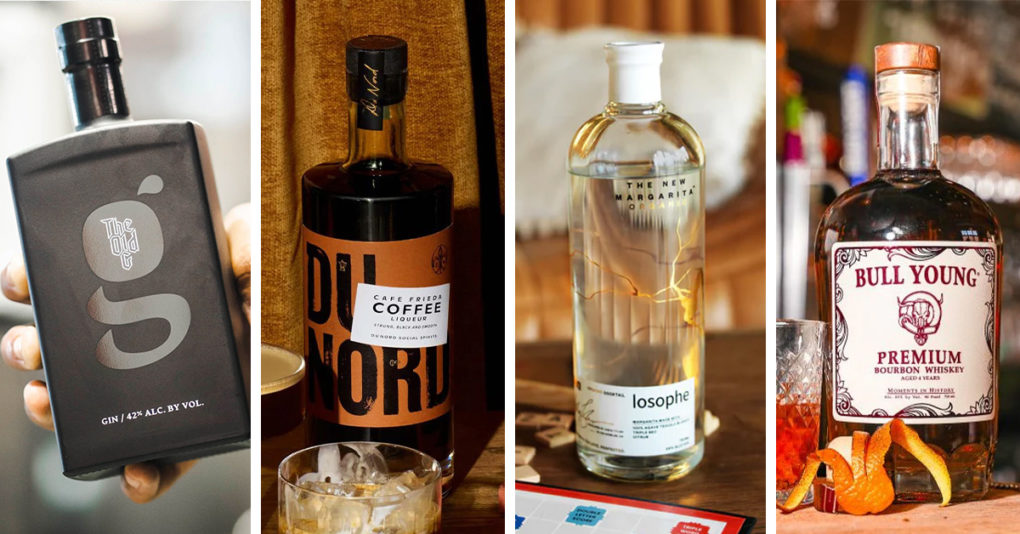
 Like many people cooped up during the pandemic, Washington, D.C. resident Charles Everett spent much of his time on lockdown scrolling social media and building out his bar. But in the case of these quarantine hobbies, Everett’s quest to collect Black-owned spirits and share them on social media has turned into something bigger: the first bev-alc e-commerce site entirely devoted to Black-owned products.
Urfriendcharles.com, a web address derived from Everett’s social media handles, launched last month boasting the largest collection of Black-owned spirits. The initiative to build a site featuring Black-owned products came after Everett began posting about little-known Black-founder led spirits he encountered at local liquor stores. He began expanding his search during the pandemic, growing his Instagram and TikTok audience to over 100,000 combined followers. Over the years, the top question in his direct messages was where followers could buy the products.
Equipped with his self-proclaimed “tech nerdom,” Everett built out a website and formed partnership with retailers, who can ship the spirits listed on the site. As of now he’s able to ship over 100 spirits to 44 states.
“It was complicated but it’s also been rewarding, because no one else is trying to get rid of this complication for this one particular category,” he said.
Other directories, such as Diverse Powered Brands, provide B2B services for companies looking to connect with diverse founders, and some direct-to-consumer e-commerce sites such as ReserveBar, have created filters for BIPOC and women-owned brands. Pronghorn, an investment firm cultivating the next generation of Black entrepreneurs and executives in the spirits industry, has its own portfolio that serves as a directory. But a hub to buy Black-owned brands hasn’t popped up until now.
That may be a missed opportunity: Black Americans represent 12% of alcohol consumers across categories, according to Pronghorn. The site comes following consumer boycotts of retailers scaling back DEI initiatives, although major bev-alc retailers have largely avoided the topic.
Everett has built shopping filters for Black women, Caribbean, LGBTQ+, veteran-owned spirits, as well as spirits owned by historically Black college and fraternity alumni. There are a few other differentiating factors he’s focused on as well.
“One thing I’m doing is helping out a lot of the small brands. If you go to the site, there’s not a lot of celebrity brands on there. I really wanted to be intentional about who I’m featuring,” he said.
That means shoppers can find well known brands such as Uncle Nearest or Ten to One Rum, as well as bottles such as Bull Young Bourbon, the first bourbon launched by an African-American chef or Black Momma Vodka, made by the first African-American female master distiller.
Everett is also building up the website’s wine and non-alc offerings, with additional drinking accessories owned by Black entrepreneurs on the way. He’s working on a directory of Black-owned liquor stores and breweries as well. Also in the works: a chatbot that can offer recommendations based on a customer’s preference for well-known brands. In the near future, Everett is hoping to launch a B2B component for on-premise buyers searching for Black-owned products and aiming to pair up with instant delivery partners. With only one month live, he’s working on social media and marketing partnerships to promote sales on the site.
He’s also likely to continue cultivating some interesting data for brands.
“When I first started, I thought Gen Z or younger millennials would grab on,” he said. “But it was actually older millennials. Gen X are my biggest fans, and they’re really the folks that can vote with their dollar and afford to try premium spirits or afford trying different things, and they’re not going to be swayed just because Kylie Jenner or George Clooney said to buy something – or maybe they did that before and they got tired of it.”
That tracks with broader online purchasers of alcohol in the U.S., who are skewed towards men, millennials, and those with higher incomes and people with broader alcohol repertoires, according to data firm IWSR.
In the IWSR’s latest report, e-commerce alcohol sales in 18 markets are expected to surpass $36 billion by 2028, with agave spirits and whisky to drive growth. The number of shoppers in the U.S. buying alcohol online has also risen by four percentage points, based on an IWSR consumer survey during the third quarter of 2024. American whiskey is expected to drive a significant share of predicted growth, led by high-end products such as bourbon, rye and American single malts.