Search across the BevNET CPG Media network including BevNET, Nosh, Brewbound, Taste Radio, Nombase and CPG Jobs.

New Beverage Showdown Finals - Round I
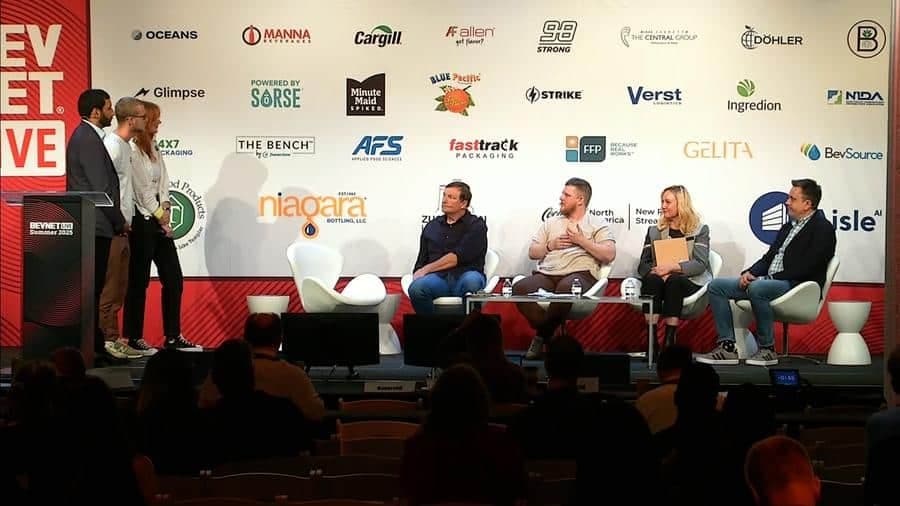
Meet the Esteemed Judges:
Dan White: Chief of New Revenue Streams, Coca-Cola Company, N.A.
Charlie New: Global Category Merchant, Whole Foods
Paula Grant: Founder, Suite9c
John Craven: Founder & CEO, BevNET
Featured Brands in Round 1:
Como No (Michelle Ivey, CEO & Gilberto Marquez, Co-Founder): A clean energy, caffeinated sparkling water aiming to disrupt the on-premise market.
HY.Q (Rick Mochulsky, Founder & CEO): A natural, modern sports drink focused on intentional hydration for individual athletes.
OOSO Sparkling Tea (Sophia Racciatti, Owner & Ollie Spring, Co-Founder): An adult non-alcoholic sparkling tea designed for Gen Z and millennials, offering health benefits and sophisticated flavors.
Discover the next big thing in beverages as these brands face tough questions and valuable feedback from industry leaders. Who will advance in the competition?
Transcript
Note: Transcripts are automatically generated and may contain inaccuracies and spelling errors.
Ray Latif [00:19] Good morning, BevNet live audience here and watching the live stream, we meet again. My name is Ray Latif. I'm the editor, producer and host of BevNet's Taste Radio podcast and the host of the new Beverage Showdown. BevNet Live's signature beverage brand competition. We've reached the final round of the showdown, which is sponsored by the new revenue streams unit of the Coca-Cola Company, North America, and gives early-stage and promising brands the opportunity to present their business plans and products to a panel of expert judges and the BevNet Live audience. The winner of the two-day competition will receive an industry awareness package. $10,000 and join a short list of brands that have triumphed in the showdown. You know these names Poppy, Health Aid, Malk, Can, Hopllark among many more. Out of the 12 semi-finalists who presented yesterday, six have made it to the final round. Let's talk about the rules for the final round. Each of the six brands will have 4 minutes to present and receive 5 minutes of immediate feedback from the judging panel. The final round is split up into a morning session and an afternoon session, with 3 brands participating in each. After all the brands have presented, the judges will convene and will announce the winner here on stage at 12:45 p.m. Eastern time. Just to note, there's no audience voting in this round. Let's meet our panel of esteemed judges, beginning with Dan White, who is the chief of new revenue streams at the Coca-Cola Company in North America. Dan drives new business models and opportunities, beginning with category expansion and the evolving access to beverages across the consumer journey. This includes the leadership of Coke's efforts with brands and beverage alcohol, enhanced hydration. Premium sparkling waters, and home dispensing systems. We are very lucky to have Dan White with us. Charlie New, another person we're very lucky to have with us, he's the global category merchant for Whole Foods. He's been with Whole Foods for 12 years, having started with the company from an entry-level position. He's on the exclusive brands team for over 5 years, developing private label products and managing the P&L for many categories. He became the senior category manager for refrigerated beverages in 2021. which includes juice, refrigerated coffee, and functional beverages. Thanks again for being with us, Charlie. Paula Grant. Paula is the founder of Suite9c. She's a beverage designer and entrepreneur that has helped create multiple billion-dollar beverage brands like Fuse, Nas, Core Water, and body, body armor. She owns a full-service design studio in SoHo that partners with a select group of emerging and established. Brands using great design thinking and creative talent to create success stories. Thanks so much for being with us, Paula. And of course John Craven, our founder and CEO of BevNet, a widely recognized authority in the beverage industry. He's frequently cited in mainstream media. Everyone knows who John is. BevNet Craven is how you know him on Instagram. I am really excited for this judging panel, highly experienced, really motivated, and I know they're going to give some great feedback and advice to our entrepreneurs today. Let's get things started with Michelle Ivey and Gilbert, Gilberto Marquez, or with Como No, come on up. All right, microphone, microphone, clicker. Who wants it? Thank you and please keep an eye on your timer. Thank you. Hello everybody. Como No is a clean energy beverage in the form of a caffeinated sparkling water. It's 100 mg of organic caffeine, 100 mg of L-theanine for focus, zero calories, zero sugar, zero synthetic bullshit. With that, I'd like to introduce you to the 2024 BevNet Spirit Leader of the Year and one of my co-founders, Gilberto Marquez, who will tell you our story. Gilberto Marquez. One of the los Fundaddores the Como No boy, uh, these liquor conventions are never this early, so I'm gonna try to power through this is the our team for the past 15 years built illegal mezcal. From just an idea to one of the most important mezcals. We built the mezcal category. Show by show, bar by bar, building real community. And that same team is now behind Como No. In the industry we saw a real void in a product that fit our lifestyle. No one was coming up with it. We wanted something. Mature, elegant, beautiful, but also that gave us the ability to, I, I learned this new term called zebra striping. Uh, is that, yeah, so, uh, essentially having a cocktail and then maybe a non-alcoholic, so we didn't really see anything out there that felt mature enough to drink at a bar, and so we came up with it ourselves. Absolutely. And how about our flavors? Yeah, so we have pineapple tamarindo, prickly pear lime, and mango con chile. Thank you, and that is our story. We do all in this room understand what the current consumer demands are in beverage, and as Gilbert told you, our answer to all of those is Como No. We will be going to market through the on-premise. We will be using our strengths as a team that built Illegal Mezcal to do it rather than fighting for space on the shelf, rather than fighting to merchandise alongside everyone else, rather than being just another brand behind the fridge door. We will be putting this brand in the hand of every bartender in New York City. We will be going and replacing that Red Bull can that for some reason still sits on that throne behind the bar. No. Has gone and done that yet. We are the team that can do it. We know we can. The CGA has recently released their 2025 bartender Global Report. 95% of bartenders responded that when they make a recommendation to a customer, they always or most always take that recommendation. I don't know of a field team of samplers that have that same success rate, so the bartenders of New York City will be our field team. They will be making the recommendation of Como No to every customer that comes into their bar. Thank you. Yeah, uh, one of the things that I've, yeah, one of the things that I've, I've noticed here, we still have 45 seconds. One of the things that I noticed was, uh, when we're talking about non-elk. A lot of people are missing the fact that you can mix this as well, uh, with, uh, uh, uh, mango con chile. uh, some of the most popular drinks out there or actually the most popular drink in the world some people may know is the margarita, also the ranch water, the espresso martini. We have, uh, natural caffeine and so very, very mixable. Yes, absolutely, and I, as most people know, vodka Red Bull, it was very popular back in the day it's been replaced with the espresso martini, and now you can just have a Como No. Gracias. All right, you guys can stick up here in case the judges have some questions for you and slide up so the cameras can see you. There we go. Uh, Dan Gilberto and Michelle outlined a youth case, an opportunity for Como No, as a caffeinated sparkling water, perhaps in bars, restaurants, nightclubs. What do you think about that opportunity? Yeah, I mean this one's really fun to start with too, so thanks a lot for being the first and early on this caffeinated water, and I think it's your story is more, I mean it's caffeinated water, but this is a badge brand to behold, you know, at Coca-Cola we've got Tobochico obviously and we talk about Tobochico that it hangs effortlessly with alcohol, and this is a brand that hangs effortlessly with alcohol, and I think you've got a clear You know, kind of, um, challenger mentality, particularly against, um, liquid death in, um, in the space, and so I think you got a clear road to, to success on this one. I don't really have any questions on it. I really love it. All right, good stuff, Charlie, uh, you know, in terms of the taste, the flavor, you tasted a couple of products in the sampling room. What are your thoughts?
Speaker 2 [08:54] Yeah, I, I mean, I'd start out by saying I think your branding is really beautiful and captivating and, in a, a sea of beverages would definitely stand out. I, I'm curious. From a space standpoint, when you're thinking about actual retail where you imagine the, the cans, do you, do you imagine them in the non-alk set or do you imagine them sort of sitting adjacent to other, um, sort of call it Energy-based caffeine-based beverages.
Ray Latif [09:32] So in, in retail we would prefer to be in the water door because we think we would stand out most there.
Speaker 2 [09:38] OK, yeah, I think, you know, the reason that came to my mind first when I was. Reviewing and tasting is Defining this space is going to help define your strategy pretty thoroughly and it's also going to define who your direct competition is. So if you're in the space with, with the other brands that are caffeinated waters, you're, you're really gonna wanna make sure to have a point of differentiation, but um I thought overall it's a beautiful brand, beautiful taste, um, really enjoyed it.
Ray Latif [10:18] Thank you. Yeah, let's stick with the brand, Paula, a distinct looking can, a black can. Um, what are your thoughts? I love the design. I think your go to market strategy is going to be really hard. I don't think you can rely on bartenders to do this. I tasted it in the back. I like we, we talk about alcohol alternatives having a complex flavor. They have to, and there was a slightly spicy one that I tasted which was excellent because you don't want it to be gluggable. Like a Red Bull, um, but you have a lot of work to do on the education. I actually like the fact that you were brought up on the stage makes me think, oh, this is, this is a brand that has to first kill it socially. On social media you need to, we couldn't agree more, right? Like we agree with that, the education. If I see this in the store, I'm passing it by. I'm not, I'm not picking that up, but there's too much of a story to tell, right? And you can't rely on bartenders either. So I think you need to get really good influencers, and this is kind of like one of those brands that you launch on social media with the right influencers to get it out and, and, and make it covetable in that respect and there's a poll. Uh, for the, for 100%, yeah, couldn't agree more, and that is our history with our brand Ileal Mezcal. We built the category itself of Mezcal. We're very well known for that globally, and that is why we believe that we have the skill set to establish this category as well. That's great, John. You get the very short last word on Como No.
Speaker 2 [12:00] Yeah, I mean, what I like about this ultimately is that it's like familiar but different and unique, and I think in general like. The brands that ultimately really scale, you know, they're not, you're not pitching us something like radically different. So I think there's a lot of good stuff here, and I, I like that you're thinking about a different strategy for go to market. Just feels like, you know, a lot of startup brands needs to be Uh, fine tuned a little bit, so, but I definitely like what I saw.
Ray Latif [12:30] Thank you. Good. All right, well done. Thank you. Thank you. Thanks. All right, great start to the final round. Let's keep it going with Rick Mochulsky from HY.Q. Come on up. Good to see you again. Hi there, Mike. This time you got a clicker. Perfect. And please keep an eye on your timer.
Speaker 2 [12:53] You got it. Hello again. Good morning, Early BevNet crew. I'm Rick, the founder of HY.Q. Um, I wanted to give you guys a bit more information about me. I have built a career in beverage category management. I've worked for some of the most iconic brands out there. A few of them actually have been up on this stage, uh, in the past. I've spent my career studying beverage and the different categories, so you're probably thinking, why would you go start a sports drink, one of the most competitive categories out there. Among many reasons, um, you know, true to my nature, I wanted to start with some data. This is fascinating to me. So, of all the major beverage categories out there, there's not one, or, excuse me, there's, Gatorade has the most share of sports drinks versus any other category's uh leading brand. All these other categories have optionality, they got flavors, they have different pack sizes, brands up and down the value chain, and sports drinks primarily have been dominated by one brand and two others. To me, to me, we have outgrown the aid era. Um, look, the legacy brands are easy to pick on, especially from an ingredient perspective, but even the new entrants, I find are providing just an array of benefits and ingredients that pull the product away from its core function, which is hydration. That's why I started HY.Q. HY.Q is an honest and intentional approach to hydration using quality ingredients and our sweat replacement blend. Our swab replacement blend is exactly what it sounds like. The ratio of electrolytes in a can of HY.Q is meant to mirror the ratio of electrolytes that you would sweat out, but most importantly, without sacrificing taste. Taste is extremely important for this category. We've got two killer flavors cool citrus and berry blend. Uh, when I was testing this product, there was a hill next to my house. I would run it 5 times, extremely poorly, come back and sample the product, and taste was the first thing I thought of before benefit, because ultimately, the benefit of IQ is just the benefit of being hydrated. We've built this brand around the mantra, do something that makes you sweat, and that's pretty wide, so we want to narrow it in a bit more. We want to focus on activities and sports that people actually do versus what they see on TV. We ran a quick study, um, and we wanted to see how people were exercising, and what we found is most people exercise as an individual and less as a team, and that's where I see the big disconnect with today's sports drink marketing playbook and where the market's actually at. We've won champion sports like, or sports and activities like running and biking, climbing, skateboarding, uh, surfing, training, you name it. We actually just signed our first, uh, big wave surfer, professional big wave surfer athlete. He's gonna be the first athlete in the HaiQ. He goes over to Portugal every winter to surf the biggest waves in the world, and that's the different kind of athlete that Haiki will get behind. HY.Q is 30 calories, 5 g of sugar, 385 mg of electrolytes, nothing artificial, no dyes, no colors, none of that. We come in 12 ounce standard cans which are better for the environment, and we do our part by giving 1% to the planet. We retail for 279. HY.Q is the natural modern sports drink of the future, and our goal with HY.Q is to challenge the category and not the consumer. Thank you.
Ray Latif [16:36] Well done. All right, Charlie, let's start with you. Uh, challenge the category, not the consumer. Uh, what do you think about IQ's opportunity to disrupt sports drinks?
Speaker 2 [16:47] Yeah, I, I mean, I, I certainly think that this is a space that's, you know, uh, ready for lots of disruption, and I'm, I'm really curious, um, channel strategy, what you're thinking. Yep, well, I I want to start with where my core person would be. And so, um, you kind of mentioned it on Como No, but it's like, start with the people who will be, uh, into the brand and will overindex through the roof. And to me that's the natural channel. The branding on it is bold. It's kind of with the times, but it is a natural product. And so for me it's, it's, how do we get involved with the channel? Well, we'll have strong velocities and index well, and we can build more of a groundswell for future retail. OK, cool, yeah. I mean, it makes it makes sense to start in the natural channel. The first thing that came up for me is. The branding is, is really enticing and definitely, um, it pulls, it pulls you in. It's, it's, it's a quick read. I know what you're trying to tell me, um. And also there's a lot of people trying to chip away at this right now in the in the natural channel, so your biggest play is gonna figure out. How do I differentiate from the other brands that are trying to do the same thing right now? Um, there's a lot of noise in this space. There's some people having quite a bit of success, so. That's, you know, that's my advice at this time. Awesome.
Ray Latif [18:25] Thank you. Yeah, all your thoughts on the color scheme, the copy on the front of the can, the name Hai you. OK, so I actually have been studying your brand because you've been highlighted on the dye line for really great design, and I think what's really interesting, I've always come at this in my own, uh, creation of brands, um. You can make really great design and totally fail, and I think that hydration, like what you're talking about in a can is such a disconnect the structure that you've chosen chosen, and you can't see the liquid and. There, there, it's such a hurdle like we talk about category cues and what people like see as far as a package and how they interpret it and what it means to them and all of I, I unders I understand getting in a can. You've got great design. I don't see this actually communicating anything that you're trying to communicate in this actual design so that happens a lot where you do like great package design visually, um. But it doesn't win. I, I, you know, like there's a, there's a real disconnect of, uh, good design versus design that sells sometimes, and I think you need to rethink that at some point. OK, that's great. Yeah, that's, that's right, John. What's inside the can is really important too. What do you think of the flavor of the products?
Speaker 2 [19:59] Yeah, I mean, I think they. Are very palatable, like, you know, familiar, uh, you know, tastes like a sports drink. But it also, again, I think it, it has its own differentiation and, you know, I think the fact that you, I don't know, I disagree with Paula a little bit and that like you have no coloring, so like, you know, how do you compete with the blue liquid and green liquid that's out there. You do it with, you know, the color of the can instead and kind of hide that fact. um, you know, I think there's something like, I don't know, again, just. Uh, this feels like a modern take, you know, that you're not just trying to be like slightly more modern, I don't know, body armor, Powerade, Gatorade, whatever. So I don't know, I think it's really interesting. Thank you. And yeah, the color of the can was intentional to make sure we're communicating flavor versus having a plastic that's clear, so you're spot on.
Ray Latif [20:51] Dan, Coca-Cola knows a few things about investing in disruptive, uh, sports drinks brands. Uh, what do you think of the potential for high you? Yeah, I, I think it, um, I think what we're not seeing is, um, What I see is all head, no heart. There's, I'm trying to figure out what the edge of the brand is, right? And so I see that all the components, all the rational components of building this out are there, and then how they're communicated and then how they're brought to life, I think, is, is probably in a different presentation, right? I can see it some on the on on Instagram. So I just think that the storytelling around this is like what type of athlete, what are you trying to do, so you got to the individual athlete and then you got to individual athletes that are not in, they're sort of in lifetime sports versus competitive sport. So I think there's there's a there's a wedge there of the type of person you're going after and I would just say from a from a founder perspective it's like for Sure you've built out all the functional, all the functional components, and they feel like you've built them up like this and then you're kind of waiting for how it's going to come to life beyond that and IQ I think works really well, but then you have to figure out how you're going to transcend that into like, OK, so capture capture me as a brand, a brand guy and what's it going to, what's it going to. Is that going to come across to the consumer? So I think you've got the rational consumer, the rational story, of course you're here to tell the rational story, but I think you want to go back and make sure that you're telling that kind of lifestyle story that you're trying to attract and you see that for sure out there in some of your social media. So thanks for, you know, sharing those with us. Absolutely, yeah, thank you. All right, great feedback. Very well done, Rick. Thank you. Thank you. All right, our final presenters for part one of the final round of the New Beverid Showdown, Olly Spring and Sophia Riccidi, the founders of Oso. Come on up. Hello again. Good to see you. Holly, great to see you. Either one of those microphones. Well, you need both actually. There's one. Here's your clicker. Please keep an eye on your timer.
Speaker 3 [22:53] Thank you. Hello. 61% of Gen Z and nearly half of millennials are looking to drink less alcohol this year, with two main reasons. They want to support their physical and mental health. I'm Sophia. I've spent over eight years in the wine and spirits industry. I have a background in go to market strategy, sales, and marketing. And I'm Ollie. I started my career in investment banking before most recently getting an MBA from NYU Stern. And together we're the Brooklyn-based couple and founders of Oso Sparkling Tea. When we were cutting back on drinking, we kept running into the same problem. We didn't want soda. We didn't want seltzer. We wanted something that really matched that vibe and complexity of a delicious, happy hour beverage just without the alcohol. So in summer of 24, we launched Uso Sparkling tea, a Brooklyn-based adult non-alcoholic, sparkling tea inspired by natural wine and made for the Gen Z and millennials looking to redefine how and what it means to drink. Uso has already landed in 200 stores, bars, and restaurants nationwide. We won Best New Product and Best Packaging Design and Bevnet's 2024 awards. The only other brands to win two awards were Ollipop and Poppy. We've had 3 headline goals to get here. We wanted to create a beautiful, elevated, and craveable tea-based liquid. We wanted to provide a net positive health benefit and design a beautiful brand. For the liquid, we have two flavors a bright, refreshing, and citrusy green tea mint lime and a bold, juicy, lingering hibiscus ginger currant. A big part of our strategy is controlling what's in our control, and the non-alcoholic movement is really a behavior shift for consumers. So we chose tea and approachable flavors to lower that barrier to entry. Another reason we chose tea is nearly half of Gen Z, our target consumer, has never tried alcohol. They're not looking for alcohol flavors or 1 to 1 replacements. They're just looking for something complex, delicious, and elevated. For health, if drinking is a negative and not drinking brings you to zero, we wanted to go further. We combined organic teas with adaptogens and vitamins to give our consumers a net positive health benefit for their mental and physical wellness. With Oso, you don't just avoid the hangover, you actually feel better the next day. Both flavors have vitamin C and vitamin B complex. They're low in sugar and only sweetened with organic honey. Our green tea mint lime flavor is lightly caffeinated, and both flavors are rounded out with ashwagandha and L-theanine. Lastly, brand. Our brand has a huge job to do. We need to give people the confidence in a world where there's still a lot of social pressure around drinking. UU was inspired by the Bauhaus movements with a focus on simplicity, function, and authentic self-expression. We wanted to give Gen Z and millennials something they'd be proud to hold. We've been intentional with how and who we show up with. Through thoughtful marketing and distribution efforts, we're proud of where we've gone and deliberately looking where to go next. Some exciting news. We've smashed our year one revenue goals. Our highest velocities are in our home market of New York City and Brooklyn. And within one year of proving our branding concept, we've already launched with a major New York City distributor in our home market of New York City as well as Long Island. At Uso we like to say that we're steeped in the perfect blend of tradition and innovation, and whether you're living a non-alcoholic lifestyle or simply just taking a break, OOSO allows you to be unapologetically yourself. Thank
Ray Latif [26:48] you.
Speaker 3 [26:48] Thank you.
Ray Latif [26:54] Hold on. Just slide over all you, you can hang on to that in case the judges't yeah, see where that, yeah, you're not Ray, but. You can stand on the Ray X, uh, Paula, I think this is one of the first products you reach for on the sampling table. What are your thoughts on the vaccine? I actually bought this the other day myself, and yes, um, and I have to congratulate you on a couple of things that, um, everybody could take away because, uh. You, you say what the brand is right underneath the name, um, sparkling tea, and then it's green tea, mint and lime. It's, it's kind of like it's right out there for me. I understand what I'm buying. There's a lot of I mean the shelf is getting so complicated right now, right? Like it's, it's so hard to understand what you're buying sometimes, especially in the non-elk space, and I kind of like that you're saying that it's a non-elk without being a non-elk. It's almost like what what I was saying before, like a com non-elk has to be the complex flavor, so it's not gluggable, um, and you're, you're getting there in a very, um. Great design way. I love the little, little cans as well. I like the structure that you ended up picking, um, so yeah, love, love the brand. Congratulations. I think it's great. Yeah, John, obviously we're familiar with OOSO 2 awards, as they mentioned, um, but now you've heard a bit more about the market strategy, the business strategy. Do you have any questions, comments?
Speaker 2 [28:25] I mean, I think it's, it's really interesting just to hear, well, certainly that the brand's doing well too, but, um. No, I think I would sort of echo what Paula said. I think it's really I mean, there have been a lot of sparkling teas that have come and gone over the years, and they've always tried to like convince tea drinkers to add bubbles, which has been hard. But I think, you know, coming at it from this kind of non-alcoholic inspired by natural wine angle makes it a lot more interesting and you know, I think it is a product that I don't know. I think of it for me personally like a product I want to like drink with my lunch more than maybe replace alcohol, and that's totally fine, you know, there's nothing about it that says I can't do that, and the liquid is really good, so definitely compliment you on that.
Speaker 3 [29:14] Thank you. And some of our best accounts are on premise, like casual elevated lunch spots, so other people agree with you and breweries.
Ray Latif [29:22] Nice, yeah. Uh, Dan, uh, what do you think about that approach is, uh, a non-alcoholic beverage as opposed to one, I know, again, people are drinking this for lunch as well, but that particular focus for Russo, yeah, I mean, I think the, the, the first, um, couple of things, um, first, it's, it's a great story, and thank you guys for sharing it, and I think, um, that this is why we love to be here is to, to see the, um, the inspiration of new beverages brought by great founders, um, and I think that, um, I think this feels like, it feels like Brooklyn, right? It feels like Gen Z. And then the last piece that I would love to see is that it would be chosen often. And so I think that, you know, I think what happens sometimes is like you, you want it to be cho chosen often versus chosen ornately, right? And so then that piece of it is like where you get the availability behind it because you'll get great availability for it, it's a beautiful, you know, beautiful brand and, um, and great tasting product. I think it's a matter of thinking about where you then ultimately want to be, you know, for scale. So I think that's the piece that with sparkling tea that's always been a problem. It's like how do you get scale and how do you get people to choose it often and so the badginess of the brand is there for sure, but I think you've got to make sure you balance that with it doesn't get too ornate. Um, and you want to have people choose that often, so you know dialing up the taste of it, dialing up the differences of, of, you know, what sparkling tea can mean for, for consumers kind of in a natural, more healthy way, I think would be really important. But I think beautifully done. Thank you. Thank you for sharing. Oh, and the other thing is, you both, you both bring notes, and so you make me feel at home by writing notes up on the stage. So thank you. Yeah, well done, Charlie. You get the last word on OOSO. I'd love to hear your thoughts on the taste as well.
Speaker 2 [31:05] Yeah, yeah, um. Tastes phenomenal. Uh, I wanna, uh, you know, with, with limited time, I wanna compliment you on your restraint and editing. Uh, far, far too many beverages have not succeeded because they tried to be a little bit of everything for everyone and therefore they didn't really have a core brand identity and I think that you've done a really excellent job. Of telling a story very quickly and offering us something that um that is enticing and pulls you in and we know, we know what we're in for, and that, that actually goes a really long way, so I'm excited to see it.
Ray Latif [31:50] Yeah, thank you. All right, well done. Great feedback. Thank you so much. Well done. All right. Uh, we are gonna get back up on stage. We're done for the first part of this, uh, final round. We're gonna be back up on stage at 11 a.m. for round two of the finals, so you don't want to miss that.