Search across the BevNET CPG Media network including BevNET, Nosh, Brewbound, Taste Radio, Nombase and CPG Jobs.

BLK & Bold Coffee Founders Talk NBA Collaboration, Growing “Conscious Consumerism”
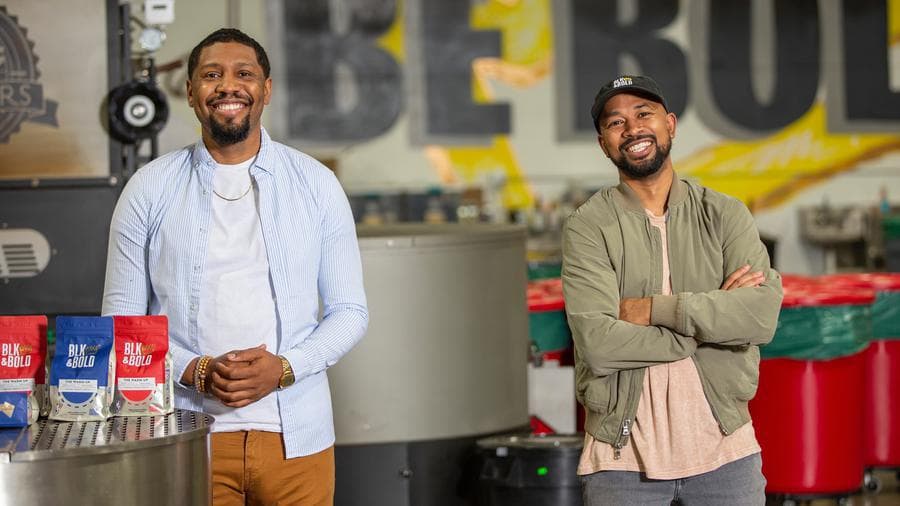
The collaboration is the first-ever licensing agreement between the NBA and a black-owned food or beverage brand, according to a press release. For every bag purchased, the NBA will match BLK & Bold’s contribution to charities through its “5% For Our Youth” program, which supports youth programming, workforce development and efforts to eradicate homelessness.
In this video, BevNET managing editor Martin Caballero spoke with BLK & Bold co-founders Rod Johnson and Pernell Cezar about the new partnership and product, discussed how brands can effectively incorporate a social impact mission into a CPG business, and shared their advice for coffee-obsessed NBA stars.
Transcript
Note: Transcripts are automatically generated and may contain inaccuracies and spelling errors.
Speaker 1 [00:09] All right, I'm here with Rod Johnson and Pernell Caesar, the co-founders of Black and Bold Coffee based in Des Moines, Iowa. Today, the company is announcing a multi-year agreement with the NBA which is actually the league's first licensing alliance with a black-owned food and beverage company for the release of a new blend called the Warm Up. For every bag purchased, the NBA will match Black and Bold's contribution to charities through its for our youth program, which supports youth programming, workforce development, and efforts to eradicate homelessness. Ron and Parnell, thanks so much for joining us today. I really appreciate it.
Speaker 2 [00:38] Thank you, thank you.
Speaker 1 [00:40] So guys, just tell me a little bit about the partnership with the NBA that launches today. You know, how did this come together and, you know, what does it mean? So,
Speaker 3 [00:48] uh, partnership has been in the works here for about 6 months now prior to actually launching our, our, uh, our first product. Um, as you mentioned, it's a multi-year agreement where, you know, we have a licensing arrangement for us to Better serve NBA fans with specialty coffee in ways that resonate with them as fans, but also from their everyday coffee needs. Us as a, as a specialty coffee roastery, you know, the value proposition we deliver on is understanding your, you know, conscious consumerism at its core from, you know, the coffee you drink every day, but also elevating that experience and meeting you where you are by helping you go even further. on the discovering your aha moment from your everyday ritual. And so being able to blend, you know, the fandom that comes with the NBA, Rod and I personally being fans of the NBA, lifelong fans of the NBA at that allows us to even further, uh, you know, align our passion and also bring more people into the fold around how we continue to super serve domestic youth in need.
Speaker 1 [01:55] So tell me a little bit about the warm-up itself. What kind of drinking experience should people expect from it and sort of how did you infuse that passion for NBA and basketball into development of this product?
Speaker 3 [02:06] Sure, I'll talk about the, the actual beans where I can talk a little bit more about the branding side and Mr. CMO, but you know, when we looked at, you know, how do we really intro this relationship with, um, again, the consumer base is a matter of we didn't want to hurry up and wait, but more so, you know, kick off things as an ode to what's to come. And so the warm up being synonymous, of course, with, with basketball, with sports in general, but also with how people start their day and the. The coffee plays and fueling you on a daily basis. And so between that and just, you know, really meeting people in the middle with a medium roast that's a little bit fruity but more approachable flavor notes with some caramel and a little bit of sweetness as well, you know, it's the perfect kind of middle of the spectrum for coffee, a place for people to start and ultimately kind of find themselves and also getting that mindset of getting their day start or whatever they have in front of them that day.
Speaker 2 [03:07] So to, to complement the, what's on the, on the inside of the bag, um, you know, a lot of that experience with the warm-up, um, happens with the packaging itself. So we have two bag experiences that, um, commemorate the respective conferences of the NBA, the Eastern Conference. Conference and the Western Conference. There are a few Easter eggs that, that you'll find as you, you know, make your way around the bag, but ultimately, um, you know, this partnership gives us an opportunity to, uh, as Pernell mentioned, merge our affinities for coffee and, and the National Basketball Association.
Speaker 1 [03:42] You know, it's funny, guys, you know, some of the NBA's biggest names over the past couple of years have professed their love for coffee very loudly and publicly. Uh, none more so than probably than Jimmy Butler of the Miami Heat, who's talked about opening a coffee shop or a roastery at some point in the future. You know, what advice would you have for Jimmy or any, uh, NBA player who wants to sort of make that leap into, uh, into the coffee world?
Speaker 3 [04:02] I would say product is hero. You know, you know, coffee still is a commodity and The more you can have people have their aha moments and fall in love with your product versus someone else's, not only because of the great taste, which can never be compromised, but also, um, the wine and the impact, it just makes it, you know, um, solidifies the role of that product, uh, in the lives of people, given how poor coffee is to people's everyday habits.
Speaker 2 [04:30] And I'll, I'll add to that, you know, as you know, coffee is, you know, the, the 2nd most consumed beverage behind water and just ahead of tea, um, I would recommend taking, you know, a, a, a consumer-first approach, you know, just kind of give a little bit of backstory on Parnell and I. Neither of us had any coffee or formal coffee experience, um, but we knew what we like, uh, and ultimately that, that shines bright in the products that we offer to, to our consumers today. Uh, we want to make sure that we enjoy it first before Um, you know, allowing other people to experience it as well. So I would definitely recommend, uh, you know, be very intentional around those flavor notes, you know, and use your own personal experience as a, as a litmus test.
Speaker 1 [05:15] And you know, you guys, uh, as we keep coming back to really the social impact that's really at the core of the company there, you know, um, so many things going on in the world today, so many issues. What are some of the things that you guys are focusing on or, or what are some of the areas that you'd like to sort of highlight or shine a light on, um, in terms of your, uh, you know, contributions to the, um, social impact program?
Speaker 2 [05:35] Sure. Um, so I'll jump in here and Pete, feel free to, uh, dovetail. Um, so you know, our for our youth, uh, initiative, um, is, is very, um, intentional and, and, and, and represents, um, our give back to various nonprofit organizations across America. Uh, these organizations are focused on, um, many. Issues that impact the very vulnerable demographic that we're speaking of and, and that's, you know, uh, underserved youth essentially. Um, you know, these organizations help instill skills around, um, coding, for example, or urban farming. Uh, they also are keenly, um, focused on eradicating food insecurities for kids or, or youth homelessness. You know, because the need is, is really great across the spectrum, um, you know, our, our company is designed to pour into those efforts that, that already exist. So, you know, when we decided, uh, that we wanted to have social impact at the core of what, what we wanted to do, we didn't want to have a narrow focus. We wanted to, to spread the love, uh, as much as possible.
Speaker 1 [06:40] You know, having put social impact really at the center of your business model, I wonder, do you guys have any advice for any early stage brands, uh, in the food and beverage space that are really looking to do something similar in terms of build a brand but really make, um, you know, a social cause or impact, a core part of, of the business?
Speaker 3 [06:58] Yeah, my first advice would be make sure that you build the economics of your business to support sustainable impact. It's a lot easier to Um, incorporate a model upfront versus trying to wedge it in after, you know, the waterfall of how your economic flow has already been built, um, and, you know, as personalized as consumerism is today as representation is today, the more, you know, consumers can resonate with what you stand for and the values you bring. Impact you look to make, uh, earlier, uh, and understand how authentic, um, you know, the business is behind standard for that, uh, the more you build long term legacy, long term impact, long term, um, uh, consumers as well. And so if it's not a part of your economics, it will be deprioritized when economics, um, have to be, and when times get tough, uh, looking back at 2020, uh, and when the success of your consumers, um, Are built into the DNA of your business, uh, that ensures that, uh, you know, when you go hard to, you know, survive your business uh financially, then you are also benefiting the consumers as well and they see that and feel that so.
Speaker 1 [08:12] Well, guys, just to, um, you know, follow up on that point, Parnell, you know, you're talking about sustained, uh, you know, momentum behind that and sort of making the changes. I mean, uh, a year ago we were seeing a lot of companies make, uh, you know, sort of commitments and various sort of initiatives, um, aimed at sort of outreach to the black community, um, especially in terms of, of supporting businesses. You know, just, are, are, are, are you seeing signs of progress, um, meaningful progress being made on that front or is it maybe less so?
Speaker 3 [08:41] I think to each his own, um, you know, there's a, um, a balance between, you know, performative allyship and sustainable allyship. And you know we've seen a bit of both, and I like to think that the intentions are always pure. It's a matter of normalizing it and not resting on the little bit of knowledge that one person may know at the at the moment they began to solve something. These are very, you know, you know, the imbalance of or the inequities of our society run pretty deep and so. We can't think of, you know, our first actions are going to drive, drive home the true solve. And so I think it's really important for anyone that is looking at allyship or those looking for allyship continue to fight the fight. And, um, you know, these are hard problems to solve. And so continue to be willing to solve the hard problems. We've seen, um, partners that have come about that have been in, you know, Uh, in the details with us as we continue to navigate how we build sustainable impact, not just for our business, but ultimately for while we're in business, which is focusing on youth in need and so when we can align on something that's bigger than just ourselves or, you know, just the, you know, problem of the moment, uh. We are able to join forces and really, you know, think long term about how we really solve against those. So no better example than, you know, the NBA and this licensing partnership where, you know, they see us for the impact we're looking to make and, you know, us, we're still a small business, black owned business, um, domestic social impact focused business. And for them to see us and support what we're doing because they understand, you know, that the importance of having, um, you know, small businesses that are validated on conscious consumerism at that, um, is huge, right, because it continues to be a model for other partnerships to, to evolve, not just for us but for other businesses, um, uh, engagements outside of us.
Speaker 1 [10:39] No, just shifting gears a little bit, you know, besides coffee, um, you know, people may not know that you, you guys also do tea as well. Um, you know, how else are you guys looking to sort of innovate, um, you know, product-wise, what the company does, and, you know, of course, we're particularly interested in anything on the RTD side here at Bevnet.
Speaker 3 [10:55] No doubt, um, we are as well. Um, yeah, so that's, I'm, I'm gonna call it a TBD, uh, we're Definitely going to scream loudly, uh, once we do enter into the space, but it is very much on our innovation roadmap, with RTD, right, and not just for the sake of being an RTD, uh, but really for, you know, the innovation that, uh, we can bring, we continue to see, you know, innovation within, uh, even coffee and tea-based beverages, uh, let alone overall RTD RTD, um, and, you know, solution-oriented. Drinks and so, you know, we're, we're very keen to what the marketplace is doing, how we fit in the marketplace, not only from, you know, where it's going, but from where we are today and, you know, looking to bring again the domestic social impact, uh, ethos to how we continue to innovate as well. So, um, very high priority on the, on the product side on, on how we diversify into RTD.
Speaker 2 [11:47] So yeah. And, and may I add, you know, so though that's on the roadmap, you know, the first iteration, um, or, or, or the first innovation rather, uh, that, that we've been able to introduce to market or, or rather adopt under our portfolio of, of products has been steeped coffee, right? So Parnell mentioned, um, you know, solution-based, uh, drinks, uh, and steeped coffee certainly. does check off a lot of boxes for people when you think about, well, where convenience will meet quality. Um, so these individually wrapped coffee sachets, um, are, are, are certainly, um, a must-have for people who are on the go, you know, someone who may not have access to brewing equipment for whatever reason, uh, you know, really insert the reason. And Steve Coffey, uh, can, can solve that issue for you. So, uh, I would, would recommend people check those out as well, um, as we continue to roadmap towards, uh, ready to
Speaker 1 [12:39] drink. Well, Ron and Parnell, thank you so much for joining me and talking about Black and Bold and the NBA partnership. Um, real quick before I leave you guys, any predictions for the finals this year? Eastern, Western Conference, who do you got?
Speaker 2 [12:52] Oh gosh, uh, we are underway, um, so I, I will not be a homer, uh, and, and try to answer this question as objectively as possible, uh, and, uh, I'll give you the Brooklyn Nets out of the East versus the Jazz. Oh
Speaker 3 [13:10] man, yeah, I was gonna say those same two teams, so
Speaker 1 [13:16] you guys planned this beforehand. All right, we'll, we'll see if that comes true. We'll see if my Knicks can, can, uh, can somehow upset the Brooklyn Nets, but fat chance. All right, thanks guys so much. Appreciate it.
Related Videos
BevNET & NOSH Boot Camp 2021: Branding: Beverage
Design and branding expert Kirk Visola of Mind the Font discusses the main elements of beverage branding and the trends that are carrying them forward.
Elevator Talk Ep. 37: Aurora Elixirs, a|dash, Yerbuzz, Explorer, and Spirity Cocktails
In this episode we hear from emerging beverage brands: Aurora Elixirs, a|dash, Yerbuzz, Explorer, and Spirity Cocktails.
Category Close-Up: CSDs/Soda - Product Showcase
On this edition of Product Showcase, you’ll hear about the latest product innovations and brand updates from: Top Note, United Sodas, Corina's Switchy, Mad Vine, Casamara Club and Soda Bossa.
Category Close-Up: Expert Analysis - CSDs/Soda
In this month’s episode of Category Closeup: Expert Analysis, we sit down with Max Baumann (CEO, Basemakers) & Mark Murray (CEO, Jones Soda Co.) to discuss the state of the soda category.