Search across the BevNET CPG Media network including BevNET, Nosh, Brewbound, Taste Radio, Nombase and CPG Jobs.

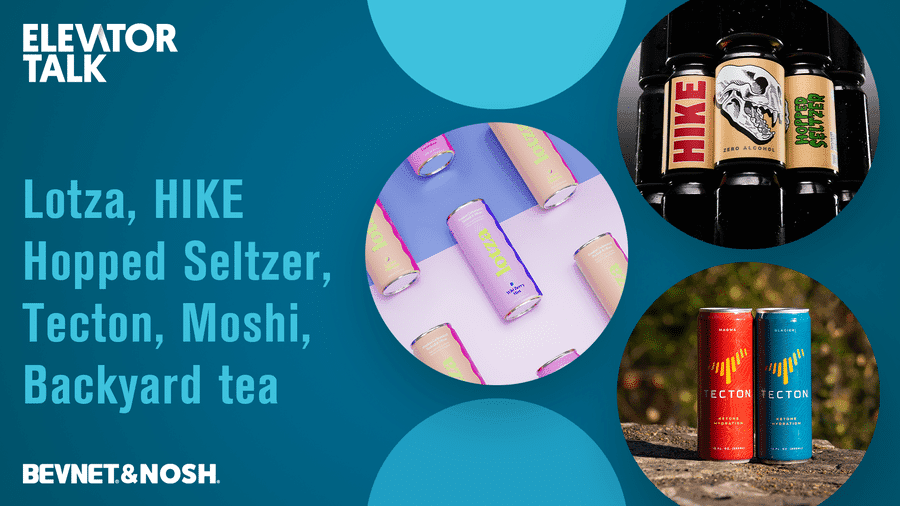
Elevator Talk Episode 91: Lotza, HIKE Hopped Seltzer, Tecton, Moshi, Backyard Tea
Transcript
Note: Transcripts are automatically generated and may contain inaccuracies and spelling errors.
Ray Latif [00:06] Hey folks, I'm Ray Latif, the editor and producer of Bevnet's Taste Radio podcast, and you're tuning into the latest episode of Bevnet and Nash's Elevator Talk, the series that profiles early stage and disruptive brands from across the food and beverage industry. Today's episode will focus on 5 beverage brands whose entrepreneurs will have an opportunity to hear feedback and advice from our co-host for this episode. That's Courtney O'Brien, who is the founder and managing director of GPS Brand Consulting. Courtney, great to see you.
Courtney O'Brien [00:39] Thanks, Larry. Nice to meet you too.
Ray Latif [00:41] Yeah, so great to meet you as well. Courtney, you have quite a bit of experience in the beverage industry. Uh, talk a bit about your background and how you work with brands today.
Courtney O'Brien [00:51] Sure, um, I'm Courtney O'Brien. I'm a marketing leader, brand builder. I have 22 years in the beverage industry. I've been fortunate to work with industry leaders like Danone, Coca-Cola, and E and J Gallo Winery. So I've led large portfolios of brands, both in non-alk and Alcoholic segments. I also led the innovation function at Gallo. Some of the standout accomplishments that I'm known for are the launch and scaling of both Coke Zero and Apothec in their respective industries that really broke out of what they were expected to do and what soda and wine traditionally did. Uh, so what I'm doing now, I'm helping smaller to medium sized beverage businesses and other businesses in adjacent categories break out, figure out who their consumer target is, how they differentiate versus their competition, what they want to be when they grow up, and make sure all their initiatives are aligned towards that goal.
Ray Latif [01:40] What they want to be when they grow up, I think a lot of founders want to be a big, big brand that is eventually acquired by an even bigger brand or company, and you've worked with a lot of those companies, as you mentioned, um, you know, in evaluating emerging brands and disruptive brands. I mean, how do big companies think about what those types of products are bringing to the table? I mean, what is their reaction internally and, you know, how do they think about it from a, a competitive standpoint?
Courtney O'Brien [02:10] Yeah, I think they look from their own point of view of what can they bring, what can the big company bring to the table from these smaller brands. So if I'm Gallo, for instance, I'm a distribution powerhouse. I know I can grow distribution rapidly. So I don't really need you to show me that you've grown distribution and you're in a lot of different. Stores, I'm looking for something that really breaks through to the consumer and does something that takes years for me to do otherwise, which is build a brand, nurture it, break through potentially where you are, show velocity, and really have a dedicated consumer base that's making me pay attention. I can do the scaling, so that's, that's an example. They're always looking through their own, through their own viewpoint, right?
Ray Latif [02:52] Absolutely, and their viewpoint though is evolving just like everyone else's given that we're seeing a lot of blurred lines among categories in the industry. I mean everything from alcohol bleeding into non-alk, from cannabis beverages bleeding into alk, you know, refreshment and functional, all of it seems to be coming together in this weird amalgamation. of beverages or the current beverage industry, um, how do you think about marketing beverages to modern consumers when there is just so much out there in terms of functionality and flavor and taste and mouthfeel,
Courtney O'Brien [03:31] right? I agree it's almost choice overload. I almost look at The beverage category and it looks a little bit like the wine aisle at this point when you go to a Sprouts. It's, you know, one facing each and you're just, they bleed right into the next and you're confused. So I think that's the way I look at a lot of these brands too when I was doing my research on them. Is it clear why me as a consumer would want this versus the one next to it? You can't be everything to everybody. So are you putting a stake in the ground, and are you clearly communicating that, whether it's a functional benefit and you've really leaned in on one ingredient like tecton that we're going to talk to, or whether it's kind of more of a lifestyle approach and I can really see myself in that occasion and grow to think about that brand when I get to that occasion.
Ray Latif [04:15] Oh, I'm glad you've done your research, Courtney, because it sounds like, uh, you have a lot to ask and to offer in terms of insight to the founders today. Are you ready to meet our first?
Courtney O'Brien [04:26] Yeah, let's do it.
Ray Latif [04:27] Fantastic. That person is Laura Markowitz, who is the founder and CEO of Lotsa. Laura, great to see you.
Courtney O'Brien [04:35] Hi guys, thank you for having me.
Ray Latif [04:38] Thanks so much for joining us. Lotza. Laura, you and I connected a few weeks back, and I don't know if I told you, but I love the name Lotza. I don't know if it's as obvious perhaps to everyone what you do, but that's why you're here on Elevator Talk to talk about exactly what Lotza's all about. So please tell us.
Courtney O'Brien [04:59] Latsa is a clean drink mixer with adaptogens to boost your mood and plant-based nutrients to support liver health and next day recovery. Uh, I know you guys will be shocked and saddened to hear that alcohol is bad for you. I'm here to bring you that news. Well, on top of that, unfortunately what we drink with alcohol is as well and often exacerbates the negative effects that alcohol has on our bodies. Well, with latsa, we've not only removed all of the garbage found in other drink mixers and alcoholic beverages, it's made with real fruit, plants, and minerals and has less than 7 g of sugar per can from the fruit, as well as a touch of organic blue agave. But along with that, with the help of our medical team, Latso's really leading the way for the future of drinking by number one, naturally boosting what we enjoy about alcohol. So the adaptogens really help relieve stress and make us feel social and elevate our mood. And by 2, combating the parts that we don't enjoy about alcohol hangovers. We have electrolytes in here for hydration and plant-based nutrients that help with next day recovery. And even more exciting, recent studies are showing that the core ingredient in latsa may help prevent and even reverse liver damage. Some, but honestly I think the best part is the taste. Latsa has this irresistible, and I literally always drool when I describe it, so I apologize. It's like this lemon lime citrus base with a hint of floral notes that come in these really fun, unique flavors. So it's not only good for you, it's effervescent, it's elevated, and it has this mouthwateringly delicious citrus pucker.
Ray Latif [06:43] I love that and I love when I hear the words that you're describing, uh, when it comes to your beverage flavor. It makes my mouth water and, and makes me want to drink it as well. Um, before we get to Courtney, I gotta ask real quick. So at the top of your can, you said it says, uh, premium carbonated mocktail and mixer.
Courtney O'Brien [07:01] It's an inclusive beverage. So we see a lot, especially with Gen Z, everything is pushing towards mocktail. Um, and I really wanted something that could be enjoyed on its own or with a shot of your favorite spirit or two, whatever you're into. You choose your own adventure, so that diversity makes it a versatile beverage that appeals to people whether they're consuming alcohol or not. There's data coming out that what is it, like 85% of the people that buy non-alcoholic beverages are actually alcohol consumers. So I wanted something that really appealed to both the individual when they're in the mood for alcohol and when they're not in the mood for alcohol.
Ray Latif [07:44] Courtney, mocktails are still a relatively small segment growing, uh, still small though, but I wonder, I mean, do you see a bigger upside for Latza as a mocktail, positioned as a mocktail or as a mixer or as Laura has done already, promoting them as both?
Courtney O'Brien [08:00] Yeah, I think it's It's interesting that it can be used as both. I think you don't want to come across as being all things to all people though, because then I don't know how to use it and when to think about it. So a slight tweak on your positioning that I think would still accomplish what you want is, you know, whether to mix it or not, your choice. You can add something to it or not. I don't know that I'd use the word mocktail, but that's, that's just a preference because it is a little bit more niche than how you choose to serve it, right? You can serve it with, with anything you want. I love that that is aligning with a lot that I'm hearing and because it is the value props are so aligned with liver health, it's more of a painkiller to people that are drinking, more of a vitamin to people that are not, because of the hangover benefits in reducing those symptoms. So yeah, I definitely in terms of targeting that end consumer, we're leaning more as a drink mixer. What we're seeing is from when we're going more B2B, when we're like we've been doing a ton of events, we've had a ton of events this month and it's been a big B2B seller, the fact that it can apply, it can really appeal to all people at the party whether they're drinking or not. Um, so it's interesting how we find that balance because yeah, I have a marketing branding background and so yeah, I'm like all about the niche, all about the brand. So yeah, I have to be careful not to try to be everything to everyone with it for sure. If I could just say one more thing, I really do like what you said though, and I didn't get that as clearly on your website as the way you just said it, that there's pain points about alcohol that you know your target has, and you're kind of addressing two of them mixing it with unideal ingredients and preventing your problem the next day. So this really piggybacks on the movement toward more healthful drinking and enables them to have their alcohol if they want it. So you're solving a lot of problems for your consumer if you make it a little bit more clear, I think. Love that. Where do you think the adaptogens fit in, like in terms of priority, um, Obviously better for you is a leading thing, but an anti- hangover is very appealing to a lot of people who are drinking and overall liver health. But where do you think adaptogens fall in there? Like our goal was to really tackle it from two angles, whereas if we were just putting DHM as that core ingredient in there that helps support next day recovery, if we were just focused on that. I worried that people would be like, oh, I can drink all that that I want now. The goal of the adaptogen adaptogens is kind of to have that two-prong approach where if we're naturally mimicking the things that people seek from alcohol alone in a healthy way, that maybe they'll consume less, and and that with the liver support ingredients will help people in their overall liver health. I'm usually a fan of leading with the consumer benefits. So if adaptogens are enhancing what you like about alcohol by, you know, whether it's relaxation or whatever, and you're going to get that with or without adding the alcohol, that's what I would lead with. Whether or not, you know, what ingredient it has in it to do that is a double click further if I'm interested, but it's about leading with the benefit to me.
Ray Latif [11:25] Oh I think that's a good point, Courtney. You know, people want to know why they're paying a certain amount of money, why they're paying a premium for, for a product, and explaining that the active ingredients are the things that you're paying for essentially does help. But when it comes to brand versus functionality, what should rise to the top in terms of how Laura should think about building and continuing to build Latsa?
Courtney O'Brien [11:52] Basically you mean whether or not she spends her time building the Lotza brand name or whether it becomes known for a certain functionality.
Ray Latif [12:00] Yeah, exactly. I mean, you know, the, the package design, the branding itself is really beautiful. It really pops, um, but you know, if you were going to invest in education and awareness, should you be investing in lifestyle or should you be investing in the benefits, the functional benefits of the product?
Courtney O'Brien [12:19] Yeah, I, I see the product as somewhat torn when I view its presence online. You have a very lighthearted, fun, feminine lifestyle feeling product and presence, but then you have doctors, you know, and there's a guy wearing a white coat, and that's usually like, oh my goodness, this is serious. So are you, are you a serious like nutraceutical that is serious about its ingredients, or are you this kind of lifestyle have fun brand? Um, you can be somewhere in the middle, but I think right now it feels a little conflicted in terms of building the brand name and the presence. The biggest question I have is what does lots of mean? It implies that there's lots of something in it. And you know, especially since you're talking about the functional ingredients, what is there a lot of, or does it mean I can have a lot of it, to your point? That to me is the first thing I have to fix in my brain before I know where I put that in my brain and when I pull it out for what occasion. Yeah, latsa is a play on the slang term, a lot of latsa, and it's referring to all the good stuff. So one of our slogans is none of the bad stuff, lots of the good stuff. Latsa is all about this idea of living life, living a life of abundance as well, like having your cake and eating it too. It's this concept of OK, we're, we're drinking. Yeah, we are balanced in our decisions in what we drink. So yeah, I just, I love a word that or a brand name that you find people saying in their everyday vernacular every day. Every time someone says latsa, I'm like Latza. And I really like what you're saying about that you're not focusing on the what it doesn't have, you're focusing on what it, what it does have lots of these good ingredients and what it will give you lots of abundant life. So to your question, Ray, I think that word, now that I understand it a little bit more, what she's getting at perfectly encapsulates the positioning and the benefit if you build it appropriately, like, you know, does your presence speak to that and make that very clear. Yeah, I mean, I'm a huge fan of Liquid Death. I couldn't be any more different as a brand. Yeah, we all are. I couldn't be any more different as a brand or with my target audience, but I come from a branding background. I was a former ad exec, and so I just branding is going to be everything. Like we're really going to focus on associating with these fun events and milestones in women's lives. Obviously we'll expand outside of women eventually, you know, the way Lululemon has, you know, a lot of brands just focus more on women first just because it's more of a community that we want to build and I think always starting niche we'll be able to have more of a focus with our messaging as well. I would play yourself up too a little bit more, Laura. I mean, you're the mother of 3, right? Correct, yeah, that, you, oh my God, that really is proof in the pudding, right? Like you want healthy ingredients so you can keep up with your young children and you can't afford hangovers and you're the, you should be the face of it. Yeah, I've been told that. I'm working on it. I used to have a podcast, so I love this. I'm getting back into it, but yeah, I'm TikTok and Instagram are big strategies, and UGC content or creator content is something that we're really leaning into. And so as a founder, I do want to be representative of the brand, especially because, yeah, I am, I am the target. I mean, when you become a mom, you kind of lose the fun in your life. You're focused on your job, reminding your husband you know he exists and all your kids. So fun kind of goes to the backside and you know, to me fun is central to an abundant life. So yeah, I love that. It is a goal.
Ray Latif [16:16] I, I think that's a great call, Courtney. I, you know, Laura created this product. Essentially for herself and those like her. So I think that's a really good point. Um, a lot of really good points made in this conversation. Thank you so much, Laura, for taking the time to be with us. Uh, really excited to see where the brand goes from here. Please stay in touch. Let us know how we can help in any way.
Courtney O'Brien [16:38] Yes, thank you so much, guys.
Ray Latif [16:40] All right, up next on this episode of Elevator Talk, we have Ryan Coleman, who is the founder of Hike Hop Seltzer. Ryan, great to see you.
Speaker 3 [16:49] Hey, thanks for having me, Ray. It's great to meet you. I'm a big fan of Taste Radio, so it's nice to put a face to the, to the voice. And, uh, Courtney, thank you, uh, thank you for, for being here. Oh, nice to meet
Ray Latif [17:02] you. Well, Ryan, I appreciate you listening. Thank you so much, and uh it's great to see your face, and I'm glad that uh we have you on the show here. Uh, please tell us all about what you do.
Speaker 3 [17:13] All right, so, um, I About 2.5 years ago, I decided to, uh, to cut out alcohol from my life. I had a new baby and it was just, you know, it, it was the right choice to do. And through that, at that time, for me at least, um, non-alcoholic beer hadn't come, athletic was there, they were growing, but non-alcoholic beer wasn't the best thing for me at that time, right? So, um, It was just too much like beer, and I was trying not to do that anymore, so I just had this idea. I was drinking a lot of seltzer. I worked in television and film. Um, every film set, every TV set, seltzer is everywhere. It's like your work drink all day long. So I was drinking that anyway, and I was just wanted sort of like a gear shift drink at the end of the day. And I had this idea. My sister used to grow hops. I wondered, we used to take them and put them in beer. I wondered if we could do it with seltzer, what the effects would be? Would it even translate? Would the flavors be there? Would the aromatics hit? Would it, you know, would it be disgusting? I didn't know. I started researching it, found a home brew website. Apparently, there was a thing called hot water. I, I followed the recipe. I went out to the home brew store. I made it, and it was actually really good, like right away, you know, I played with it. I started talking to some hot, this is all just for myself. No, no inkling to create anything, really. Just wanted to make something at home that I could have. Then I started making it, started getting better, started bringing it to work. Um, basically, everyone is like gassing me up about it. Um, then hot water started to come out in the market. Now I'm paying attention. Um, and I'm like, wow, this might actually be a thing that I could do, but I saw that really only breweries seem to be making it with the exception of, um, some other California and Colorado brands. Um, and so I essentially Um, you know, kept, kept developing a recipe, you know, being as practical as I could about it, you know, I'm not a brewery. I don't have, you know, millions of dollars' worth of equipment. Ended up finding a formulation that seemed like I could probably scale it using co-packers, um. Next thing you know, you know, I started an LLC and I decided to make a pilot run. Um, my job, um, dried up because of the writers' strike, and I decided to make it and Uh, the support that I got was overwhelming. I thought I was gonna have to give it all away to try to find a target audience. I was like, maybe 40% of people will like it. And I sold like all 90 cases in the first month, like, By just going out and letting people try it, and then they would buy cases of it from me and then they would sell it. And it's continued and the trajectory has continued all of my accounts. I have kept and grown. Um, I'm starting to get investors now. I've got this weird like following around town. People really enjoy it. Um, Uh, so that's where I'm at with it. Um, it's, it's essentially, um, the branding came about because I just didn't see any non-alcoholic specific drinks, you know, that were trying to kind of have a foot in the, in the flavor profiles of beer or hops that, that sort of looked like stuff that I was into. As dumb as that might sound, um, I just really thought that it could take off. There was sort of a An anti-establishment sort of a, of an, of an image, you know. I grew up listening to thrash metal, skateboarding, you know, uh, graffiti writing and stuff like that. And I just sort of reached out to some of my friends to help me develop some of the artwork, and I put it all together. I picked the colors and, um, and people seem to, again, really, really sort of respond to the branding and, and the taste. Um. So now I'm just trying to, trying to, to grow in a measured way.
Ray Latif [21:01] I have about, I don't know, 30 questions and about another 30 comments that I'd love to make, but I think Courtney's been chomping at the bit because I think she has a lot to ask and, and comment on as well. By the way, I love your brand, I love your branding, I love your positioning, so I'll say that before I get to Courtney. Courtney, take it away.
Speaker 3 [21:20] Thanks.
Courtney O'Brien [21:22] I think you've done a lot well. Something that, something that really caught my eye was your Instagram. You had to smash the beerarchy with Voodoo Ranger fighting against the high ABV. I always loved tension in a brand and in a brand story, and something to fight against. And as the low alc, low cal thing has come about. So has the high alk, high, you know, high intensity of flavor, and I love that you're kind of fighting against that with a with a mallet. There's a lot of tension there. There's also a lot to work with, with, I know many people who non-elk beer is too close to real beer for their taste, given what they're trying to do with their life, and They may not be wine drinkers, they may not want to make a cocktail. Thinking of this as an easy to grab alternative is something I didn't think of when I was looking at your online presence. So really giving me that cue that this is an alternative to a non-alk beer and that you're fighting against this high ABV movement so that you can have a fuller life. I love that. I think there's a lot there.
Ray Latif [22:27] I, I mean, I, I agree that, you know, this idea of a product that is not for beer drinkers, um, but I, it's, it's this weird kind of thing where like it's sort of for beer drinkers but not for beer drinkers, but I think that positioning is somewhat similar to some of the larger hop seltzer products on the market, brands on the market. You have Hop Lark, you have Hop water, as you mentioned. There are big beer companies launching hop flavored seltzers. Um, so with those products and those brands already out on the market and in stores that you're probably trying to get into, what is your pitch to retail buyers?
Speaker 3 [23:10] Um, so My pitch to retail buyers is that, um, well, one, that it usually ends up being a, uh, The the the branding itself is, is, it really separates itself from those. So on a shelf, it, you know, it's pretty clear just by showing them what it looks like that it's going to stand out a little bit apart. The fact that I'm calling it a hot seltzer rather than a hot water does sort of help in some ways because it, it will take folks that are maybe more of a seltzer drinker that don't think of themselves like you mentioned as being a beer drinker. And will gravitate toward it because they, they know they like seltzers. Um, that's been something I've seen in, in, in a lot of tastings that I do where people see my branding and they come over and they go, Oh, I love seltzer. What is this? And they see the hops, they might be a little hesitant because they're not beer drinkers, let's say. But I mean, 9 times out of 10, they end up walking away and buying something because they, they really like the sort of natural, effervescent, citrusy, aromatic experience that they get. It really is kind of unique. My other, um, pitch to the stores and they're like, well, we have Hop Lark. Hop Lark tries to be an IPA. Um, it is really in your face. And most people that have tried Hop Lark that aren't beer drinkers don't, and I'm not say I love Hop Lark, don't get me wrong, like I really, I enjoy that product, but I wanted to make something more measured that people who don't like beer would drink this and surprise themselves and then become People that, that, you know, buy this on the regular. And that's been my experience. I've had lots of people reach out on social media saying, oh my gosh, a gluten-free alternative to beer. I don't even like beer, you know, like a non-alcoholic drink for my, I like to think of it as like a gear shift, you know, like if you are a seltzer drinker, and, and let's say you don't drink alcohol, you're drinking seltzers all day. When you get to that social moment, that occasion, whether I don't know, it's a barbecue or you're just coming home from work or you finally put the kids to bed, you want to crack something open, you don't want to just drink another seltzer. That was my experience, you know, and so identify with that. You're like, I drank this thing all day. Like I need a gear. I need something that can just sort of like in my head, right? Cause we're still, we got lizard brains, you know, there's like a connection that happens when you do something a little bit different. I still haven't landed on the phrase that I want, but the adult flavor, whether, you know, herbaceous or aromatic, it's like, It is a grown-up sort of flavor that comes along with the drink that, that gives in your mind like, oh, I'm hanging out. I'm not on someone else's clock. I'm on my own time now. And, and you feel good about it, you
Ray Latif [25:47] know. Ryan, I, I gotta, I gotta ask one more question. Well, I'm going to ask this to Courtney, you know, I see this product and I see the can. I'm like, wow, this would, this would really feel cool to hold, you know, if I was holding this can, someone would definitely ask me about it, and I wonder about the opportunity. In hospitality, restaurants, bars, concert venues, and whether, Courtney, you think that Ryan should, should, should go after those opportunities.
Courtney O'Brien [26:14] Yeah, I absolutely would, especially if you're able to articulate your point of difference like you just did, Ryan. I didn't understand what it was going to taste like by perusing your materials. If it's going to taste, if you're really trying to go toward more of a seltzer, which is, I just got back from a festival this weekend, lots of seltzers, lots of beers, and lots of liquid deaths, which looks so much like, you know, an aggressive type of beverage like that. Um, even putting it in a large can sort of thing gives that, uh, aggressive, this is not your normal work seltzer sort of vibe. Um, I did notice you do have some on-premise distribution in the mid-Atlantic, right?
Speaker 3 [26:52] I do. I have, I have a, a nice combination of, I've tried to be a little, I tried to curate my, my, my thing a little bit because I knew that it wasn't gonna do everywhere, you know, I'm not gonna go into a restaurant that serves like nice dinners. But if it's a bar that's got kind of a rock and roll vibe, especially if they have live music. It does really well, especially, and what I've been finding is like a lot of bartenders these days aren't like the bartenders when I was bartending that just drink heavy. A lot of them are like smart or sober now about their drinking. So what ends up happening is bartenders end up loving it. They drink it as their shift drinks. They tell their customers about it and it flies. And even like places that sell liquid death too, a lot of times people will go for a hike instead of a liquid Death just because it has sort of a It's just a different sort of flavor. I don't know how to describe it. It's like, obviously, it, it's competing with that a little bit, and I, but it, it still has its own sort of categorical thing happening. So, like, I'll give you just real quick. I know I don't have much time, but like, one thing that I'm doing this, this summer, which would be cool, is that there are these festivals at this thing called Brown's Island. It's a big outdoor music event. It's like 16,000 people every weekend. And it was way too prohibitive cost-wise for me to get a table there. Plus, it's all like wrapped up in old beer distribution and one NA per show and all this stuff. So, what I did is I found a food truck that's super popular, and they're like skateboard kids and they love it. And so they're gonna bring it in like a Trojan horse and they're gonna sell it from their food truck. So the cans will be circulating and I've got the QR code. And you'd be surprised how many random emails I get from people go, I had a can at such and such. I looked up your website, and then they hit me up and they're like, Can I just buy like two cases from you, you know, or like, do you have any t-shirts? Do you have any hats, you know, like that kind of thing. So I'm, yeah, heavily relying, Ray, on that like. People seeing the canon wondering what it is. Um,
Ray Latif [28:50] that, that is a good way to get awareness and relatively inexpensive awareness for sure. Uh, Ryan, we are at a time, but, uh, I'm so happy that we had this time to chat because it's, uh so great learning about your brand. It's so exciting hearing about what you've created to this point and, and where the brand is going. Um, so please stay in touch if you need help with anything, if you need contexts, if you want to ask questions about co-packers, uh, if you just want to bounce ideas off someone, please reach out. That's what we're here for, dude.
Speaker 3 [29:22] That is so awesome. Yeah, I just signed up for that pamphlet thing, and I'm gonna, I was gonna go to Bevnet East, but I think I'm gonna push until I'm ready, Bevnet West and try to get into that product, uh.
Ray Latif [29:33] Into the new new beverage showdown. Well,
Speaker 3 [29:35] yes,
Ray Latif [29:36] the new Beverage showdown is, uh, it's, it's always open 20, uh, 2 days, uh, excuse me, 2 times a year. So whenever you're ready, yes, please apply. Right
Speaker 3 [29:43] on. Thanks, thanks, thanks so much.
Ray Latif [29:45] Thank you so much.
Speaker 3 [29:46] Thank you. All right.
Ray Latif [29:48] All right, on to our next guest for this episode of Elevator Talk. That's Udan Dittar, who is the co-founder and CEO of Techton. UJ, great to see you.
Speaker 4 [29:58] Great to see you. Thank you so much for having me and Courtney, I'm, I'm glad we have you on this call because I think you and I shared quite a common background for several years. Yes,
Courtney O'Brien [30:09] Coca-Cola.
Ray Latif [30:11] Yeah, well, uh, please tell us about your background and sort of the development of Techon.
Speaker 4 [30:16] Yeah, you know, let me start with the background on the tecton first, and you know, we'll come to the background of the team, but you know, for millennia, the human liver has converted stored fat in the body and converted into what you call ketones. They are, they are nature's optimal macronutrient. Ketones actually give you more energy per molecule than carbs under under any kind of exertion. They cut hunger and curb appetite. They give you mental and physical cognition and energy and endurance so that you can find your next meal. So essentially macronutrients and our bodies are made up to 300 g of ketones a day. I call it macronutrients but for a purpose. And these have helped us survive. Tekon is a biotechnology company really that has perfected the art of creating these ketones outside the body to make them nature identical. Using plants and natural enzymatic process, and these ketones can now be put into food and beverage, medical foods, even drugs. And ketones being this, you know, incredible macronutrient, have, you know, these massive benefits. So our first product that we have brought to market is the tecton ketone hydration drink which has 10 g of ketone. in it and it gives you many of the benefits of a keto diet, aka the ketogenic diet, without having to do the keto diet. The keto diet has become almost impossible in today's day and age because carbs in every single thing. In the past, it would be very hard to find an apple and a banana on the same continent. Now you eat an apple and banana, you're cut, cut, you know, kicked out of ketosis. And this is one of the few products that are out there that you can objectively test. So this is keto mojo, you can test using the strips to see whether it elevated your ketone levels. So people are consuming it during fasting because it doesn't break the fast. My product has zero caffeine, zero sugar, no carbs, no artificial preservatives or sweeteners. We sweeten with monk fruit. I'm happy for my daughter to drink 10 of these a day if she wants to without any harm because it is designed to be harmless while giving you all the benefits. And you know, so people are using it during fasting without breaking the fast to cut hunger and, you know, to, you know, to burn fat. They're using it in the afternoon instead of caffeine, so it gives you mental cognition and focus, but you can still sleep well at night. People have it as a hangover because it does cross the blood-brain barrier and clear your brain, and you know, the brain fog as they call it. So lots of really substantial advantages of the product, and that's kind of where we are. For this moment
Ray Latif [33:07] UJ, um, you are also in a place where it looks like, uh, finances and fundraising, um, have been, uh, a, a benefit of our, I mean, I feel like, let me try that one more time, 32. UJ, you're also in a place where you have raised a bit of money. You raised your Series A recently. Talk about why investors are interested in your brand.
Speaker 4 [33:34] Yeah, so you know our investors are a really unique group of people. So one of my major investors is the former chief of neurosurgery at Walter Reed. He is a neurosurgeon, an active brain and spine surgeon. I have an NFL team owner. We have one of the the family that owns part of the largest food broker in the United States. And so they have come in mostly because what tecton's technology represents is a revolution in nutrition. It is one of the few companies that has a patent portfolio that covers a macronutrient. So imagine that someone owned protein. We have ketones which you should be consuming more of them a day than you should have of carbs. So that's kind of the vision behind this is to help really improve metabolic health and provide people with a general product that you can consume every day or multiples of them for different needs, and it can be put into yogurts and bars and, you know, so it's got a very wide application. One of my major investors is also a company called Thorn. That makes nutraceuticals and supplements and, you know, sells them to the Olympic teams. They work with the Mayo Clinic. Our data has been analyzed by the Mayo Clinic to prove that it is actually efficacious in terms of pharmacokinetic data. So that's kind of the reason why we've raised as much as we've done. We've got about 5.5 of the 10 million in our Series A already raised.
Ray Latif [35:12] So a lot of people believe in the brand and the product and what you're doing. Courtney, are you a believer in the approach because that's just as important. I mean, you want to know that you can actually sell this to consumers and they're going to want it. Uh, based on what you've heard, you know, how do you, what do you think about that proposition?
Courtney O'Brien [35:32] I think it's really powerful. I mean, a revolution in nutrition and trying to solve one of the biggest issues of our time is a big, that made me take a step back. If you're trying to, I think I have so many thoughts, if you're trying to eventually reach your general consumer looking for a pick me up at a convenience store at 3 o'clock on a Tuesday, I'm looking at it from their point of view if that's where the volume and the dollars are eventually going to be. Um, I had a lot of questions just because this is a big proposition, right? Um, do I need to do some research on this before buying it on a whim? I just had pizza for lunch. Is that like, why bother with it's like people that order Diet Coke with a Big Mac, right? Like, should I still, is this still for me, even if I'm not eating, you know, a really great diet? Um, what will happen? Can I have a bunch of them? I have, I had a bunch of those questions myself, and I've done ketosis for months before on, on diet alone. Um, and I still have a lot of questions, which I think if this is really a big, big idea, I'm in, you got my attention. I think the challenge is really in communicating what you want to choose to communicate at the right time and to who is gonna be really important because you can't do all of it.
Speaker 4 [36:49] Absolutely, and that is the biggest challenge that we've got. And so think about this as a new technology with a new innovation adoption curve, and right now our product is expensive and it's the costs are going to come down through process improvement, majoratively and then partially through economies economies of scale. So this product is kind of was used to kind of bell like a test, a test balloon to understand what the product market fit might be, and now we realize that we do need a product because we've got Olympic athletes using this to improve their personal best, but this drink is not the right format for them, so we've got a gel pack, 30 g for them specifically. A half a dose of this in an 8 ounce sparkling beverage would probably be a more cost effective way for us to get into convenience and petroleum in the future. So what we're doing is we've got a portfolio strategy and then we're using influencers, medical practitioners licensing as a strategy as well to get the word out. So Thorn has signed a licensing agreement with us. They've got 45,000 healthcare practitioners that they can promote their Thorn branded product with Made great with tecton ketones inside. There's a little symbol that will go onto their packaging with a QR code to my Science page, so this way we can educate. Using the strength of our partners, licensing partners as well, and then influencers like doctors and practitioners, healthcare, fitness people, you know, we are a veteran and a veteran family founded company. We give 1% of our revenues to nonprofits that work with disabled veterans, but also 42% discounts to first responders, active and retired military. And to medical practitioners, and coaches and trainers. So this way we're trying to see the market of the people who can help educate so that the burden is not entirely on us because hey, I'll have to raise billions to educate everybody, but if we can do it through other people, that's better for us.
Courtney O'Brien [38:46] I love that though you've got your core core target who are providing the use cases and you know if it's good enough for them, it's certainly good enough for me and you might need another format like you said or maybe a subbrand eventually and then you've got something for the masses that you rely on their word of mouth but really speak to them in a in a lighter tone,
Speaker 4 [39:04] right. And we've got a lot of clinical data that has just started to emerge because we're just, we are barely a year old, so this clinical data, as it's getting written up and published in peer reviewed journals will allow us to make structure function claims and then be able to get much more say things more directly than we can right now in terms of the benefits.
Courtney O'Brien [39:26] I have one more question on that if you don't mind, right.
Ray Latif [39:29] Sure, no, please go ahead, Courtney.
Courtney O'Brien [39:30] Are you doing PR around that? I feel like this is such a big thing that I need to hear about this from multiple sources before I'm going to believe that this one beverage has solved the world's problems. Like I need to be hearing about it everywhere that this new study has been released, etc.
Speaker 4 [39:46] Yes, we just got a PR person onto the team for the first time recently, uh, but you're right, uh, you know, this needs a multi-pronged strategy to get out there and get the word out.
Ray Latif [39:58] We're almost out of time, but I wonder if what you also need is a strategic partner and given that both of you have had experience working with strategics, how likely a strategic partner, you know, could be involved at such an early stage. Courtney, I mean, have you experienced any kind of partnerships like these in, in, in, you know, your background?
Courtney O'Brien [40:17] Are you talking about like Thorn like you mentioned?
Ray Latif [40:19] I'm talking about like a beverage strategic, whether it's a non-Ak giant like a Coke or an elk giants, you know, that is just interested in new technology and new ways to expand their expand their their abilities and their their portfolios.
Courtney O'Brien [40:36] Yeah, I mean, I haven't had any direct experience with that, but I wonder if that's what you're envisioning, given that it sounds like you're talking about it as a branded ingredient potentially in a line of products in the future that could be done via partnerships.
Speaker 4 [40:49] Yeah, I do believe that, uh, you know, a strategic investment partner would also, that has a big global footprint would be, I used to run a global JV between Coca-Cola and Nestle in the 90s, but there are companies out there that are into food and nutrition that we are talking to right now, that the multinationals to look in, coming in at a small investment right now, but with an option to buy a larger piece down the line. So those conversations are definitely very much part of the game as we speak.
Ray Latif [41:19] Outstanding. UJ, uh, so great meeting you and thank you so much for the introduction to Techton. Uh, such an interesting beverage and brand. Uh, please keep us in the loop about anything that is going on with your brand in terms of distribution, new product that new products, uh, any hires or fundraisers. We want to hear it all. Uh, just send us a note to [email protected].
Speaker 4 [41:40] Will do. Thank you so much. Thank you so much for having me on this call. Nice to meet you. Appreciate it. Nice to meet you, Courtney. Thank you.
Ray Latif [41:47] Bye bye. All right, up next on Elevator Talk, we have Alton Butt who is the founder of Moshe. Alton, so great to see you.
Speaker 5 [41:54] Yeah, thanks for having me, guys. I appreciate, uh, I appreciate your time and I appreciate the invite.
Ray Latif [41:59] Yeah, I am a big fan of your brand. I'm not ashamed to say that, even though I should be more objective when it comes to brands and products that come into the office. But in a recent episode of Taste Radio, uh, we were raving. I hope, my co-host and I were raving about your product. Uh, Moshe, please tell our audience all about what you do. Yeah,
Speaker 5 [42:19] thank you. I appreciate that. You know, it's always nice to hear some, some kind words, um. Uh, I guess, you know, my brand is a little bit different from, from some of the other brands that are spoken on in today's podcast, and that, you know, I actually started 3 years ago as a soda brand, right? And even my experience is a little bit different. Um, I used to be a chef in my, in my former lifetime. And a lot of the inspiration for the sodas and the sparkling teas in our first iteration of beverages were really kind of derived from working in a lot of these restaurants, um, you know, familiar with the Asian American dining experience and seeing really, really cool cuisine, um, really great cocktail and spirit programs, but when it came to non-alcoholics, the options were, were, were just really limited and very uninspiring, right? And I think that's really where the foundation of my brand came from. I really wanted to create something where, you know, if myself and a group of friends or myself and my wife wanted to go out to eat, and that particular night, we didn't want to, you know, have alcohol. We just wanted something that was a nicer pairing than your, you know, traditional soft drink brands, right? So that's really where the, the inspiration came in. Um, most recently, we launched a line of sparkling waters about 2 months ago. Um, and, uh, you know, this line was really kind of our low calorie alternative to our traditional, like I said, flagship sodas and teas. Um, and a lot of that has to do with, um, really what we learned from the 1st 3 years at our first attempt, in, in the space, right? And just hearing our customers saying that, you know, they really love their flavors, um, cool, you know, Asian combinations like, you know, white peach and yuzu, and just You know, wanting to be able to consume it at a more, you know, frequent pace, right? They would say sometimes that they felt a little bit guilty about drinking the sodas really often. And so that's really where the inspiration behind the sparkling waters came in. Um, we wanted to kind of keep that similar identity with that, you know, premium and elevated look and feel, but, you know, as, as a chef, I, I, the one key difference for me personally was I also wanted it to be super flavorful. Right? So I wanted to have a really good amount of juice in there that you can really taste the flavors and, you know, we'll also keep it under, you know, 30 calories, under 5 g of sugar, so that, you know, the person who's drinking it and consuming it could, could, you know, could really enjoy it without, you know, feeling guilty and, and know that they're really having something different and unique. So, that's really, that's really what my brain's about.
Ray Latif [44:55] Yeah, let's stay on the sparkling water because they are amazing and these are the products I was talking about when I mentioned your brand. My mouth is watering. I'm sorry. Now Honeydew melon and Cream. Oh man, that sounds amazing. It does sound amazing. You don't see many sparkling waters or products that are positioned as sparkling waters that contain as much fruit juice as yours do. Why do you feel like it was so important to include that amount, that amount? Yeah,
Speaker 5 [45:22] that, that for me was really big and it kind of like leans into when I First came out with the soda brand, being flavorful is super important to me, right? Like, taste is like paramount in terms of what our business does, right? And I really wanted to, and a lot of, you know, the taste from our drinks comes from the juice itself, right? You know, there's, there's some blend of flavorings, um, based on what we are able to do to figure out, you know, the best balance in terms of our beverages. But a lot of times, you know, the better tasting products tend to have a little bit more juice in them. You know, the challenge in putting too much is obviously the more juice you put in it, you know, the higher the sugar count, the higher the amount of calories in it. But when we were doing the formulations, we, we were basically kind of pushing the limits, you know, I went with my team and I was like, what is the most amount of juice that we can put in here that would still make this super tasty and under, under, under the, the amount of sugar that a lot of people really care about when they're, when they're drinking this on a daily basis. Um. But like I said, I, I, I know I mentioned this a few times already, but taste was really the driving force in us, and, you know, that that's where that juice comes in too, right? Um, and if you notice on our, on our cans as well, aside from like the primary flavors. Uh, instead of using ascorbic or citric acid to help with the pH, we also add in lemon and lime because we feel like it helped with the additional flavor and also balance of the drink. So, it's just another kind of way that we showcase why, why, why that's really important to us.
Ray Latif [46:54] Coordinating the flavors uh across the, the line of sparkling waters is just, I mean, just fabulous. I mean, I, I can't imagine a single person wouldn't be like very, very interested in at least one of these products. The potential issue, as Alton mentioned, is that, uh, a lot of people are used to zero calorie, zero sugar, sparkling waters with some added natural flavor. These have actual real juice in them. But I almost feel like we're at this tipping point where people are like, look, 30 calories versus 0 calories. I'm, I'm much more willing to accept better flavor. Do you, do you agree?
Courtney O'Brien [47:30] Yes, I was going to ask Alton if he had a certain sugar count he was trying to stick to. We certainly similarly in the beverage industries, the companies I've worked for, you're trying to balance the flavor with what people will tolerate and what the ess are for that category, and you. Yes, I think 20 calories is virtually negligible. If I'm going to get a better taste profile, I would lean in on these tastings and on these awards that you're winning and really get it in people's mouths, and I think they'll forgive you for the calories. Was there a certain sugar count you were trying to hit?
Speaker 5 [48:04] Yeah, we really tried to keep everything under 5 g. Our first, you know, 4 flavors have anywhere between 2 to 2 to 4 g of sugar. And even speaking to the calorie count, I think that You know, if you put into perspective 20 calories out of, you know, what's the average, 2000 in a day, that's like 1%. You're right, it, it really is negligible, right? So I, I think, you know, there are definitely going to be consumers out there who are insistent and only drinking, you know, products that have zero calories. But I, I think if you look at the bigger picture, you know, the difference between 0 and 1% in, in the daily, you know, consumption rate, it's, it's, it's really not that much different, at least in my opinion.
Ray Latif [48:44] Mhm. Alton, you know, when I think about Moshe, there are two brands that come up, come to mind immediately, Spindrift and Sanzo. And when I think about where a merchandiser would position your brand in store, it almost feels like they could sit, it could sit right in between. But is that where you want to be?
Speaker 5 [49:04] Yeah, I mean, I think in terms of the beverage set, you know, when we're kind of pitching to these retailers, everything's kind of like category based, right, when we're doing these reviews. So I would imagine that if a retailer were to bring us on, um, that's exactly where we would be sitting next to. And, you know, those are exactly brands that we definitely had in mind when we were coming out with our line, right? They, the amount of Uh, scaling that both those brands have done in such a short period of time is, is impressive, right? And I, I definitely admire both those brands, but, you know, we really tried to work hard in kind of differentiating our offerings as well. I think another key highlight of our brand is we really wanted to focus on using kind of multiple fruits or multiple flavors to kind of create something different that you don't traditionally see. I think. In the seltzer sparkling water world, most brands, including the ones you mentioned, traditionally highlight one fruit or one flavor, and, you know, it was really important for me to kind of, you know, showcase that sparkling waters don't necessarily have to to stay in that kind of realm, right? Like, be, like I said, being a former chef, like I really wanted to create this balance of flavors in each. In each, uh, in each can, in each, uh, in each skew to to really make it unique, right? And I think that's a, that's a key separating factor that, that we have in our, in our line and I think we'll continue to use that same blend of two or three flavors, if not more in our future, uh, future iterations.
Ray Latif [50:28] Well, you got my 3 bucks for sure, but, uh, you know, Courtney, I think those two flavors are really important, but what else on front of pack might entice you to pick up the can and pay. Well, I, I assume it's about $2 to between $2.03 dollars. Alton, what is the price point actually?
Speaker 5 [50:45] $249 is the is the resale that we're targeting.
Ray Latif [50:47] $249. Um, is there anything else that Courtney, that you would think, uh, Alton and his team need to highlight or play up on the front of pack to get people to try it, because, as you mentioned, trial is gonna be so important in the future of this line.
Courtney O'Brien [51:00] I honestly think the taste appeal could be dialed up on the package. It is a very modern and contemporary and pleasing to the eye looking package. It also looks like it's going to be light. Given the color palette, but I am not getting how amazing these flavors are and how this is really a different flavor experience like Ray is saying it is from looking at the package. It looks a little bit more category expected, especially with a lot of the category entrants being really big, bold colors. This is very much on the lighter end, um, so I don't know exactly what I would suggest, but I think there's a little bit of a mismatch between. The little bit richer flavor experience that you're getting because you're getting the juice that and what it's communicating on the pack.
Speaker 5 [51:45] Yeah, no, we definitely appreciate that insight and advice. I think a lot of our decision making in terms of the packaging was just kind of, you know, when we were, when we were kind of working out this line, we, we bought a lot of different sparkling waters and, and seltzers and just kind of lined everything up and we thought that that white palette, um, really kind of stood out and popped among all of the, but I do get your, your, your, your statement and saying that, you know, in order to kind of con convey these like bold. Flavors, you might want to consider like having stronger colors in the future. So, you know,
Courtney O'Brien [52:17] but I think you're right. You've got to look at what's going to stand out in your competitive set too. And you know that better than me. But how else could you communicate your difference versus these, you know, the naturalness, the multi, I think the multi fruit is, is in itself, that's just additive in my brain. It sounds more complex and more flavorful, the more Ray keeps talking about these flavors. Um, but what else could you do?
Speaker 5 [52:41] OK, definitely, definitely something we can think about moving forward. Um, like I said, this, this, this brand has only been around for, or this line has only been around for 2 months, but definitely a lot of things that we can kind of rethink about at work. So any insight in it is always appreciated.
Courtney O'Brien [52:55] One other thing I would offer is, um, if it's all about food, I'm left wondering, so it's all about food, and yet it's also sounds like a complex flavor experience in itself. What do I pair with it, you know, assuming I'm not in an Asian restaurant, if I'm drinking it, you know, I'm just grabbing it on the go, what should I be drinking it with? Is it something, it sounds like something that would taste delicious by itself, but kind of what's my usage occasion that I have in my mind, if you want people to picture it somewhere?
Speaker 5 [53:24] Yeah, so a lot of the concepts that have worked out for us are, at least in New York when we've done, when we're doing our initial pitches are like the grab and go concepts. So like fights like sandwiches, salads, bowls, um, you know, stuff on the healthier side for sure, have really been, uh, Things that we've seen work, um, and, and our buyers specifically are, are, are like really happy to see that there's something unique and different than what they're, they're, they're typically offering. So that, that's something in, in the early stages that we've seen, uh, a lot of our, you know, customers, um, are interested in pairing up with it and at least in the first few months that we've launched the line.
Ray Latif [54:01] Alton, if I may ask, uh, unless your products are available where Courtney lives, you, you gotta send her a couple cans because I think she, I mean, you'll, you'll know what I'm talking about when you try these, Courtney, you're at
Courtney O'Brien [54:14] Sprouts, right?
Speaker 5 [54:16] Uh, the sodas are, not the, not the cans. yeah,
Courtney O'Brien [54:19] yeah, I would love to try it.
Ray Latif [54:21] Alton, thank you so much for taking the time to sit down with us. Uh, as I mentioned, big fan, and I think there's a great runway for Moshi with the sparkling line in particular, uh, sparkling water line that is. Thank you so much and please stay in touch. Yep,
Speaker 5 [54:34] thanks. Thanks for having me. Appreciate it guys.
Ray Latif [54:36] All right, our final guest for this episode of Elevator Talk is Jason Westplate, who is the founder of Backyard Tea. Jason, great to see you. Yeah, thank you so much, Ray. Thanks for having me and Courtney, great to meet you. You too. I appreciate your patience. It's sometimes kind of difficult being the last one, but you know what they say, you save the best for the can. I'm sorry, you can, you say, well, in this case with backyard tea, you save the can of best for last, right? There you go. So very true, yeah, uh, I'm, I'm giving away what I'm giving away your speech here. Talk all about backyard tea and what you guys do. Yeah, so, uh, backyard tea makers, we're, uh, just over a year old. We are a delta 9 hemp-infused, um, tea, tea line. Um, and, uh, for us, it was, uh, you know, really looking at this landscape of burgeoning hemp products, um, with the low-dose edible, um, and how, uh, the industry has been really responsive to it. Um, and, uh, when initial offerings came out, it was a lot of, of similar products. It was a lot of seltzers, it was a lot of sodas. It was very easy to, to, to move those products to market. But, um, we as, um, kind of industry veterans on the beverage side, Realized there was a gap or non-sparkling products for lower glycemic products, for real ingredient products. So for us, a brewed tea, um, was the perfect vehicle for, um, you know, bringing people into this, uh, new accessible option, um, for those that are, that are looking for an alternative to alcohol or, or looking for a social, um, social beverage that wasn't in the traditional. So it's, it's been A real crazy whirlwind year for us, you know, the hemp industry and cannabis in general has been, been really rocketing, um, in the last 12 months. So it's just been an incredibly exciting time for us. And as people that have, you know, helped other brands get to that spot, um, and, and kind of guided them through this network, um, it was our turn to kind of dip our toe into the water and, and, um, put our best foot forward. Jason, uh, two quick things. Number one, I just love the fact that you're a tea. I love the fact that you're a relatable beverage that people can approach and say, hey, I know tea. This happens to have THC in it. I feel like, you know, this is something that's accessible, um, and, and then also, uh, you know, it's, it's, as you mentioned, it's hard. To get distribution, it's hard to get retail for your product, but where are you sold right now? Yeah, so right now we've just added two new distributors Classic City Hemp in Georgia that handles part of our southern US and Momentum Beverage in Illinois. We're also in our home state in manufacturer of Minnesota. And then because of the regulations and law as it stands right now, we're currently in 31 states through either Agoods or, you know, direct to consumer. Courtney, are you, are you a cannabis beverage consumer or are you, have you considered cannabis beverages at this point?
Courtney O'Brien [57:44] I have considered it, you know, as I've moved away from alcohol personally, from my every night kind of routine, but I am a mom of 3 young kids, so sometimes you need to chill out a little bit, and my husband and I have discussed it, and I'm just kind of Um, the uneducated consumer that thinks it sounds like it might be a good idea, but I don't want to make the wrong choice. I don't know how many I should drink. I don't want to get wasted in front of my kids, and I just don't, I just don't know where to start. That's
Ray Latif [58:14] my, I think, I think those are all really great questions, and it's not an uncommon thought, you know, being from the Midwest, we're a little bit more conservative. We You know, are not as necessarily the most adventurous people when it comes to, to new things. But, um, what's exciting about low-dose hemp, um, which differs from traditional cannabis, is, it's a much gentler entry point. It's a much more familiar feeling to consumers that are used to alcohol, um, and that type of consumption. Um, because of low dose, you're also not as, as liable to overconsume. A lot of people are afraid that that first experience is going to be something they can't control or can't handle. And by providing a product that is gentler, that is a much easier entrance, um, I think it, it kind of starts to change people's. Mindset about looking at THC in this way. And also, you know, it's, it's, it lives in a different environment than traditional cannabis products. You're not going to find as many THC hemp derived products in dispensaries or salons because their customer base is used to those types of experiences that are a little bit more potent. But being able to find this at your, you know, local, local grocery or co op or in a restaurant where it's surrounded by other products that you have more familiarity to, it's, it's less of a leap to kind of get someone to move into that space.
Courtney O'Brien [59:35] Absolutely agree, and I would probably play that up if I were you, you know, it could be the entry point for people as they experiment in this category. Yeah,
Ray Latif [59:42] that's great. Jason, uh, we're starting to see, as you mentioned, more cannabis brands come to market, um, a lot of innovation in the space in terms of flavor, in terms of dosage. Um, how do you talk to people about backyard tea? Do you lead as much with tea and flavor as you do with your functional ingredient? Oh, yes, definitely. I mean, we're, we're a flavor first company. Um, the fact that we can use a product that we, we think is delicious, to support THC is great. When it came to this decision to make a tea product, um, you know, a lot of traditional beverage, a lot of traditional packaged CPG teas are extracted or it's kind of a flavor endpoint to be tea-like. We wanted real tea. For us, it was as much about the brewing process. It was much as much about sourcing. Delicious teas to be the foundation of our product as it was to have really good efficacy on the THC side. So when we're talking to customers about products, not only can we talk to them about kind of that gentler entry point in milligram dosage of THC, but it's a delicious product too, and that makes it a lot easier. I think there are some products on the market that if you're not someone that's used to cannabis, those, those flavors can still come through and be a little bit off-putting. Um, to people that are not familiar or used to it. So having something that is very familiar, very approachable, and delicious, also helps us kind of get those adopters on board. You know what also helps? Money. Money helps build Beveridge brand for sure does, yeah, yeah, Courtney, you know, hearing pitches, um, is different for every investor, you know. There, there might be something that an investor hears like, wow, that's exactly what I want to hear. I'm willing to put, to, to put my money behind this brand and behind you, um, you know, based on. Yeah, the, the concept, the potential, the flavor that Jason's been talking about, if you were an investor, and I'm not sure if you, you do any kind of angel investing, but if you were an investor, you know, what did, what did you appreciate hearing and what do you want to hear more about, you know, if you were to put your money behind back guarantee?
Courtney O'Brien [1:02:02] It's gonna sound like a broken record, but I want to hear how it can solve people's problems. You know, people perceive, I don't think there's a bunch of people out there looking for the next new beverage. There's so many right now, but not many of them are talking about how they can solve a problem that I might have top of mind. Like I, I, you know, maybe I, maybe I should have a wine tonight. I don't know. I don't, I don't want to do that on a Tuesday night. Oh, look, here's something that is alcohol adjacent. Um, I'm used to tea. It only has 25. Calories, it gets awards and tastes delicious and it's gonna chill me out. I don't have to be scared I'm gonna overdose. Um, that could be my entry point into the entire category and I could become a consumer of that category. So, um, I think you've got a lot here. You've got a lot that you're doing right. Um, when I looked at the can, it didn't necessarily tell me some of those. It looks beautiful. The graphics are gorgeous. I'd be proud to hold it in any environment, but I think you, um. Have the consumer communication challenge at this point. I love some of the positioning on your site. Here's, cheers to the little people. We may not have all the power, but we do have a choice. I mean, that's, that's powerful stuff and how that plays into, um, everyday people that might want to move into this category in your brand.
Ray Latif [1:03:16] So you think that by changing some of our language or adding some language to packaging that represents or. Kind of is what is expounded on the website would be, would be a positive asset.
Courtney O'Brien [1:03:29] You, you really have to think about what you're going to communicate where. You only get so much packaging space, and right now you've got a gorgeous can, so I'm not saying you should plaster the positioning all over your can, but if it were me, I would really, because that's pretty hidden away, I think, on your website too. How, what is your mission? You know, what are you really trying to accomplish, and then what are all the tools you have available to you to communicate that? Because if it's not adding to your story and your mission, then it's taking you away from it. So is the packaging furthering that point of communication? And maybe that's not your primary thing you want to communicate. Maybe it's more about this breakthrough technology, um, or it's about I've solved your problem on, on a weeknight in an easy way to get into an alcohol alternative. Um, so whatever it is, getting really tight on it and thinking through where you can communicate that and who.
Ray Latif [1:04:19] Excellent. Jason, I have one more related question. Um, You know, the question of what problem does this product solve is directly tied to who you're selling to. Who is this product for? Who do you expect will be drinking it? Yeah, and so, you know, we're as founders, there were 3 dads. For us it was guys getting into their 40s and realizing that in a backyard environment, the days of really wanting to have a lot of beers or, you know, have that really strong IPA. Not only just, you know, wasn't as attractive to us, but was not as attractive to our wives, to our friends, to everyone kind of in our circles, um, and realizing we wanted to look for a different alternative. Um, so when we're thinking about our customer base, it is people that are seeing the landscape, not necessarily leaving alcohol behind, but just looking for other options and looking for ones that still make us feel, you know, as relaxed, as comfortable, as sociable. As we had in the past, uh, without a lot of the negative, you know, aspects of that. And so for, for us, we're, you know, everyone says they're selling to everybody, um, but we just want to be a little bit more egalitarian about it. We want to be, um, you know, really approachable, really, um, easy to, to, to accept and, and not feel like you have to learn that much or, um, be in a particular environment to really enjoy something that's delicious and, and makes you feel the way you want to feel. Well, I really hope you get into the Boston area soon because I can totally see this fitting into backyard barbecues for people who are educated and looking for a more sophisticated. A beverage or in particular cannabis beverage and some of the things that you can get at local dispensaries which are just, you know, quirky and very much tied to hemp culture or what have you. So I mean this does feel like a much more sophisticated option for folks who are looking for an alcohol alternative or just something refreshing to drink on a Saturday afternoon. So
Courtney O'Brien [1:06:21] and mainstream too, I think mainstream applicable feels so I love your CTA. I'll see you out back, your
Ray Latif [1:06:26] call to action very much,
Courtney O'Brien [1:06:27] really strong, yeah.
Ray Latif [1:06:30] Jason, thank you so so much for taking the time to be with us. I feel like we we could use like another 20 minutes with everyone. I don't know. I got to talk to the team about this, but um hopefully, hopefully we can continue this conversation as you continue to grow. Stay in touch. um if you need help with anything, please let us know. Yeah, we definitely will. Courtney, uh, that was fantastic. So many amazing brands, so many interesting concepts and positionings. Uh, I really feel like there's a lot to love in this group. Um, I'm sure there are gonna be people watching this episode and saying, wow, Courtney is amazing. I wanna get in touch with her. I wanna pick her brain. I, I, I just wanna bounce a couple of questions off her. Um, what is the best way to get in touch with you?
Courtney O'Brien [1:07:10] I would say LinkedIn. So my little one woman consulting business right now is called GPS Brand Consulting, but I'm on LinkedIn under Courtney O'Brien. You'll find me pretty easily, and I can give you the link if you'd like.
Ray Latif [1:07:23] OK, fantastic. Next question, can we get you back on Elevator Talk really soon? Yeah,
Courtney O'Brien [1:07:27] I'd love to. This stuff is fun. I'm I'm a geek for this.
Ray Latif [1:07:30] Fantastic. Well, you are awesome, um, and I really, really appreciate you taking the time and offering so much great feedback and advice to our founders today. Thank you so much. Thank you. And thanks to all the founders who joined us. Thanks to our amazing team at Bevnet Nosh and Taste Radio, signing off for everyone. I'm Ray Latif and we'll talk to you next time.