Search across the BevNET CPG Media network including BevNET, Nosh, Brewbound, Taste Radio, Nombase and CPG Jobs.

Pasture to Package: Building A Better Meat Stick With Singing Pastures
Transcript
Note: Transcripts are automatically generated and may contain inaccuracies and spelling errors.
Speaker 1 [00:02] Hey folks, it's Ray with Taste Radio. Right now I am supremely honored to be sitting down with Holly Arbuckle, who is the CEO of Singing Pastures. Holly, congratulations first and foremost.
Speaker 2 [00:13] Thank you so much. I'm just thrilled right now. Yeah,
Speaker 1 [00:16] we're here in Providence at the Naturally New England Naturally Rising pitch competition, which you won just now. And, uh, it was a tough competition. Some really great brands, really great presentations, but the judges, uh, heaped praise on you and your presentation and your brand Singing Pastures. Uh, for folks who aren't familiar with the brand, tell us what you do.
Speaker 2 [00:39] So Singing Pastures is the name of our farm. We're a farm in Midcoast, Maine, and I'm always very clear that we don't single source from our. Farm. We source from other pasteurized and grass-fed, uh, ranches, but our farm, our product, so it started as a farm, and now we're a CPG brand also. So our hero product line is premium craft meat sticks.
Speaker 1 [01:03] And meat sticks definitely a category on the rise, but what makes yours different from all the other ones that are on the market?
Speaker 2 [01:10] That's a great question. So what I was pitching tonight was the next generation of our products. So we've actually been making, uh, meat sticks since 2016, and we have grown slowly over the years. So at the beginning, our differentiator was we were pasture raised pork, a lot of the other sticks are grass-fed beef. That's kind of how we got our entry in, and we really talked a lot about farming because that's what we do, and we've been very involved in the regenerative. Of agriculture movement. We've done a lot of studies with CAR. I did two CAR grants and, and we're with another one right now, which you don't need to know what that means, but the important thing is, we're always pushing the envelope about nutrient density in meat, and how it's important to know how the animal is raised. The, that is, none of that is why I won tonight. We won tonight because we were talking about women and meat sticks. Right now, historically, a lot of the brands were very masculine and macho when you think Black Jack Link's, you know, Old Trapper, Slim Jim, right? And I give credit to Chomps and Archer that have really pushed that category, but what we're seeing is the reason that category is exploding is because of women. Women are looking for high protein. They're looking for, you know, snacks on the go, and. We've just taken that to the next step. So we're launching our new packaging that is a lot more female-oriented. It's Gen Z oriented, and we have a new recipe that has grass-fed beef bone broth and, uh, grass-fed collagen in it. So those things, I think, you know, we're looking to kind of talk to the women out there that are doing strength training and looking for protein.
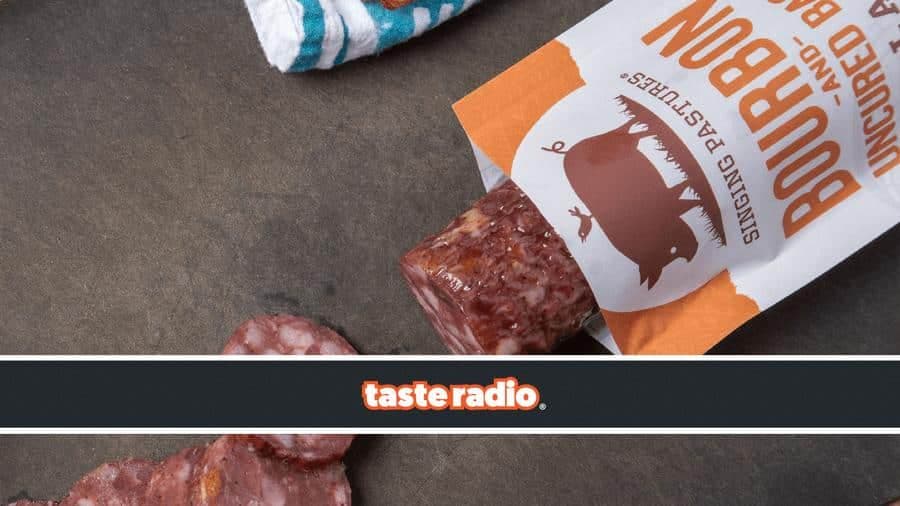
Speaker 1 [02:49] One of the things that, uh, for me, looks a lot different or, or seems to be a lot different than other meat sticks that I've seen. Is that when you cut it open or bite it open, it actually looks like meat on the inside. Um, uh, clearly that was an intentional decision or isn't, there's a lot of intentionality behind that. Um, it doesn't feel processed, even though, you know, meat sticks are, you know, they're processed. It is what it is. But, um, you know, how do you incorporate that kind of education into your marketing? Just make it clear that what you're eating, the ingredients are high quality and you can literally see them.
Speaker 2 [03:26] So you said a couple of things that I want to touch on. Um, one is that The way we make them is different, and I said that during my pitch tonight. They're fermented, and then they're slow smoked. So the process of crafting we're doing is 16 hours. It's twice as long, maybe more than twice as long as most of those other sticks on the market. So, like Chomps and Archer. So they use encapsulated acid and liquid smoke. So the first thing is, part of what's happening is just the way that it's made. And so that makes it kind of more, more tender and meaty, where those sticks are dried down more. And so that's how they get the protein up. So part of the reason that we're making this evolution in our sticks is adding grass-fed beef bone broth. It's for the taste, but a, a fortunate byproduct of that is that it also is going to be higher in protein. So, and then to your point about, uh, the processed food. I think of our sticks as a processed food, not an ultra processed food. And here's why. If you have yogurt, if you have sauerkraut, right, those are processed foods. Ours are fermented and then they're smoked. It's something you could do in your kitchen. We don't have any encapsulated acid, we don't have any partially hydrogenated oils in our sticks, and I think that is very different, right? That's a different step. So, I'm always trying to tell people, you want to eat food that you could make in your kitchen. Maybe you never will, but is it possible? Yes, right? Is it Possible if I give you a stick of corn to say, go make corn oil out of it in your kitchen? Probably not, right? That's an ultra-processed food. So that's just the line that I think of between processed and ultra-processed, that we're trying to do it the slow way and the right way.
Speaker 1 [05:15] Holly, you mentioned that a lot of the growth in the meat stick category is coming from female consumers. Um, are they shopping for meat sticks in the traditional places that we've seen them? By the cash register. I, I guess, where are the opportunities to merchandise, uh, meat sticks at retail and, and what channels as well?
Speaker 2 [05:37] So, primarily we're going to be in the jerky aisle and then I think also by the cash register. So those are places. I think that this is part of the pivot. I think historically it was mostly men, like 7 out of 10 people were men eating meat sticks and meat jerky. But when I was in high school, we were told to eat granola bars and do a lot of aerobic exercise. Now, pretty much across all age groups from Gen Z to I'm Gen X, everybody that I know, the, the my women friends are all looking for protein and they're doing strength training, right? And we're doing that. You know, not like just to get buff, but just because we know it's good for our long-term health. So, those are the people that I'm really speaking to, and, and not exclusively, right? Like, because our packaging is really bright and fun and colorful, we took For inspiration from brands like Graza and Fish Wife, you know, I also could see the young men eating them and, you know, lots of people eating them just because they like the taste. So, that's the direction we're going and, you know, I hope people really like it when they see it on the shelf. Yeah,
Speaker 1 [06:47] I hope so as well. Price, price also, you know, is a factor in how people buy meat sticks. Um, I think, unfortunately, for the most part, people are looking at them as being. On the less expensive side, especially now that you can get, uh, you know, a stick of chomps at a Trader Joe's for a buck 50, um, how do you think about pricing strategy when it comes to the development of your brand?
Speaker 2 [07:12] Yeah, we're going for price integrity and price conviction, which means that ours will be on the higher end, no doubt about it. So right now, our SRP is 2259. As we pivot in our new recipe, we're gonna be adding grass-fed beef bone broth, grass-fed collagen. Stick's also going to be 20% bigger than it is right now. So there's a lot of value coming with that. So, our SRP we're looking at 299 a stick, and having gone over everybody in the category, it doesn't. Make us, we're still within the boundaries of how much, at least at Sprouts, because that's the one national grocer we're with right now. We're in 400 locations of Sprouts. We're still within the range. We're not going outside of that range, but for me, I feel like if there are people that are already buying this often as a meal replacement, right? Like. It's still a really good value because you're getting the protein, and one of the neat things about our new sticks, like the beef stick is going to be 10 g of protein and 80 calories. So it has a really great protein to calorie ratio also. So, you know, if it's the extra, you know, 15 cents or 20 cents. I think a lot of people are going to be willing to do that because they want the quality, and then they buy it again because they like the taste, right? The first time is just like, oh, it's good for me. I like the packaging, but then after that it's like, no, this is meaty and juicy and tender, and, you know, I wanna, I wanna be able to eat this and put it in my kids' lunchbox.
Speaker 1 [08:41] Great segue because I'm seeing a lot of kids eating meat sticks more than I ever imagined, um. And I feel like that's a big opportunity for meat stick brands. Are you looking at that? Are you looking at that
Speaker 2 [08:52] demographic? Yeah, if you look at our new packaging, which is not launching until August, right, so it's not out there. If you go to our website right now, you're not gonna see the new packaging. But that's what I was, you know, pitching tonight because this is the up and coming thing and we've got the packaging, we're on track, you know, it's just a matter of, you know, getting everything done and out the door. So kids, absolutely. I think the bright colors, the Gen Z, the kind of fun cartoonish look, that all went into it too. I can easily see this something. And, and really, we're going with super bright colors, like yellow and bright pink, you know? And I had one person say, Oh, it reminds me of candy. And at first I thought like, e, like, I don't want to remind anybody on candy. But then the second thought I had was, actually, what they're telling me is it seems like it has a lot of flavor. It's something that I'd want to reach for, right? And that's what we want for our kids to. We have filled up children with sugary snacks forever, and we know we're not doing them any good. We know it's not good for their metabolic health in a long time, in the long term. So, just even returning to real food seems like something that has captured the imagination of the public right now. Like, simple ingredients. I want to be able to afford it, and I mean, excuse me, I want to be able to pronounce it and afford it, and that's good too. Um, and I guess that is where we're going is like, you know, it's just kind of in a, in a sense, it's just a real bread and butter kind of thing, like, you know, real meat, you know, and then have some water with it as far as I'm concerned.
Speaker 1 [10:27] Yeah, simplicity goes a long way, and I think people are looking to simplify what they're eating because it's probably the healthiest way to eat is using the ingredients that are easy to pronounce that you know and, um, don't make you feel ill. That goes a long way too,
Speaker 2 [10:43] yeah, and I think that we're, we're governed by the USDA and the USDA, there are a lot of things that I can say. It's very hard sometimes to negotiate with them, and I feel like there's been historically. A lot of room for food corporations to write the rules, you know, and grass, which people know about, generally regarded as safe, you know, Here's an example. This is not going to be true anymore, but this was true when we started when we went to make a meat stick at first. I found out that red dye was in the casing, the collagen casing, and it didn't have to be disclosed. You didn't have to put it on the ingredient deck. And I didn't want red dye in our stuff. So we started with dye-free casings, right? So that's what you put the meat in. And I went to the USDA and I was like, I want to put no red dye on our box. Well, that got turned down. I'm not allowed to say that. I could say in a dye-free, uh, in a dye-free collagen casing. So that's what we ended up doing. But there are really strange rules sometimes that you have to negotiate. Now, of course, that's probably gonna change because as we all know that seems like the some of the artificial dyes are gonna be going away, but who Decided, right, that that was considered like generally regarded as safe. Who decided that's generally, that's safe? Who decided that that didn't have to be on the ingredient deck, but that's how it is. And when you look at a gas station meat stick and it looks unnaturally red, that's why it's red dye. Yeah,
Speaker 1 [12:17] well, uh, I can't thank you enough for sitting down with me today. Congratulations again on the big win. Thank you so much, and, uh, look forward to speaking again soon.
Speaker 2 [12:24] I look forward to it too. I appreciate what you're doing to try and bring integrity. Into food and help people to understand it one day at a time.
Speaker 1 [12:32] Thank you. Thank you.