Search across the BevNET CPG Media network including BevNET, Nosh, Brewbound, Taste Radio, Nombase and CPG Jobs.

From Apartment Oven to CPG Aisle. Fancypants Baking Co. Is Cooking.
Transcript
Note: Transcripts are automatically generated and may contain inaccuracies and spelling errors.
Speaker 1 [00:02] Hey folks, it's Ray with Taste Radio. Right now I'm honored to be sitting down with Maura Duggan, who is the founder and CEO of Fancy Pants Baking Company. Maura, it's a pleasure. Thank you so much for having me. Yeah, we, uh, we're a bit of, uh, fans, I would say fiends is more like it at the Bevnet office for Fancy Pants Baking Company. We love your products. Oh,
Speaker 2 [00:22] thank you so much. They're my favorite kind of people. Yeah.
Speaker 1 [00:26] All I can tell you is that every time the bags come into the office, they're gone in 60 seconds either because someone's grabbing them and hoarding them or someone just ate an entire bag on their own. So that's great. I love that. Yeah, we're here in Providence for the Naturally New England Naturally rising pitch competition and we were just chatting before we hopped on the mics about. How professional and polished these presentations are and you know how, how far founders have come in being able to, uh, not only amplify what they're doing but do it in a really concise and professional way.
Speaker 2 [01:02] Yes, absolutely. I was really impressed. It was a great crew. And just the amount of, you know, time and effort you could tell that everybody put into what they were saying, but they really know their background and their facts and their audience, and they're able to explain it to people in a, you know, easily and approachable way. It was, it was really fun.
Speaker 1 [01:22] Do you think you could have been up on stage in 2004 when you started the company? Oh,
Speaker 2 [01:25] I don't know. I think. It's probably not my strength, so I'm, I'm happy to be in the audience and to cheer people on.
Speaker 1 [01:33] Yeah, well, I mean, nevertheless, you have a great brand. You have a great company. As I mentioned, you started out in 2004. The brand, um, the CPG brand, the consumer brand launched in 2024. Um, so what, what were you doing for the 1st 20 years?
Speaker 2 [01:48] Yes, still baking cookies, so many cookies, but it's been a huge transformation. It's really, I started in 2004 in my apartment. Decorative cookies and first walked into fresh bakery departments of grocery stores in the greater Boston area because I was a home baker. My career was going to be in something else. And so I thought, well, I bake cookies that you walk into a bakery. So I was lucky. I had, um, you know, great reception early on to the decorative product and I grew and scaled that over the last 20 years. But, um, as you said, now I'm full on 2 ft in. In CPG, so there's some similarities but lots of differences.
Speaker 1 [02:32] Are you still, do you still have the other part of your business as well?
Speaker 2 [02:35] Not really. It's really winding down. Over the past 18 months. We've been sort of scaling that down as we scale up the CPG.
Speaker 1 [02:42] So the idea of creating A cookie brand is not necessarily a new or crazy thing. I mean, there's a lot of people who want to start cooking brands, but your cookies are different. They're not like the typical cookies you would find, I guess, that most people would think of when they're looking for a store brand cookies or branded cookies in a, in a grocery store. What makes yours different?
Speaker 2 [03:02] It's really all about the ingredients. When we were developing the recipes, I kept thinking about, like, you know, what do you want when you have a cookie and you want it to be. Delicious and it has to be. And to do that, you have to have the best ingredients. And so we experimented with, you know, probably 10 different butters, which one, you know, tastes the richest and is the best. And we did that for every single ingredient, for every single flavor. And you can really tell, I think when you mix them all together, um, we use like a premium flour, King Arthur flour, and it's every one of those things. When you, you know, mix them all together in a bowl, you wind up with a delicious, indulgent. Cookie and
Speaker 1 [03:42] these are small crunchy cookies that come in a, uh, I don't know what that's the pouch size is. Yeah, it's
Speaker 2 [03:48] 5 ounces, so about 22-23 cookies per bag.
Speaker 1 [03:53] Why small cookies? Why, why do you go in that direction?
Speaker 2 [03:55] Just, you know, they're snackable, and I think people, people snack a lot, and they're convenient. So you can have, you know, one serving is 4 cookies. You can, you know, have 234 cookies, reseal the bag, put them away, or pass them around to family in the office, um. You know they're they're convenient and I think that that people like that.
Speaker 1 [04:16] Now, having been in business for 20 years before you launched this uh consumer brand, I'm sure you have a lot of experience that you could bring to the table, but what surprised you about CPG when you came into it and what did you feel like you really needed to catch up and get up to speed to quickly before. Um, you launched the brand. I mean,
Speaker 2 [04:34] I think a lot, you know, the review schedules, I'd say that, you know, the lead times, uh, we're not used to that in the fresh bakery. It's more kind of present as you go a little bit, so that's really different. You can't scale maybe as quickly as you think because you might have to wait for 7 months for your preferred retailer to be looking at your product. So that, you know, that's been something that we've adjusted and we've been learning about, um. A lot of the different means of having to promote your product, it's getting on the shelf, which is difficult, but it's also reaching the customers. Again, we were a very niche product in the fresh bakery. We had decorative products that were bright. They kind of marketed themselves because we were merchandis amongst. Bagels and muffins and then we had, you know, bright cookies. So we didn't need to put the same attention. They kind of grabbed people's attention on their own. So I think it's been a lot about learning, you know, what works in different retailers to to grab the consumer's attention.
Speaker 1 [05:35] Yeah, the review cycles different for different retailers and you have to think about, OK, what happens if they say yes and. What kind of production capacity are we gonna need and so on and so forth, but the one thing I think that's universal across all retailers is your package, right? So when you think about or when you were thinking about what the package should look like, what the name should be, how the name should pop, how the cookies should pop on the front of the pack, what went into those decisions?
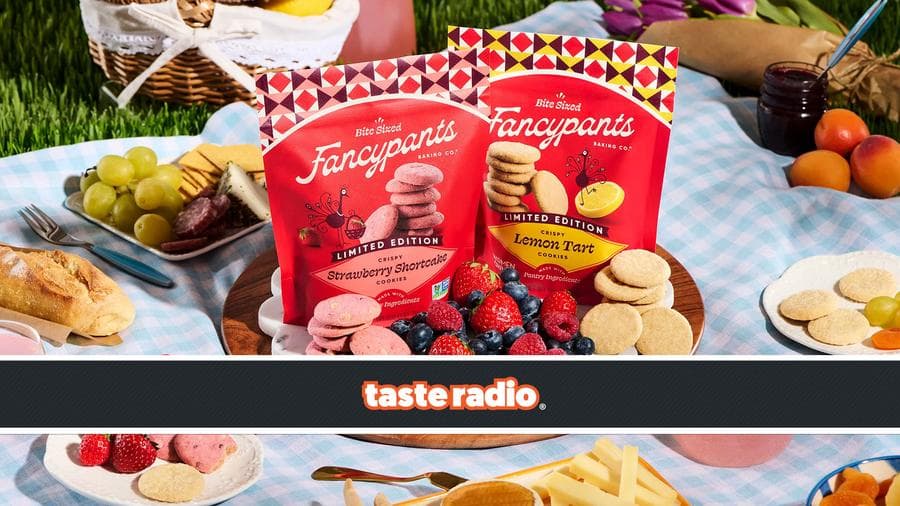
Speaker 2 [06:00] Yeah, we really needed, we really knew that you have those few, few seconds to grab people's attention, so we knew we wanted bright, and we realized that. No other brand really owns red in the cookie category. So that seemed, and it's kind of like a rich color, um, kind of like an indulgence. So it felt like it sort of went along with with the indulgence that we're creating in the cookies. And then I really wanted something, you know, cookies are meant to be, they're they're sort of celebratory. They're, they're kind of fun. They make you feel good, that type of thing. So it was really important to me that that we captured that sort of lightheartedness and um that's where we came up with the idea of a peacock and that it's just sort of like a cool looking fun little creature that can do lots of cute things with the chocolate chips or. Uh, you know, holding oats, whatever it is, and so it was really about trying to just maximize those first few seconds with some bright colors, but also something that might, you know, make you smile enough to maybe grab the bag and then flip it over and take a look at the ingredients which we then hope, you know, convinces you to buy them.
Speaker 1 [07:11] Yeah, is the word fancy pants? I feel like it's always associated with peacocks. Is it?
Speaker 2 [07:17] I don't, you know,
Speaker 1 [07:18] it's funny just you guys. It's,
Speaker 2 [07:20] yeah, yeah, that was a name, you know, back in 2004 when I started the business, it was meant to just be like I was going to do it for maybe 6 months or a year, and I just wanted like a fun memorable name. And so fancy pants, you know, came to me and I just thought that'd be fun. But now here you are, you know, 21 years later. Well, it is memorable. Yeah,
Speaker 1 [07:39] it definitely is. Well, I mean, a Massachusetts native like myself, I think when I was growing up. I look at this fancy pants over here, you know, it was a lot
Speaker 2 [07:46] of that. A lot of people have, have like a personal, uh, connection to it, which is really great, you know, when you're doing demos or at trade shows, a lot of people have, um, a positive association with the name. So it's been, that's really fun.
Speaker 1 [07:58] Yeah, I think a lot of people have a positive association with fancy pants because of the ingredients that you mentioned, but also because it's not free. Um, how much of a conscious decision was that? Especially given that nut allergies seem to be going through the roof,
Speaker 2 [08:13] right? That was a decision that I made very early on. Um, I actually had a great friend who both of her children had severe allergies, and again that was, you know, 20 years ago, and there really were not a lot of options back then and um. I just decided we're going to stay nut free. We're nut free now and we're going to stay that way, and it can be a real challenge, but it's also a great advantage as long as you know we're ultra careful about who we source from and have all sorts of documentation and sometimes it can be limiting because there aren't a lot of people who want to. You know, say that they're not free or provide the documentation, but it's worth it. It's something that people, once they know that we're nut free, they, they, they're repeat customers, and strangely, I, I now have a nut allergy which developed. Oh, so
Speaker 1 [09:08] that was weird. Sorry to hear that. Well, that just makes it even more important for you to get fancy pants. Cookies on JetBlue flights and Delta flights and so on and so forth because I think they're pretty cautious about not allergies on flights like that and um. I got to tell you, the options that I've seen on certain flights lately have not been so great.
Speaker 2 [09:30] So yes, that's definitely something that we would love to do. We, um, we received a grant recently, uh, just about a month ago that from a Massachusetts mass tech collaborative that we're going to use to buy some new packaging equipment that's going to allow us to make mini packs. So
Speaker 1 [09:49] stay tuned, stay tuned. OK, cool. Well, you, you brought up your factory. When I talk to entrepreneurs and they have a manufacturing facility in addition to their consumer brand. They always refer to the businesses as two distinct businesses. So you have, on the one hand, you're making the product. On the other hand, you have sales and marketing. How are you balancing both?
Speaker 2 [10:10] Well, I mean, we've, that's the way it's always been. So I mean we have different people who. Have, you know, serve different purposes, so we have a VP of sales and his, you know, job all day every day is to be, you know, talking with stores and making presentations, things like that, and then we also, you know, we are running our manufacturing. We also do a lot of co-packing and private label for other companies, so we're kind of used to, we've kind of grown, you know, from very small, and we're still very nimble and we're still small, but it's everybody. That works for us does like 10 different things.
Speaker 1 [10:45] I mean, it certainly seems like it's an advantage to have a manufacturing facility, but for folks who are listening right now, what advice would you have for them if they're starting out?
Speaker 2 [10:54] I'm sure there are pros and cons to both. This is what I've always known. I'm a bit of a control freak, and so I've always had control over everything that we do. We can scale up and down, you know, we can. Do a lot of different things very quickly. We can innovate quickly. So if you kind of like that, if you, you know, I'd say famous last words I, I said 20 years ago I never wanted to be bored and I'm certainly never bored. So you have to like doing a lot of different things I think if you're going to do your own manufacturing, but you know I think it's, it's been a great route for us.
Speaker 1 [11:33] Well, I think one advantage that's very clear is your ability to create limited edition flavors, uh, which you do in spades, um, and, and it's great because it seems like every. 3 or 4 months you have a couple new limited edition flavors and they're all amazing. Your strawberry shortcake. Oh my goodness, knocked it out of the park. It's so darn good. Um, how, what does it do for the brand having all these limited edition flavors?
Speaker 2 [12:00] You know, it's, it's a way it gives us something to talk about, um, it, we. new customers maybe you wouldn't have tried a chocolate chip cookie, but you love strawberry shortcake and you're like, well, I'll pick that up and try. So I think it, you know, it brings different people in for different reasons. Um, it's, it's kind of fun for our team to, uh, we're used to, you know, it kind of a lot goes back to what we used to do. We used to do decorative cookies that, you know, we had. 8 or 12 different designs every month we're used to, you know, always changing and something fresh and so I think it's kind of as the group that we are we're used to like what about this? What about that? We could sort of love to experiment. We all have sweet tooth, so it's. Always fun to come up with a new recipe and I think you know consumers today, they want that you see huge CPG companies and they're coming out with limited editions all the time so it's also partly I think it's something that you need to do to stay relevant
Speaker 1 [12:56] and just keep the customer interested, I
Speaker 2 [12:58] think, right, uh, because people are becoming accustomed to be. Introduced to new things constantly,
Speaker 1 [13:05] yeah, and, and again it definitely is, I think it makes your social media content a lot easier to, um, strategize around because you, you always have something new, you always have something to talk about, right,
Speaker 2 [13:17] right, yes, and people engage different things and come up with great ideas. I love people send us ideas sometimes too, you know, I mean, it's, it's, in, you know, food is very, you know, social. And so it's, it's something I look forward to. It's one of my favorite parts of the business is thinking about kind of what's next.
Speaker 1 [13:38] Absolutely. Where can you find Fancy Pants Baking Company at retail?
Speaker 2 [13:43] Sure, we are gaining retail every day, which is really exciting, so. You can find us, um, sort of in the New England markets all the way to California. So, um, Gelson's and Bristol Farms, we just launched at, um, Harris Teeter on the East Coast in the Fresh Market. We launched this week in 40 Whole Foods Market in the mid-Atlantic region, uh, Central Market, uh, Woodman's Market, so we're in a couple 1000 doors right now and you know, hopefully. More and more as the year continues. Well, if it
Speaker 1 [14:16] hasn't been clear, listeners, uh, you got to get your hands on some fancy pants Baking Company cookies. And if you're a retailer listening, I would highly consider you look at the brand because what Maura and her team make, uh, are, is just, it's just a fantastic brand with fantastic products, so. I can't thank you enough for taking the time to sit down with me today. Really appreciate it. Gotta come visit the factory. Yes,
Speaker 2 [14:38] pretty soon. Love to have you.
Speaker 1 [14:39] Absolutely. OK, well, that will be part two of our, uh, discussion with Maura about fancy pants. But in the meantime, thank you so much again.
Speaker 2 [14:45] Thank you for having me. Appreciate it.