

Stress Testing the Market
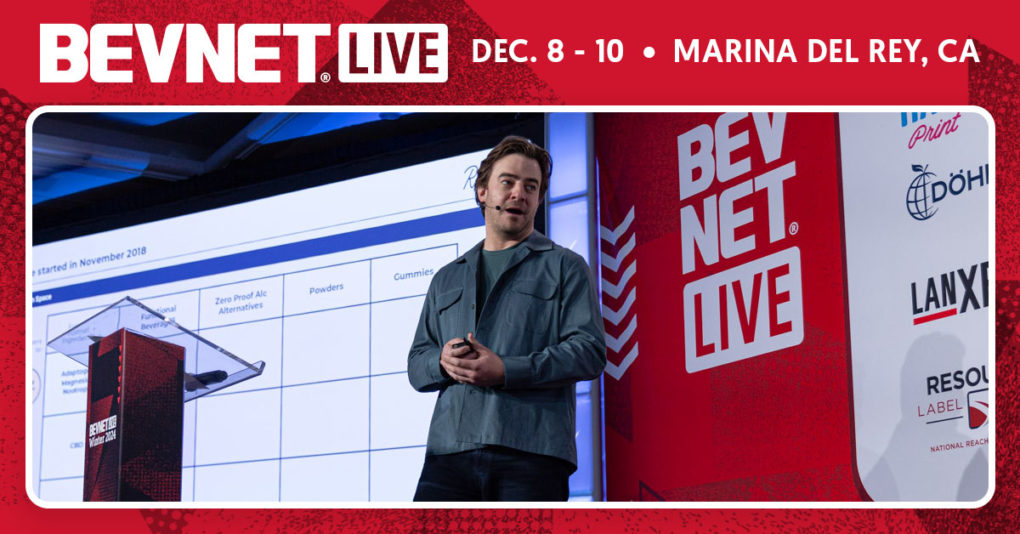
In 2016, Recess founder and CEO Ben Witte witnessed that year’s presidential election and made a confident bet: the future would be stressful.
Thus, he reasoned, that consumers would soon be looking for any aid for relaxation they could find. For him, the result of that bet became Recess, a functional beverage brand which began as one of several poster children for the late 2010s CBD fad and has now evolved into a broad, fast-rising platform brand built around the simple idea of “taking a recess.”
In a discussion focused on how brands establish new categories, Witte told the audience at BevNET Live Winter 2024 on Tuesday that although CBD was a pivotal first step for establishing the business as being at the forefront of the emerging relaxation drinks sector, he “saw the writing on the wall” that the regulatory environment would not turn in the ingredient’s favor. So, business innovated and evolved while Witte made sure not to lose sight of the core proposition around the relaxation need state he was confident would remain in vogue with or without cannabidiol.
CBD-infused Recess products are still on the market, but they now represent less than 10% of the business’ sales, whereas its mocktails are over 90%.
“Consumers buy solutions, not ingredients,” Witte said. “I really believe it’s important to focus on the key value propositions and the specific occasions and need states you’re most relevant for.”
Later in the day, Thirstwell founder and CEO Brandy Rand picked back up on the subject of rising demand for relaxation drinks in a session focused on how cultural shifts have led to changes in how consumers “drink their feelings.” She pointed to a decline in American happiness, dropping from the 15th happiest country in the world to 23rd, out of 140 tracked nations, according to at least one survey.
In response, she said brands could benefit from working to uplift consumers who are feeling down through positive messaging and upbeat ad campaigns.
“Marketing through feeling for beverages is not a revolutionary thing, the biggest companies in the world have done this for decades,” Rand said, pointing to trends during the 2008 recession when brands like Coca-Cola mounted marketing campaigns focused on happiness and “lifting people up” that proved highly successful.
Losing the Dead Weight and Making Gains
In a time of economic uncertainty, many founders and startups have been faced with an ultimatum: get profitable or get packing. But as growing companies burn through cash, and securing investment becomes a far tougher challenge, how can an emerging brand actually make the bottom line leap from the red to the black?
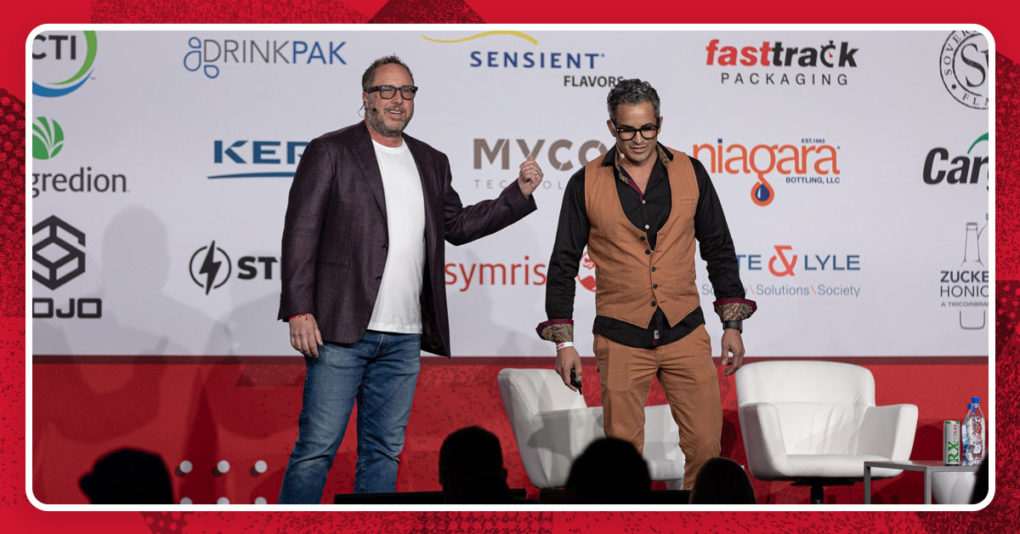
LifeAID founders Orion Melehan and Aaron Hinde were presented with that exact challenge two years ago, and through diligent work – and frequently painful decisions – they achieved profitability and positive EBITDA. On stage Tuesday, they walked through some of the steps they took to get to this point and aimed to demystify at least some of the fog that surrounds the path to profit.
Among the steps they took included hiring a proper accounting team to identify inefficiencies, optimizing inventory and learning how to prioritize their key accounts, slashing marketing and reducing payback periods, and – hardest of all, they said – layoffs. In the end, the business accrued 24% in savings and is still running at a profit today.
Achieving profitability, Melehan said, is a key to longevity for a brand, and suggested it can be a proper marker of success.
“You never know when you’re going to get your true growth spurt,” he said. “There’s always opportunity out there. There’s always disruption going on in the category. There’s always a bottom 50% on a retail shelf that you can go and execute and take against.”
An Investor Checks In
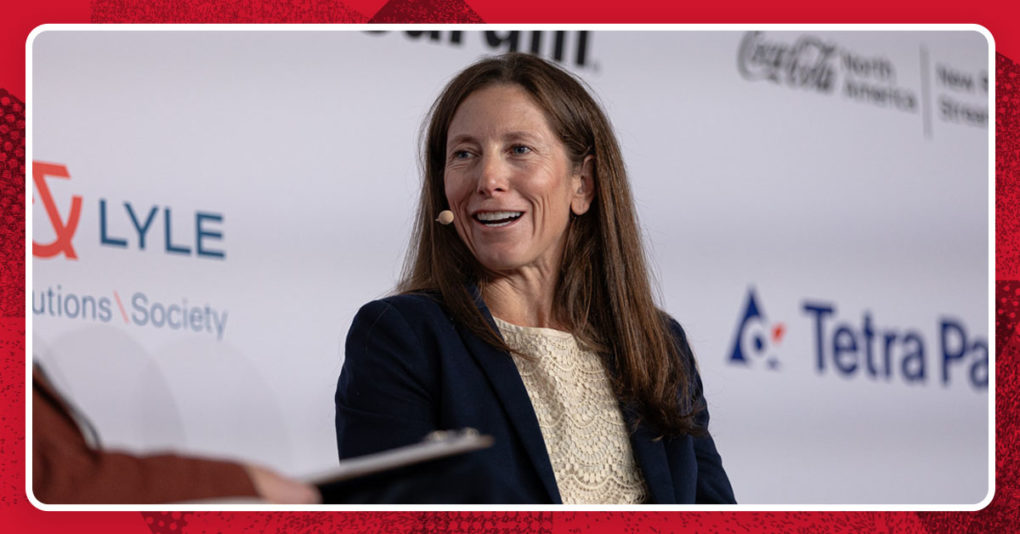
In the wake of the 2024 presidential election there’s been a lot of uncertainty in the air over what the next year will mean for the marketplace. While no one has a perfect crystal ball to tell the future, Janica Lane, co-head of consumer investment banking at Piper Sandler, offered some insights into what investors are anticipating for the beverage industry in the coming months.
Lane said that while many in the industry are worried about the potential tariffs on international trade promised by president-elect Donald Trump, she believes that beverage is not likely to be as heavily hit as other sectors will be.
Another unknown is the effect that GLP-1 weight loss and diabetes drugs will have in the food and beverage space, but Lane said that early signs suggest sales could even increase as a result of these new drugs’ prevalence – a sentiment echoed by speakers last week during Nosh Live.
Overall, Lane projected a positive outlook for beverage as categories like energy and sports drinks have demonstrated room for disruption and new brands to gain a foothold.
“I am hugely bullish on beverage,” she said. “I think that if you look in the retail sales data, it’s some of the biggest categories in terms of sales. I think it’s some of the highest potential for growth and for new companies to emerge.”
Additional highlights from Day Two of BevNET Live:
- Alpha-Diver CEO Hunter Thurman walked through his firm’s methods for understanding consumer psychology and the path brands take to become active and routine parts of people’s lives.
- Spec’s chief sales and operations officer Stephen Jabour sat for a retailer profile, offering insight into how the Texas-based chain has embraced Delta-9 THC drinks.
- After selling her company earlier this year, Nutpods founder Madeline Haydon shared her lessons for founders including her successes and mistakes.
- In the RTD cocktail space, On the Rocks’ EVP of sales Rocco Milano shared how the brand looped in Dr. Dre and Snoop Dogg as it looks to establish itself as a serious brand in a fresh category.