

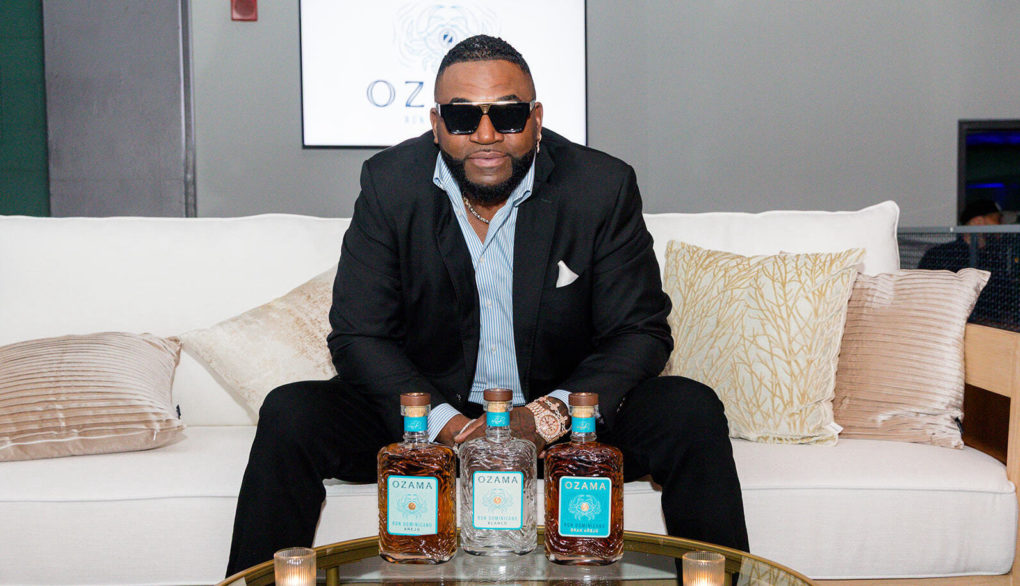
David “Big Papi” Ortiz may be a baseball Hall of Famer and a three-time World Series champion. But can he live up to his own standards for greatness on the field of the spirits business?
The former Boston Red Sox All-Star is the founder of a new brand of “ultra-premium” rums, Ozama Rum, produced in his home country of the Dominican Republic.
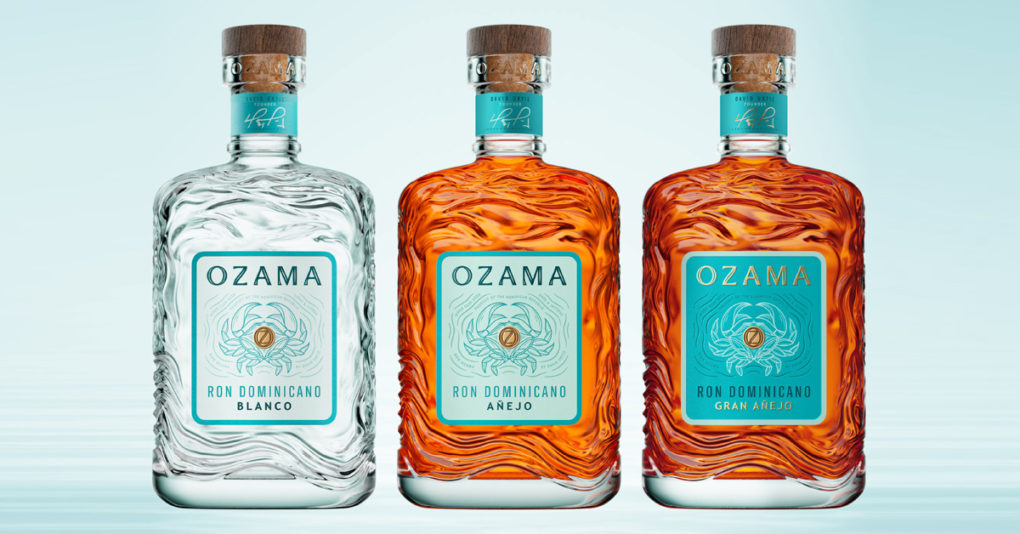
The rums are certified as “Ron Dominicano” to denote that they’re made with 100% Dominican sugarcane, fermented and aged for at least one year in oak barrels, and come in three expressions: Ozama Blanco, Ozama Añejo, and Ozama Gran Añejo. Each 700ml bottle is priced at $25-$40.
“I know I’m a big man, but I want Ozama to go way bigger than myself,” Ortiz told BevNET earlier this month.
The spirits are now rolling out to stores in the Dominican Republic and select U.S. states including New Jersey, New York, Florida and – given Ortiz’s connection to the Red Sox – all of New England. The rums will also be sold online direct-to-consumer.
Ortiz has lent his name (or, more often, his Papi nickname) to numerous CPG and food and drink concepts over the years, from restaurants to salsa to, most recently, cannabis.
But Ozama Rum uses a far more subtle approach to note his involvement in the business; Ortiz’s name and signature appears with the title “founder” in a wrap around the stem of the bottle, and while the slugger will be prominent in the brand’s marketing efforts, he said it was a conscious choice to take a more subdued approach on the bottle itself.
“I don’t want people to fall in love with a product because of me,” Ortiz said. “Of course, I’m here to drive attention [from] the customer. But at the end of the day, this is going to be part of our legacy. This is something that I want people to recognize because it’s a really good product from the Dominican Republic.”
However, the name is still deeply personal to Ortiz; he said the name Ozama refers to a river in the Dominican that he grew up near and played by regularly in his youth.
“I used to spend a lot of time with my friends going fishing and doing a lot of things [by the river],” he said. “Some of those things I remember very well, because I got in trouble a few times with my mom and dad for just going to the river without permission.”
“It was a great experience,” he added. “Whenever I get the opportunity to drive by the river and stuff like that, all those memories just pop up.”
Ensuring Ozama is made in the Dominican Republic and supports local communities was also of top priority for Ortiz. He said the brand employs a number of single mothers to hand-wrap bottles and provides daycare and other services for them while they are working.
“David was pretty clear: He wanted to create a brand of his own,” said Abbott Wolfe, founder and CEO of Drink2Success, who is now managing business operations for Ozama Rum.
While Wolfe will handle Ozama’s day-to-day business, Ortiz insists that unlike past endorsement deals he will take a hands-on approach with the brand, from offering creative input to being involved in marketing campaigns both behind and in front of the camera.
In some senses, Ortiz agreed, he’ll be the brand’s “designated hitter.”
Given his lengthy experience in brand promotion going back to his playing days, Ortiz said he’s learned that one of the most important things to making a product a success is that there needs to be “a story behind it.”
“Based on me representing so many products, in my case, I always have to work harder and harder and harder to be able to connect people,” Ortiz said.
However, the question hanging above Ozama is one that all spirits businesses are facing today: how does a brand compete in a saturated market when consumers are drinking less alcohol overall?
Consumers have been inundated with celebrity-backed spirits launches for years, to the point that brands like Siempre Tequila have even countered the trend by touting themselves as being “celebrity-free.”
Within spirits, celebrity brands are only 5% of dollar sales within NIQ-tracked off-premise channels, and celebrity brands in traditional categories, such as tequila, are declining at a faster rate than the category itself, according to new data from 3 Tier Beverages.
As well, growth of rum has been slower in recent years, trailing behind tequila and whiskey sales.

According to Wolfe, he sees slower rum sales as “all the more reason” to enter the space and provide a point of differentiation, as opposed to competing in an oversaturated tequila or bourbon set.
“[Rum is] not as crowded, it is skewed predominantly to really one player who has the volume play at a lower price point,” Wolfe said. Our data is showing that almost a third of consumers who are in the whiskey category are looking to experiment or looking to try other products, and rum is one that they’re picking up.”
Wolfe also highlighted that premium spirits have been performing better compared to value plays, another reason for them to be optimistic about Ozama’s chances.
“In my mind, the spirit category always has its up to down, whether you’re celebrating or commiserating based on what’s happening,” he said. “But new products that are authentic, products you can make a splash with, you can cut through some of the clutter. It’s just hard to lump us into the overall, every-item in the spirit category. Spirits are down, but there are bright spots within it, and I know that we’re in one of those bright spots.”
At launch, Ozama will be activating in Boston around Red Sox games – although the Red Sox organization is not involved in the business – while the goal for Florida is to draw a connection with the Dominican community in the Southern state. Wolfe said the brand is focusing on both retail and on-premise opportunities and in addition to employing Ortiz for meet-and-greats, media appearances and other activations, Ozama will also be looking to promote via specialty cocktails (with work titles like a ‘Papi and Coke’) and other traditional spirits brand building techniques.
And for Ortiz, who is well aware of his reputation as one of the greatest baseball players of all time, failure in business does not sound like an option.
“I have been part of some alcohol before, but just as an image, not as an owner,” he said. “Now that I’m an owner, every owner wants to look at his product as the best product in the market. That’s my goal…. So people can relate who I was as a player and also say ‘We a good ass product.’”