

Bevscape: The Latest Beverage Brand News
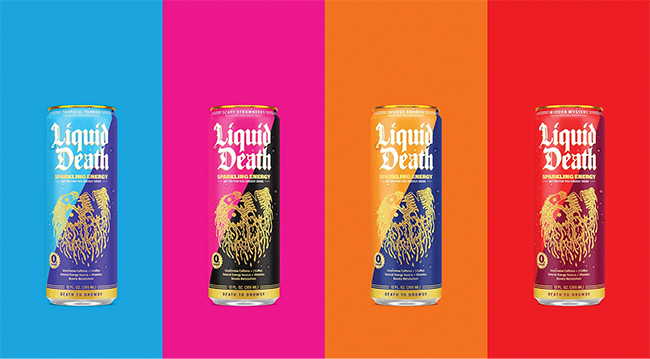
Liquid Death, David Protein Facing Lawsuits Claiming Allulose Contradicts ‘Zero Sugar’ Claims
Liquid Death is facing two proposed class action lawsuits, both taking aim at the brand’s claims that its energy drinks contain “0g sugar” despite its use of allulose, a sweetener that has been classified by the Food and Drug Administration (FDA) as a sugar.
Both complaints were filed in late August, one in California and the other in New York, with plaintiffs represented by different law firms but making similar claims that the brand misled consumers by putting a “zero sugar” claim on its Sparkling Energy Drinks.
The first lawsuit was filed in the U.S. District Court Northern District of California by Calif. resident James Williamson, followed by a suit filed in the Southern District of New York by N.Y. resident John Frelinghuysen.
At the heart of both cases is the company’s use of allulose, a naturally occurring monosaccharide sugar sourced from fruits like figs and raisins, as well as wheat, maple syrup and molasses.
The FDA recognizes allulose as a sugar, but has chosen to exercise enforcement discretion over its absence from total
sugar listings on nutrition labels.
“There is no such thing as ‘0g Sugar’ allulose; it does not exist,” Williamson’s complaint states. “To peddle this contradiction in terms, Defendant deceives the public through misleading packaging statements and labels. This deception has earned Defendant many millions of dollars, while doing substantial damage to a broad class of consumers across California and the country.”
Frelinghuysen’s complaint argued that there is also a high chance of consumer confusion, due to a general lack of awareness of allulose as an ingredient.
“Allulose is not a common household name,” the complaint claims. “Reasonable consumers, including Plaintiff, are unlikely to recognize the term or to infer from the ingredient list alone that it is a sugar.”
It’s unclear how much allulose is used in the energy drinks, although it is the second listed ingredient on the nutrition label after carbonated water.
While class actions have long been a burden for CPG businesses, complaints around allulose labeling have become a more common issue, and there’s legal precedent to back the plaintiffs.
In July, the U.S. Seventh Circuit court revived a proposed class action case filed against Chobani, which also claims the brand misled consumers by calling its yogurts “sugar free” despite the use of allulose.
The decision reversed a previous dismissal of the case, arguing that allulose is regulated by the Federal Food Drug and Cosmetic Act and provided backing for arguments that the ingredient should be included under total sugar listings.
“The federal requirements at issue are plain — food products cannot be labeled sugar free unless they have less than half a gram of sugar, and sugars include every monosaccharide, including allulose,” the Seventh Circuit wrote in its opinion.
Williamson’s complaint against Liquid Death leans heavily on the Seventh Circuit’s opinion, further arguing that the court held that the FDA’s October 2020 Allulose Guidance, in which the agency said it would exercise enforcement discretion for the exclusion of allulose from sugar declarations, “is not entitled to deference and does not change the analysis.” Rather, it states that the regulations are “unambiguous” and that the guidance is “an announcement of a change in enforcement policy,” and not an interpretation of regulatory law.
Liquid Death isn’t the only brand facing fresh class action complaints over allulose; the same week, a complaint was filed against WK Kellogg alleging it falsely labeled its Special K cereals as containing no added sugars despite the use of allulose syrup.
A similar lawsuit was also filed against David Protein, targeting its flagship protein bars zero sugar claims and the use of allulose.
Liquid Death and David Protein did not respond to a request for comment.
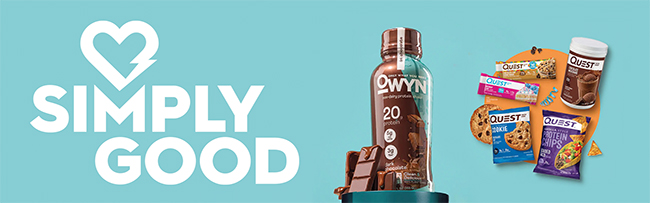
Investors Sue Simply Good Foods Over ‘Abject Failure’ To Integrate OWYN Brand
Less than two years after its $280 million acquisition of Only What You Need (OWYN), Simply Good Foods Company is facing a proposed class action suit from investors alleging the integration of the brand has been “an abject failure.”
The complaint, filed Aug. 14 in the U.S. District Court for the Southern District of New York by the Monroe County
Employees’ Retirement System, argues Simply Good Foods and several current and former executives made materially false or misleading statements about OWYN and its integration. The proposed class action includes investors who purchased Simply Good Foods stock between Oct. 24, 2024 and April 8, 2026.
Simply Good Foods’ former president and CEO Geoff Tanner, former CFO Shaun Mara and current CFO Christopher Bealer are named as defendants alongside the company.
The complaint centers on the contrast between management’s public characterization of the transaction and the operational issues that later emerged.
Simply Good Foods completed its acquisition of OWYN in June 2024, positioning the deal as a way to expand its presence in the ready-to-drink (RTD) protein shake market. In the months that followed, the suit alleges that Tanner repeatedly told investors the integration was “progressing as planned,” later describing it as “largely completed” and saying it had “gone well.”
However, investors claim the reality inside the business was significantly different. Among the problems alleged in the suit:
• Simply Good Foods lost key managers following the acquisition and responded by creating a layered organizational structure that ultimately became “bloated” and was “lacking strategic cohesion.”
• A change in pea protein sourcing before the acquisition closed but implemented shortly thereafter allegedly hurt the taste, texture and shelf life of certain OWYN products, contributing to poor consumer reviews, weaker sales and lost distribution.
• As sales weakened, plaintiffs allege Simply Good Foods leaned more heavily on promotions before cutting brand support.
In October 2025, Tanner disclosed that a pea protein sourcing decision had resulted in taste and texture issues as products aged. At the time, however, he said the problem had been “rectified” and was “mostly in the rearview mirror,” while maintaining that the integration had gone well.
As recently as January, Simply Good Foods continued to express confidence in OWYN. Despite lingering effects from the quality issue, retail takeaway for the brand climbed 18% during the company’s first quarter, and management outlined plans to increase marketing spend to more than 10% of OWYN net sales. Three months later, after CEO Joe Scalzo returned to lead the company, the picture had changed dramatically.
In April, Simply Good Foods reported that OWYN sales had fallen nearly 17%.The company reported a $187 million impairment charge against OWYN’s intangible assets.
Scalzo said the company had lost brand expertise, struggled with marketplace execution and failed to meet its own expectations for the acquisition. He also cited rising G&A expenses, declining marketing investment and an overreliance on promotions as Simply Good Foods moved to reset the broader business.The company cut nearly 15% of its workforce in April to streamline operations and lower overhead costs.
“While the growth opportunity with OWYN is compelling, we did not meet our own expectations with the integration of the brand into our parent company,” said Scalzo. “As a result, we lost some important brand expertise, our marketplace execution was poor and our brand performance fell well short of our plans.”
The plaintiffs argue that the company’s later disclosures proved the company had omitted material information about the OWYN integration. Following the April earnings announcement, Simply Good Foods shares fell from $14.41 on April 8 to $10.44 on April 10, a decline of more than 27%, per the complaint. In July, Simply Good Foods recorded another $13 million impairment tied to OWYN. Cumulative impairments on the business now total $200 million – roughly 70% of the $280 million acquisition price.
Management has maintained that OWYN’s underlying opportunity remains intact.
In July, Scalzo said the company believes the brand’s challenges “stem primarily from integration and execution issues rather than a lack of consumer demand for clean-label plant-based nutrition,” while cautioning that distribution losses could continue over the next six to 12 months.
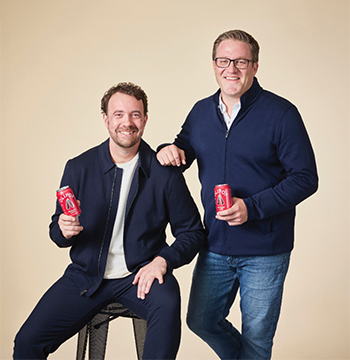
OLIPOP Announces New CEO; Founder Goodwin Set for Innovation Role
OLIPOP welcomed a new CEO this August, appointing Christian Patiño Webb to lead the brand as founder Ben Goodwin transitioned to executive chairman and head of innovation.
Patiño Webb joined OLIPOP after a four-year run as CEO of sports drink brand Electrolit. He is charged with overseeing “business operations, distribution, organizational execution, brand expansion, and strategic growth initiatives that support OLIPOP’s long-term vision,” according to a press release.
Prior to becoming CEO of Electrolit in 2022, Patiño Webb held leadership roles at Procter & Gamble, Johnson & Johnson, Red Bull and Unilever.
Meanwhile, Goodwin is now helping guide OLIPOP’s long-term vision and innovation pipeline, as well as “shaping its next phase of growth.”
In an interview with Bloomberg, Goodwin said he made the decision to step down after a “decompression spirit quest” at his home in Washington state. He called the search for a new CEO a “really long, very painstaking process.”
“I am more replaceable as the CEO than I am as the founder and driver of formulation and innovation,” he said.
“What Ben and the team have built is remarkable and a step forward for the beverage industry. OLIPOP is not only a category-defining brand, but a company with a clear mission, culture, best in class talent, and an extraordinary runway ahead,” said Webb. “I look forward to partnering closely with Ben as we continue scaling the business, investing in new capabilities, and building on the strong foundation already in place.”
As he transitioned to his new role, Goodwin called founding and leading OLIPOP to mainstream success “the honor of my lifetime, and I feel extremely fortunate and proud of what we’ve accomplished to date. I’m thrilled to evolve my role to
focus on areas where I have strong natural talent and motivation, to serve as a source of meaningful differentiation for OLIPOP.”
OLIPOP has been ramping up over the past 18 months, first with a $188 million Series C funding round in 2025 at a $1.85 billion valuation.
That was followed by a brand refresh and a national marketing campaign this year.
Amidst rumors of a potential sale or IPO, the changes “position OLIPOP to pursue future strategic and financial milestones with confidence, while maintaining the flexibility to evaluate capital markets opportunities alongside other strategic alternatives as the company continues to grow.”
Patiño Webb’s hiring showed OLIPOP once again leaning on experienced Big CPG veterans. The company previously recruited Mel Landis, who previously integrated BodyArmor into the Coke system, as
president in 2024.
During his roughly four-year stint at Electrolit, Patiño Webb helped guide the brand (a division of Grupo PiSA) to massive gains in the U.S. and turning it into the fastest-growing scaled brand in sports hydration, per distribution partner Keurig Dr Pepper (KDP).
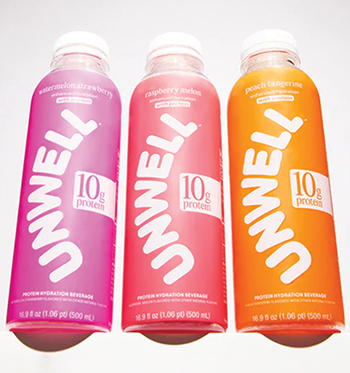
Podcast Star Alex Cooper’s Unwell Beverage Venture Is Shutting Down
The beverage arm of celebrity podcaster Alex Cooper’s Unwell media empire was shut down in August.
The brand, launched with Nestlé SA, will continue to produce drinks and new flavor launches through Halloween, but will cease operations soon after.
Cooper announced her brand’s entry into the hydration space in December 2024 with 16.9 oz. plastic bottles, using a wellness
positioning to market to women underserved by high-performance sports drinks.
By November, Unwell had begun testing the energy drink set and followed with protein beverages.
The reasons behind the shut down are still unclear. Cooper’s Unwell media business received an investment at a $500 million valuation days before the closure was revealed. The undisclosed funding round was led by WTSL, an investment firm led by former Endeavor executive Patrick Whitesell and Jason Lublin, and could have signaled that Unwell’s partners are more interested in media endeavors than in consumer goods.
Beverages are a notoriously difficult industry to break into; especially when the categories Unwell operates. Both the energy and sports (or hydration) drink categories are dominated by big names like Monster, Red Bull, Pepsi (Gatorade) and Coke (Body Armor and Powerade).
Unwell also faced increased competition for female consumers from brands like Bloom, Alani Nu, FLRT and others.


Receive your free magazine!
Join thousands of other food and beverage professionals who utilize BevNET Magazine to stay up-to-date on current trends and news within the food and beverage world.
Receive your free copy of the magazine 6x per year in digital or print and utilize insights on consumer behavior, brand growth, category volume, and trend forecasting.
Subscribe