

Pressure Test: Can HPP Cold-Pressed Juice Thrive in the New Functional Beverage Era?
Cold-pressed juice helped usher in the modern functional beverage era, giving consumers a convenient way to pack fruit, vegetables and other nutrient-dense ingredients into a single bottle. But in the decade since the category’s initial boom, the functional beverage landscape has become significantly more crowded.
Consumers can now find hydration, energy, immunity and gut health benefits in everything from soda and sports drinks to powders and supplements.
Meanwhile, juice as a whole has faced its own challenges as shoppers have become increasingly conscious of sugar, even if it’s naturally occurring. But the cold-pressed juice segment – and its most common CPG variety, juice that undergoes high-pressure processing, or HPP – appears to be finding fresh momentum. (HPP is a nonthermal processing method used to extend shelf life without relying on heat.)
According to market research firm SPINS, the broader HPP beverage category generated $344 million in sales during the 52-week period ended Aug. 9, up 17.8% from last year. That growth outpaced the overall juice market, where dollar sales increased roughly 2% over the same period across refrigerated and shelf-stable products.
Scott Dicker, market insights director at SPINS, said the growth reflects both strong execution by individual brands and a broader shift in how consumers approach premium products. Even as shoppers remain mindful of their overall grocery bills, they are willing to selectively trade up in categories where they perceive meaningful differences in quality or benefits.
At Whole Foods Market, cold-pressed and HPP juices are punching above their weight.
“HPP and cold-pressed juice has been one of our strongest performing segments within refrigerated beverage. It is meaningfully outpacing the broader juice category, and that gap has only widened over the past year,” Charlie New, senior category
He continued, “This segment is not a niche anymore. It is becoming a core part of how our customers think about daily nutrition.”
That’s a notable shift from where the category stood roughly eight years ago. In 2018, BevNET reported that HPP beverage growth had slowed to 5.4%, down from 31.5% the previous year, as cold-pressed juice struggled with oversaturation, high prices and an inability to communicate its value to mainstream shoppers.
Today’s momentum, however, doesn’t represent a return to the cleanse-driven, $10 green juice era. Instead, the category is being reshaped around more explicit functionality, accessible premium pricing and products designed to fit seamlessly into everyday routines.
With functional benefits now available across virtually every corner of the beverage industry, what does cold-pressed juice need to offer to stand apart? And can HPP brands turn a historically premium proposition into something consumers can reach for every day?
The Functionality Question
Juice has spent much of the past decade navigating an ever-evolving definition of “healthy.” Rising scrutiny of sugar has complicated the category’s traditional health halo, Dicker said, while a proliferation of functional beverages has given
consumers more ways to seek out specific wellness benefits.
For HPP cold-pressed juice, that has put a greater emphasis on communicating a clear reason to purchase.
“Ten years ago, the primary proposition was relatively simple: cold-pressed juice was a convenient way to get more fruits,
vegetables and nutrition into your day,” Saxon Seay, president of Suja Organic at Suja Life, told BevNET via email. “Today,
consumers have an enormous number of ways to access functional benefits […] so the role of cold-pressed juice has to be more than simply ‘juice that’s good for you.’”
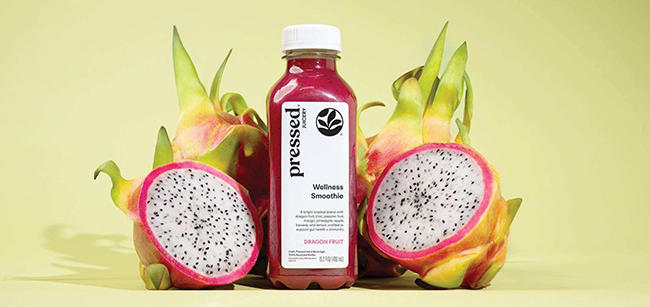
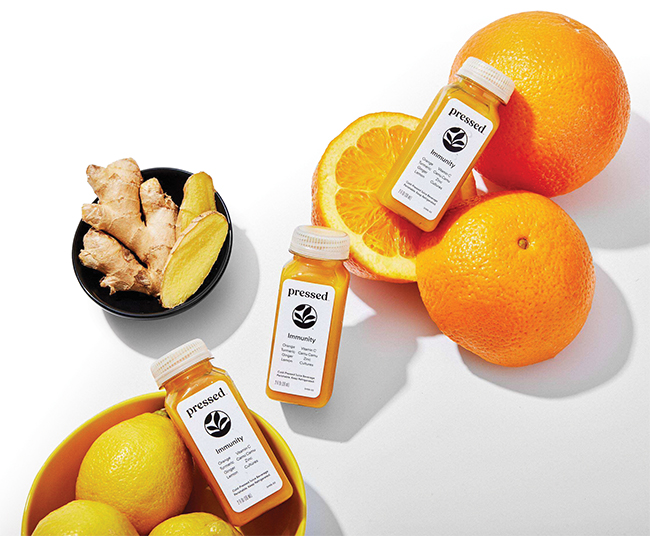
That shift is influencing how companies think about the boundaries of juice. Pressed Juicery, which began primarily as a cold-pressed juice and cleanse brand, now spans more than six categories, including tonics, wellness smoothies, probiotic lemonades, protein drinks and hydration; all of its bottled cold-pressed juices and wellness shots are processed using HPP.
Pressed Juicery CEO Justin Nedelman said that expansion reflects the different ways consumers now incorporate wellness into their routines and the expectation that beverages can serve a specific need state throughout the day.
“Consumers don’t just want a beverage that promises a benefit – they want to understand where that benefit is coming from,” Nedelman told BevNET.
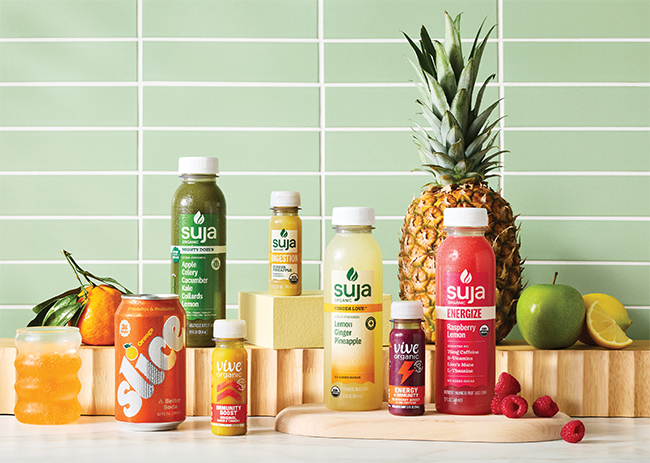
For Suja – which made its public market debut earlier this year – that means using fruits and vegetables as the foundation for benefits consumers can immediately understand, including immunity, gut health, hydration, energy and daily nutrition. The company’s portfolio includes “Boosted Juices” like Immunity Citrus Pineapple and Gut Health Berry Lemon, alongside its Suja Organic and Vive Organic wellness shots.
Those products are among the strongest performers in Suja’s business. The brand’s benefit-forward cold-pressed juices are up 32% year-to-date, while its superfood-forward offerings have grown 76%, according to Seay.
Whole Foods is seeing a similar pattern. Functional blends are currently the strongest growth driver within the retailer’s cold-pressed set, New said, particularly products positioned around gut health, immunity or energy. Green juice remains a steady performer and an “anchor” of the segment, while lower-sugar and vegetable-forward recipes are also resonating with shoppers.
Dicker sees opportunity for juice makers to lean into functions that consumers already associate with familiar ingredients. Tart cherry, for example, has gained traction around recovery, while orange juice has long benefited from its association with Vitamin C and immunity.
For the HPP cold-pressed segment, making those connections more explicit can help turn inherent nutrition into a clearer purchase driver.
“The sweet spot is when function doesn’t come at the expense of taste,” said Nedelman. “Consumers expect both now.”
Re-educating the Consumer
Functionality may be getting clearer, but communicating what makes HPP juice distinctive remains a work in progress.
That has been one of the category’s longest-running questions. Back in 2018, Cold Pressure Council chairperson Joyce Longfield told BevNET that cold-pressed brands had often been “preaching to the converted,” successfully reaching wellness consumers who already understood juice cleanses and alternative processing, but had struggled to explain the proposition to a broader audience.
Today, some brands are translating the technology through the attributes it enables.
“I don’t think the average consumer wakes up thinking about HPP – and frankly, they shouldn’t have to,” said Seay. “HPP is the technology; what matters to the consumer is what that technology
allows us to deliver.”
Nedelman also emphasized the consumer experience rather than a technical understanding of the process.
Consumers “don’t necessarily need to understand the mechanics of HPP,” he said. “What they experience is what the technology helps enable: fresh taste, simple ingredients, quality and convenience.”
Consumer education around the technology itself also remains part of the opportunity.
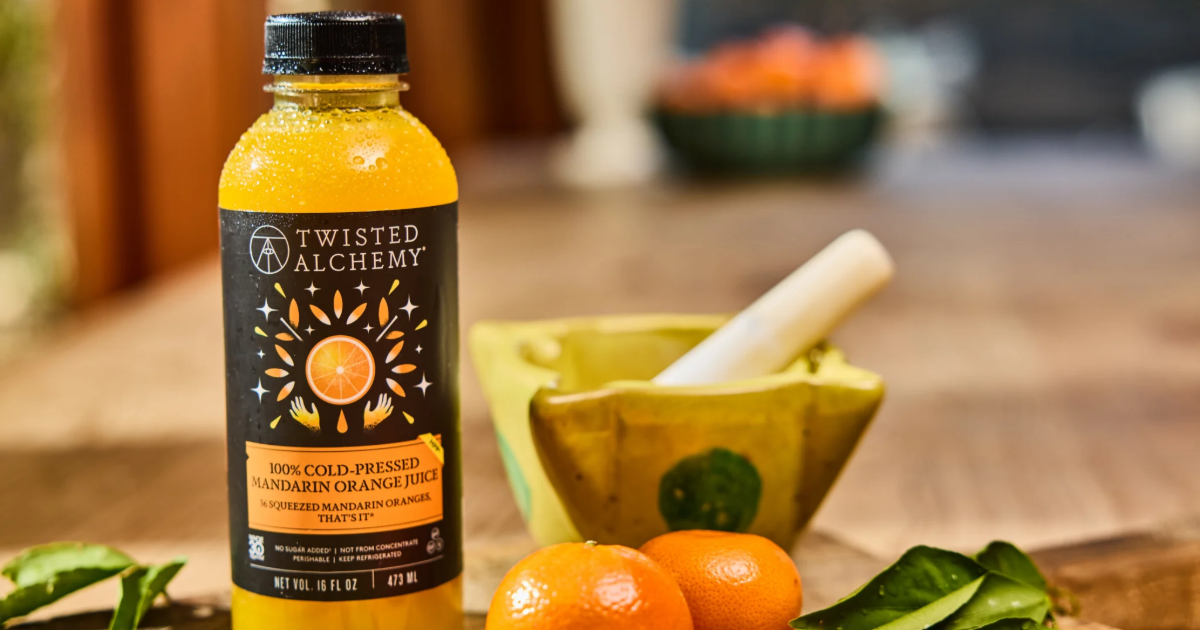
For Twisted Alchemy, HPP has been embedded in the business since its roots in hospitality. Co-founders Scott and Kim Holstein initially used the technology to address a practical challenge for restaurants and bars: delivering fresh citrus and other juices without the labor, inconsistency and waste involved with squeezing fruit on-site.
As the company has expanded its retail presence, the Holsteins have also sought ways to increase consumer awareness of the processing method. The founders said they are working to make HPP more visible on Twisted Alchemy’s packaging; the company is adding an HPP callout to the front of its labels, with an asterisk directing consumers to an explanation of the process on the back of the bottle.
“I see and hope that consumers get more knowledgeable about the benefits of an HPP product versus a non-HPP product when it comes to juices,” said Scott Holstein.
That education is taking place alongside a broader push to explain how the products can be used. Twisted Alchemy is now sold in roughly 250 Whole Foods Market stores, primarily in the produce section, and the Holsteins said the Whole Foods business has grown more than 175% overall.
Together, the efforts illustrate the multitude of ways HPP can be translated at shelf, from communicating attributes such as freshness, simplicity and convenience to more direct education about the processing method and its applications.
Making Premium More Accessible
For all of the category’s evolution, one of its oldest challenges remains: price.
Cold-pressed juice initially established itself at the ultra-premium end of the beverage market, with some bottles commanding prices north of $10. By 2019, many players were targeting a $3.99-$4.99 price point – a move that increased accessibility but also created pressure to reduce costs.
That price range now looks close to the category’s sweet spot.
At Whole Foods, New said the strongest velocity and repeat rates are coming from what he calls the “accessible premium tier,” roughly $3.49-$4.99 for a single-serve cold-pressed juice.
“Our customers absolutely still pay a premium for HPP juice, but they want that premium to feel justified,” he said. “Clean ingredients, a real functional benefit, a brand they trust.”
Dicker similarly sees consumers selectively trading up. A shopper may choose private label in one aisle and spend more on a premium product in another; for cold-pressed, HPP juice, the question is whether the proposition provides enough value to earn that additional spend.
Scale can help, but HPP remains a premium process. Beyond processing itself, Nedelman pointed to produce sourcing and yield, refrigeration and cold-chain distribution as additional complexities.
“The opportunity is to use scale to take cost out of the system without taking quality out of the product. For Pressed, accessibility has always been central to the mission. As we’ve scaled our manufacturing and
distribution capabilities, we’ve been able to reach more consumers while maintaining the product standards that differentiate HPP cold-pressed juice in the first place,” said Nedelman.
He continued, “The challenge for the category is finding that balance: making HPP products accessible enough to become an everyday purchase while preserving the ingredient quality, freshness and experience that justify their premium positioning.”
Distribution is the other side of the accessibility equation. Pressed is investing in wholesale across grocery, foodservice, hospitality and other channels as it works to reach consumers beyond its own stores.
Suja is similarly focused on affordability, availability and awareness. Historically concentrated in natural and premium grocery, Seay sees conventional grocery, mass, club, convenience, foodservice, airports and other away-from-home channels as potential whitespace.
“You can’t build a large category if consumers have to seek it out. Our ambition is for Suja Life’s products to be available wherever and whenever the consumer wants our brands,” said Seay.
Refrigeration can complicate the category’s expansion, but for retailers, HPP also provides retailers with an operational advantage. According to New, the technology can provide roughly 30 to 90 days of shelf life, compared to three to five days for raw juice, allowing Whole Foods to manage inventory more efficiently and reduce shrink. The retailer has progressively given more space to HPP and cold-pressed products as demand has increased.
Broadening Use Occasions
If accessibility is one piece of the growth equation, frequency may be another.
The classic single-serve bottle doesn’t necessarily need to define the future of cold-pressed juice. Smaller formats, multi-serve options and products designed around specific occasions can all give consumers new reasons to enter the category.
Wellness shots have already demonstrated the potential of smaller functional formats, with New reporting strong repeat purchase rates at Whole Foods.
“The per-ounce premium is significant, but customers see it as a daily wellness investment, not a juice purchase, and that reframes the value equation entirely. We are working with our brand partners to keep innovating on format and bundling across the cold-pressed set,” he said.
Daily routines are also creating new opportunities for the category. Nedelman said HPP juice has shifted from something consumers may have encountered through an occasional cleanse into products that can play throughout the day – an immunity shot in the morning, hydration or energy during the day and an Unwind tonic at night.
“Wellness today is less about extremes and more about simple habits you can realistically incorporate into your everyday life. HPP cold-pressed juice fits naturally into that mindset because it’s convenient, approachable, and can serve different needs and occasions,” said Nedelman.
Even the cleanse is evolving. Pressed’s Simple Cleanse is positioned as something consumers can add to their existing morning routine rather than requiring an all-day regimen.
That evolution is a long way from the restrictive cleanse culture that helped put cold-pressed juice on the map. It also speaks to a potentially much larger opportunity: turning juice from an occasional wellness intervention into a repeatable habit.
New usage occasions are emerging outside traditional juice occasions as well. Twisted Alchemy’s hospitality business puts its juice into cocktails, mocktails and culinary applications, while its retail business encourages consumers to bring those same uses home. That versatility gives consumers additional reasons to keep citrus and other juices in the refrigerator beyond drinking them straight.
Collectively, those efforts point to a broader opportunity: increasing the number of occasions in which cold-pressed juice can fit into consumers’ routines.
What’s Next?
The HPP cold-pressed juice segment may look considerably different from the one that emerged during the cold-pressed boom roughly a decade ago, but many of the questions surrounding its long-term growth remain familiar.
Sugar continues to influence perceptions of juice, HPP remains relatively expensive, and refrigeration adds complexity. At the same time, functionality, new formats, wider distribution and additional usage occasions are giving the categories more avenues for growth.
At Whole Foods, lower sugar is becoming an expectation rather than a differentiator. New said the retailer is also watching prebiotic fiber, electrolyte-enhanced cold-pressed products and “multi-functional benefit stacking,” where one beverage may address several wellness needs.
Making HPP products part of more regular routines is another potential source of expansion.
“For the growth to be durable, the category has to deliver more than novelty,” said Nedelman. “Products have to have great taste, have a clear reason for being, use ingredients consumers understand and be available at a price and in a place that makes repeat purchase realistic.”
Seay expects the evolution of functionality to eventually change the composition of the refrigerated set itself.
“Three to five years from now, I think the cold-pressed set will look less like a traditional juice set and much more like a destination for functional nutrition. Historically, the category has largely been organized around ingredients and flavors — greens, citrus, roots, fruit. Those things will remain important, but I think consumers are increasingly shopping with a different question in mind: What is this going to do for me?” she said.
HPP will likely remain central to how these products are made, even as the consumer proposition surrounding cold-pressed juice continues to evolve. Fresh taste and recognizable ingredients remain part of the equation, while functionality, accessibility, education and new use occasions are giving brands more ways to communicate the category’s value.
For a segment that once built much of its identity around how its products were made, the next stage of growth may hinge just as much on giving consumers more reasons – and more opportunities – to reach for them.


Receive your free magazine!
Join thousands of other food and beverage professionals who utilize BevNET Magazine to stay up-to-date on current trends and news within the food and beverage world.
Receive your free copy of the magazine 6x per year in digital or print and utilize insights on consumer behavior, brand growth, category volume, and trend forecasting.
Subscribe