

Considering their place in the global beverage elite, it seems rather unsurprising that Keurig Dr Pepper (KDP) would have a some thoughts (and data) tracking the latest industry trends. Yet its only this year that the company has released its first-ever State of Beverages Trend Report, and among the more broad takeaways (coffee is the US consumer’s “most essential” drink, if you weren’t aware) there’s a few glints of insight — mostly around soda’s resurgent influence and integration with the Gen Z-driven wellness movement — that peek out.
Soda Is My Happy Place
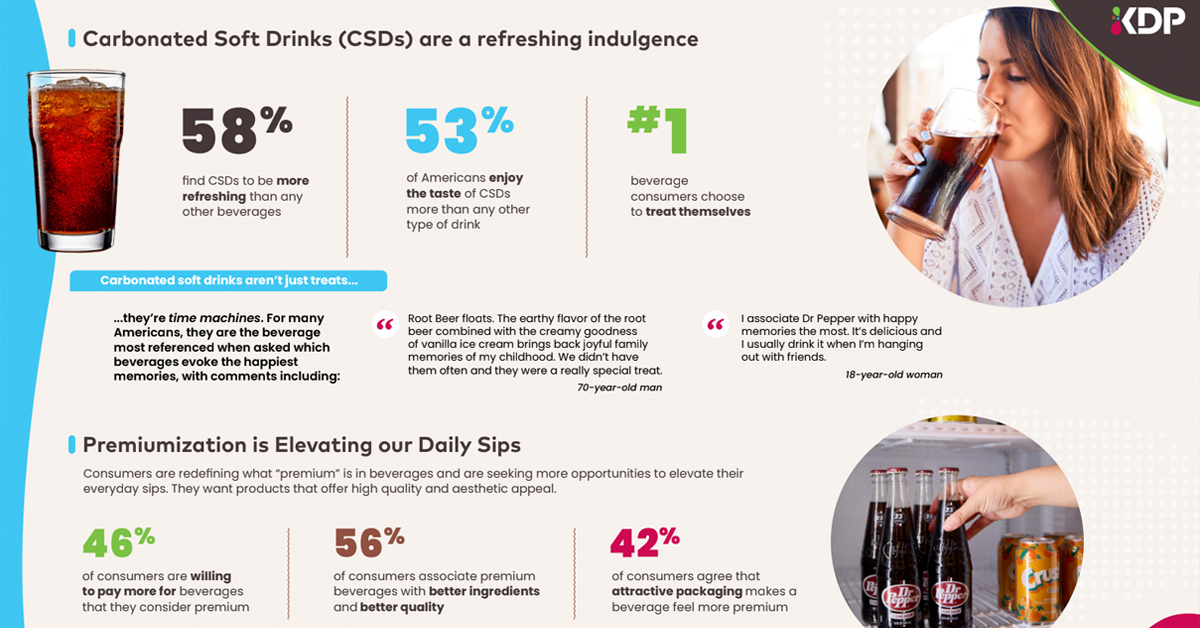
As KDP is no doubt happy to report, carbonated soft drinks (CSDs) remain a wellspring of “happy memories” for American consumers, who ranked soda as the #1 category they choose to treat themselves.
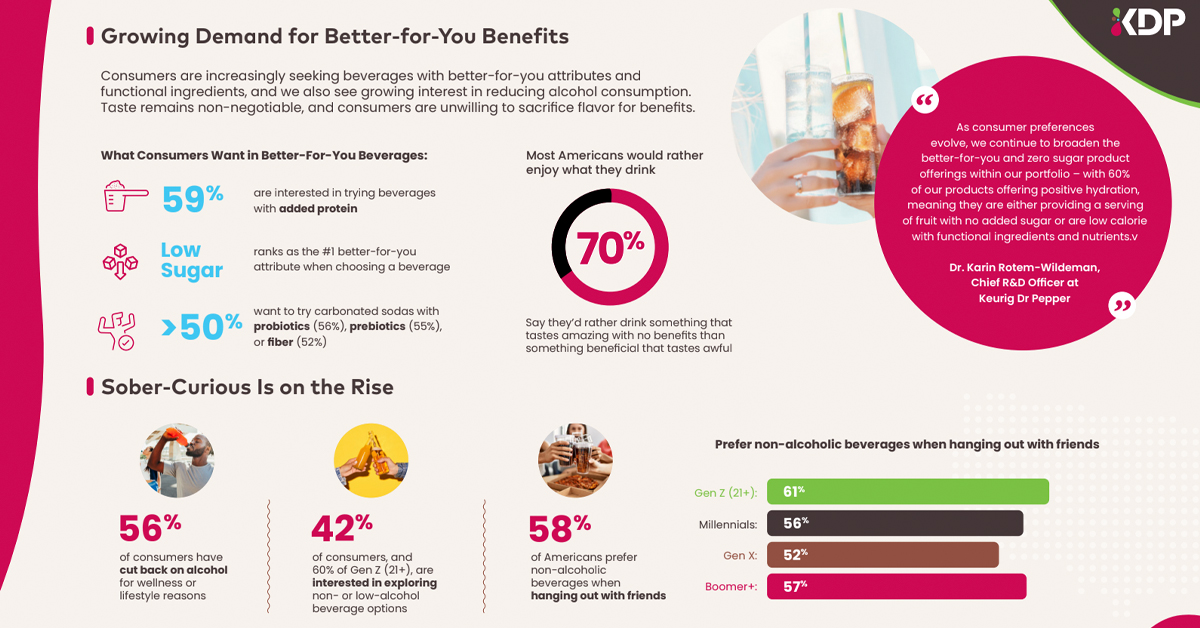
That makes CSDs a familiar, attractive vehicle for brands to deliver whatever types of ingredients or functional benefits that consumers are asking for: today, its gut health, specifically probiotics (56%), prebiotics (55%) and fiber (52%).
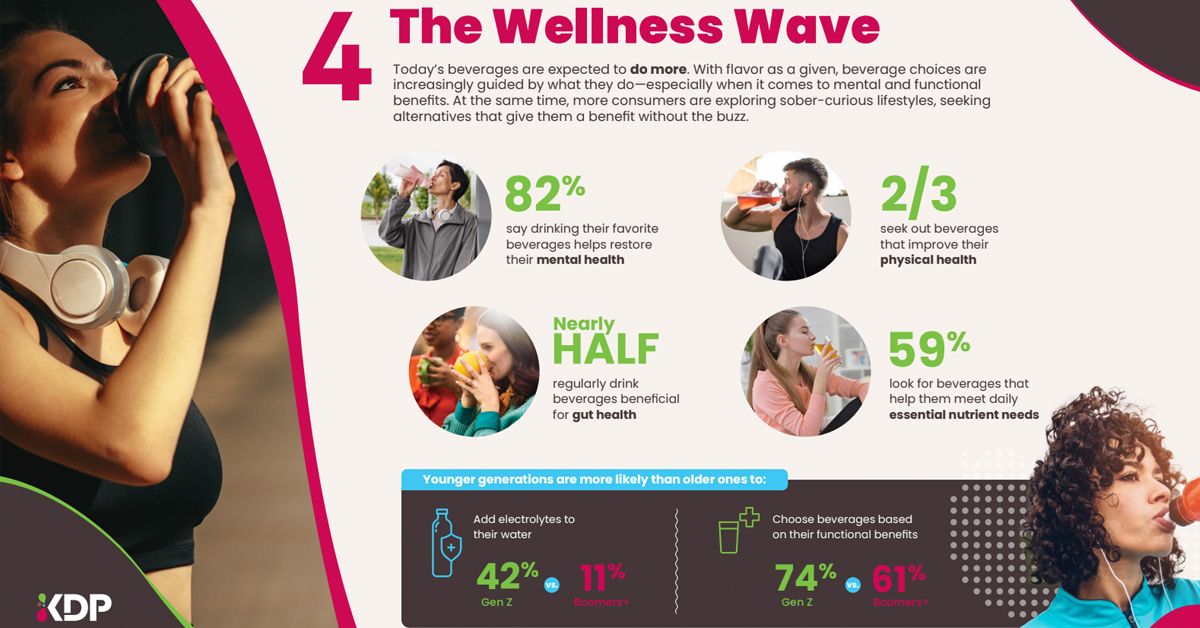
But emerging functional spaces like protein soda (KDP-backed Don’t Quit, among others), relaxation drinks and THC could all potentially benefit from alignment with CSD. For the 82% of consumers who say drinking their favorite beverages helps restore their mental health, functional beverages that tap into those existing positive associations with soda could be particularly potent.
Viral Velocity
Considering the way consumers feel about CSDs, the category is uniquely well poised to exploit the desire for constant innovation — and the more viral, the better.
Per the report, 72% of Gen Z consumers try a new beverage every month, with new flavors being top-ranked amongst motivational attributes at 59% (considerably more than the next-highest attribute, “offered by a brand I trust,” at 39%). And they’re discovering those flavors overwhelmingly on social media (74%). The reception for Dr Pepper Creamy Coconut, the company’s best-performing limited offering last year, confirmed that “bold flavors spark curiosity, drive relevance and create personal, memorable experiences,” said Eric Gorli, President of U.S. Refreshment Beverages at KDP. In that context, does the drink even have to taste good? When 53% of Gen Z say they choose beverages to “stand out,” it’s a question worth considering.
It’s notable, too, that the ability to captural excitement around viral beverage trends has somewhat leveled the innovation playing field between soda giants and smaller players. While the big guys leverage their big brands (see: Sprite +Tea, Pepsi’s IHOP-approved maple syrup cola) to dabble in product trends, there’s still room for independents like Perfy and Swig Drinks to generate attention and disrupt the category in their own way.
Finding a Formula
Without the ability to predict the next big viral beverage flavor trend, we can still glean a few indicators from the report as to where conditions may be strongest for innovation.
Taste Over Function: 74% of Gen Z choose beverages based on their functional benefits, but 70% of consumers say they would rather drink something that tastes amazing with no benefits than something beneficial that tastes bad. That’s not big news in itself, but suggests that consumers in crowded categories (like modern soda) will increasingly choose around flavor as ingredients like prebiotics become commoditized. Consumers here may be more concerned with how well brands can mimic the taste of a cream soda or gummy bear, rather than how many billion CFUs they have.
Low-Sugar: Still the top attribute for consumers when choosing a better-for-you beverage, per KDP’s report. However, not all categories see it the same way: zero-sugar has become the standard for next-gen energy drinks across the board, but a little bit of sugar didn’t stop Poppi from scoring a billion-dollar-plus exit to Pepsi.
Occasions Shape Choices: Consumers want different beverages for different parts of the day; during exercise (water), hanging out (CSDs) and doing homework (juice) all speak to different drinks, per KDP’s report. Building a platform that can go beyond those restrictions is something sports nutrition brands have smartly exploited (with pre, during and post-workout occasions) but it’s still just beginning to be explored in earnest. We’re curious to see what that means for disruptive ‘hybrid’ products that play across categories: not just the aforementioned protein sodas, but also things like Throne Sport Coffee, Orka Energy Water and fruit water brand Loom – not to mention the rising crop of adult non-alcoholic (ANA) products.