

Appropriately for a brand whose name translates as “from the street,” De La Calle is taking a new route.
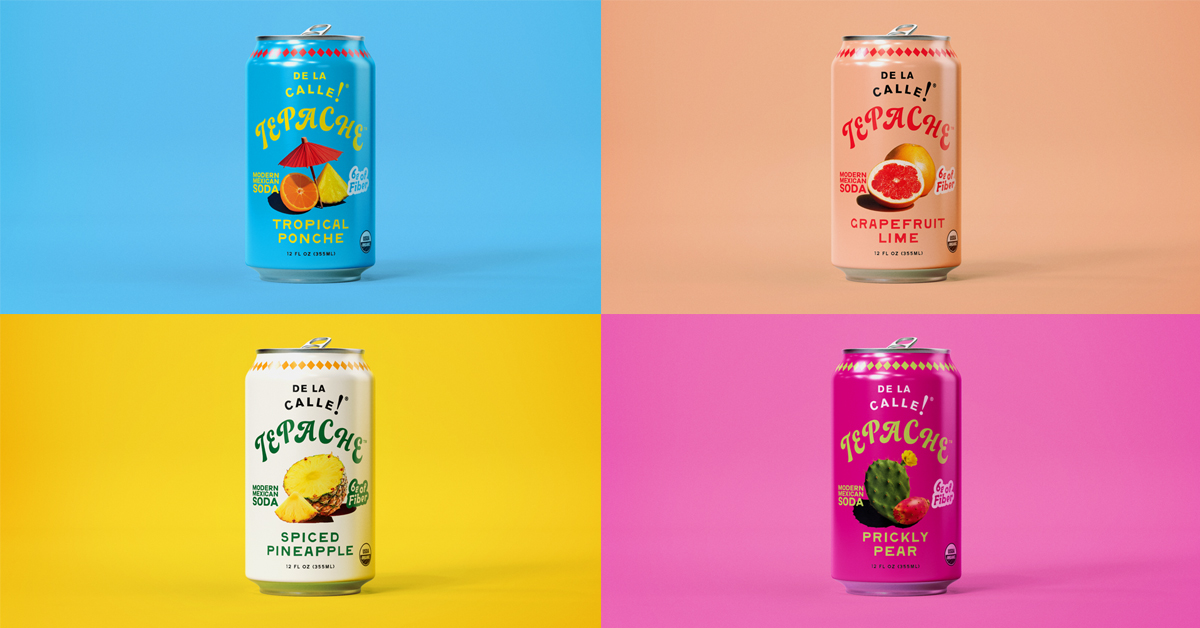
The Los Angeles-based brand is coming off a summer of transition in which its pointed shift from traditional tepache – a fizzy fermented drink made with pineapple rinds and sugar – to a “modern Mexican soda” has heralded a new phase of growth. In June, the brand unveiled new packaging and marketing to reflect that pivot, along with a new formulation and a price drop from $3.29 to $2.49 per 12 oz. cans (in c-stores).
But even as those changes begin to take hold, CEO and founder Alex Matthews and his team continue to iterate.
‘Breaking Down the Barrier’
As a tepache, De La Calle’s growing pains echoed the development of categories like coconut water or kombucha; drinks with deep roots within ethnic groups but educational barriers for mainstream adoption. Matthews’ initial thought — “Let’s just be a Mexican kombucha,” he recalls thinking — ended up undercutting tepache’s unique recipe, an issue further complicated by cold-chain requirements.
“Positioning tepache as a kombucha alternative was short lived as it doesn’t taste anything like tepache,” Matthews said. “This is a fermented beverage from Mexico, made with pineapple rind and positioned as a Mexican Soda. The pineapple is just the fermented starter that gets you to that base, and then we of course add organic fruit juice, and that actually is what you’re tasting more than anything.”
De La Calle’s new design is intended to quickly and more explicitly bring consumers into the flavor experience. There’s still a strong, deliberate color scheme on the package — cans of Mango Chili, for example, feature yellow text against a bold red background — that helps lift the brand visually off the shelf, Matthews said. But now there’s real fruit photography on the can, too.
It’s a small but intentional change that helps subtly indicate De La Calle’s better-for-you credentials — a crucial distinction as it enters an indulgent category. Known for their glass bottles and use of cane sugar rather than high fructose corn syrup, powerhouse brands like Jarritos (Novamex) and Fanta (Coca-Cola) have become staples of Latino drinking culture in the States. Much like “modern soda” brands Poppi, Bloom and Olipop have done, De La Calle aims to attract Mexican soda fans seeking a permissible alternative.
That approach requires a careful balance: “tepache” is still prominently emblazoned on the front label, but De La Calle’s sodas are now buffeted by six grams of fiber per can, and sweetness (a combination of organic cane sugar, organic vegetable-derived erithrytol and organic juices) has also been boosted around 30%, Matthews said. The introduction of Mandarin Refresco, now the brand’s most popular SKU, earlier this year is a clear nod to one of Mexican soda’s most popular varieties, and another “traditional Mexican flavor” is on the way next year.
These changes have come amidst growing momentum for beverage makers offering modern takes on drinks popular with Hispanic and Latino demographics. Independent brands like Bawi, TUYYO and Taste Salud have taken on aguas frecas, while Jarritos is celebrating its 75th anniversary this year with a slew of innovation.
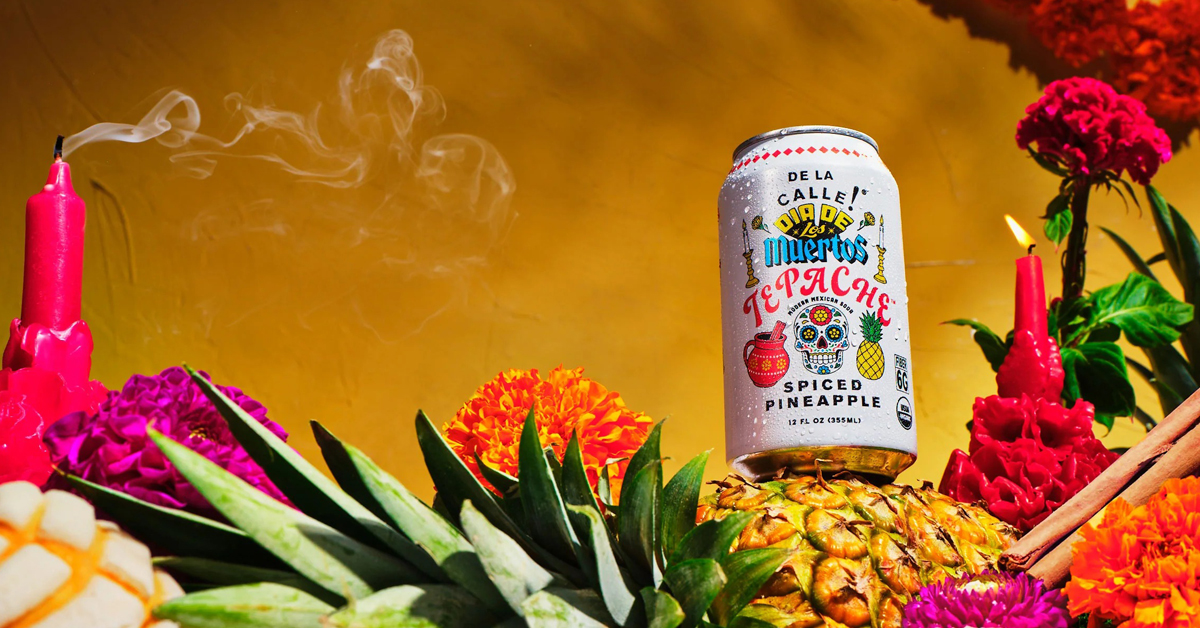
De La Calle’s position within that maturing sector is creating new opportunities to engage with those consumers, as seen with the limited release of a Dia de los Muertos-inspired can for Hispanic Hertiage Month.
Northgate Opens Doors
Though its route to mainstream consumers has been winding, De La Calle hasn’t lacked for major retail support, with berths in Walmart, Albertson’s and Whole Foods.
But leaning into “modern Mexican soda” has also inspired a pivot in distribution tactics. Matthews speaks in reverence about a visit to Northgate Market, a Southern California grocery chain specializing in Mexican foods, where, watching shoppers from all demographics browsing elegantly merchandised rows of chiles and buying freshly prepared tortillas, he had a “lightbulb moment.”
“It was like a melting pot and, culturally, that’s what De La Calle is about,” he said “It’s like this modern take on this traditional drink. Northgate is, for me, the pinnacle of that.”
That experience has informed a new approach: targeting Mexican grocery chains, where De La Calle’s better-for-you credentials can offer a pointed differentiator. The company has hired an experienced broker — Adaline Tabello of Cal Coast Sales & Marketing — specifically for that channel, and Northgate’s 40-plus stores are already onboard. The brand isn’t retreating from its existing partners, but Matthews sees Mexican grocery as the clear next step, followed by food service.
Within a better-for-you soda category overflowing with competition, De La Calle’s intentional points of differentiation may provide both short and long term gains.
“I do think that, looking at this category now, I can buy a cola or a root beer or something like that from 15 brands. Do we need that many options? I don’t know. Maybe not,” said Matthews. “But do you need one multicultural soda in that set? I think you do.”