

Levia’s next chapter begins back at the start.
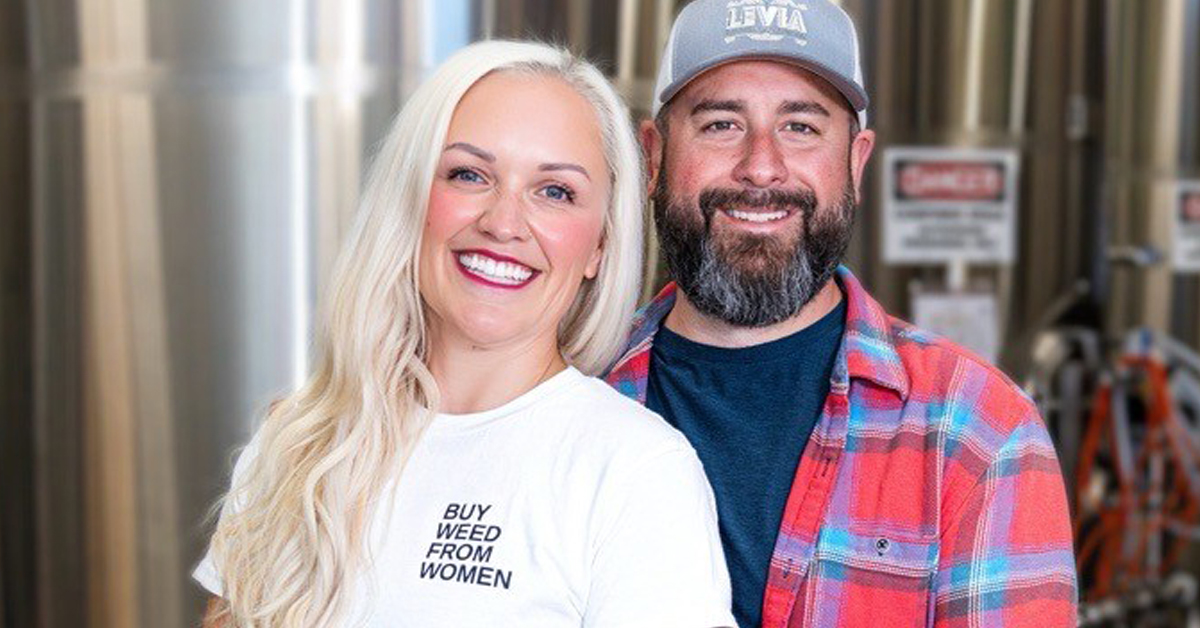
Three years after the Massachusetts-based THC seltzer brand was acquired by multi-state operator Ayr Wellness in a $20 million deal, Levia is back in the hands of two of its original cofounders, Kristin Rogers and her husband Eric Rogers. They’re both eager to reset and recalibrate, though no less ambitious than before.
Upon launching back in 2021, Levia was a pioneering brand in a category just finding its feet. Working from its owned facility in Georgetown, Mass., the company produced a three-SKU line of infused seltzers (5 mg THC per 12 oz. slim can) tailored for their different effects: Achieve, Celebrate and Dream. With an open runway to grow, Levia quickly grabbed around 80% of the THC beverage market in the Bay State, and less than year after the company launched, Ayr came calling. Announcing the deal in August 2021, Ayr CEO Jonathan Sandelman said Levia would “play a marquee role in each market where we operate.”
Yet the proposal — which included the carrot of an additional $40 million in shares based on Levia’s performance in 2022 and 2023 — did not win instant approval.
“I had been pretty open about not wanting to sell the company,” said Eric. “But at the end of the day, my personal preferences for Levia didn’t matter. My goal was always for the brand to exist and thrive and grow and become the national brand that these multi state operators were promising that they were going to help us achieve.”
The sale took the cofounders in different directions: Eric left to start a culinary-focused brand, Second Act Cannabis, as well as Elemental Jerry, a developer of encapsulation technology. Kristen stayed onboard to run the business, and Levia continued to drop new releases – including a couple of well-received collaborations with legendary Massachusetts eatery Kowloon.
Levia’s other co-founder, Troy Brosnan, stayed on for almost a year after the transaction before departing.
Kristen reflects positively on Ayr’s staff and her overall experience at the company. Rather than a breakdown in the business relationship, she says, the split was a shared acknowledgement that cannabis beverages were developing at a faster pace and under more unique conditions relative to the broader category.
“I think really it was one of those situations where everyone sort of understood that to be more successful, we needed to be a little bit more nimble and pivot when we could pivot, and that’s really hard for large companies,” said Kristen.
Growing Apart, Starting Again
In the years following Ayr’s acquisition, the THC drink category shifted — with hemp-derived drinks now thriving outside of regulated cannabis dispensaries in many states.
That tension pulled Levia and its parent company in different directions. As a multi-state operator deeply invested in adult recreational sales, Ayr initially saw the emerging market as a “threat to the infrastructure they had built, versus the opportunity in front of them,” said Kristen. That came against the backdrop of Ayr borrowing and spending heavily to take chase a bigger piece of the burgeoning cannabis industry, a strategy that came crashing down in July. Over the course of more than 18 months of negotiations, Kristen and Eric were able to reach a deal to take back Levia.
Emerging out the other side of MSO experience, Levia looks incredibly similar to how it did before: “We’re basically undoing what we did the first time,” Eric said. Operating as a standalone company, Levia is still producing and distributing products out of its original manufacturing site in Georgetown, Mass.
The brand’s original ethos – creating products focused around effects and consistency – has also been revived. Packaging on the drinks have been refreshed, but innovation is coming in other formats. Levia is currently rolling out its first new product in three years: a multi-serve drink enhancer with 1000 mg THC per 1 oz bottle.
That product is for regulated markets, an indication of Levia’s intention to keep prioritizing that channel. Since hiring a head of sales in February, the brand has picked up 125 new dispensaries in Massachusetts, and the drink drops are positioned at Levia’s bid to break into regulated adult-use states like New Jersey, New York and Connecticut. In terms of hemp, the space is “hard to ignore,” Eric conceded, “so we’re trying to sort of evaluate each opportunity that comes.”
Whatever decisions the couple eventually make, they’ll be the ones in control.
“We learned a lot of great lessons [from the experience,” said Eric. “The opportunity came back to reacquire the brand and see through sort of that original vision – it’s not on the path that we thought it was going to be, but the path is still there. So I would say [to entrepreneurs] trust yourself as an entrepreneur and know that you know you’ll get there ultimately.”