

Success doesn’t come overnight, and even experienced beverage industry operators are in a constant state of trial-and-error to find a product’s best iteration, especially when building a new category.
In the year since it launched, for example, Key Energy – one of the early brands trying to make ketone-based beverages a thing – has consistently adjusted its marketing approach, flavors, packaging and fundraising strategies to reach a new growth stage.
The company, which plans to raise a series A round in Q1 2026, has recently secured a strategic bridge round investment from U.K. socialite-turned-biohacker Davinia Taylor, who operates a U.K.-based wellness platform WillPowders. Taylor is expected to add value as an influencer with her 1.2 million Instagram followers.
For marketing, Key has invested in sponsorships like DJ Blondish’s Energy Week event earlier in the month. The brand has also worked with between “10 and 20” run clubs, said Key Energy co-founder and CEO Tekla Back, and lined up partnerships with fitness apparel brands like Hoka, Arc’teryx and ON.
“We’re probably on the streets once or twice a week right now,” Back said. “Our strategy is to rub shoulders with brands that are bigger and cooler than us. That way, they amplify us and maybe some of that cool rubs off.”
Adjusting Distribution
Putting in work with its ground game has paid off. Key Energy is being sold in around 400 independent stores in the New York City area and 10 Erewhon locations in Los Angeles.
The brand has also used that momentum to begin considering chasing expansion into conventional grocery.
During a one-month, 24-store trial run at Market District (the premium banner of Giant Eagle), Key tested how the brand would sell with more conventional shoppers. The successful trial led to a permanent deal with Market District and paved the way to potentially opening up new accounts at Harmon’s in Utah and Central Market in Texas.
One of the learnings that Key made as it did its test run at Market District was that “price matters and promotions matter,” said Key cofounder and COO Karishma Thawani. “When you go into a store like Market District, you have to do a paper coupon because a QR code coupon doesn’t give that immediate gratification to consumers.”
In the brand’s home market in New York, sampling once every two to three months builds enough brand awareness to increase sales; in more conventional markets, “you need to do a demo two or three times in the same month to continue the education,” she said.
Reworking Key Product Elements
As the brand has evolved, it has also reformulated its sweetener system to solve for ketones’ bitter aftertaste. Initially, the brand used stevia alone as a sweetener but has since added allulose to make it a more “sippable beverage,” Thawani said.
“I think we still have a bit of a way to go, but just adding allulose makes it taste so much better,” she added.
Allulose in the formulation complicates potentially launching into Whole Foods Market in the future – the ingredient is on the retailer’s banned sweetener list. But that’s a problem to solve down the road, Back said, and it can be addressed eventually by either creating an allulose-free version solely for Whole Foods stores, or adopting a new sweetener system completely after more through market testing.
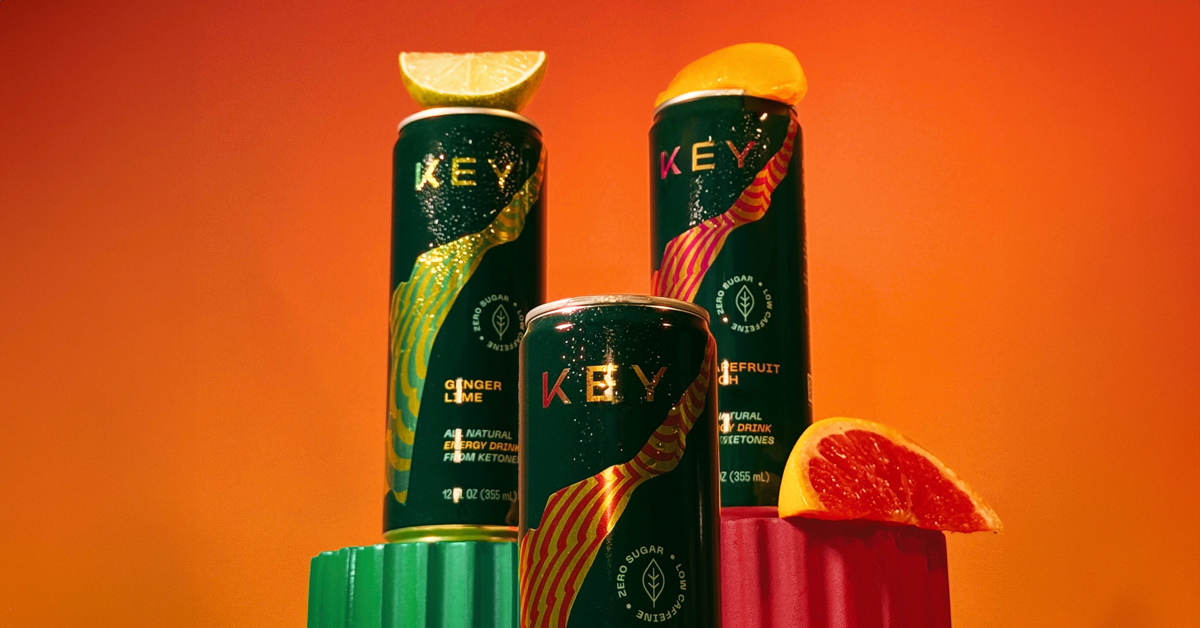
Along with the reformulation, Key has made some adjustments to its packaging. The brand has slightly adjusted the front-of-can design, reworking callouts like “all-natural” and “low-caffeine” and making the colors pop. Key also added a QR code and addressed persistent can denting with its co-manufacturer to reduce inventory loss when shipped.
“It’s not just one thing,” said Back, addressing Key’s persistent evolution process. “It’s a thousand small things that all add up.”