

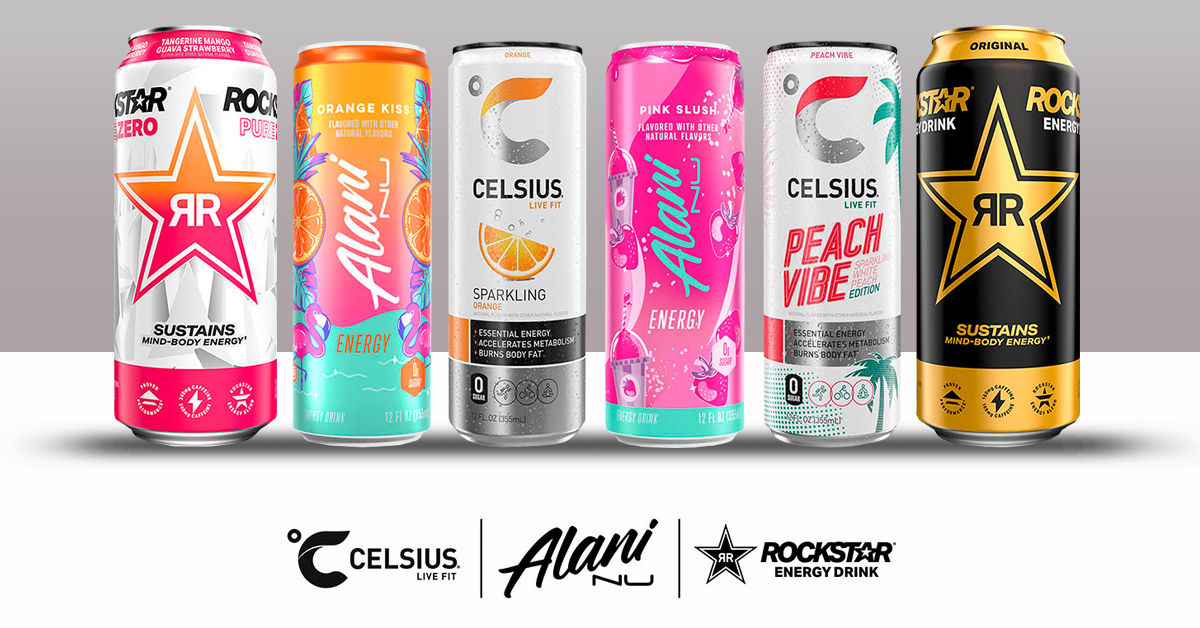
The thriving partnership between Celsius and PepsiCo is entering a new phase.
The two companies announced an expansion of their long-term strategic alliance this morning that positions Celsius Holdings as PepsiCo’s “strategic energy lead in the U.S.,” placing the Celsius, Alani Nu and Rockstar Energy brands under its management, with PepsiCo distributing the full portfolio in the U.S. and Canada.
PepsiCo is also deepening its stake in Celsius Holdings to 11% through $585 million in newly issued convertible 5% preferred stock. The company will nominate an additional director to Celsius Holdings’ board of directors.
The deal builds upon Pepsi’s initial $550 million investment (8.5% ownership stake) in August 2022 as part of its distribution agreement.
“Stepping into the role of PepsiCo’s strategic energy drink captain in the U.S. is expected to be a pivotal milestone in our journey to shape the future of modern energy and grow our brands within a leading beverage distribution system,” said John Fieldly, Chairman and CEO of Celsius Holdings, in a prepared statement. “With a proven functional beverage portfolio and a stronger long-term partnership with PepsiCo, we believe that Celsius Holdings is well-positioned to deliver greater innovation, sharper execution and sustained brand growth. Together, we will reach more people, in more places, more often, with a total energy portfolio that offers options for every consumer and creates greater value for all our stakeholders.”
As PepsiCo’s energy leader in the U.S., Celsius Holdings will drive a unified strategy across the energy portfolio through “seamless planogram design, SKU prioritization and promotional execution.”
“This agreement marks the next step in PepsiCo reshaping its brand portfolio to position us for long-term growth,” said Ram Krishnan, CEO PepsiCo Beverages U.S. “Energy is an important growth category, and we believe this move with our partner Celsius creates a stronger multi-brand energy portfolio that is better positioned to serve different consumer cohorts. This transaction creates an aligned incentive structure for both parties to bring their individual expertise to better compete in the energy category.”
The announcement confirms the future of Alani Nu distribution, one of the most pressing questions since Celsius bought the brand for $1.8 billion in February. Alani’s massive success — sales hit $301 million (+129%) in Q2, with share up 3.2 points from the same period last year — has come mainly on the back of independent beer DSDs, many of which have been predicting it would eventually leave their portfolios. In a survey of beer distributors earlier this summer, 64% said they expected to lose the brand sometime in the near future.
That cycle — growing in DSD before shifting to a major strategic — has been a major theme of the recent energy drink boom, driving consolidation at the top of the market. Outside of Red Bull, Coca-Cola (Monster, which also owns Bang), Keurig Dr Pepper (Ghost, C4, Bloom, Black Rifle) and now PepsiCo are collectively aligned with the energy category’s top ten brands.
The exchange is evocative of Coke’s alignment-seeking deal with Monster in 2015, in which Monster gained control of Coke’s energy brands like Full Throttle and NOS — the latter generating over $500 million in the 52-weeks ended July 3, 2025 — in exchange for the natural beverage portfolio it had grown as the original Hansen’s Beverage Co.
But whereas previous strategic exits have opened up opportunities for smaller brands to fill the gaps on distributor’s trucks, the conditions now may be different as beer conglomerates seek to have their say. Molson Coors took full control of the much-hyped ZOA brand last November, while Anheuser Busch is currently in the midst of introducing Phorm Energy, its joint venture with UFC boss Dana White and supplement maker 1st Phorm. The brand announced it’s heading to 7-Eleven stores earlier this month.