

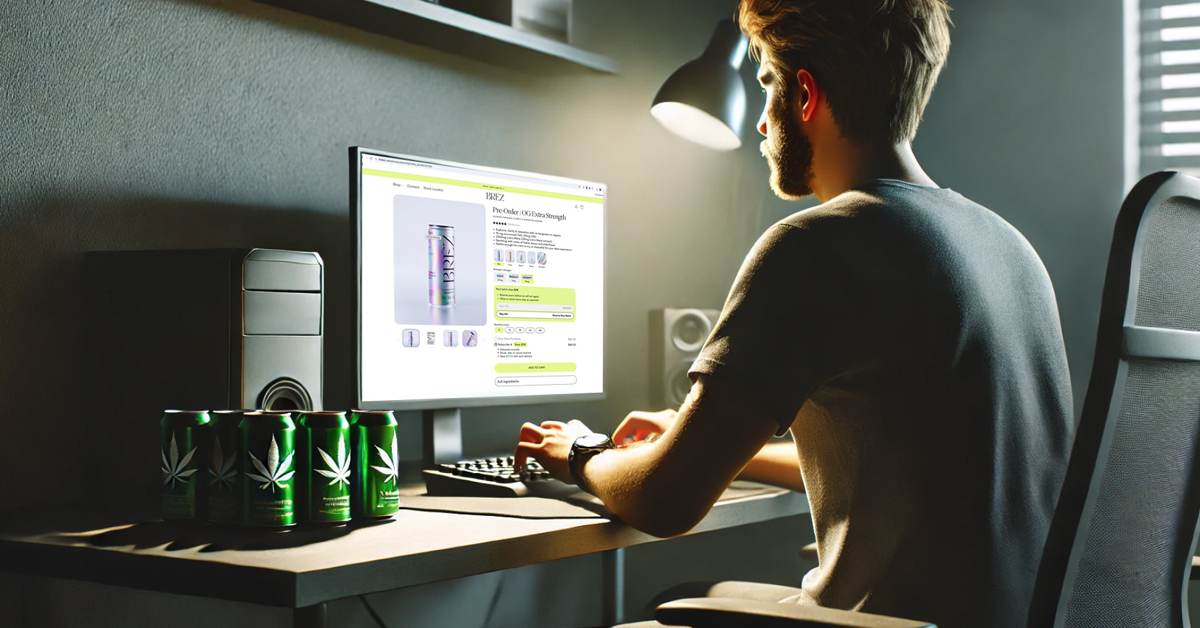
Not that long ago, the idea of buying cannabis – especially in a drinkable format – online would have seemed like an unlikely pipedream. Now, order-by-mail has become a primary mechanism for distributing intoxicating hemp beverages.
For most beverage types, direct-to-consumer (DTC) and ecommerce have served as successful platforms for building brand awareness, rather than lasting revenue pillars. Sending canned liquids via post is not traditionally seen as a long-term value proposition for growth. But cannabis beverages have bucked that trend, utilizing a grey area provided in the 2018 Farm Bill to introduce consumers to the format and drive sustainable velocities.
Instead of using DTC as a springboard to broader retail distribution, many hemp beverage brands have leaned successfully on ecommerce sales, particularly as federal and state regulations continue to evolve. But there are storm clouds: the increasing pressure to incorporate intoxicating hemp into the three-tier system of alcohol distribution calls into question the long-term viability of direct-to-consumer hemp sales.
Will ecommerce continue to be a valuable mechanism for moving volume, or is a transition to bev-alc retail a necessary – albeit complicated – next step?
A High-er Upside Online
Hemp-derived THC drink purchases from brand websites were up 27.4% during Q1 2025, according to the Brightfield Group, an uptick from the 25.9% increase in the previous two quarters. Drink format usage – which includes powders, drops and syrups – rose to 24.8% in Q1 2025, up over 10% from Q4 2024, according to the Brightfield Group survey data.
Where consumers are purchasing hemp drinks is represented in the channel distribution growth. Hemp-derived THC beverage sales in smoke and vape shops fell over 10% between Q4 2024 and Q1 2025, according to the Brightfield Group. Meanwhile, those sold at alcohol retailers saw a high water mark in Q3 2024 at 31.2%, since then subsiding to 26.7% in Q1, as more states have enacted bans on intoxicating hemp products sold outside of dispensaries.
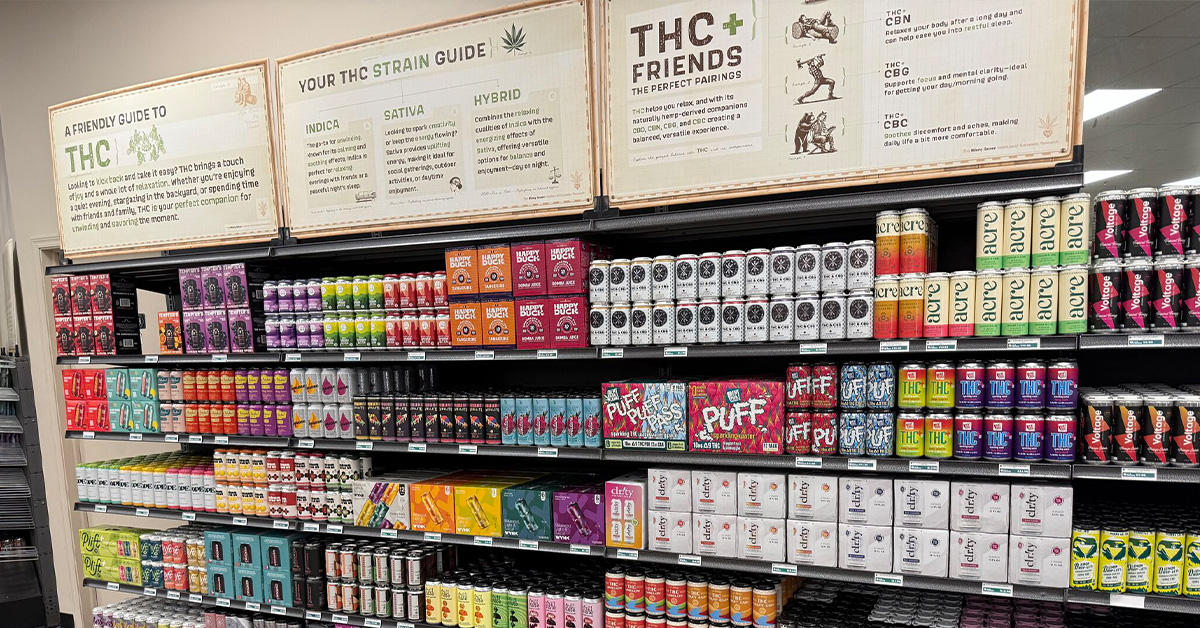
Yet, both the on-premise (bars, restaurants, live event spaces) and c-store channels show steady sales gains over the last three quarters.
For all beverage brands, prioritizing marketing dollars between digital and brick-and-mortar footprints can be difficult. Hemp beverage makers face even more complexity due to a consistently evolving landscape of restrictions both online and in-person.
Retail go-to-market strategies usually require hiring sales associates to pitch buyers, investing in field marketing teams in-store sampling and activations, and lofty trade spend on distributor contracts and slotting fees, among other expenses.
A digital approach does not necessarily translate to a cheaper price tag, but it does mean allocating dollars in different ways. From SEO experts and influencers to high marketing costs of working with Google and Meta, cannabis companies also face the challenge of not being able to use words like “THC,” “marijuana,” “pot” or other terms in digital advertising campaigns. Additionally, Amazon, the biggest online retailer in the U.S., doesn’t allow intoxicating hemp products to be sold on the platform.
This has led to several online marketplaces springing up to service the category. Edible Brands (Edible Arrangements’ parent company) launched an intoxicating hemp ecommerce site, while adult non-alcoholic (ANA) retailers like Boisson have also established standalone online marketplaces that specialize in hemp-derived THC drinks.
Canopy USA LLC-owned multi-state operator (MSO) Wana Brands has paired its retail strategy with Wanderous, an online marketplace which offers its own branded, hemp-derived THC drinks along with a curated menu of other category players like Cann, happi and MXXN.
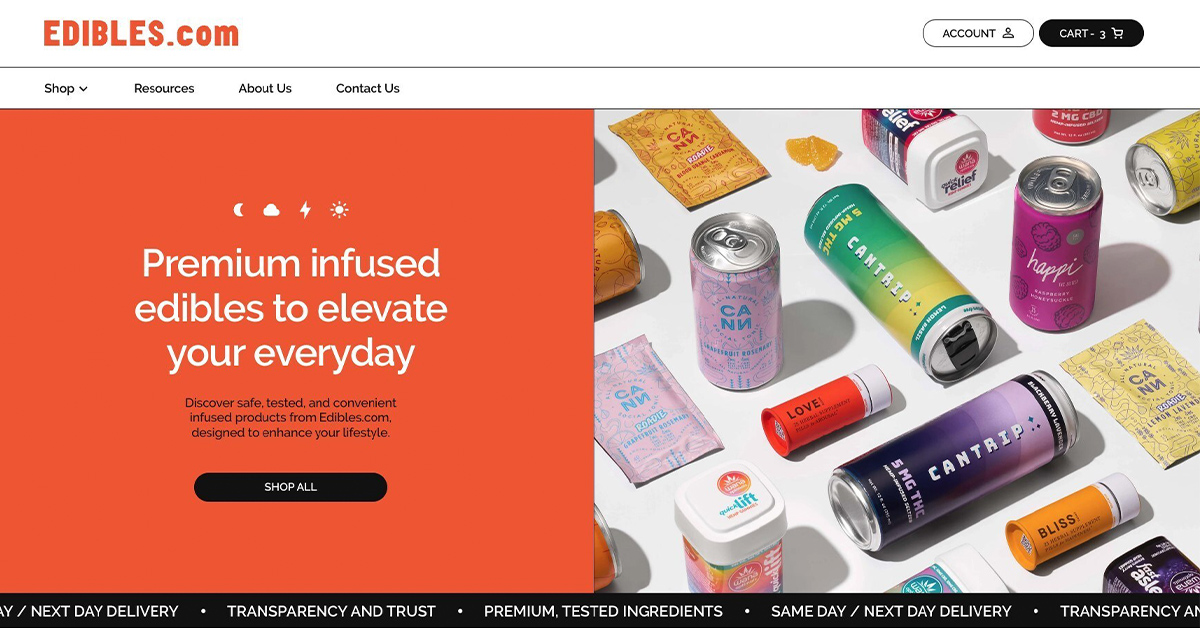
The reliance on DTC, ecommerce and online marketplace sales is both a response to the unclear regulatory landscape in retail and a result of the category’s continued success bringing in new consumers.
Leveraging The Online Hemp Consumer
Although DTC provides a great avenue for category education, digital-first brands operate in different ways than retail beverage companies.
“What hemp beverages are going to have to figure out is either pricing towards DTC or building for retail first,” said Ben Mason, founder and CEO of Pillar Marketing, because “you can’t sell something for $10 a can online and then make it $4 per can in retail. You just can’t do that to the consumer.”
U.S. sales of hemp-derived THC beverages were estimated to be $382 million in 2024. That number is projected to balloon to $4.1 billion by 2028, a 1,615% increase from 2023, according to Euromonitor data compiled by Pillar Marketing for its recent 2025 Hemp Beverage Industry Report.
To hit those numbers, DTC cannot be the primary purchase channel, but it can be an effective tool, Mason said, especially when paired with other types of products that can deliver the functionality of THC in an easier-to-ship format.
“The most successful, smart brands understand that you can break even acquiring new customers via paid ads on DTC with other formats like gummies and then upsell them into beverages in retail,” he said.
This is the approach of many brands in the space. Cann, an early adopter of low-dose THC drinks, recently launched into gummies to complement its on-the-go 0.9 oz. Roadie shot format.
Other hemp beverage makers have taken a similar tactic, marketing tablets, gummies, shots and large-format, spirit analogues for THC cocktail mixing. All of these portfolio extensions provide better DTC margins because shipping a pouch of edibles is cheaper to cheaper than a four- or six-pack of 12 oz. drinks.
These products also allow brands to bundle products together or offer subscriptions that can increase order volume and repeat purchases.
Put another way: “DTC is not a business plan, but a channel strategy,” said Green Street Beverage CMO Jarrod Jordan. “Especially in beverage, you can’t think that you’re going to win by focusing on having a DTC Dollar Shave Club-esque business without winning in retail.”
The choice between continuing to squeeze dollars out of DTC, or embracing a shift to wider distribution by aligning with beverage alcohol is perhaps one of the largest questions the hemp beverage category faces today.
We will explore that in Part II, tomorrow.