

The Zero Proof Playbook is BevNET’s exclusive interview series with the pioneers and experts who are shaping adult non-alc (ANA) spaces – uncovering the trends and on-the-ground data driving the category forward.
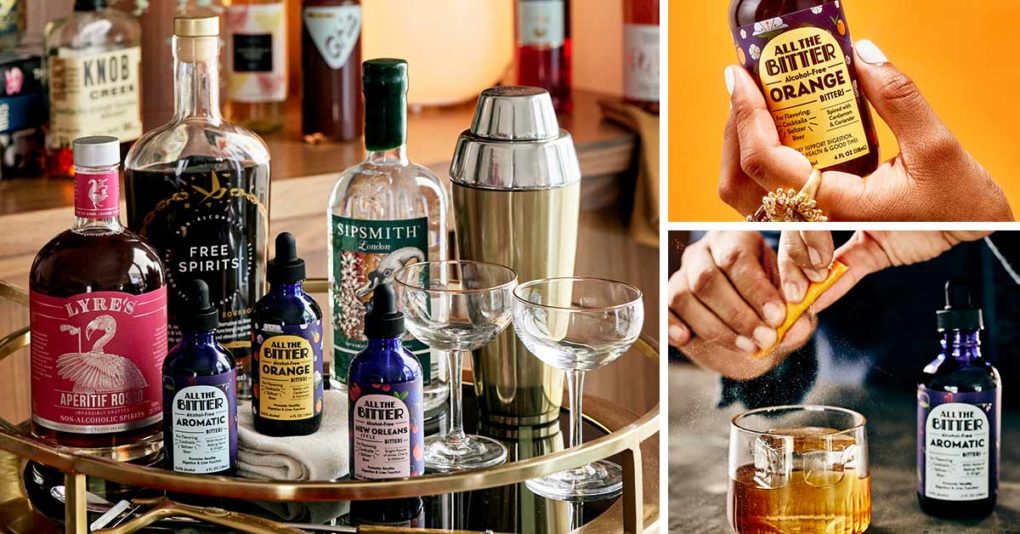
Former sommeliers at The French Laundry, Ian and Carly Blessing have applied their hospitality expertise to All the Bitter Zero Proof Lounge: a non-alcoholic tasting lounge that combines on-site production of the couple’s bitters line, educational tours, cocktail flights, a full zero-proof bar, local snacks, and a curated NA bottle shop under one roof. Less than one month after their opening in Chico, California, we chatted with Ian about what’s selling, how ANA brands, retailers and bartenders can address the category’s educational pain points, and why the debate about what to call adult non-alc is a distraction from the category’s real mission ahead. Answers have been lightly edited for length and clarity.
In the store what are top-sellers so far in terms of brands or categories? How about top-selling cocktails?
Our top seller by far is our cocktail flight – people love the chance to explore and taste a range of zero-proof cocktails side by side. Right now, the flight includes a Margarita, Negroni, Old Fashioned, and Lemon Drop. It’s a great way for guests to get a feel for what’s possible with non-alc. All The Bitter is the number one seller, but beyond that, kava has been huge for us, both in bottled spirits like Kava Haven and Kavahol, and in the cocktails on our menu. We’re also seeing strong interest in Three Spirit Nightcap, Pathfinder, Noughty sparkling wine, and the new Tomorrow Cellars Red Blend, which features a botanical extract we developed specifically to enhance the flavor and structure of the wine.
What are some of the educational gaps from customers around ANA? How are you approaching those gaps?
One of the biggest gaps we see is around how to actually use non-alcoholic spirits. A lot of people come in expecting to sip NA whiskey neat or take a shot of NA tequila, and that’s almost always a disappointing experience. These products aren’t designed to be consumed that way. One of the advantages of running both a lounge and a bottle shop is that we can serve great cocktails while also showing people how to make them at home. We get to educate in real time, and we also use the lounge to film content for Instagram to keep that education going online.
For example, I think trying to make an Old Fashioned the traditional way – just swapping in NA whiskey – is a recipe for disappointment. It usually ends up flat and watery. But if you rethink it a little, it can be fantastic. Our version uses a split base with a unique black pepper and ginger spirit called Tenneyson that gives the drink the bite and texture people are missing. We try to meet people where they are and guide them toward what actually works.
How did you curate your selection?
I’ve spent the past five years tasting pretty much everything in the non-alc world, so by the time the bottle shop became a reality, I already had a strong sense of what I wanted on the shelves. We’ve curated what I think are the best examples in each category, rather than carrying full lines. It’s more about quality than quantity. We also stock everything you’d need to make just about any cocktail at home. One of the most popular parts of the shop is our functional section – CBD, kava, adaptogens. That’s where most people gravitate first, because they’re often looking for something that not only tastes good but makes them feel something, too.
Where do you think there’s room for improvement from ANA brands?
I think one of the biggest opportunities for non-alc brands is better storytelling and education. People still associate non-alcoholic cocktails with mocktails – which, in their minds, means juice. And when they see a $40 bottle of non-alc spirits, they don’t understand what justifies the price. It’s up to brands to show the process: the ingredients, the production methods and techniques, the innovation that goes into creating these drinks. A lot of thoughtful work goes into building complexity and balance without alcohol, and when people understand that, they’re much more open to exploring the category.
What are you most excited about in terms of innovation?
I’m really excited to see more producers exploring natural botanicals and extracts, not just for function, but for the structure and bite they bring to a drink. Kava is a great example: it’s naturally relaxing, but it also has a bitter edge and a mouth-tingling effect that mimics both the feel and the effect of alcohol in a really compelling way. CBD extracts can have that same kind of bitterness, which helps slow the drinker down and adds complexity. I’m also watching the development of THC spirits – I think there’s a lot of consumer interest there, and we’re only starting to see what’s possible.
On your menu you have mocktails and zero-proof cocktails, what’s the difference?
Separating mocktails and zero-proof cocktails lets us offer two distinct styles of drinks, at different price points, for different drinkers. Our zero-proof cocktails use non-alcoholic spirits and are designed to taste like familiar cocktails. The mocktails are built from juice, tea, soda, syrups, and bitters – simpler by design, and often preferred by folks who want a fancy drink but aren’t looking for the taste of alcohol.
The distinction also helps with education around pricing. Zero-proof cocktails cost more because the ingredients cost more. Mocktails should cost less. We’re trying to shift the conversation – if a drink includes a spirit, even if it’s non-alcoholic, it should be called a cocktail. One of the best menu formats I’ve seen had a small zero-proof cocktail section, and also marked certain drinks in the regular cocktail section with an asterisk to show they could be made into mocktails by removing the alcohol and lowering the price. That’s a really smart use of limited menu space.
Often innovation has to be packaged in the form of something familiar for consumers, curious about how you are balancing the two when it comes to your cocktail menu?
I love unique, novel flavors as much as the next beverage nerd – but we also need to meet people where they are. That’s why our menu leans into familiar classics like the Margarita, Old Fashioned, Negroni, and Aperol Spritz, but we tweak them to actually work with non-alc spirits. Our take on a Mojito swaps in Aplós Ease, which has flavors of yuzu, mint, and shiso, paired with mint and muddled lime wedges, caipirinha-style. It’s not a Mojito, but it hits the same refreshing, herbal notes. I want people to feel comfortable with what they’re ordering, while still getting something they’ve never had before.
What do you see as the evolution of ANA in fine dining?
Fine dining has actually done a pretty good job addressing non-alc – partly because the level of service demands it. These restaurants understand that every guest deserves something exceptional, whether they’re drinking or not. The evolution, I think, will come as more beverage directors (and chefs) realize they don’t have to go full Alinea and build NA spirits from scratch. There’s a growing range of thoughtful, complex options out there – Ghia, Three Spirit, Tenneyson, Pathfinder, Botivo (I can’t wait to see that in the U.S.) – and of course, why spend months developing your own bitters when you can use All The Bitter? We designed them with the fine dining world in mind.
Taking a poll: do you like “adult non-alc” as a title or think there is a better category name?
That’s a tough one. Honestly, I think adult non-alc is pretty good. This topic has been coming up a lot lately, and it feels like the new version of the mocktail debate – people in the industry have pushed back on that word for years, but it’s still what most people use. And despite our efforts to distinguish between mocktails and zero-proof cocktails, I don’t think it’s ever going away. Personally, I like zero proof, but I think non-alc works just fine too. At the end of the day, the language is still evolving, and I’m more focused on how we serve the drinks and tell the story than which exact term we use.